
Stamped Concrete
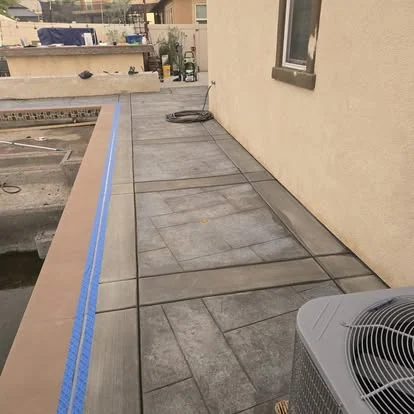
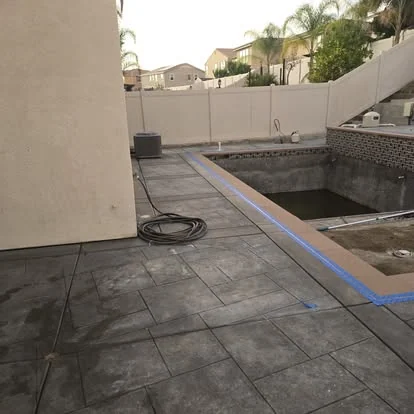
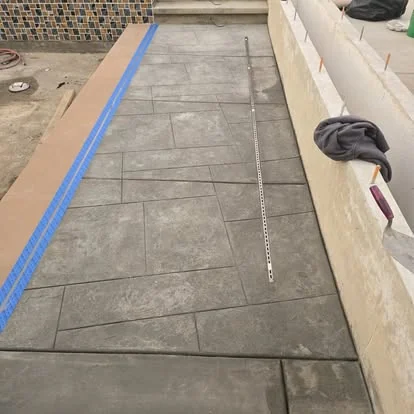
Stamping is timing. The concrete has to be at exactly the right stage to take an impression and hold it. Too early and it closes up, too late and the mat will not seat. That window is the whole skill.
Talk to us about the job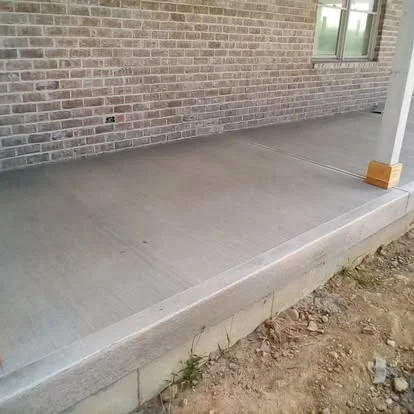

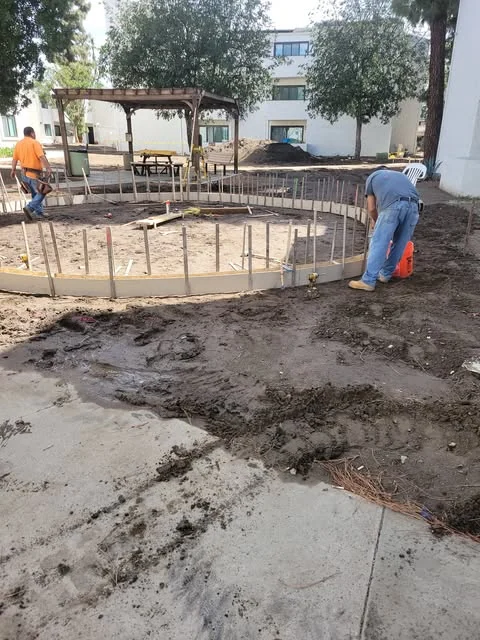
How the job runs
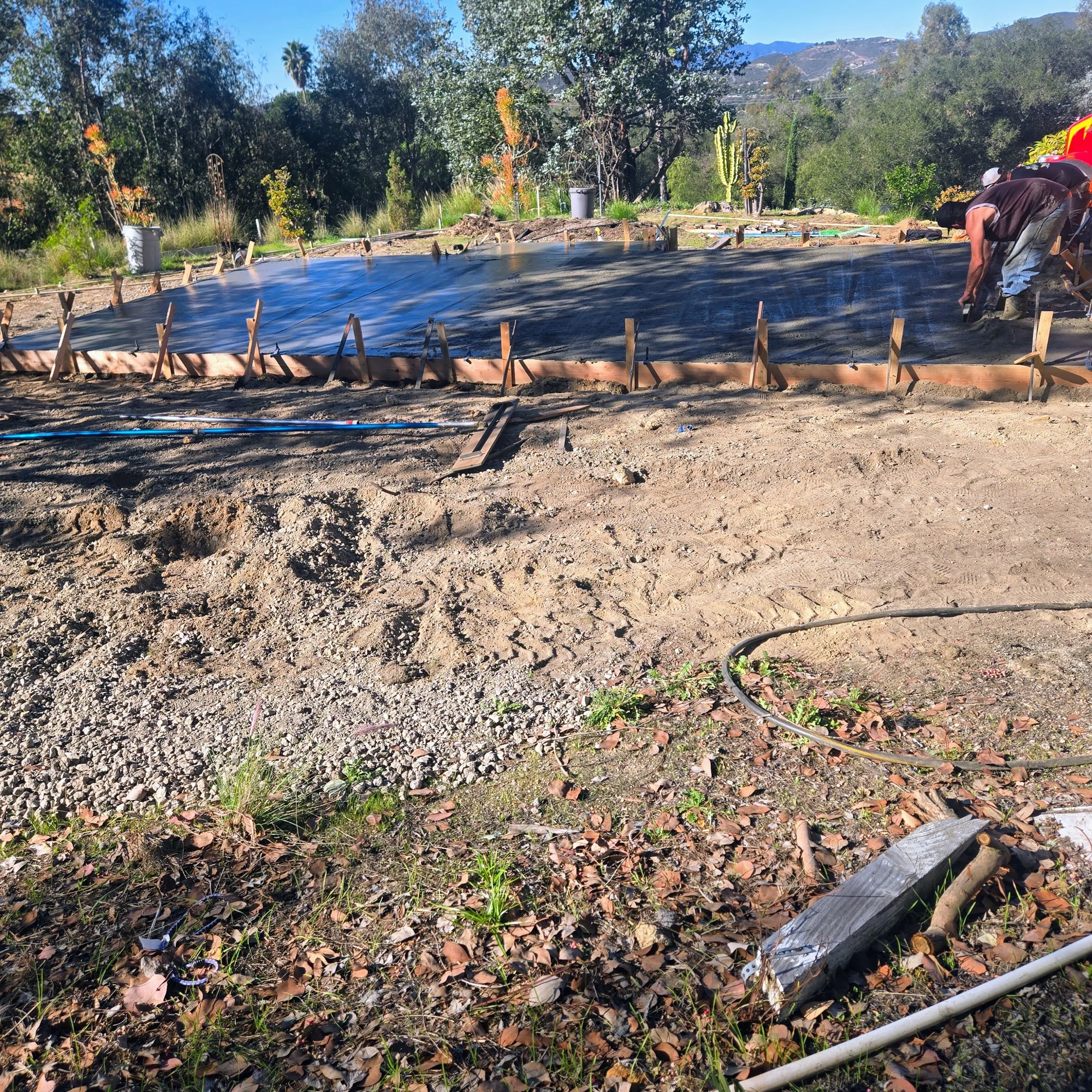
Somebody stands on it
Every job starts with a site visit, because the questions that decide the price are all about the ground and the access.
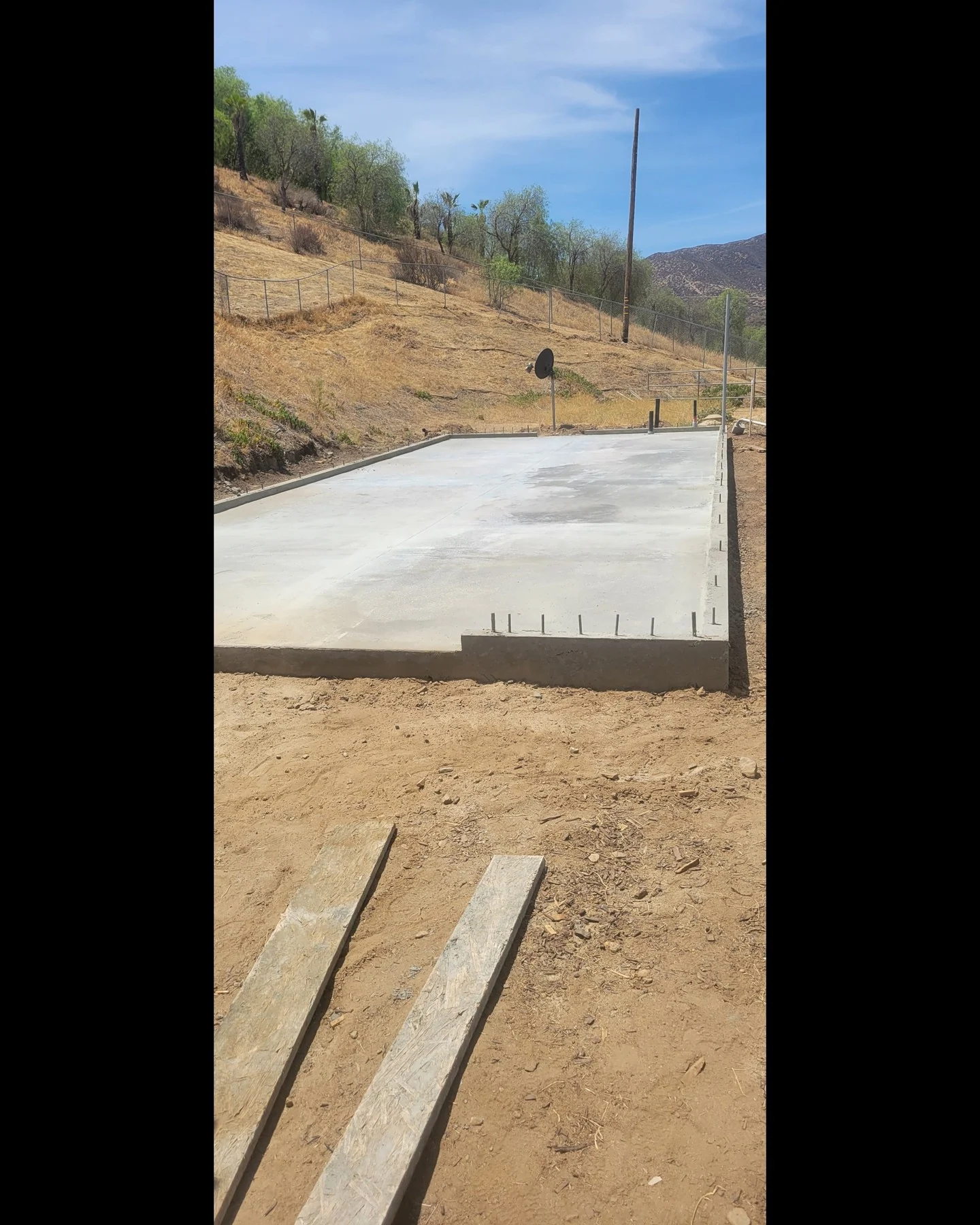
The direct answer
We will tell you what it needs, and we will tell you when it needs less than you thought.
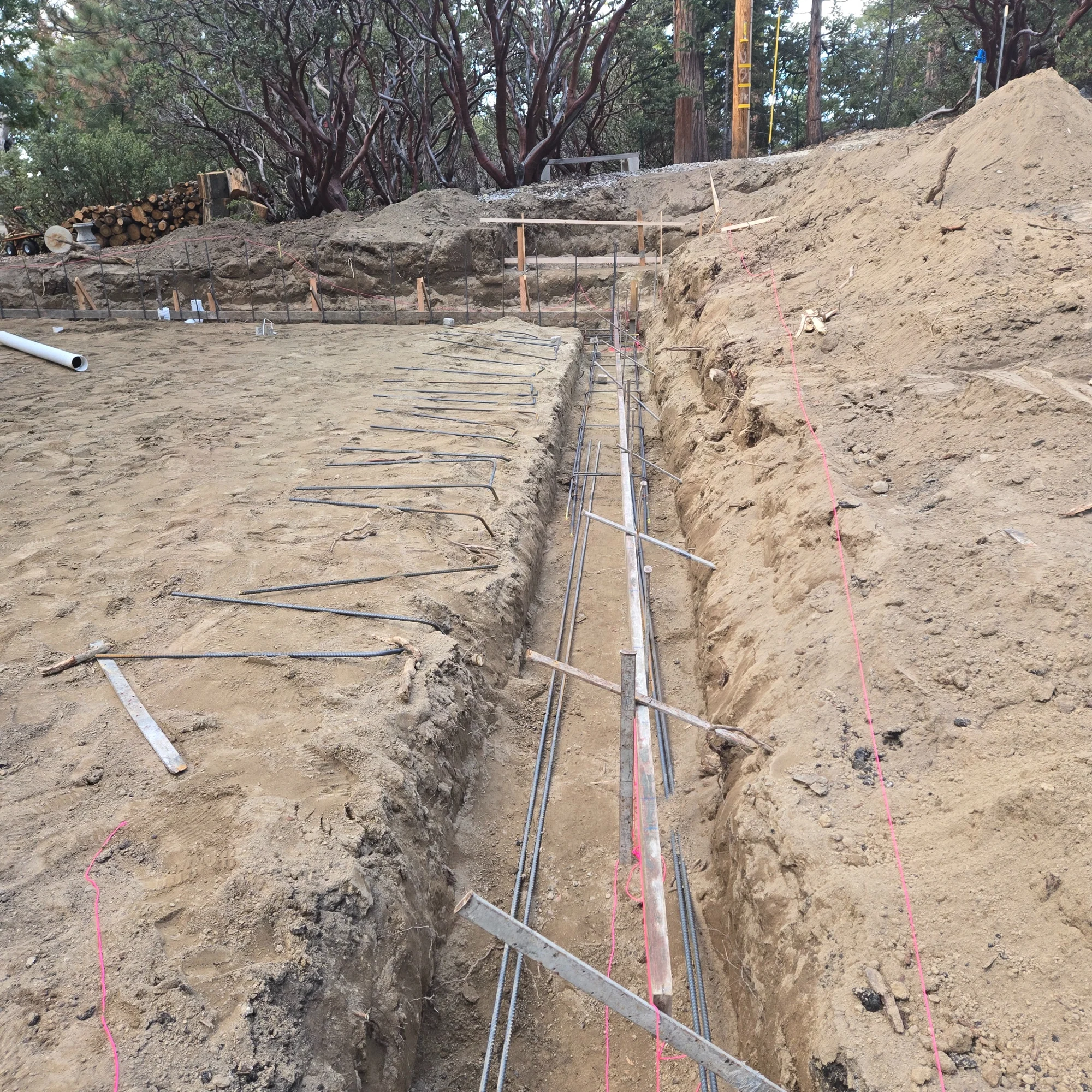
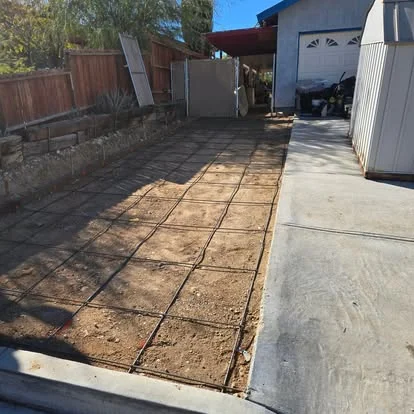
Correct the subgrade
Soft spots found and fixed, base placed in lifts and compacted. Invisible when it is right, obvious when it is not.

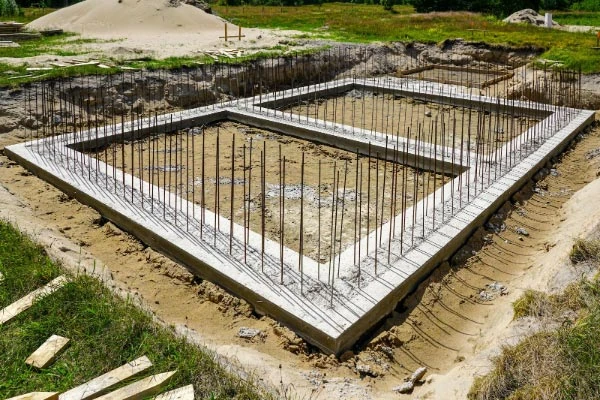
Form and place
Braced forms, steel on chairs, proper consolidation, and finishing worked to the concrete’s timing.
What this job actually needs
Timing is the whole skill
Stamping happens in a window measured in minutes. The concrete has to be firm enough to hold an impression and soft enough to take one. Too early and the mat sinks and closes up, too late and it will not seat at all. On a hot inland afternoon that window is short, which is why these pours start early.
Color is two decisions
Integral color goes in the mix and colors the whole section, so a chip does not show gray underneath. Release and antiquing colors sit in the surface and give the depth and variation that makes stamped work read as stone rather than as patterned concrete. Most jobs use both.
Pattern, scale and joints
A pattern has to suit the size of the slab. Large ashlar on a small patio reads wrong, and a busy pattern fights a long driveway. Control joints still have to go where the slab needs them, so the layout is planned to hide them in the pattern instead of cutting across it.
Sealing and upkeep
Stamped concrete is sealed, and the sealer is what protects the color and gives the finish its depth. It needs redoing periodically. That is real maintenance and it is worth knowing before you choose it.
What decides whether it lasts
Concrete is judged on the surface and it fails from underneath. The base, the steel, the joints and the cure are the whole job. A slab that was poured on bad ground will tell you so, usually in the third or fourth year.
Why fourth generation matters here
32 years on the tools means most of these problems have already been seen once. Reading a slab before quoting it is the part you cannot learn from a book, and it is the difference between a repair that holds and one that comes back.
What Southern California ground does to stamped concrete
Older flatwork around here
A lot of valley concrete was poured thin, with light reinforcement, on a base that was never properly compacted. When it fails it is usually reporting on the ground rather than on the mix, and that is the difference between a repair that holds and one that comes back in a year.
Summer pours
Triple digit afternoons change how concrete behaves. It stiffens before it can be finished properly, the surface skins over while the body underneath is still soft, and water leaves the slab faster than the cement can use it. Valley pours start early, the mix gets adjusted for the heat, and curing is treated as an active step instead of something that happens on its own.
What lasts here
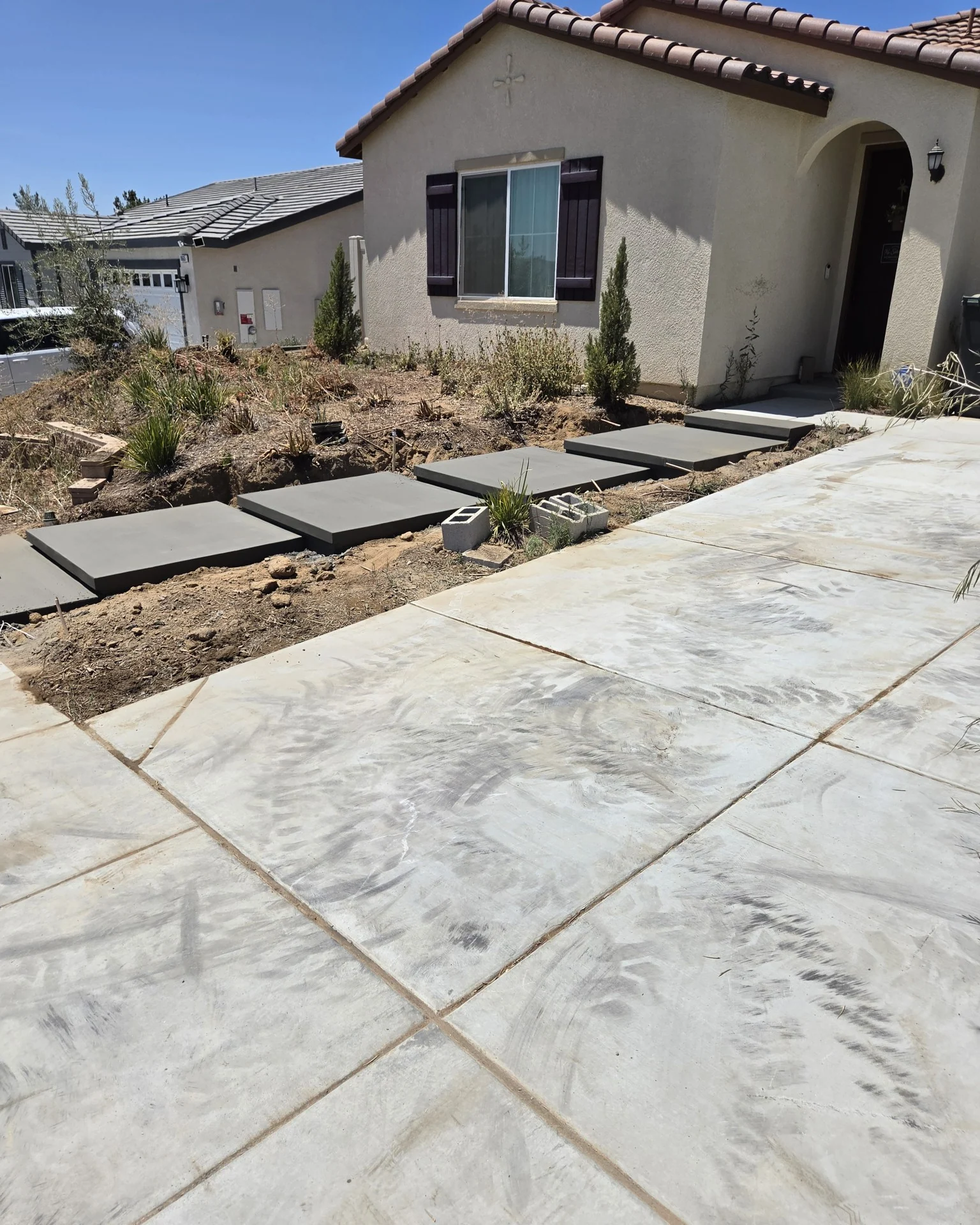
A properly based, properly jointed slab with reinforcement sized to the load will outlast the house it sits beside. The variables that decide it are all underneath and all invisible once the pour is done, which is exactly why they get cut on cheap jobs.
Drainage on a flat lot
Valley lots are often close to level, which makes slope hard to find and easy to get wrong. Low points, cross-fall and where water actually leaves the property get worked out before the pour, because once the concrete is down the drainage is permanent.
How concrete fails, and why
Settlement at the apron
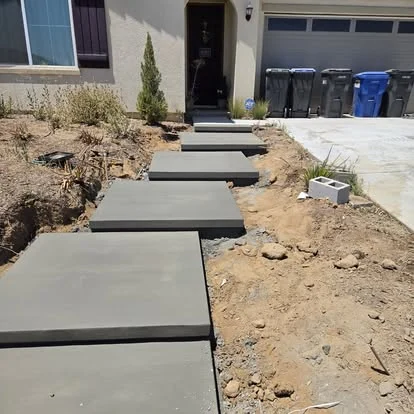
The strip where a driveway meets a garage takes every vehicle and sits over backfill that was disturbed during construction. It settles more than the rest of the drive and it needs its own thickness and joint.
Heaving
A slab pushed upward is usually roots or expansive soil taking on water. Both get worse with irrigation, and neither is fixed by resurfacing the top.
Pop-outs
Small conical craters come from a particle of reactive aggregate near the surface expanding and blowing the concrete off above it. Cosmetic, and a repairable surface defect.
Dusting
A surface that chalks under a broom was finished or cured badly, or had water worked into it. Sealing helps; grinding and resurfacing fixes it.
How a job runs
Getting a number
We walk the job, measure, and quote what it needs. No number goes out on a photograph and nothing gets quoted thin to win it.
How long it takes
Most residential flatwork is a few days from demolition to pour, plus curing. Structural work runs longer because of inspections.
Pouring new concrete on ground that already failed once buys you the same crack.On replacement
Who is on site
The same crew that forms it pours it and finishes it. There is no handoff where the details get lost.
Afterwards
Sealing, joint maintenance, and keeping water off it are the things that decide whether you get twenty years or forty.
Other decorative work

Colored Concrete
Color through the mix or worked into the surface.
Exposed Aggregate Concrete
Washing back the paste to show the stone.
Broom-Finished Concrete
The working finish, done well.
Salt Finish Concrete
Rock salt pressed in, then washed out.
Sand Finish Concrete
A fine, even surface texture.
Polished Concrete
Grinding the slab itself to a finish.
Concrete Overlays
A thin new wearing surface, bonded down.
Epoxy-Ready Concrete Floors
A slab finished so a coating will actually bond.
Straight answers
Will color fade?
Integral color goes through the whole section so a chip does not show gray, and it holds up better than surface color. Anything on the surface is in the wear layer and will need maintenance.
Does decorative concrete need sealing?
Yes, and then again periodically. Sealing protects the finish and the color. It is maintenance rather than a one-time step.
Which finish should I pick?
It comes down to where it is and what it has to do. Broom and salt finishes grip when wet. Exposed aggregate hides wear. Stamped and colored work read best where people actually look at the floor.
Is stamped concrete slippery?
Texture usually helps rather than hurts. Around a pool we specify for slip resistance deliberately, because wet feet are the whole point of that slab.
Can you do decorative work on an existing slab?
If the slab is sound, an overlay or a polish can change the surface without demolition. Bonding is the whole question, which means the existing concrete has to be prepared properly.
Tell us what the job is
We walk the job, tell you what it needs, and give you a number. Hemet and roughly 100 miles around it.