
Chino Hills’s concrete crew
Flatwork, foundations and repair across Chino Hills and the rest of San Bernardino County. Fourth generation, 32 years in the trade, California license 1137822.
Talk to us about the job
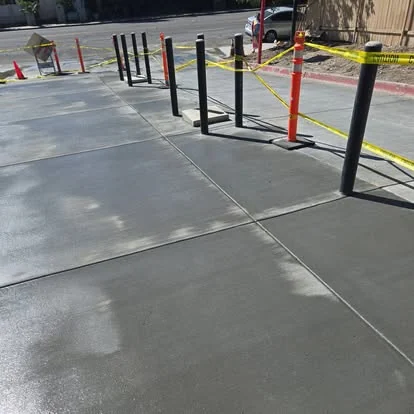
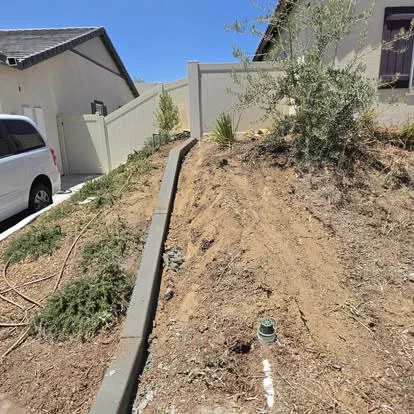
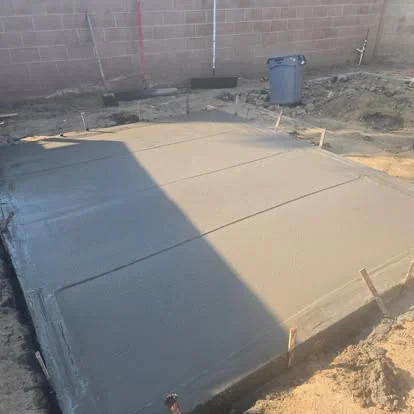
What concrete is up against around Chino Hills
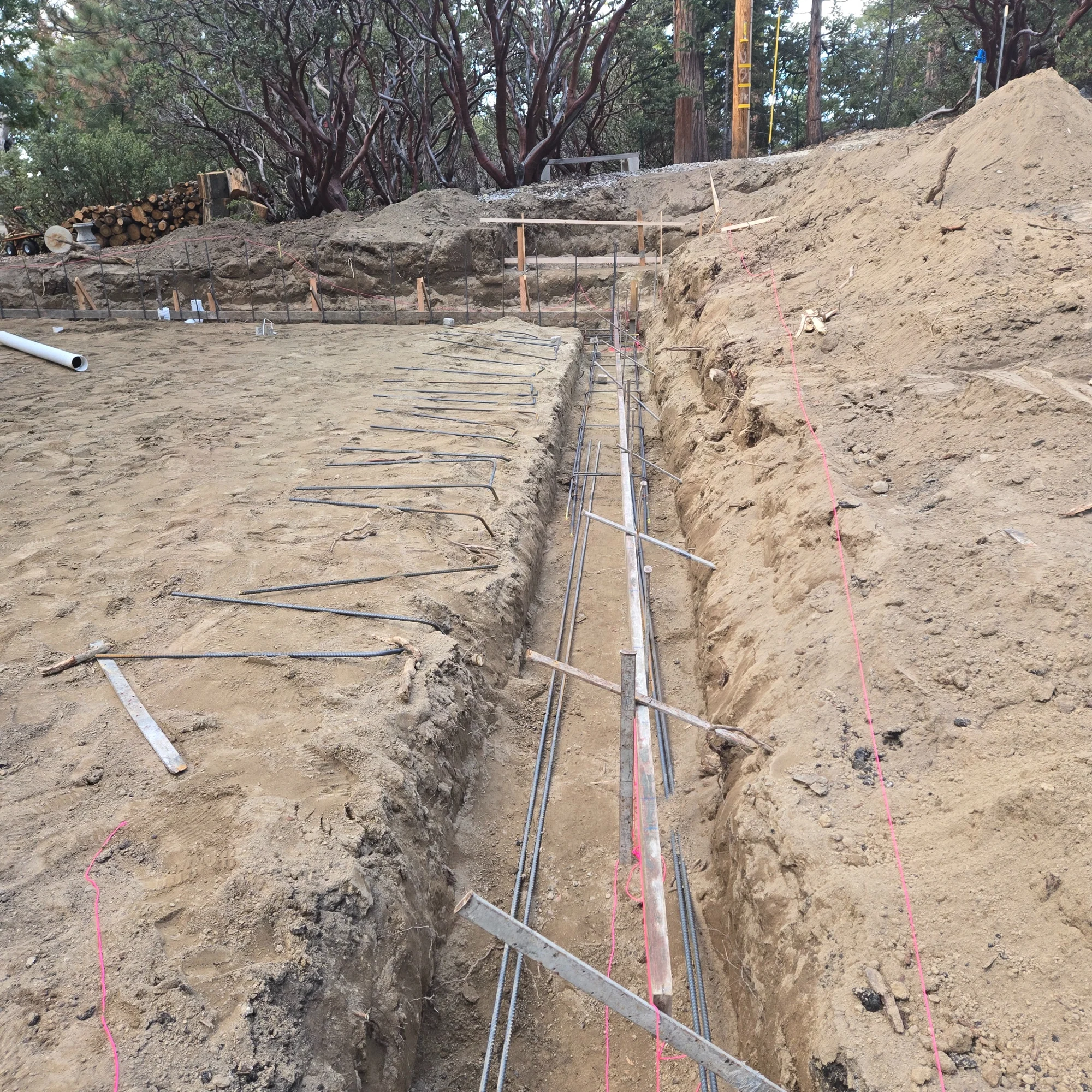
The base is the job
People judge concrete by the surface and it fails from underneath. Grade, material, lift thickness and compaction decide how a slab performs for thirty years. It is invisible when it is right.
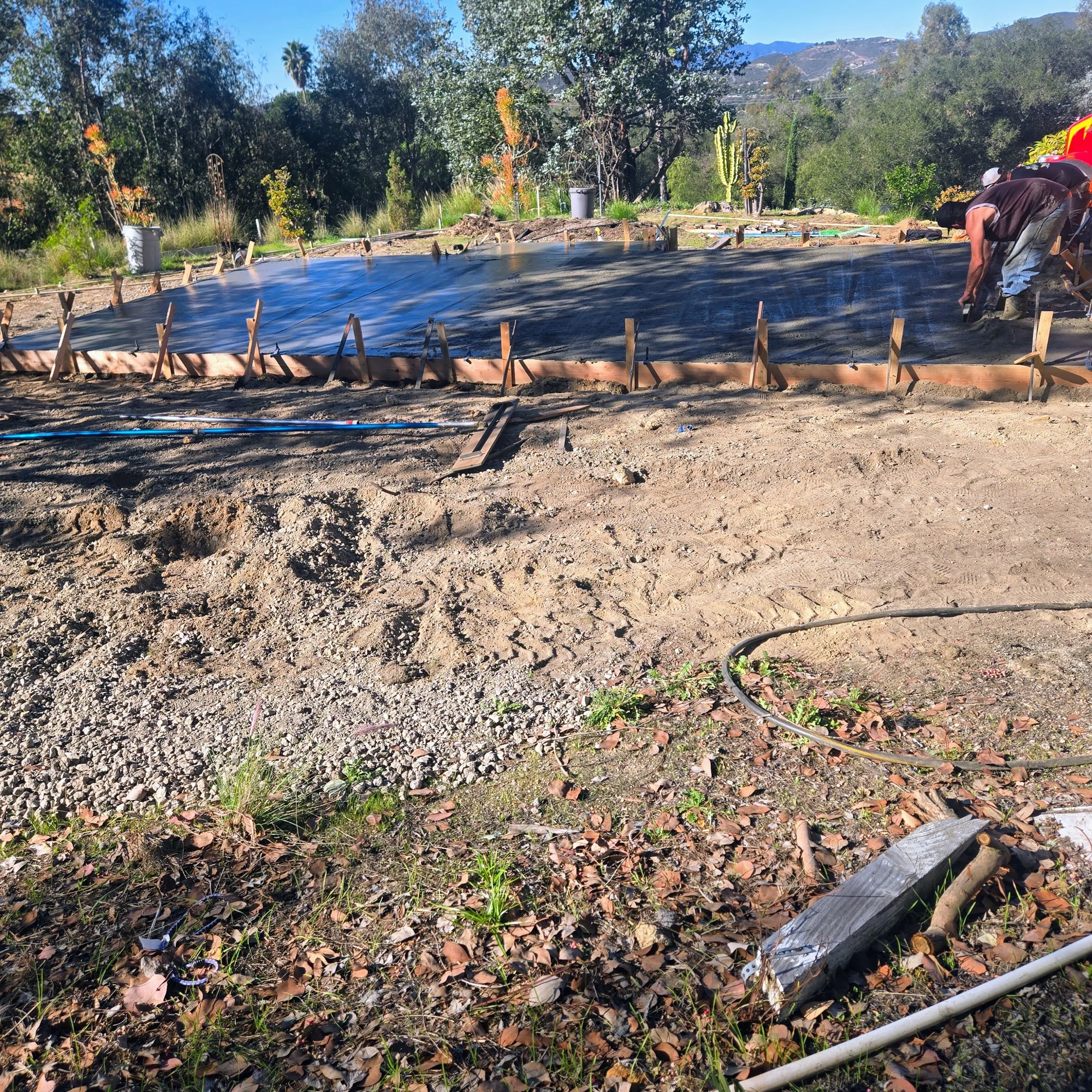
Old slabs and new ones together
A new pour tied hard to an old slab will crack at the joint, because the two will never move the same. They get isolated on purpose so each one can do what it wants.
Summer heat during the pour
Concrete placed at a hundred and five degrees behaves nothing like concrete placed at seventy. It stiffens fast, the surface skins over while the body is still soft, and you get a finish that looks closed but is not. Hot weather pours get scheduled early and treated differently.
Cleanup is part of the job
Washout handled properly, spoil hauled, surfaces cleaned. Concrete work is messy while it happens and should be invisible when it is done.
Curing treated as a step
Fresh concrete gets protected from dry wind and sun until it has what it needs. Skipping that is how you get a dusty, weak top layer.
Steel sized to the movement
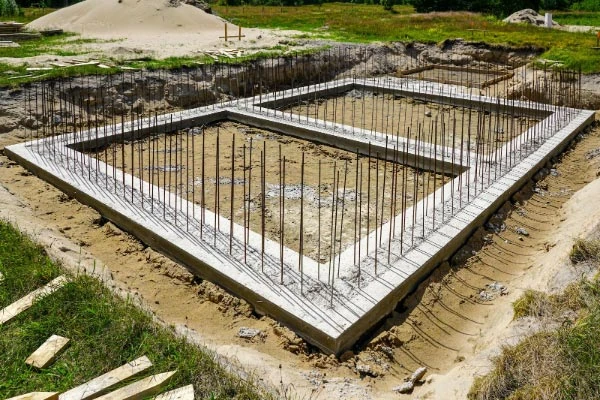
Reinforcement gets placed for what the soil is going to do, on chairs at the right height with real cover. Steel lying on the dirt does nothing at all.
What we build in Chino Hills
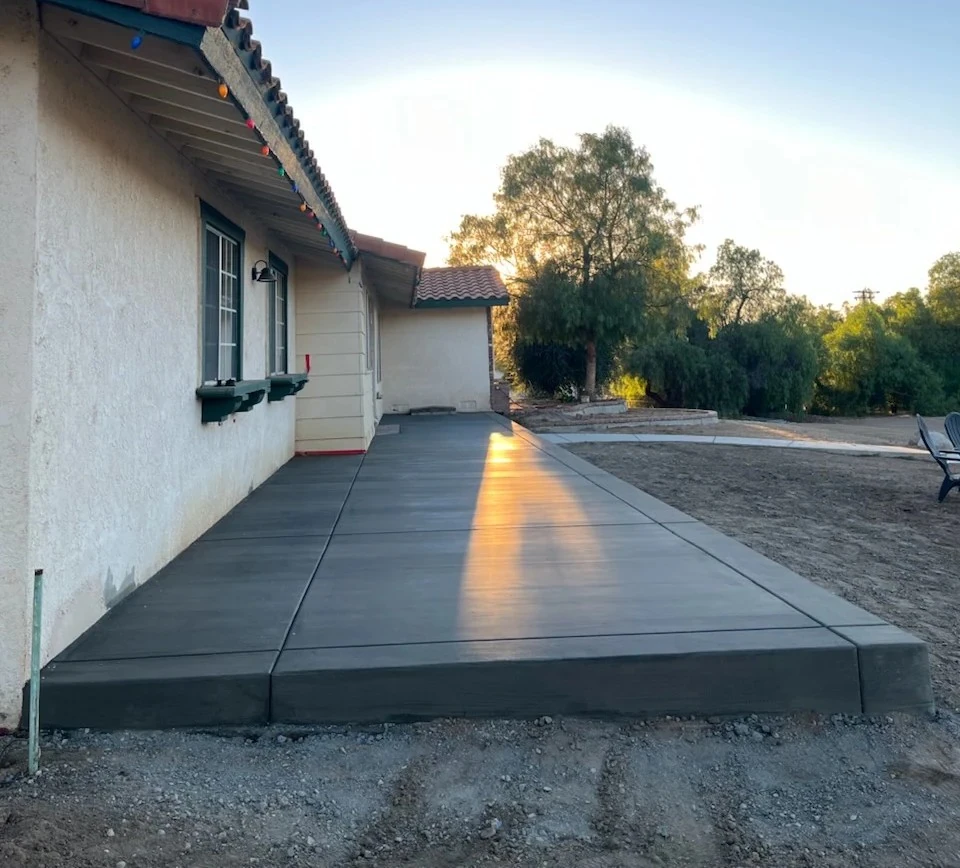
RV Pads
Heavy, concentrated, parked in one place for months.
Boat Pads
Trailer tongue weight and a slab that has to stay level.
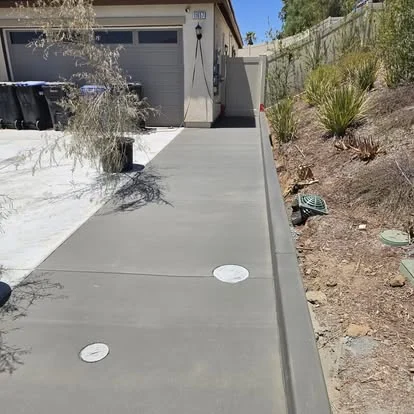
Parking Pads
Extra parking that is not the driveway.
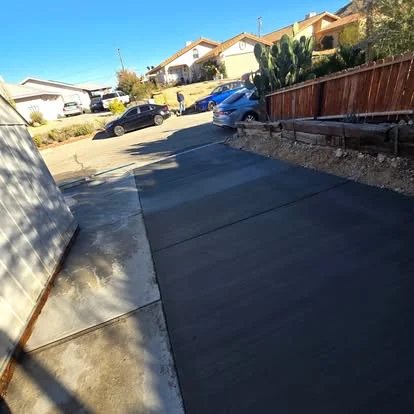
Concrete Pool Decks
Wet feet, chemicals, and sun all year.
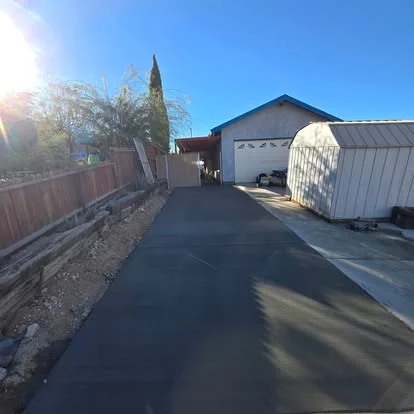
Concrete Pads
A pad sized to the thing that is going on it.
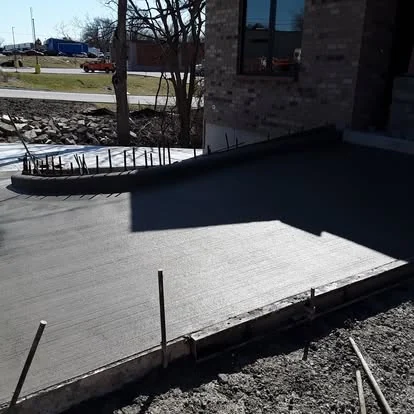
Residential Concrete Flatwork
All the flat concrete around a house, done by one crew.
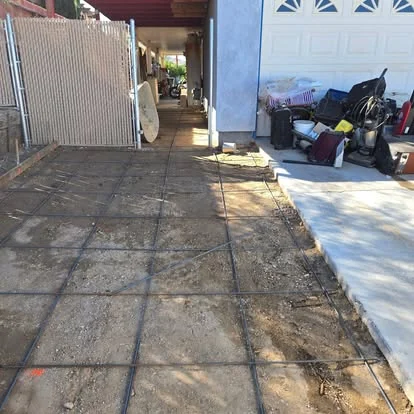
Concrete Joint Repair
The joints fail before the concrete does.
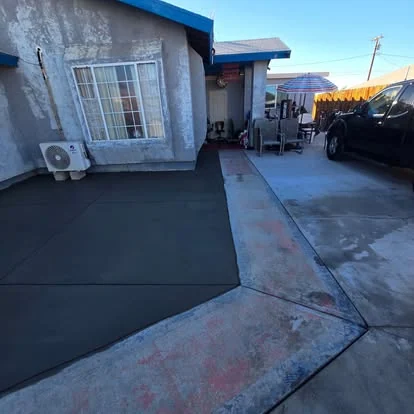
Concrete Resurfacing
A new surface on a sound slab.
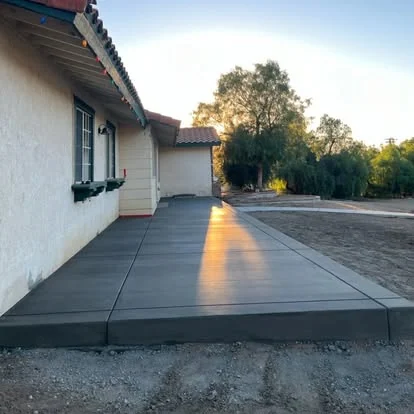
Concrete Leveling
Lifting a slab back to where it started.
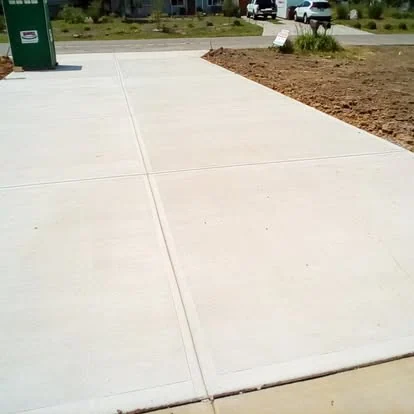
Dumpster Pads
A truck, a full bin, and the same spot every week.
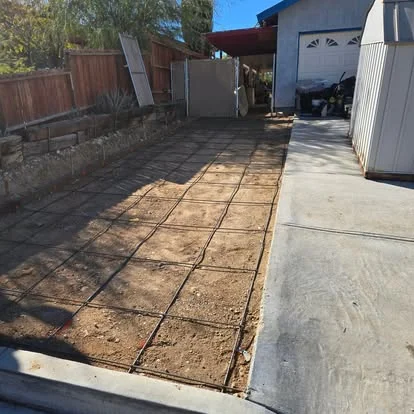
Equipment Pads
A level base for machinery that cannot move.
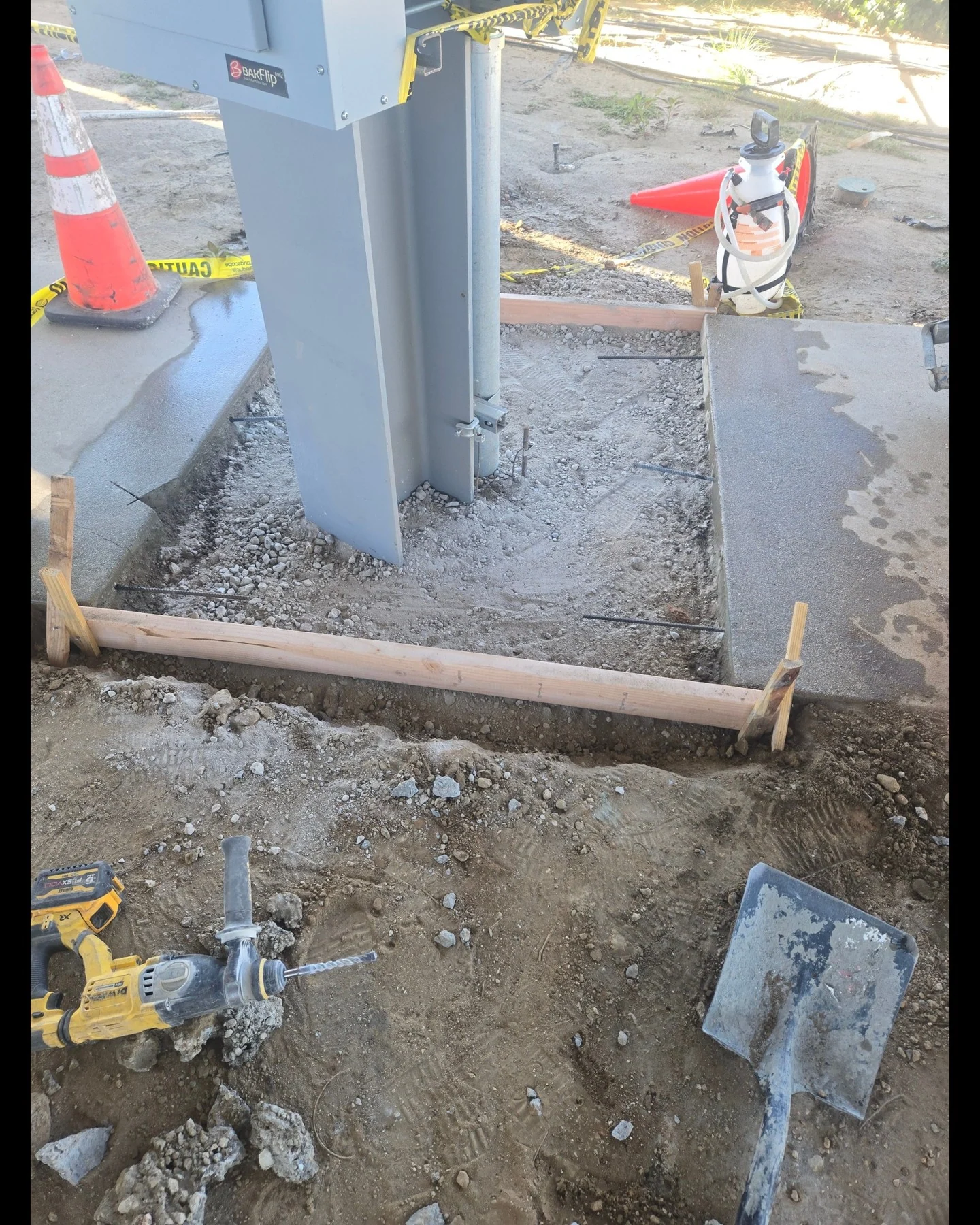
Transformer Pads
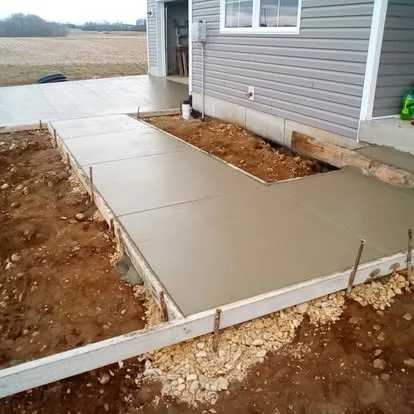
Utility pads built to the utility’s drawing.
Pouring concrete around Chino Hills
Older flatwork around here
A lot of valley concrete was poured thin, with light reinforcement, on a base that was never properly compacted. When it fails it is usually reporting on the ground rather than on the mix, and that is the difference between a repair that holds and one that comes back in a year.
Drainage on a flat lot
Valley lots are often close to level, which makes slope hard to find and easy to get wrong. Low points, cross-fall and where water actually leaves the property get worked out before the pour, because once the concrete is down the drainage is permanent.
What lasts here
A properly based, properly jointed slab with reinforcement sized to the load will outlast the house it sits beside. The variables that decide it are all underneath and all invisible once the pour is done, which is exactly why they get cut on cheap jobs.
Summer pours
Triple digit afternoons change how concrete behaves. It stiffens before it can be finished properly, the surface skins over while the body underneath is still soft, and water leaves the slab faster than the cement can use it. Valley pours start early, the mix gets adjusted for the heat, and curing is treated as an active step instead of something that happens on its own.
Concrete work around Chino Hills
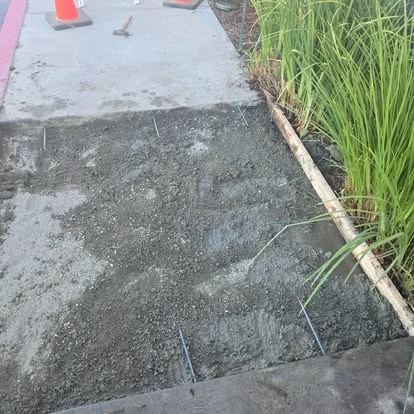
Flatwork, foundations and repair across Chino Hills and the rest of San Bernardino County, poured by the same crew that answers the phone.
How concrete fails, and why
Failure that starts at the edge
Most slabs die from the outside in. Edges are thin, unsupported and exposed, which is why a thickened perimeter is worth the concrete it costs.
Water tracking under the slab
If water can get under concrete it will move fines out and leave voids. Drainage and base gradation both exist to stop that.
Cracks that open seasonally
A crack that closes in winter and opens in summer is expansive soil cycling. It is manageable and it is not going to be solved by filling it once.
Coatings peeling off
A coating is only as good as the prep under it. Profile, moisture content and cleanliness all decide whether it bonds or sheets off later.
How a job runs
Before we start
You get told what is being built, how long the concrete is unusable, and where the truck and the crew will be. Access gets sorted before the day, not on it.
The day of the pour
Concrete arrives on a schedule and does not wait. The crew works to the material, which means the pour is not a good day to renegotiate the scope.
Width tells you less about a crack than movement does.On reading a slab
After the pour
Foot traffic usually after a day or so, vehicles longer. You get the real numbers for your slab, because thickness and weather both change them.
The first month
Concrete keeps gaining strength for weeks. Hairline shrinkage cracking in that window is normal and is not a failure. Anything that worries you, call and we will look.
Around Chino Hills
Straight answers
How long before I can drive on it?
Concrete takes most of its strength in the first week. Foot traffic is usually fine within a day or two; vehicles wait longer. On a valley summer pour the numbers shift, so you get the real ones for your slab rather than a generic answer.
Can you pour in the middle of summer?
We do, and we start early. Triple digit afternoons stiffen the mix before it can be finished and pull water out of the slab, so hot weather pours get scheduled, mixed and cured differently. Sometimes the right answer is moving the date.
Do I need a permit?
Structural work and anything in the public right of way generally does. A straight replacement often does not. We raise it before anything is broken out rather than at inspection.
What maintenance does concrete actually need?
Keep water moving off it, reseal when it needs it, and keep the joints maintained. Water is the common factor in nearly every concrete failure, so those three things buy years.
Should I worry about hairline cracks in the first month?
Usually not. Concrete gives up water as it cures and gets slightly smaller doing it, and fine shrinkage cracking in that window is the material behaving normally. Anything that widens or lifts is different, and worth a call.
Start with a site visit
No number goes out on a photograph. We come to Chino Hills, look at the ground and the access, and price the work from that.