

Concrete work across Mecca
From a single pad to a full foundation. We cover Mecca and the rest of Riverside County out of Hemet, with 32 years in the trade and a license to back it.
Talk to us about the job


What concrete is up against around Mecca
Irrigation on a desert lot
Landscape watering in the desert concentrates water in narrow bands right where the planting is. Next to a slab edge that creates exactly the moisture differential that moves concrete.
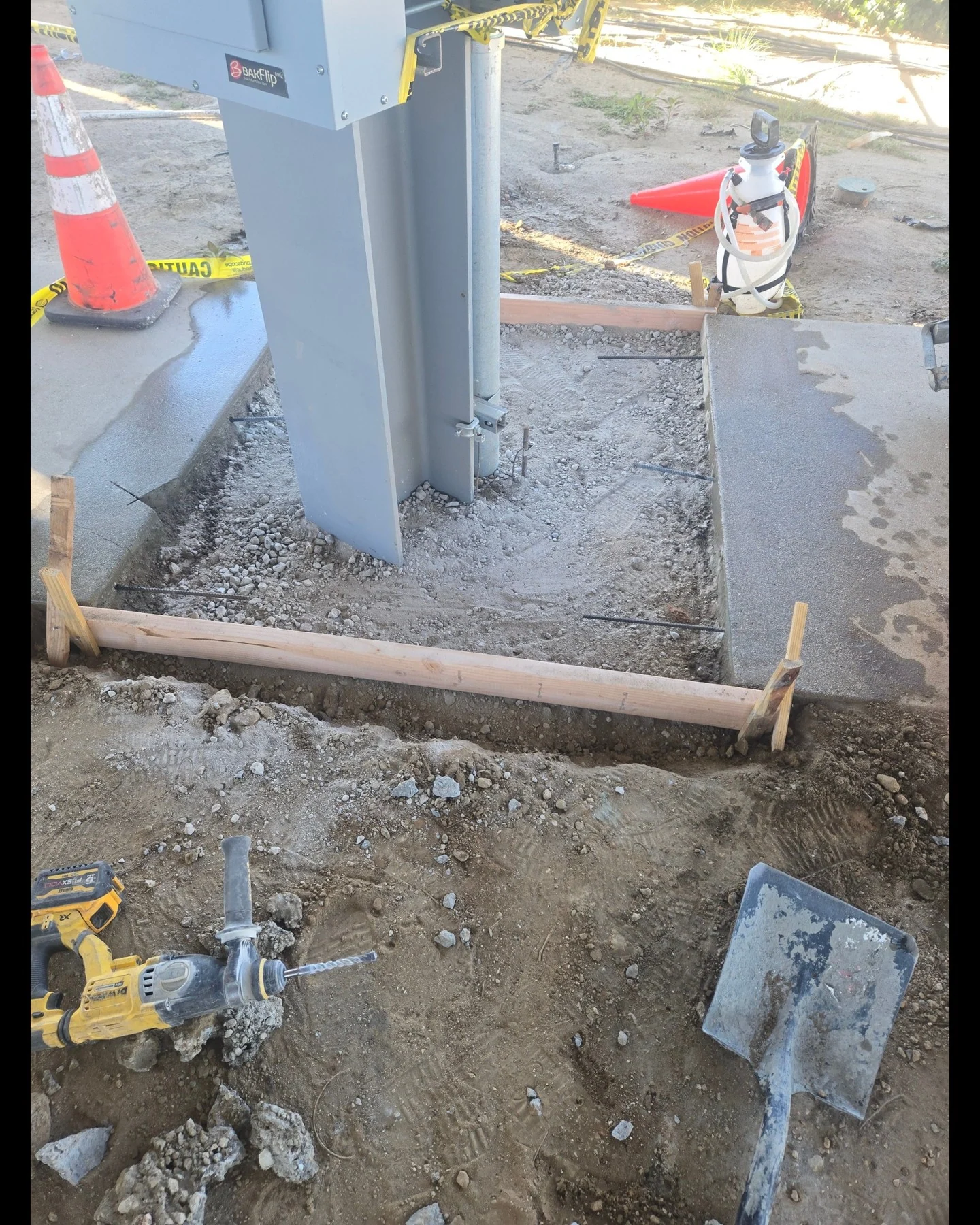
Blowing sand during finishing
Wind-driven sand landing on a slab during the finishing window gets worked into the surface. Wind is a scheduling factor here the same way rain is elsewhere.
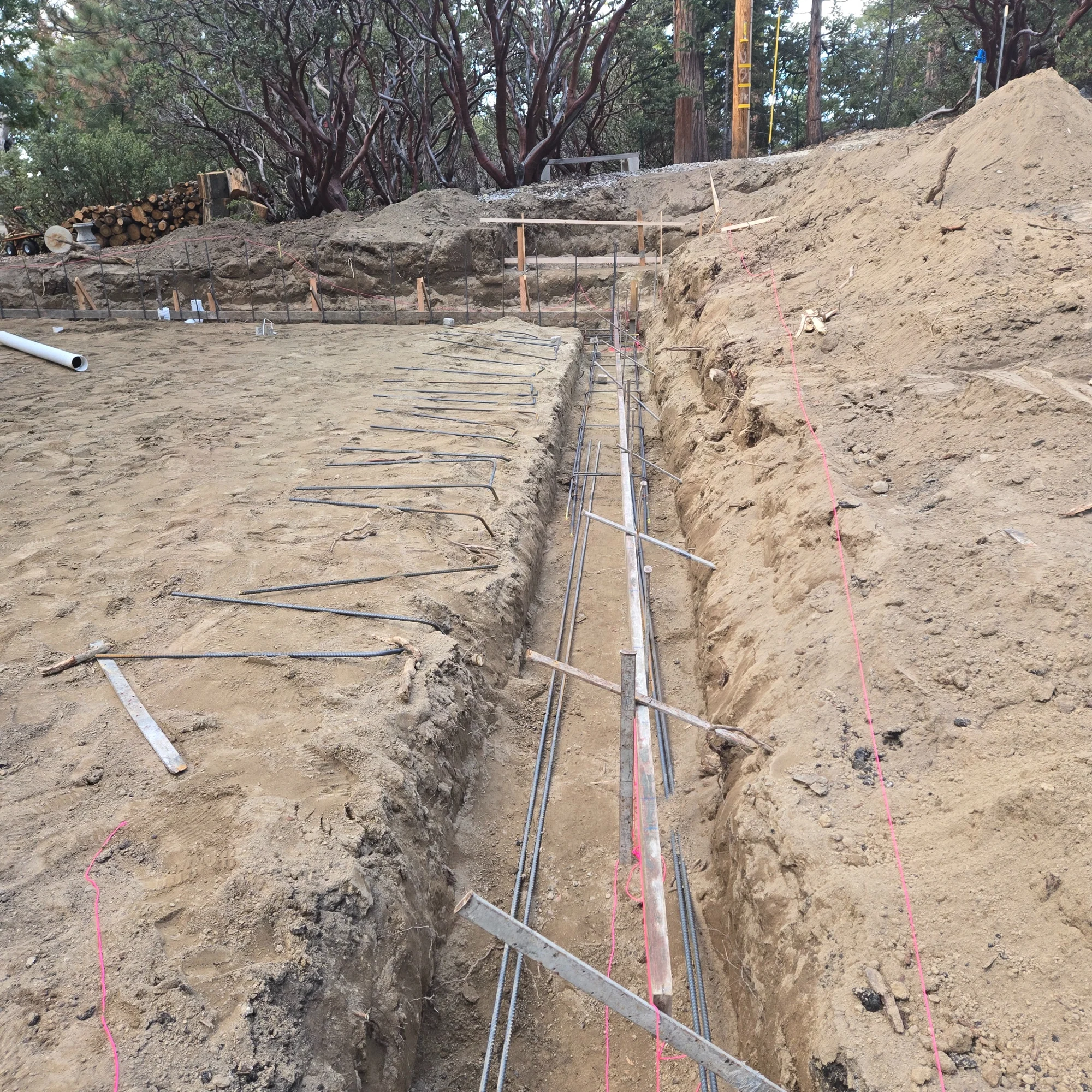
Scheduling around the season
There are weeks in a desert summer where pouring flatwork in the afternoon is simply the wrong decision. We would rather move a date than place concrete into conditions that will not finish.
Joints planned on paper
Joint layout gets worked out before the pour, spaced to the thickness and placed where the slab wants to move anyway. Then it gets cut at the right time.
Water routed off the slab
Slopes, low points and a path for water to leave are set before the pour, because afterward the drainage is permanent.
Steel sized to the movement
Reinforcement gets placed for what the soil is going to do, on chairs at the right height with real cover. Steel lying on the dirt does nothing at all.
What we build in Mecca
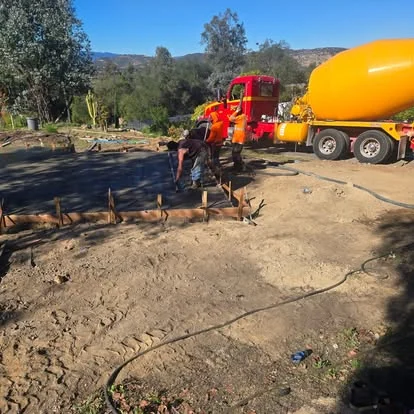
Outdoor Living Concrete
Kitchens, fire features, and seating built on concrete.
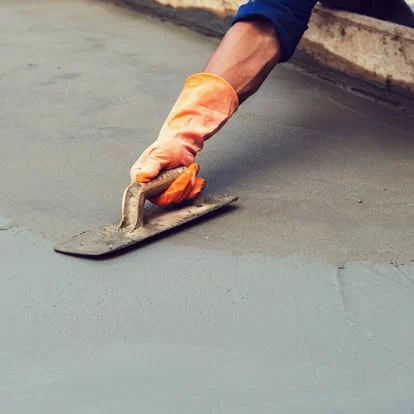
Concrete Driveways
The slab that carries a car every day of its life.

Concrete Driveway Replacement
Out to the dirt, rebuilt from the base up.
Concrete Driveway Repair
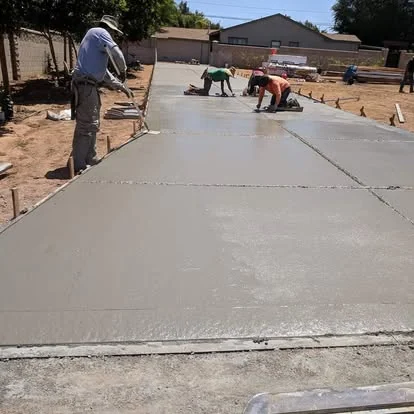
Fix what is broken and leave what is sound.
Concrete Patios
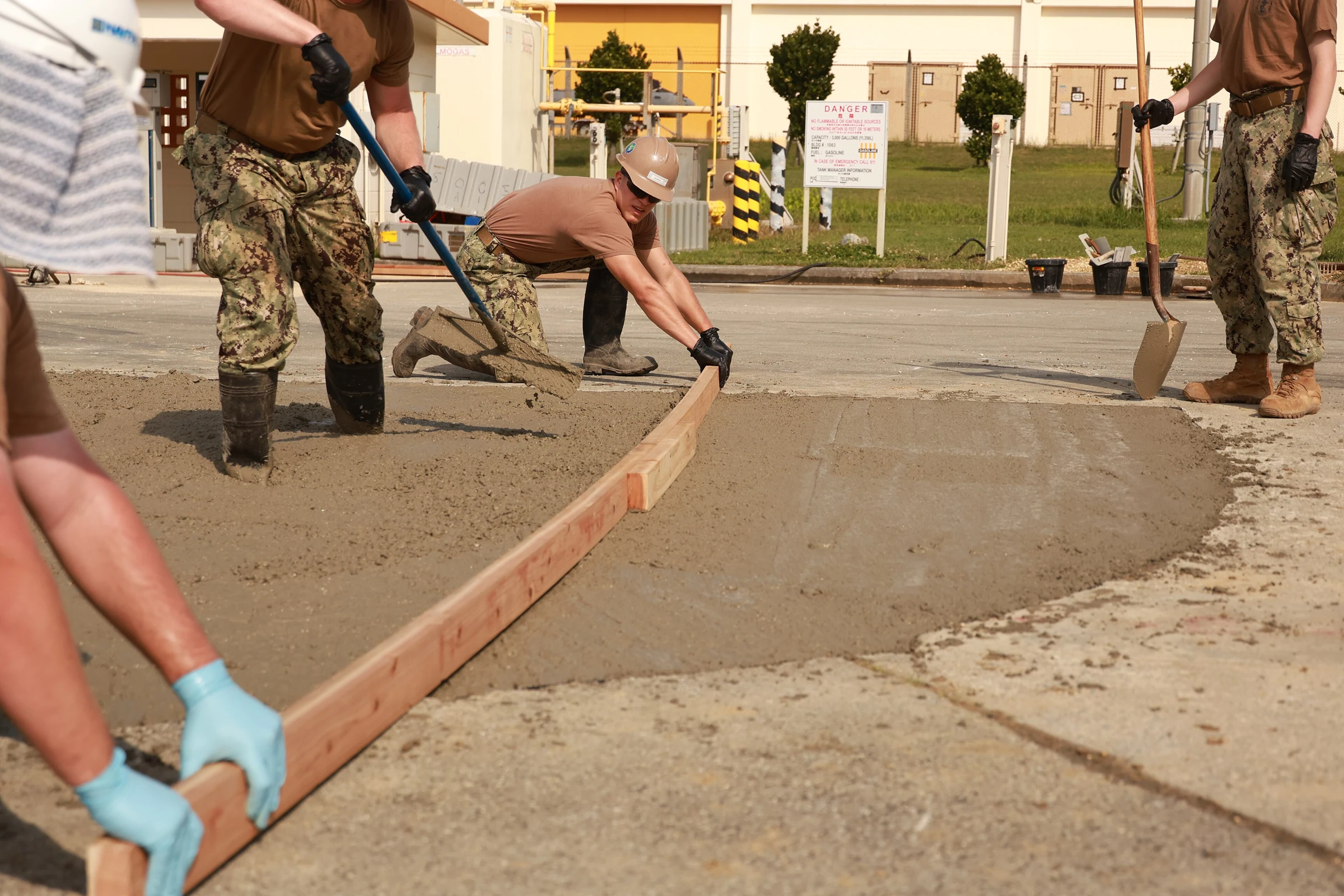
The outdoor room that starts as a flat pour.

Concrete Patio Replacement
Take out the old slab, pour the one you actually wanted.
Concrete Sealing
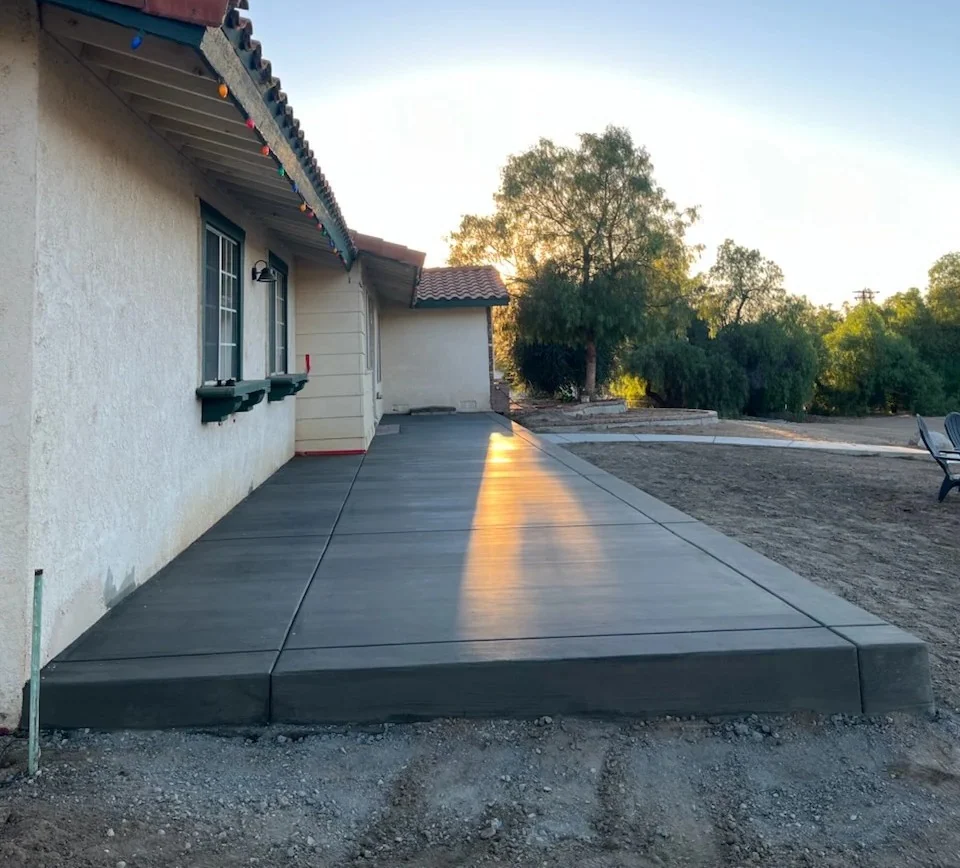
Keeping water out of the pores.
Concrete Replacement
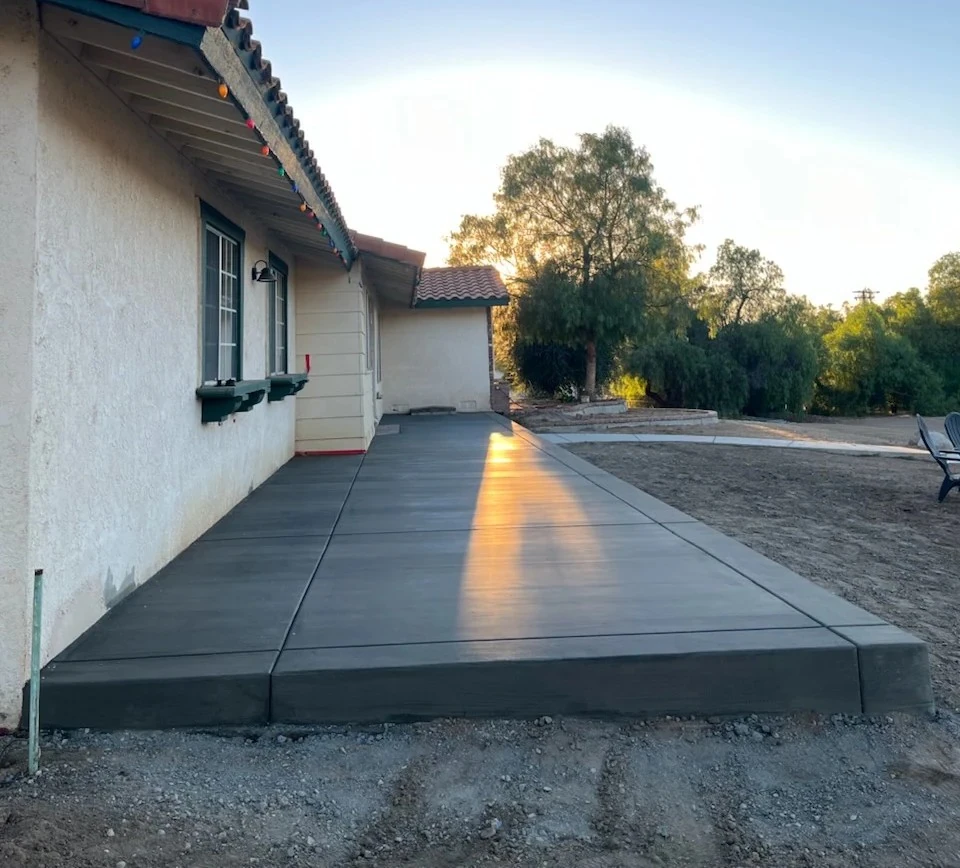
Out with the old slab, in with one built right.
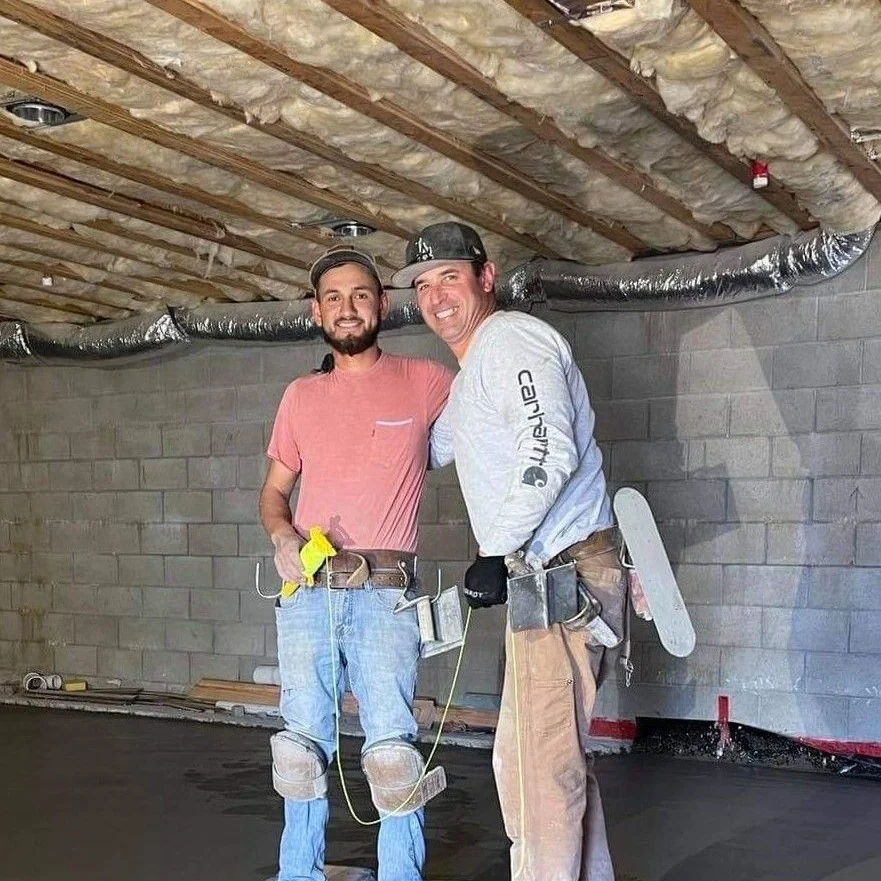
Concrete Removal
Break it out, haul it off, leave it clean.
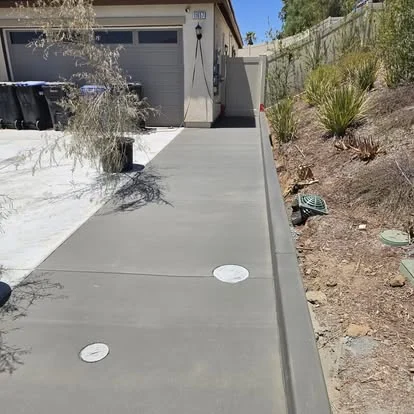
Tilt-Up Concrete
Panels cast flat on the slab, then stood up.
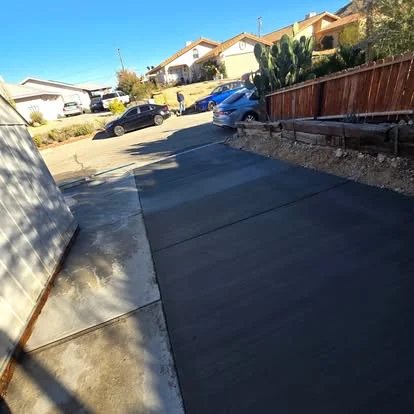
Concrete Drainage Channels
Formed channels that carry water on purpose.
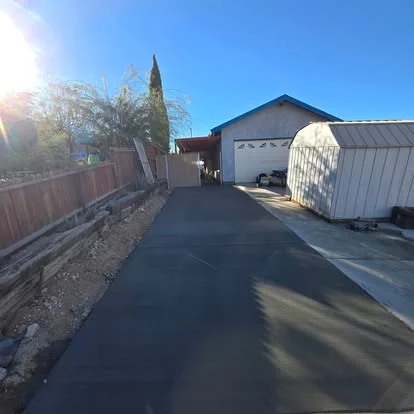
Commercial Concrete Flatwork
Flatwork built to a plan set and an inspection.
Pouring concrete around Mecca
Salts and sulfates in the soil
Parts of the low desert carry high salt and sulfate levels. Those attack cement paste and corrode reinforcing steel, and where it is a factor both the mix design and the concrete cover over the steel change. It is worth knowing before pouring rather than after.
Sun on the finished surface
A dark slab in full desert sun becomes genuinely unusable barefoot, which matters around pools and on patios. Color and finish are a comfort decision here as much as an appearance one, and lighter, more textured surfaces earn their place.
Wind during finishing
Blowing sand landing on a slab inside the finishing window gets worked into the surface and stays there. Wind is a scheduling factor in the desert the same way rain is elsewhere.
The daily temperature swing
The desert can drop forty degrees after sundown, and concrete expands and contracts with that every single day for its whole life. Joint spacing has to allow for a slab that never stops moving, which is a different calculation from a mild coastal lot.
Concrete work around Mecca
Flatwork, foundations and repair across Mecca and the rest of Riverside County, poured by the same crew that answers the phone.
How concrete fails, and why
Settlement at the apron
The strip where a driveway meets a garage takes every vehicle and sits over backfill that was disturbed during construction. It settles more than the rest of the drive and it needs its own thickness and joint.
Heaving
A slab pushed upward is usually roots or expansive soil taking on water. Both get worse with irrigation, and neither is fixed by resurfacing the top.
Pop-outs
Small conical craters come from a particle of reactive aggregate near the surface expanding and blowing the concrete off above it. Cosmetic, and a repairable surface defect.
Dusting
A surface that chalks under a broom was finished or cured badly, or had water worked into it. Sealing helps; grinding and resurfacing fixes it.
How a job runs
Preparation you may need to do
Moving vehicles, clearing the area, and sometimes irrigation being shut off. We will tell you in advance what is on you.
Demolition day
Saw cutting, breaking, loading and hauling. It is the loudest and dirtiest part and it usually happens first.
The base is the job. The concrete is the finish on top of it.On what actually matters
Pour day
Early start in summer. The crew works continuously until the slab is placed and finished, because concrete sets on its own schedule.
Keeping off it
How long depends on the pour and the weather. You will get a real number, not a generic one.
Around Mecca
Straight answers
Is the sandy soil here better or worse than clay?
Different. It drains well, which helps, but loose alluvial material has to be compacted in controlled lifts or the slab settles unevenly. It is not a free pass on base work.
How long before I can drive on it?
Foot traffic is usually a day or two, vehicles longer. Desert heat changes the early curve, so you get the real numbers for your pour.
Should a desert slab be sealed?
Sealing slows what gets into the pores, which slows staining and surface wear. It is maintenance rather than a one-time step.
Why does the daily temperature swing matter?
The desert can drop forty degrees after sundown, and the slab expands and contracts with that every day for its whole life. Joint spacing has to allow for concrete that never stops moving.
What about salts in the desert soil?
Parts of the low desert carry high salt and sulfate levels that attack cement paste and corrode reinforcing steel. Where it is a factor the mix design and the cover over the steel both change.
Concrete work in Mecca
Call and we will come out, look at the job, and give you a number. Mecca sits inside the 100 mile radius we work out of Hemet.