
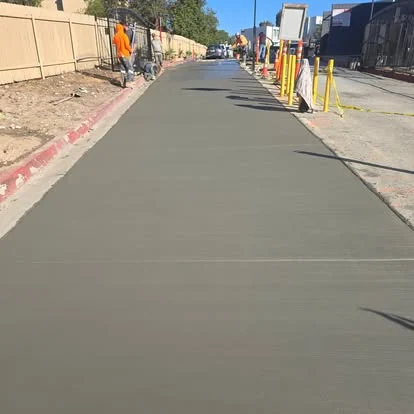
Banning walks that meet the curb flush
A walk along the street and a path across your own lot follow different rules, and we sort out which one you have before anything is broken out. Either way it ends flush with what it meets, with a finish you can trust underfoot.
Talk to us about the job
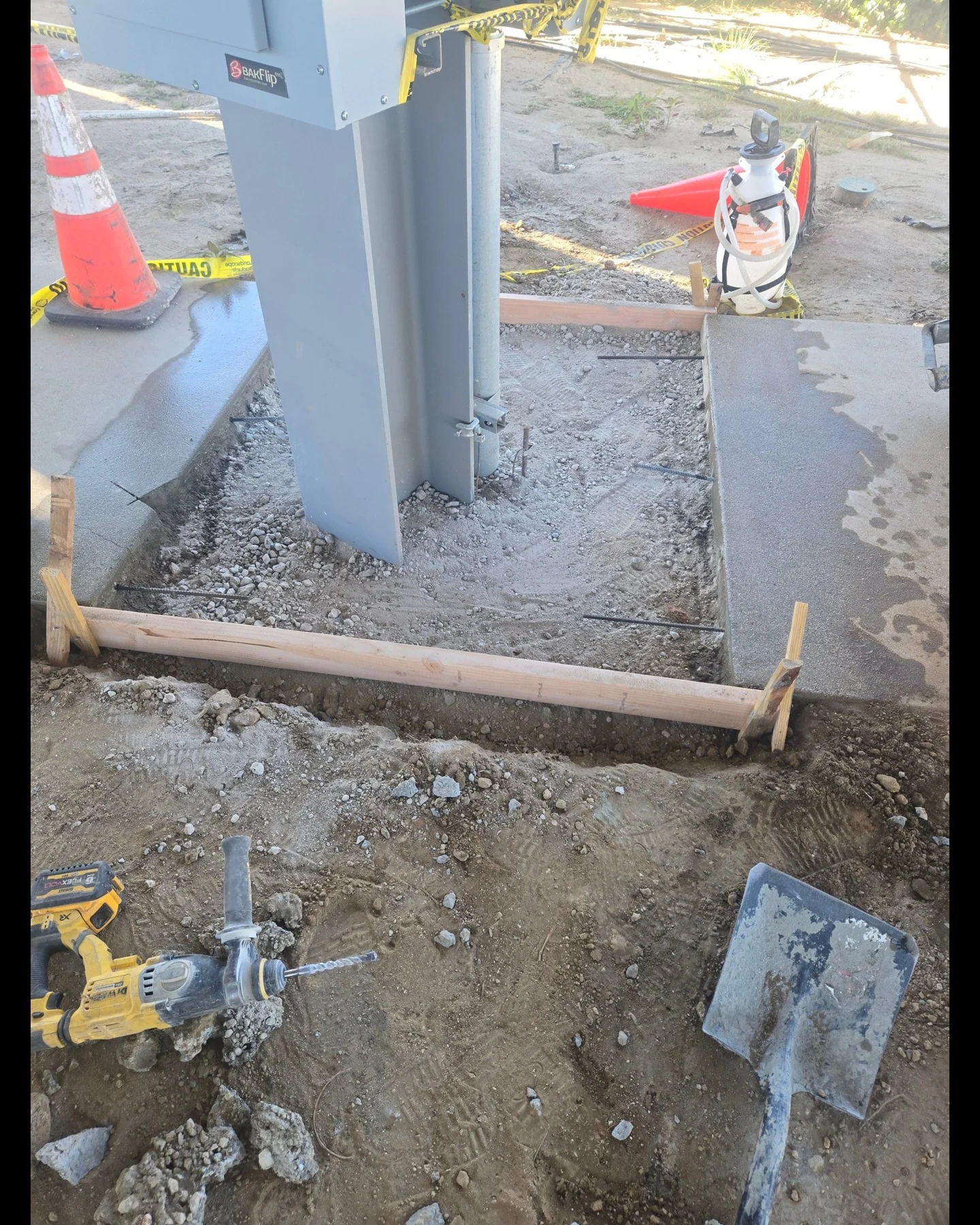
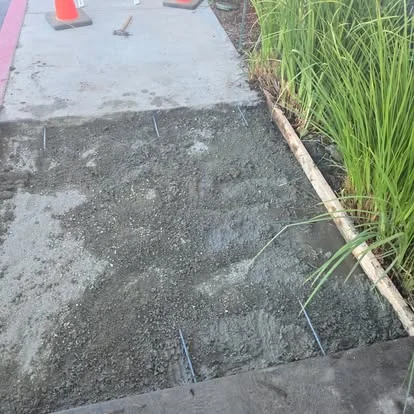
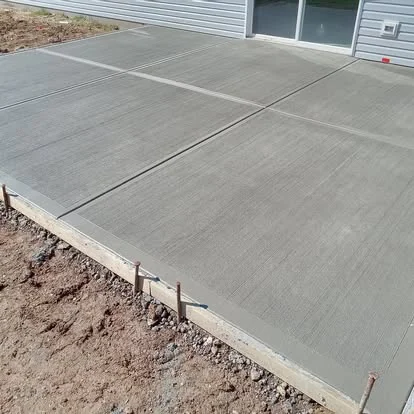
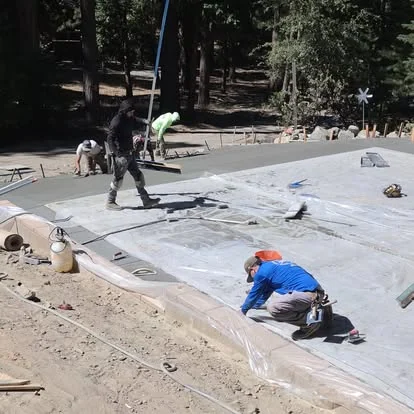
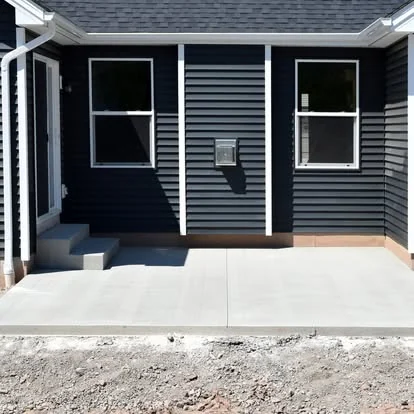
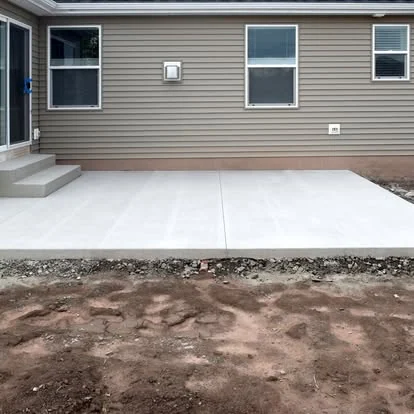
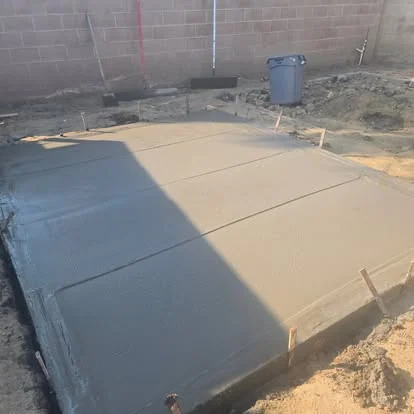
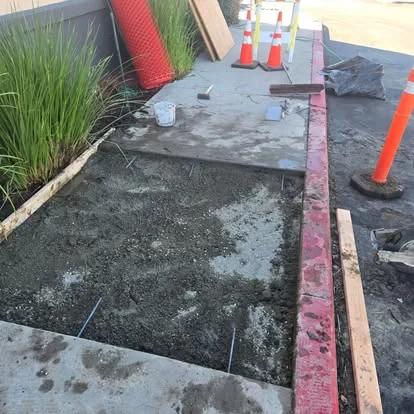
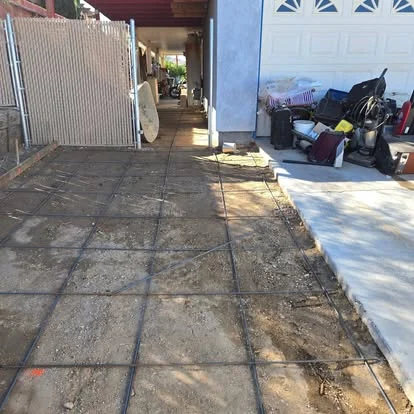
Street side or your side of the line
The walk running along the street usually sits in the public right of way, even when it fronts your house, and replacing it means a permit and an inspection. A path from the driveway to the porch or around to the backyard is private work on your lot. We raise the permit question at the first visit, because learning about it on pour day stops the whole job. If you are not sure which side of the line your walk sits on, send the details and a photo from the street.
Built to the inspected spec
Public walks get poured to the width, thickness and finish the inspector expects, and nothing gets placed until the forms and base have been looked at when the permit calls for it.
Private paths, your call
On your own lot the width, the curve and the finish are choices. We will tell you what holds up and what trips people, then build the walk you picked.
Driveway approaches too
The sloped approach where a driveway crosses the walk to the street is usually public work as well. If yours is cracked or settled, it often makes sense to replace it alongside the walk so the two finish together.
No lip at the curb or the drive
Trips on a sidewalk tend to happen at a seam, where the new walk sits a little proud of the curb or drops below the driveway approach. We set our grades off what is already there: the top of the curb, the edge of the drive apron, the threshold at the door and any neighbor’s walk we tie into. String lines run the full length before the base goes in, so the finished surface lands flush at every end and carries water toward the street rather than toward the house.
String lines run the full length before the base goes in.On the tie-in
Steel on chairs, even thickness
Rebar or mesh sits up on chairs inside the slab where it can hold cracks tight, and the base is screeded so the walk is the same thickness end to end. Thin spots are where a walk breaks first.
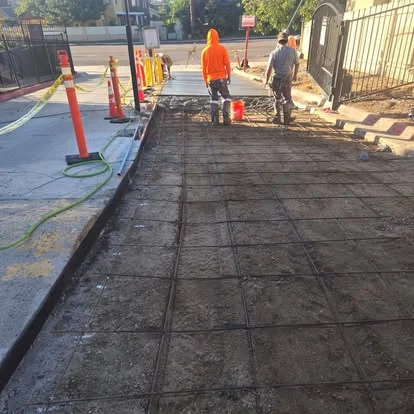
Roots and settled panels
Where an old walk lifted over a tree root or sank over a trench, we find out why before pouring the new one. Otherwise the replacement does the same thing.
Water toward the gutter
A street walk usually falls slightly toward the curb, so rain and sprinkler runoff head for the gutter. A private walk falls away from the house and off to one side into the yard.
A broom finish across the walk
A sidewalk gets a broom finish pulled across the direction people walk, so the texture catches a shoe sole as it pushes off. On a smooth trowel finish, water from a sprinkler or a hose turns the walk into a skating surface, and leaf litter makes it worse. The edges get a tooled radius so they do not chip, and the broom lines stop short of the edge for a clean border. Color stays the plain gray of the walks around it unless you ask otherwise. Full details on our concrete sidewalk work live on the service page.
Joints on a steady rhythm
Control joints go in at regular spacing down the whole run, so the walk cracks on our lines. Every joint is cut or tooled deep enough to matter and early enough to beat the wind.
Boxes, meters and tree wells
A utility box, a water meter lid or a tree well breaks the walk into an odd shape, and odd shapes crack at their corners. We put a joint at each one so the crack has somewhere planned to go.
Wider where people pass
A private walk that has to fit two people side by side, or a wheelchair, or the trash cans on pickup day, gets laid out wider. We mark the width on the ground first so you can walk it.
Staging the street around the pour
A sidewalk job happens where people are walking, so the site gets staged before the first panel comes out. Cones and caution tape mark the work on the street side, the old walk comes out in sections when it can, and wherever the frontage allows, a path stays open for neighbors, mail carriers and anyone pushing a stroller. Breaking out old concrete is loud, and we will tell you which days that happens. When we leave, spoil is hauled off and the street is washed down.
Locating before we cut
Anything that gets dug or sawn starts with marking the buried lines. Hitting a gas or water line with a saw is avoidable, and we avoid it.
Off the new walk for a while
Foot traffic usually comes back within a day or two, and bikes and anything heavier wait longer. We leave tape up and tell you the date to take it down.
See it, then call
Walks and approaches we have poured are in the gallery. Call (951) 533-8821 or go through the contact page, and we will come out and look at it with you.
More concrete work in Banning
Sidewalk questions from the street
Do I need a permit to replace my sidewalk?
If the walk is in the public right of way, usually yes, and it will be inspected. A private path on your own lot often does not need one. We check which applies at the first visit, before any concrete is broken out.
Will the new walk line up with my driveway?
It should, and that is the point of setting grades off the existing approach and curb. A walk that lands a little high or low at the drive becomes a trip hazard the first week. We check the tie-in with a level before the forms are staked.
Why is a sidewalk broom finished?
For grip. The broom leaves fine ridges across the walk, and those ridges catch a shoe when the surface is wet from sprinklers or a hose. A smooth finish looks clean on day one and turns slick the first time water hits it.
How far apart should sidewalk joints be?
Close enough that each panel stays roughly square, with extra joints at every utility box, meter and tree well. Long panels crack across the middle on their own. The spacing comes off the walk’s width and thickness, so we lay it out for your run.
Can people still get past during the job?
In most cases, yes. We stage the work with cones and tape, take the old walk out in sections where we can, and keep a way around the pour. If the frontage is too tight for that, we tell you and the neighbors ahead of time.
Does a sidewalk need steel in it?
We put rebar or mesh in, set on chairs so it sits inside the concrete. Mesh trampled down onto the dirt during the pour does nothing. Steel keeps the pieces tight and level after a crack forms, which is what keeps a walk from turning into a trip hazard.
Start at the curb
Send a photo from the street, tell us whether the walk runs along the road or across your lot and whether the old one has lifted or sunk, and mention any meter boxes or trees in the way. We walk the frontage with you first and talk pricing after.