
Poured once, done right
Grand Terrace driveways, patios, foundations and repair work. Licensed 1137822, fourth generation, and straight about what a job actually needs.
Talk to us about the job



What concrete is up against around Grand Terrace
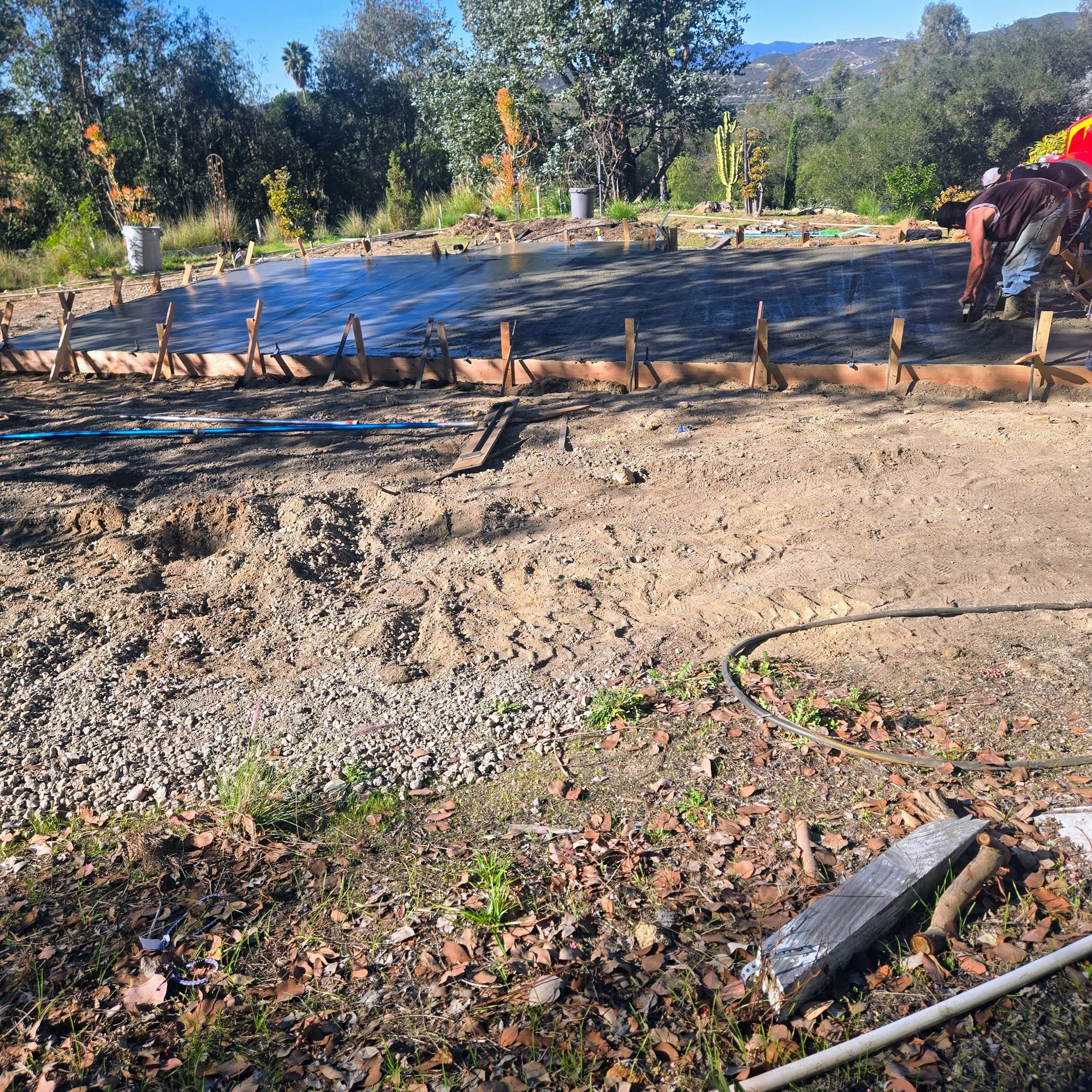
Thickness matched to the load
A driveway that carries a work truck is not the same slab as a garden path. Thickness and steel come off what actually drives on it, and getting that wrong shows up as cracking in the wheel path.
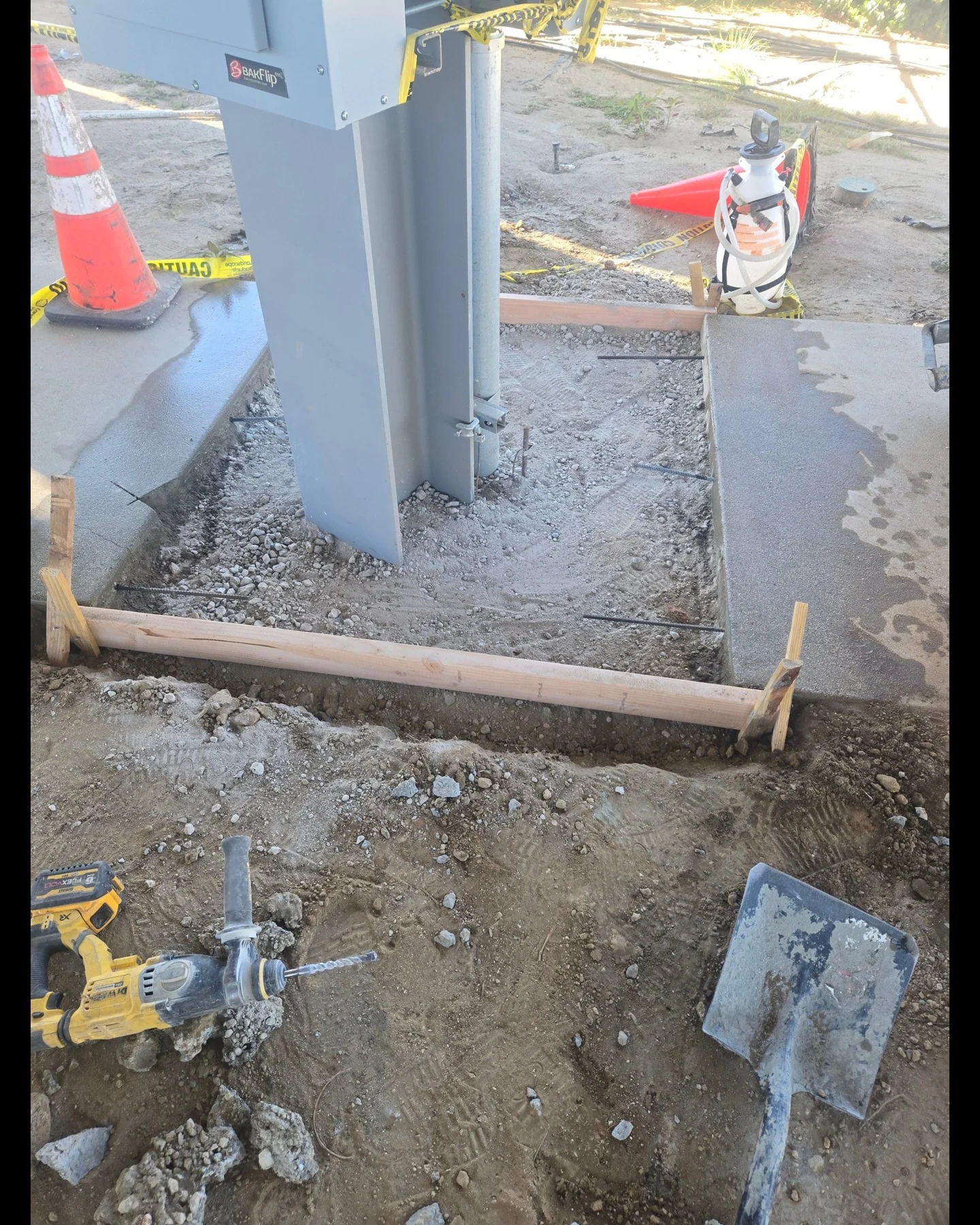
Joints decide where cracks go
Concrete cracks. That is not a defect, it is the material. A control joint decides where, cut deep enough and early enough to work. Cut it late and the slab has already chosen.
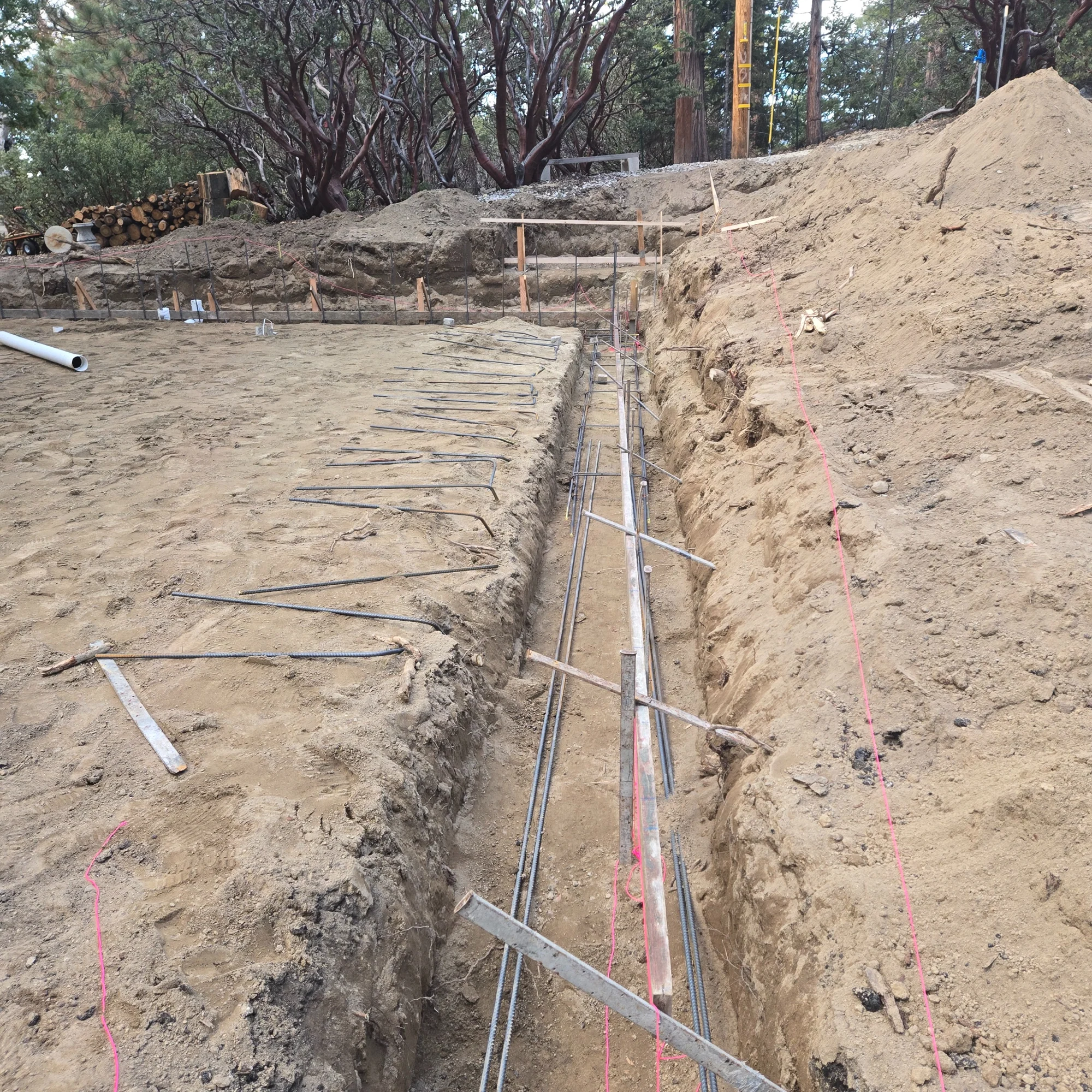
Water is the whole story
Almost every failed slab we are called to look at failed because water got somewhere it should not have. Into the base, under a footing, or through a joint nobody sealed. Drainage gets designed before the pour, not discovered afterward.
Honest diagnosis before a number
We look at what failed and why before quoting. Sometimes the answer is a repair and sometimes it is a rebuild, and we will tell you which even when the smaller job is ours to lose.
Pours scheduled to the heat
In summer we start early and keep the mix and the crew ahead of the temperature. Concrete does not wait for anybody.
Cleanup is part of the job
Washout handled properly, spoil hauled, surfaces cleaned. Concrete work is messy while it happens and should be invisible when it is done.
What we build in Grand Terrace
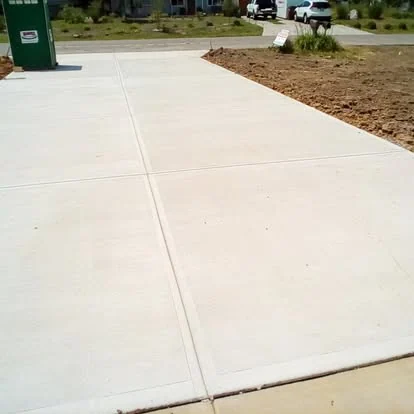
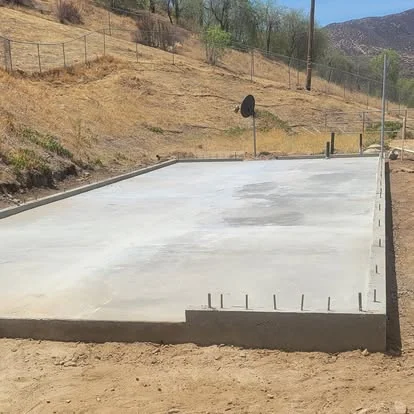
Concrete Slabs
The flat pour everything else is a version of.
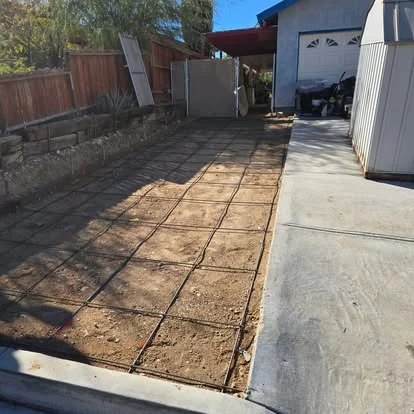
Concrete Slab Repair
Cracks and surface failure on a slab worth keeping.
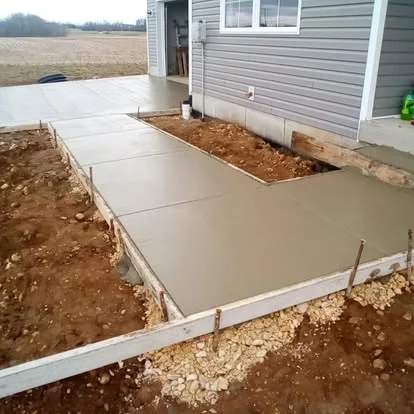
Concrete Slab Replacement
When the base failed, the slab follows.
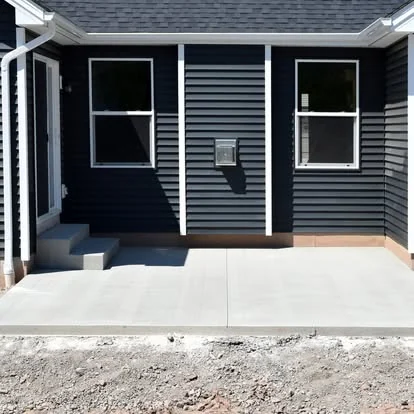
Garage Floors
Hot tires, dropped tools, and whatever ran off the car.
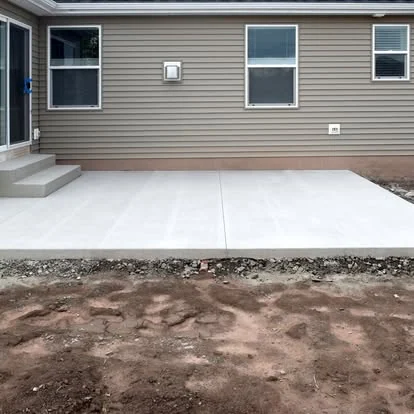
Garage Aprons
The strip between the driveway and the garage door.
Basement Floors
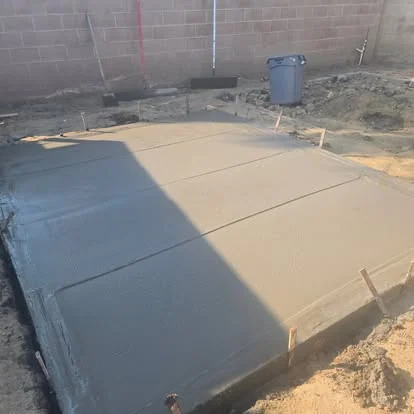
A slab poured inside, where moisture has nowhere to go.
Concrete Leveling
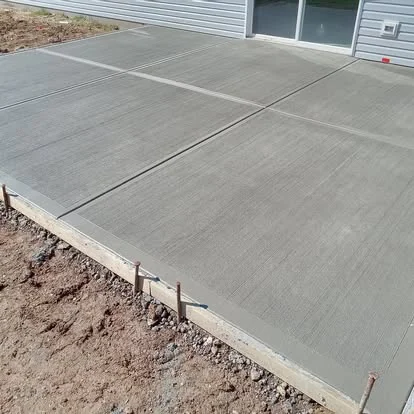
Lifting a slab back to where it started.
Concrete Grinding
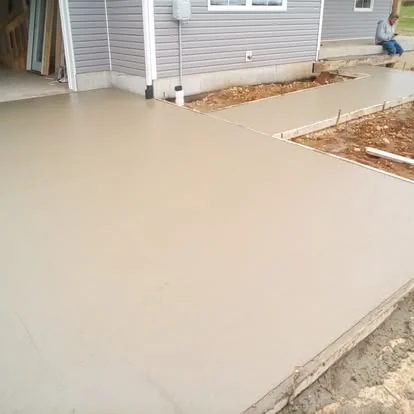
Taking down high spots and trip lips.
Concrete Sealing
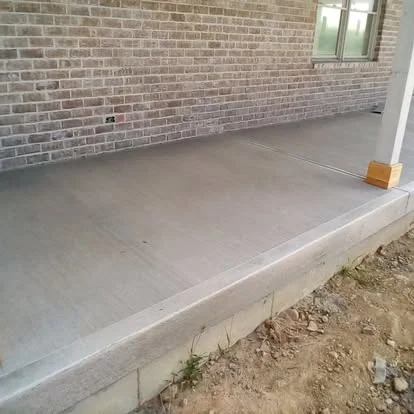
Keeping water out of the pores.
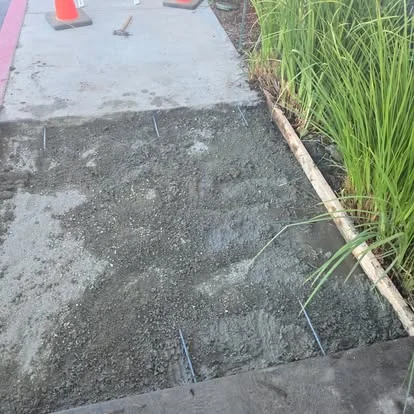
Concrete Parking Lots
Concrete instead of asphalt, for the life of it.
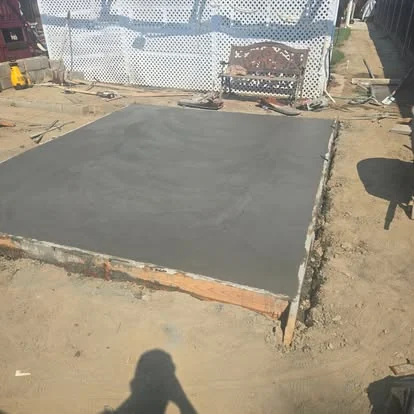
Concrete Parking Lot Repair
Failed panels replaced without closing the whole lot.
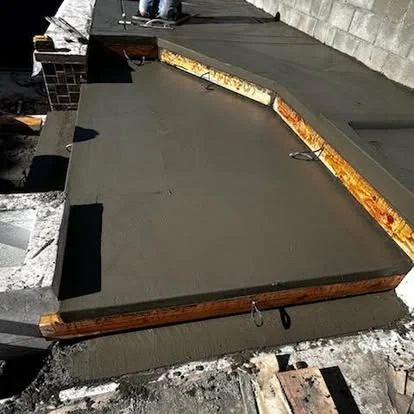
Concrete Parking Lot Replacement
A full lot rebuilt on a schedule that keeps you open.
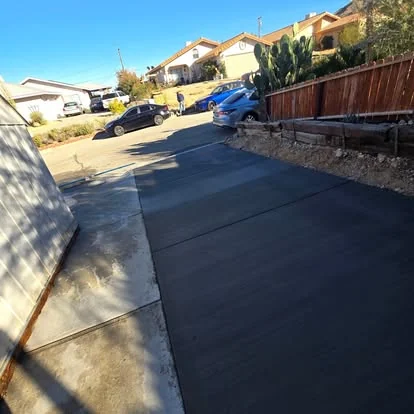
Pouring concrete around Grand Terrace
Irrigation against the slab
Almost every valley property waters something, and sprinklers running along a slab edge keep the base saturated year round. In expansive soil that is a slow way to undermine your own driveway. Where the water lands is worth looking at before blaming the concrete.
What the ground does here
The inland valleys run on expansive clay. It takes on water and swells, then dries out and shrinks, and it does that cycle every year. A slab poured on untreated clay rides that movement until something gives, which is why base preparation and reinforcement are the design rather than an upgrade. Where a soils report exists we build to it; where there is none, what we find during excavation tells us what the ground is going to do.
Drainage on a flat lot
Valley lots are often close to level, which makes slope hard to find and easy to get wrong. Low points, cross-fall and where water actually leaves the property get worked out before the pour, because once the concrete is down the drainage is permanent.
What lasts here
A properly based, properly jointed slab with reinforcement sized to the load will outlast the house it sits beside. The variables that decide it are all underneath and all invisible once the pour is done, which is exactly why they get cut on cheap jobs.
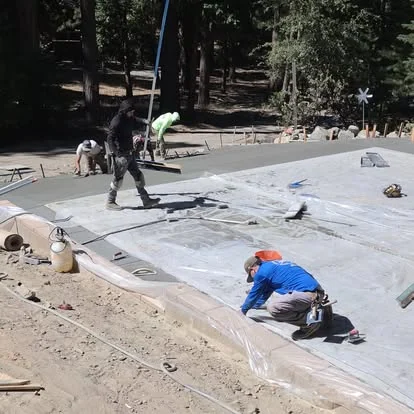
Concrete work around Grand Terrace
Flatwork, foundations and repair across Grand Terrace and the rest of San Bernardino County, poured by the same crew that answers the phone.
How concrete fails, and why
Cracks radiating from a drain
Anything cast into a slab is a stress point. Drains, posts and penetrations all need isolation or steel around them, otherwise cracks start there.
Uneven cure color on a big pour
A large slab poured across changing weather or with loads arriving at different times can finish in visibly different shades. Sequencing and consistent mix control prevent it.
Deterioration at sprinkler heads
Constant water in one spot saturates the base and leaches the surface. It is a landscaping-meets-concrete problem and it is common.
Broken corners at driveways
Vehicles cut the corner where a drive meets the street, over the least supported concrete on the property. A thickened edge and steel at the corner fix it.
How a job runs
Before we start
You get told what is being built, how long the concrete is unusable, and where the truck and the crew will be. Access gets sorted before the day, not on it.
The day of the pour
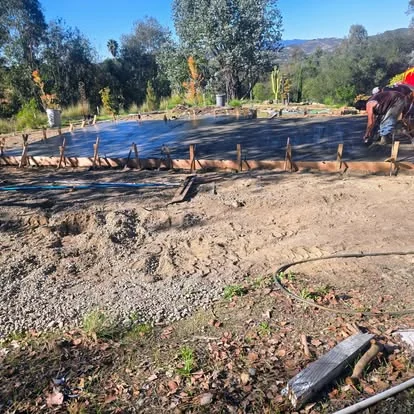
Concrete arrives on a schedule and does not wait. The crew works to the material, which means the pour is not a good day to renegotiate the scope.
Once the slab is down, the drainage is permanent.On grading
After the pour
Foot traffic usually after a day or so, vehicles longer. You get the real numbers for your slab, because thickness and weather both change them.
The first month
Concrete keeps gaining strength for weeks. Hairline shrinkage cracking in that window is normal and is not a failure. Anything that worries you, call and we will look.
Around Grand Terrace
Straight answers
How thick should my driveway be?
It comes off what parks on it. A passenger car drive and one carrying a loaded work truck or an RV are not the same slab, and the wheel path is where a thin one cracks first.
How long before I can drive on it?
Concrete takes most of its strength in the first week. Foot traffic is usually fine within a day or two; vehicles wait longer. On a valley summer pour the numbers shift, so you get the real ones for your slab rather than a generic answer.
Can you pour in the middle of summer?
We do, and we start early. Triple digit afternoons stiffen the mix before it can be finished and pull water out of the slab, so hot weather pours get scheduled, mixed and cured differently. Sometimes the right answer is moving the date.
Do I need a permit?
Structural work and anything in the public right of way generally does. A straight replacement often does not. We raise it before anything is broken out rather than at inspection.
What maintenance does concrete actually need?
Keep water moving off it, reseal when it needs it, and keep the joints maintained. Water is the common factor in nearly every concrete failure, so those three things buy years.
Start with a site visit
No number goes out on a photograph. We come to Grand Terrace, look at the ground and the access, and price the work from that.