
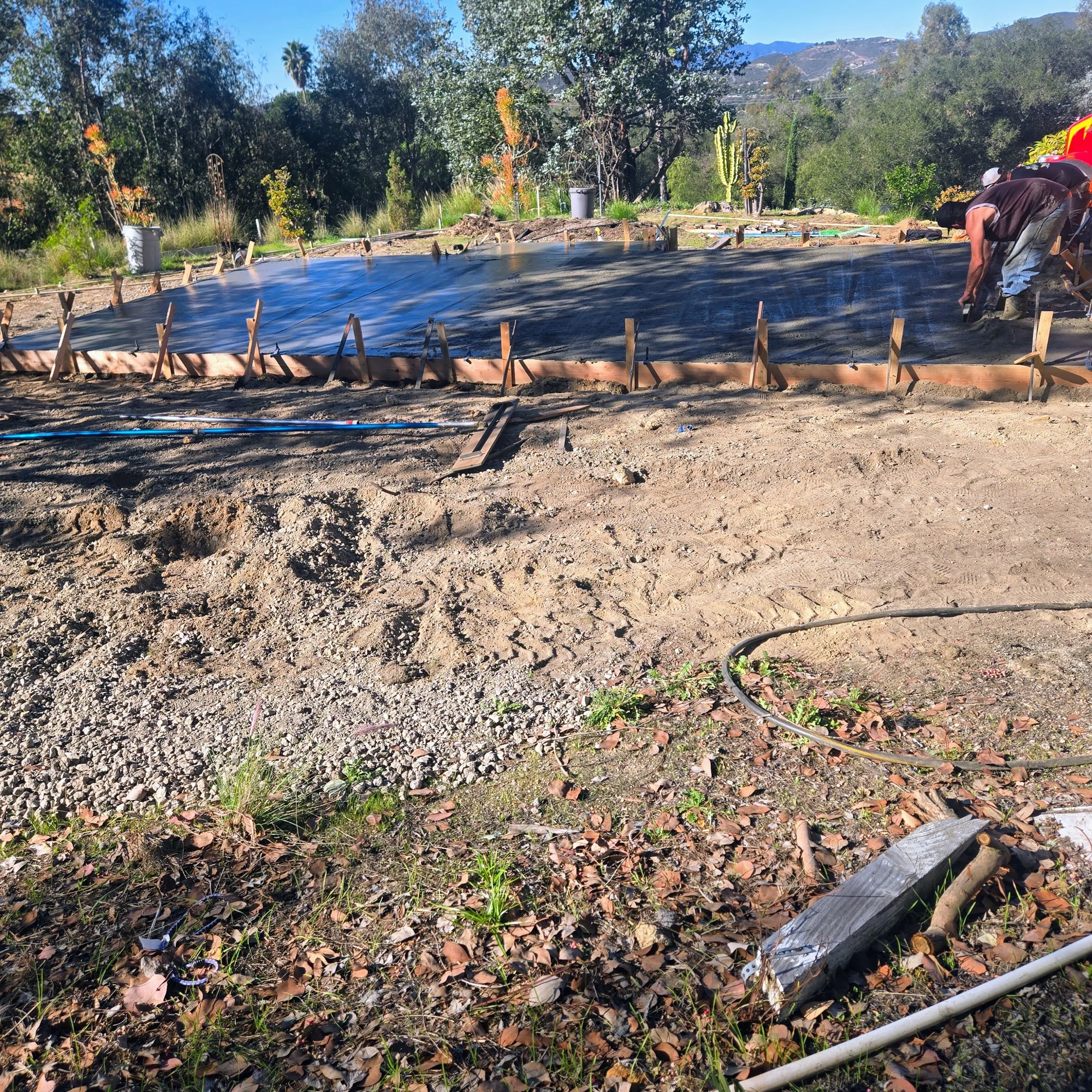
Concrete Excavation
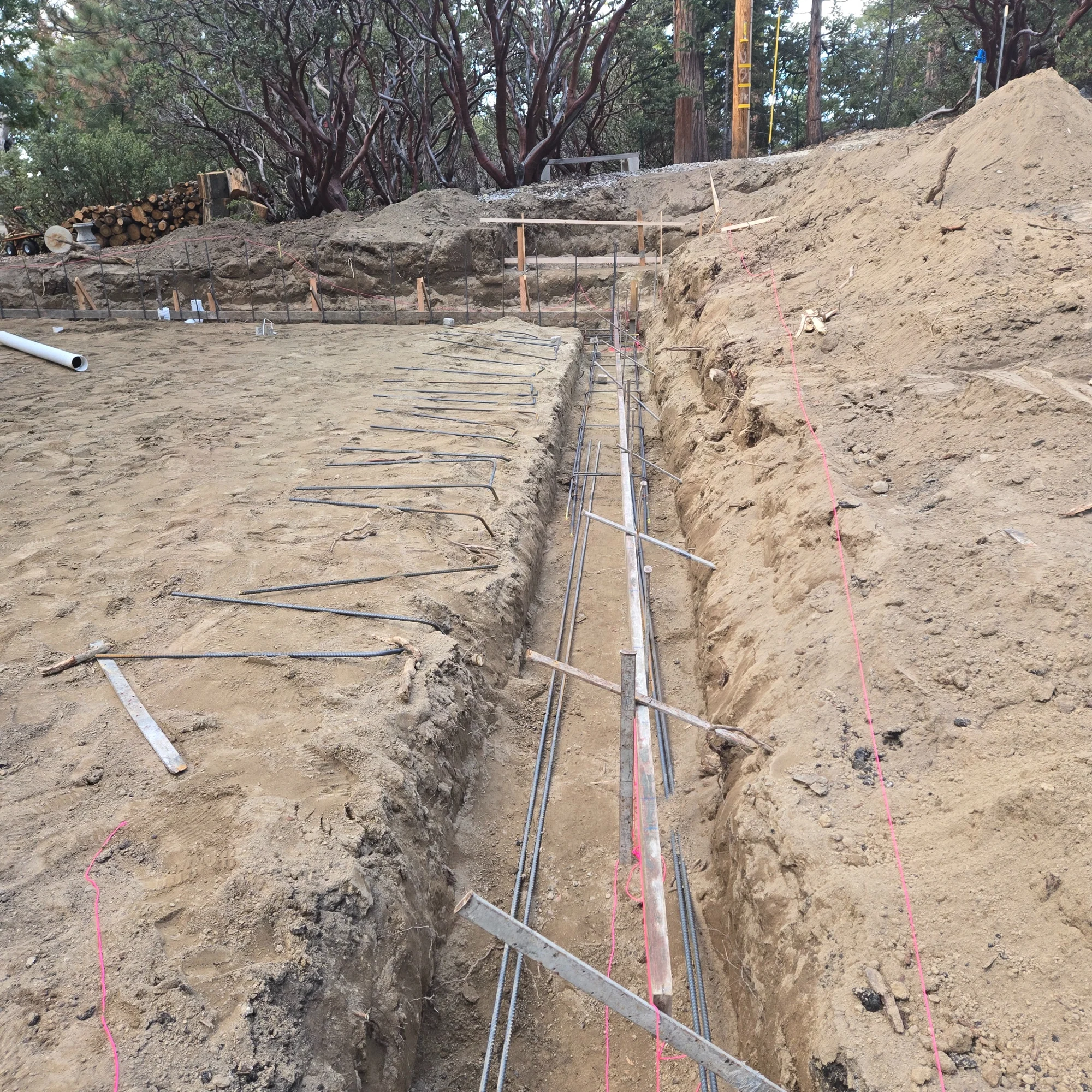
Excavation for concrete is cutting to the right depth and leaving a stable bottom. Over-dig and you are paying to put engineered fill back. This is the work that happens as part of our own pours.
Talk to us about the job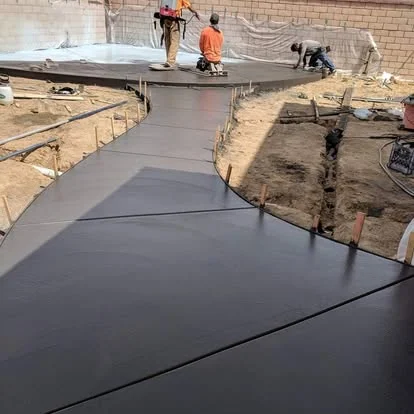


How the job runs
Look at it in person
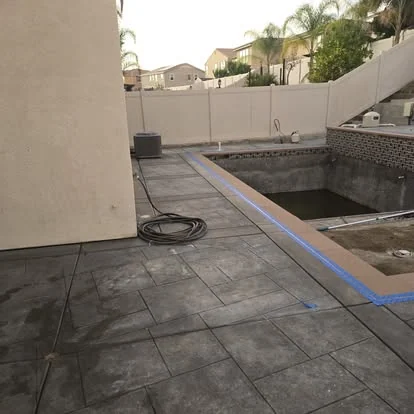
We come out, measure, and read the site. Drainage, access, what the existing concrete is telling us, and what is under it. That visit is where the real decisions get made.
Give you the honest version
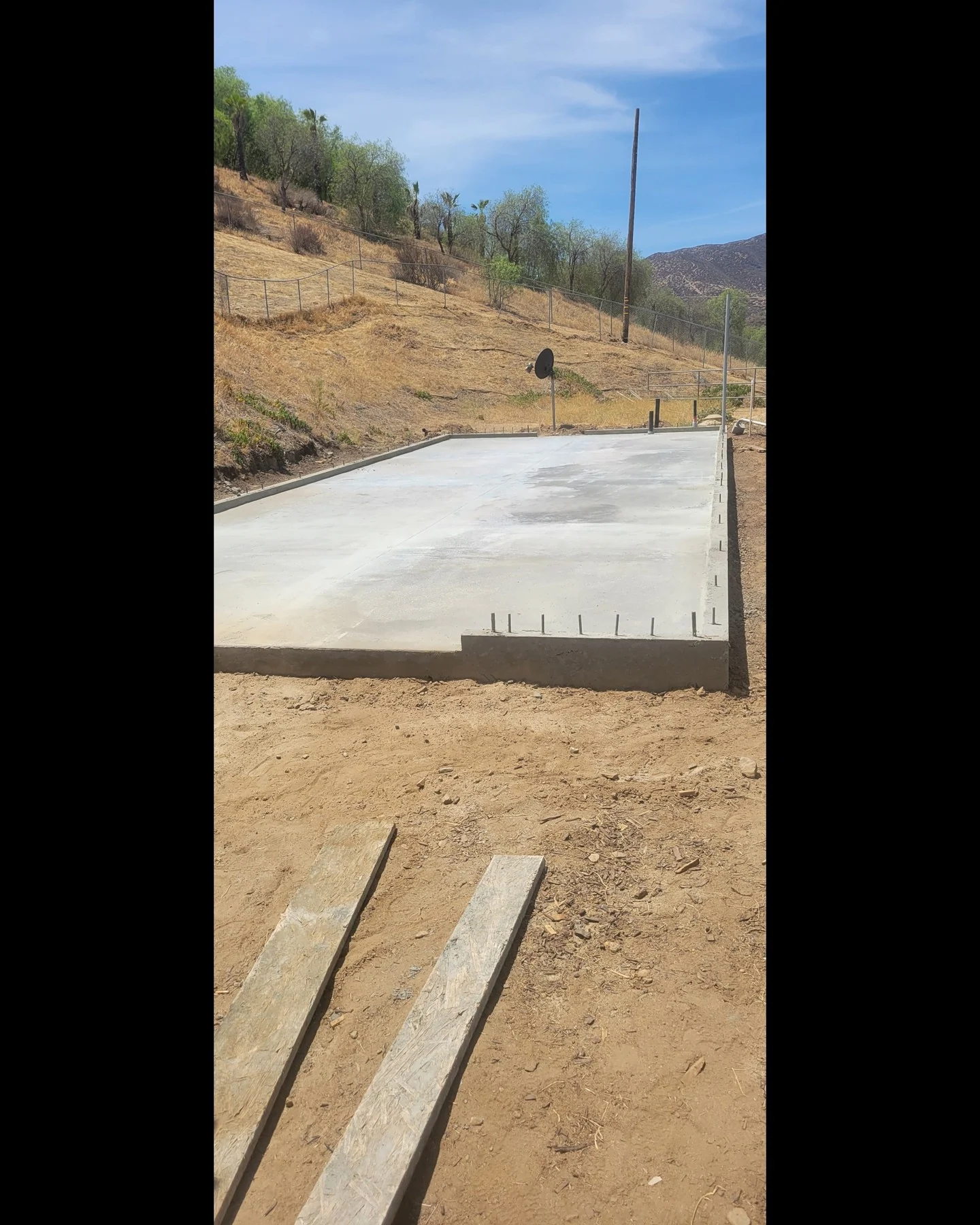
You get told what the job needs and what it does not. If the slab is sound and you only need a repair, that is what we will say.
Fix the ground
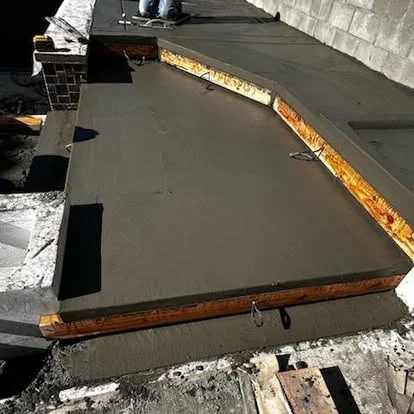
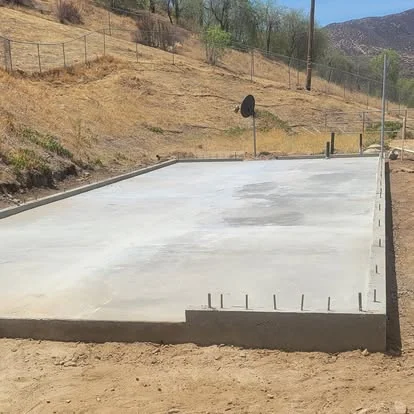
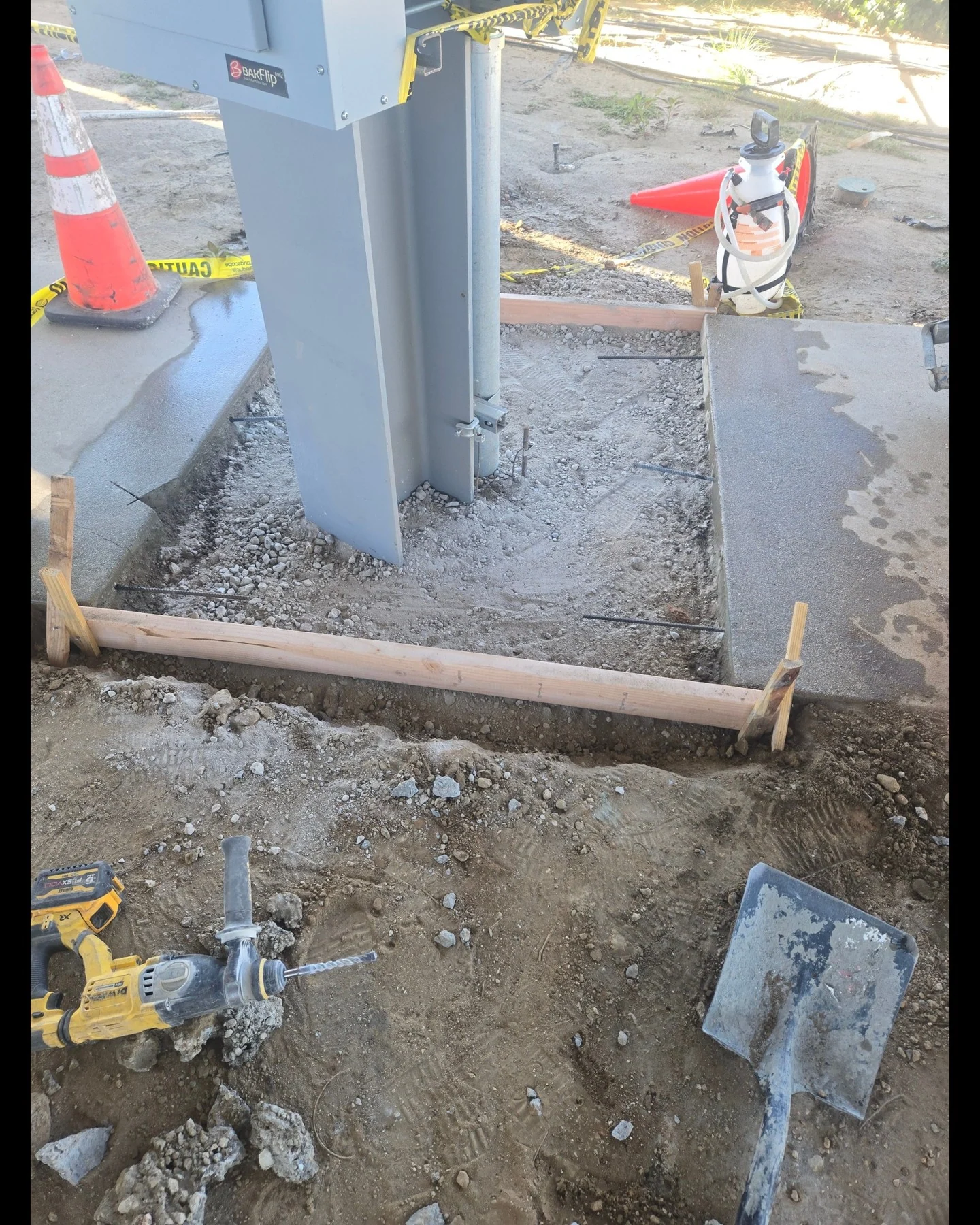
Every slab is only as good as what it sits on. Cut to grade, replace bad material, compact it in controlled lifts, and check it before anything gets formed.
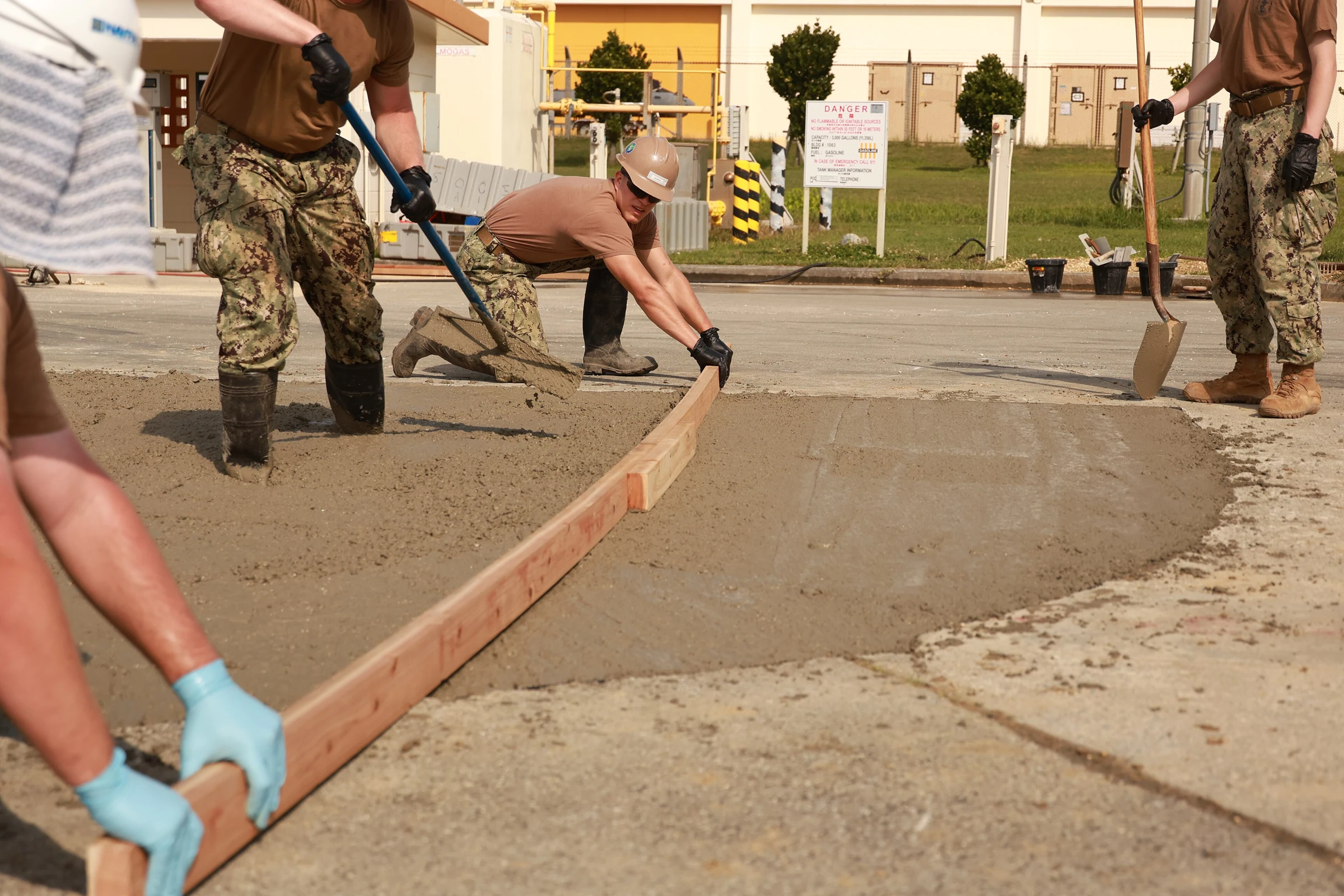
Pour it properly
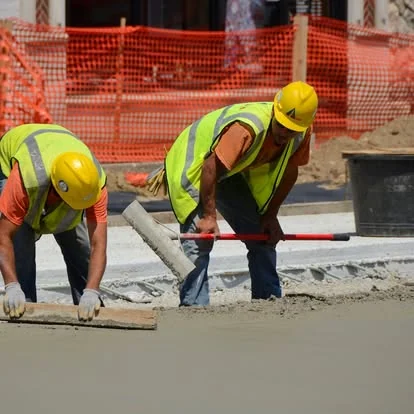
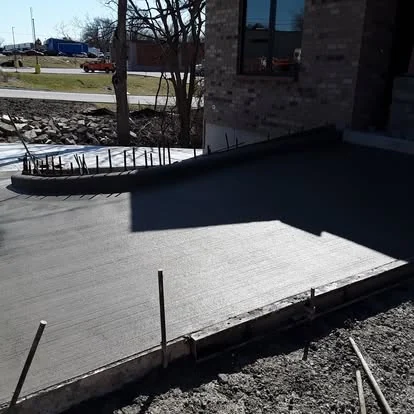
Braced forms, correctly placed steel, a mix suited to the job, and consolidation that leaves no voids. Finishing happens on the concrete’s schedule, not ours.
What this job actually needs
Compaction in lifts
Base goes down in controlled layers and each layer gets compacted before the next. Dumped and raked flat looks identical once concrete is over it and performs nothing like it. This is the step that decides whether a slab stays flat.
Grade and drainage are permanent
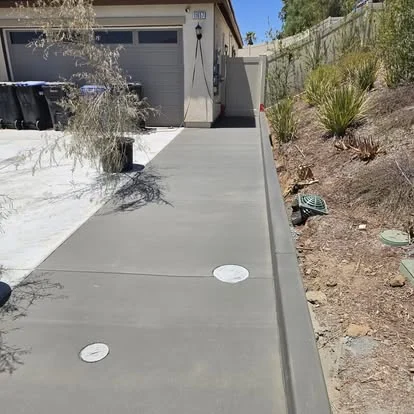
Once concrete is placed, the slopes are set. Where water goes gets decided before the pour, including low points and any drain structures, because water is what destroys concrete over time.
Subgrade problems get fixed now
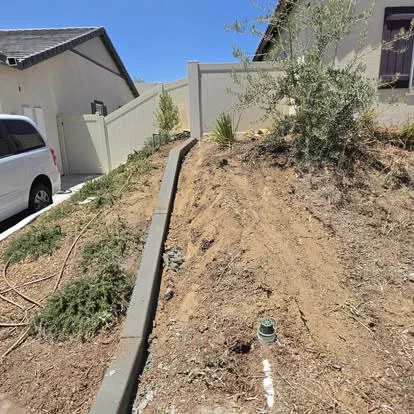
Soft spots found during excavation get corrected before base goes in. They do not improve under load and they will find you later as a crack in the finished slab.
Clean handover
Washout handled properly, spoil hauled off, surrounding surfaces cleaned. Concrete work is messy while it happens and should be invisible when it is done.
What decides whether it lasts
Concrete is judged on the surface and it fails from underneath. The base, the steel, the joints and the cure are the whole job. A slab that was poured on bad ground will tell you so, usually in the third or fourth year.
Why fourth generation matters here
32 years on the tools means most of these problems have already been seen once. Reading a slab before quoting it is the part you cannot learn from a book, and it is the difference between a repair that holds and one that comes back.
What Southern California ground does to concrete excavation
Older flatwork around here
A lot of valley concrete was poured thin, with light reinforcement, on a base that was never properly compacted. When it fails it is usually reporting on the ground rather than on the mix, and that is the difference between a repair that holds and one that comes back in a year.
What lasts here
A properly based, properly jointed slab with reinforcement sized to the load will outlast the house it sits beside. The variables that decide it are all underneath and all invisible once the pour is done, which is exactly why they get cut on cheap jobs.
Summer pours
Triple digit afternoons change how concrete behaves. It stiffens before it can be finished properly, the surface skins over while the body underneath is still soft, and water leaves the slab faster than the cement can use it. Valley pours start early, the mix gets adjusted for the heat, and curing is treated as an active step instead of something that happens on its own.
Drainage on a flat lot
Valley lots are often close to level, which makes slope hard to find and easy to get wrong. Low points, cross-fall and where water actually leaves the property get worked out before the pour, because once the concrete is down the drainage is permanent.
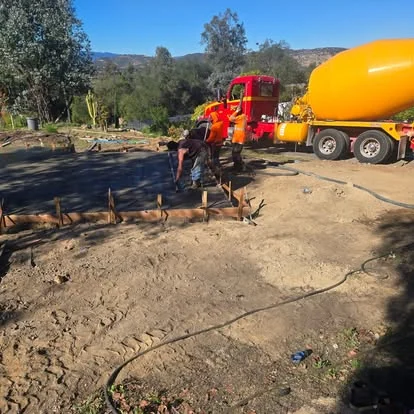
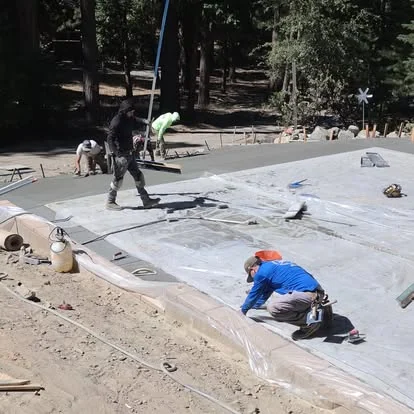
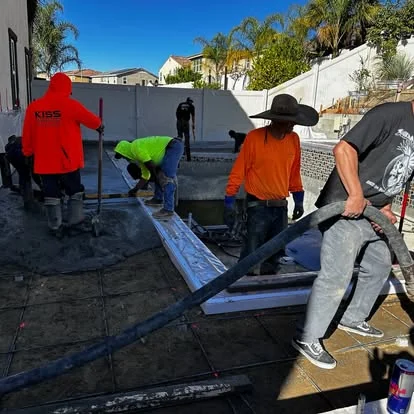
How concrete fails, and why
Thin slab cracking under vehicles
A four inch slab under a work truck or an RV will crack in the wheel path. Thickness has to come off the actual load, not off what is typical.
Joints in the wrong place
Joints spaced too far apart let the slab crack between them. The rule of thumb is roughly two to three feet of spacing per inch of thickness.
Surface loss at door thresholds
Water runs off a roof or a door and lands in the same line every time. Concentrated water wears concrete, and a drip line is a real design consideration.
Reinforcement too low
Steel sitting on the subgrade is doing nothing. It has to be lifted on chairs into the upper portion of the slab where tension actually occurs.
How a job runs
Before we start
You get told what is being built, how long the concrete is unusable, and where the truck and the crew will be. Access gets sorted before the day, not on it.
The day of the pour
Concrete arrives on a schedule and does not wait. The crew works to the material, which means the pour is not a good day to renegotiate the scope.
Width tells you less about a crack than movement does.On reading a slab
After the pour
Foot traffic usually after a day or so, vehicles longer. You get the real numbers for your slab, because thickness and weather both change them.
The first month
Concrete keeps gaining strength for weeks. Hairline shrinkage cracking in that window is normal and is not a failure. Anything that worries you, call and we will look.
Other site work work
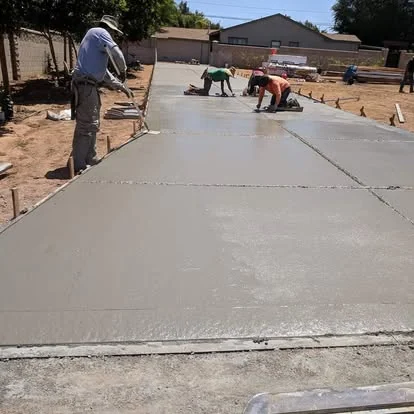
Grading Base Preparation
The half of the job that ends up buried.

Concrete Site Preparation
Getting a site ready to pour.
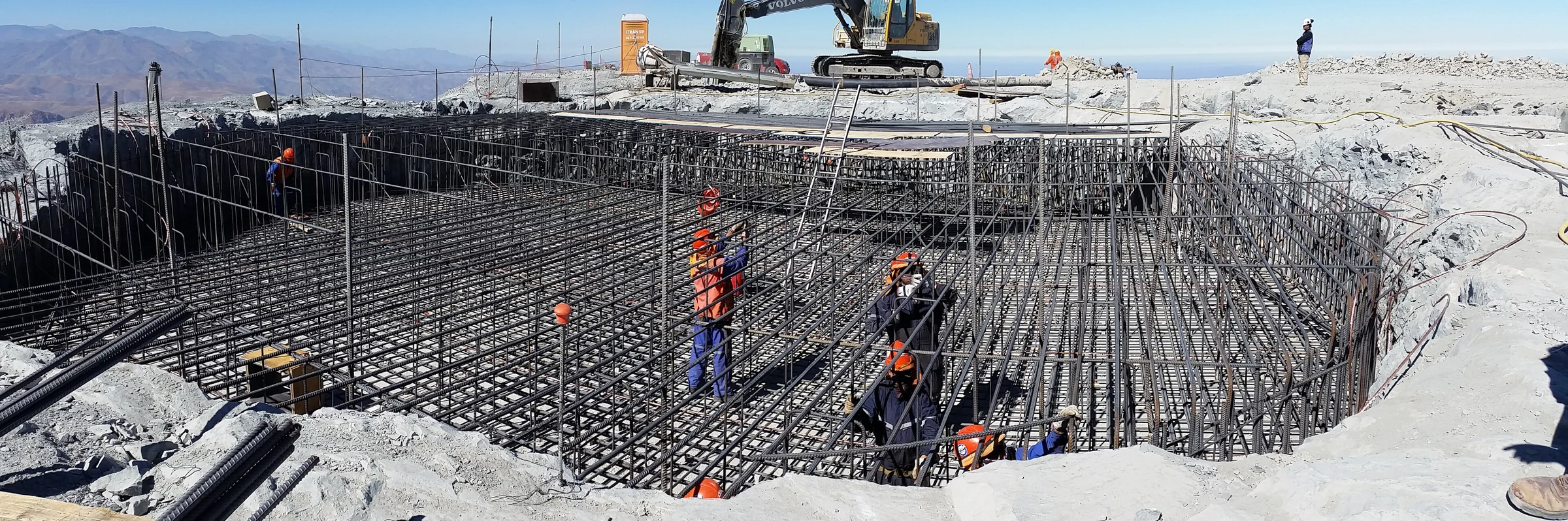
Subgrade Preparation
The native ground under the base.
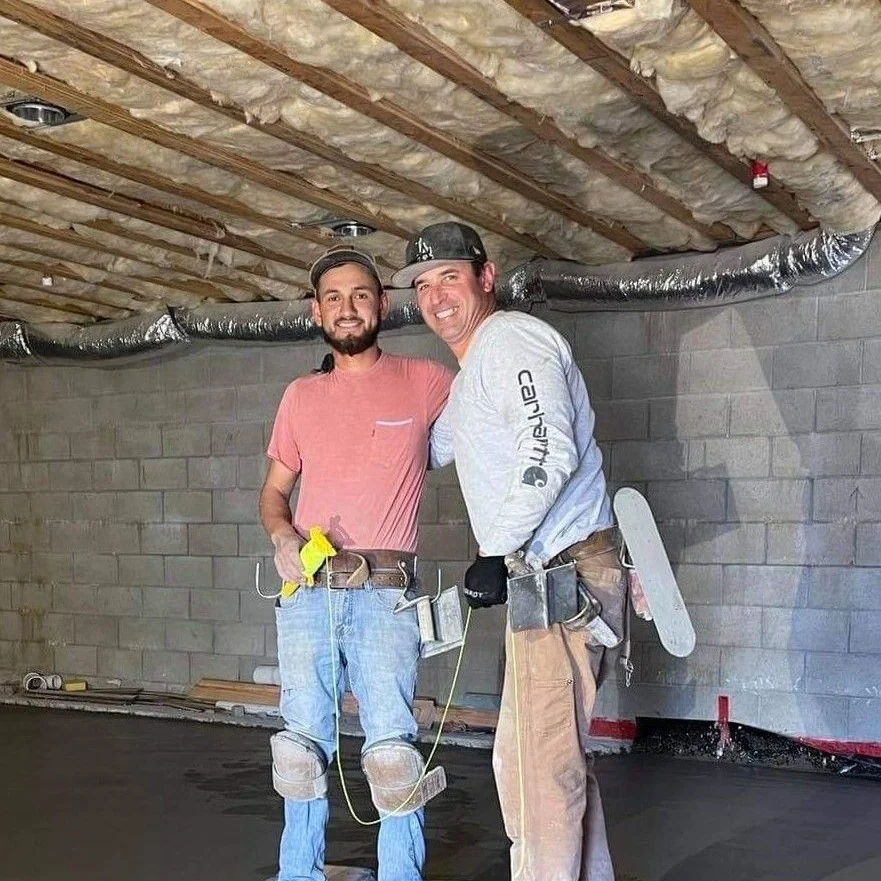
Gravel Base Installation
Aggregate base, placed in lifts and compacted.
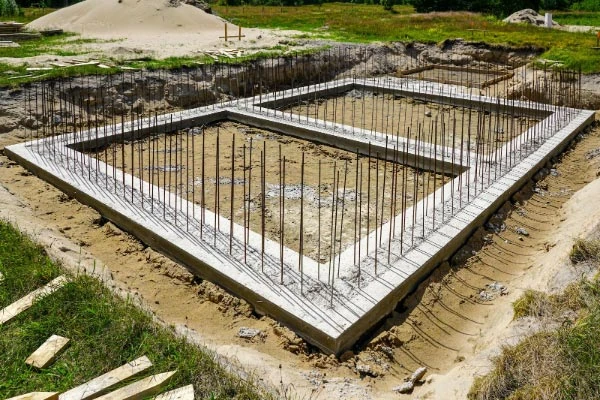
Concrete Drainage Preparation
Deciding where water goes before the concrete sets it.
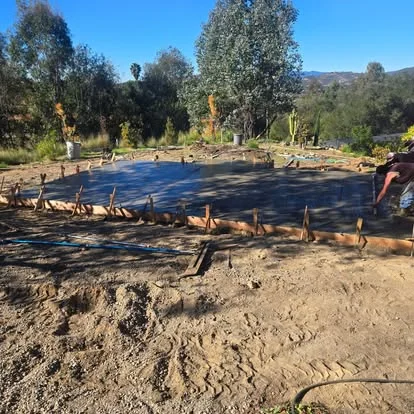
Concrete Site Cleanup
Leaving it the way we would want it left.
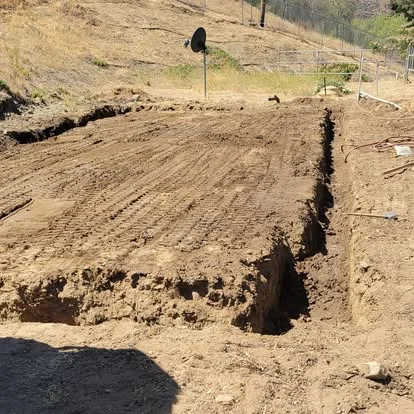
Concrete Pouring
Placement, consolidation, and timing.
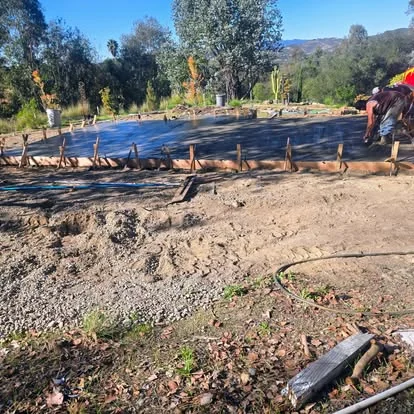
Concrete Finishing
Reading the slab and working it at the right moment.
Straight answers
Why does the base matter so much?
Almost every slab failure we are called to look at is base, not concrete. Grade, material, lift thickness and compaction decide how the slab performs for decades.
What is compaction in lifts?
Base material goes down in controlled layers and each one gets compacted before the next. Dumped and raked flat is not base, even though it looks the same once concrete is on it.
Do you handle the excavation?
For our own pours, yes. Cutting to grade, dealing with soft spots and building the base is part of the concrete job rather than something we ask you to arrange.
What happens to the old concrete?
Saw cut to a clean line, broken out, loaded and hauled off. We protect what stays and leave the ground ready for the new pour.
How do you decide where water goes?
Before the pour, because afterward it is permanent. Slopes, low points and any drain structures are set while it can still be changed.
Tell us what the job is
We walk the job, tell you what it needs, and give you a number. Hemet and roughly 100 miles around it.