
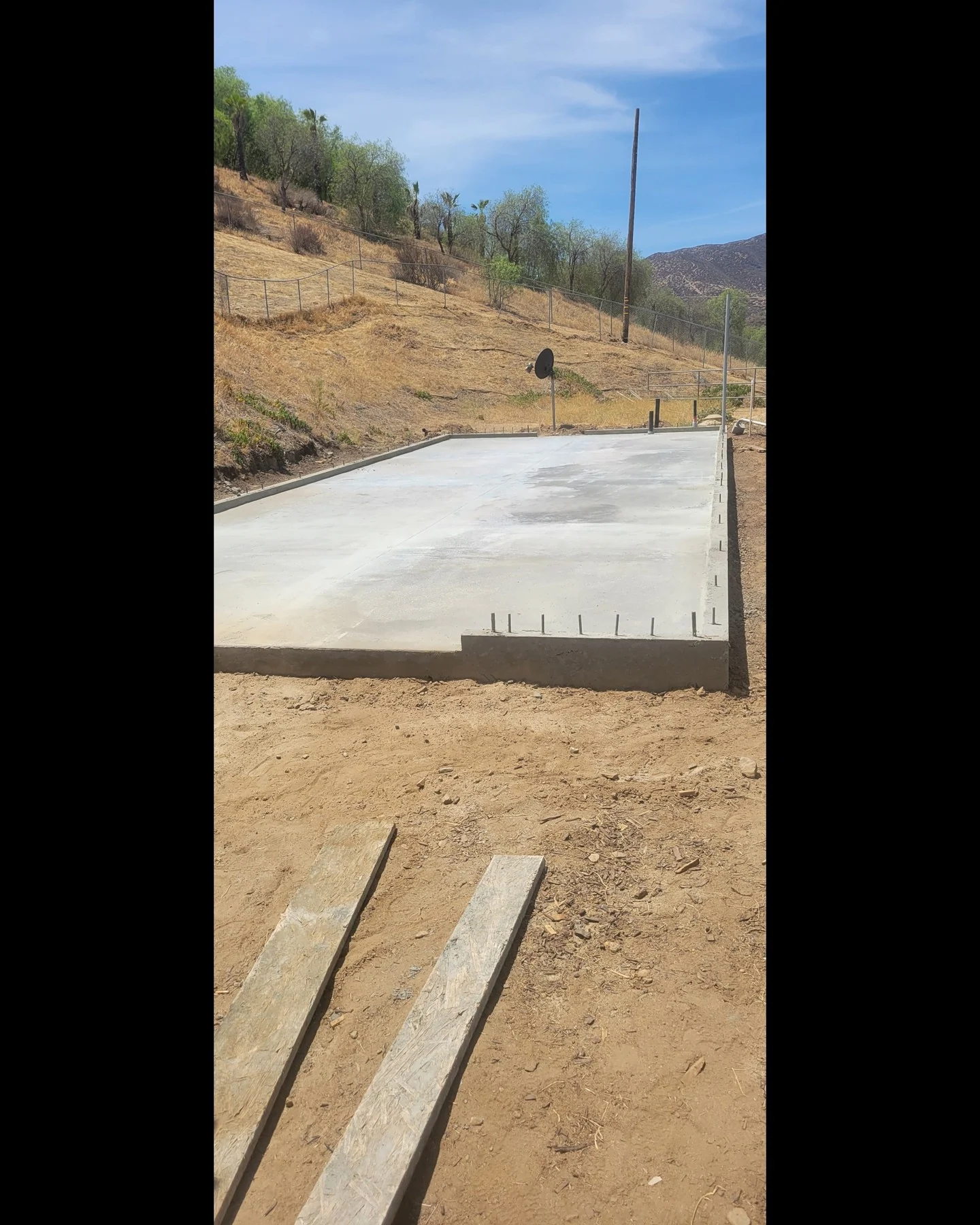
San Bernardino County concrete
We cover 35 communities across San Bernardino County from the shop in Hemet. Same crew, same license, whatever the drive.
Talk to us about the job

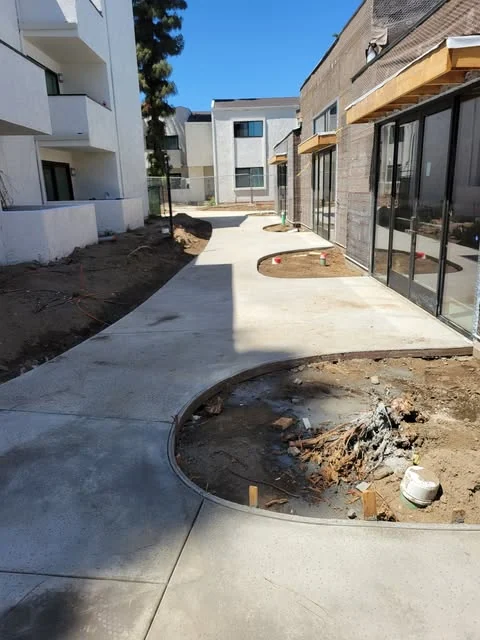
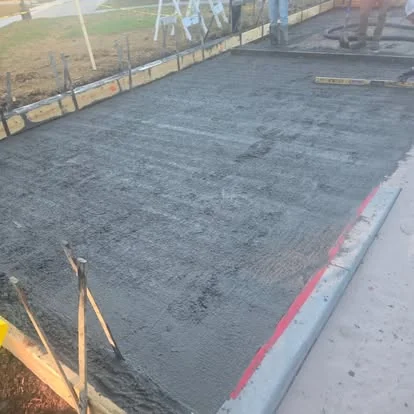
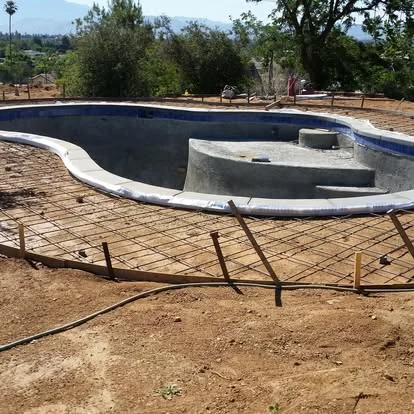
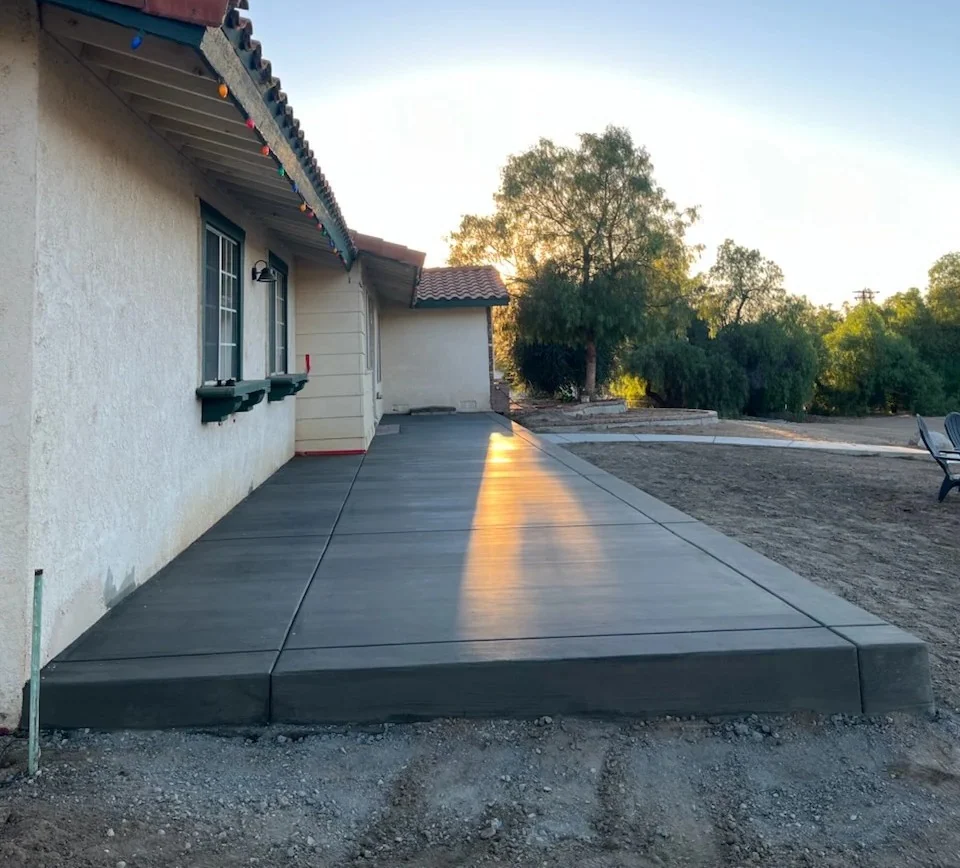
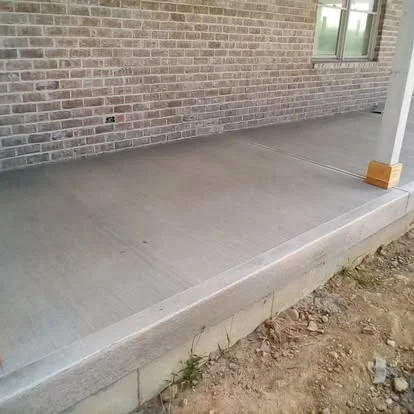

Ground conditions across San Bernardino County
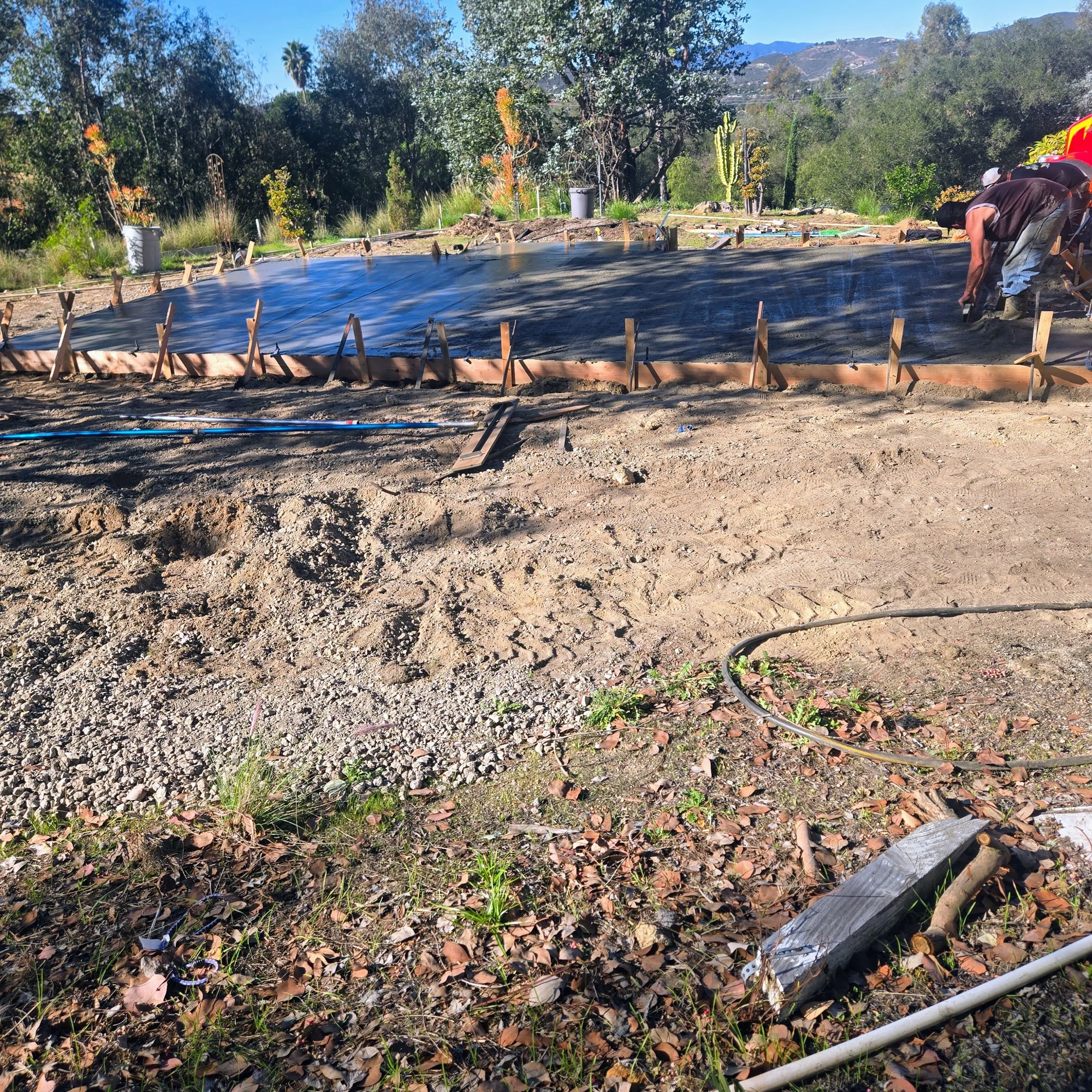
UV on the surface
Sun exposure at elevation is intense and it ages surface treatments faster. Anything applied on top of the slab needs to be rated for it.
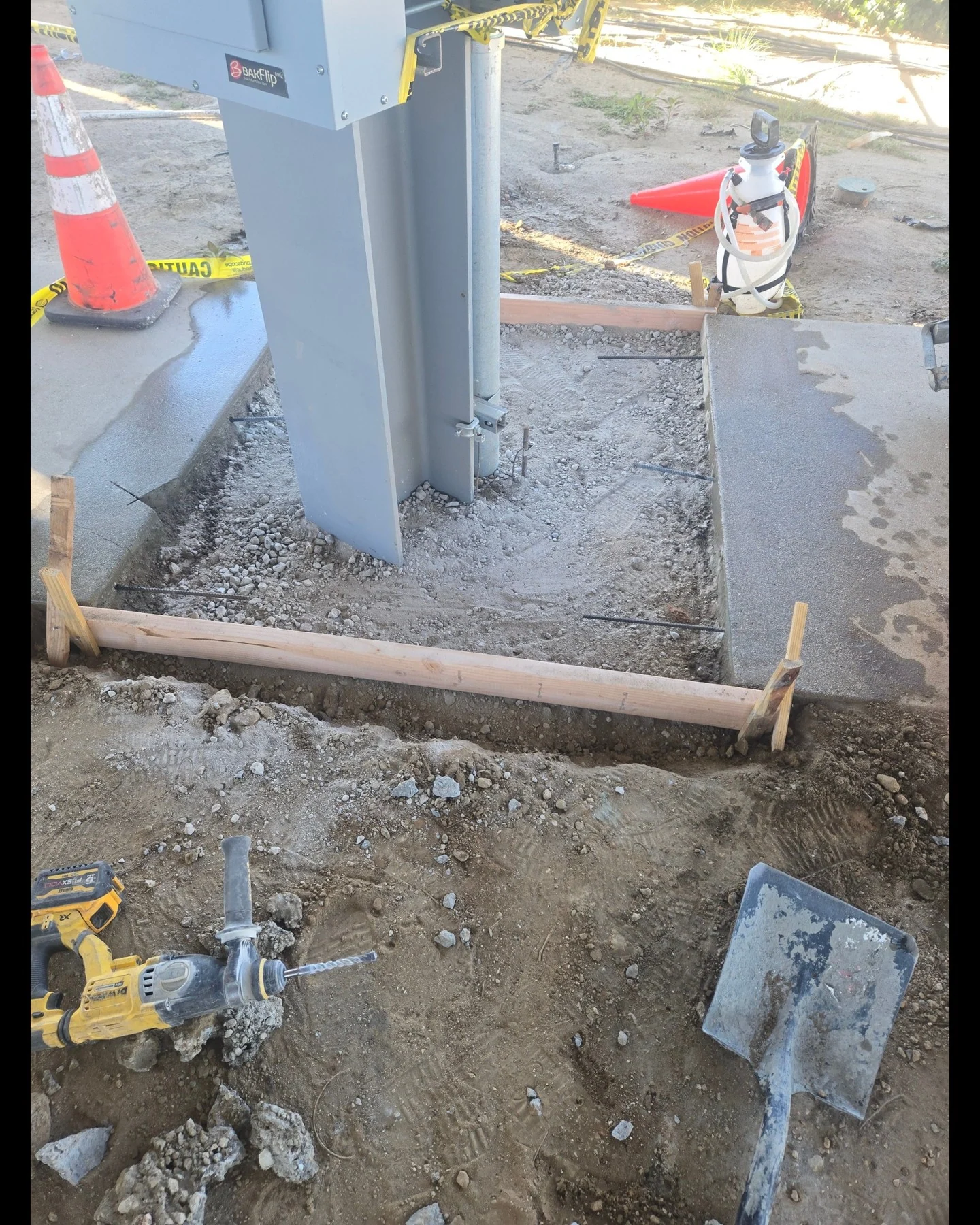
Irrigation next to flatwork
Sprinklers running against a slab edge keep the base saturated year round. In expansive soil that is a slow way to undermine your own driveway. Where the water lands matters.
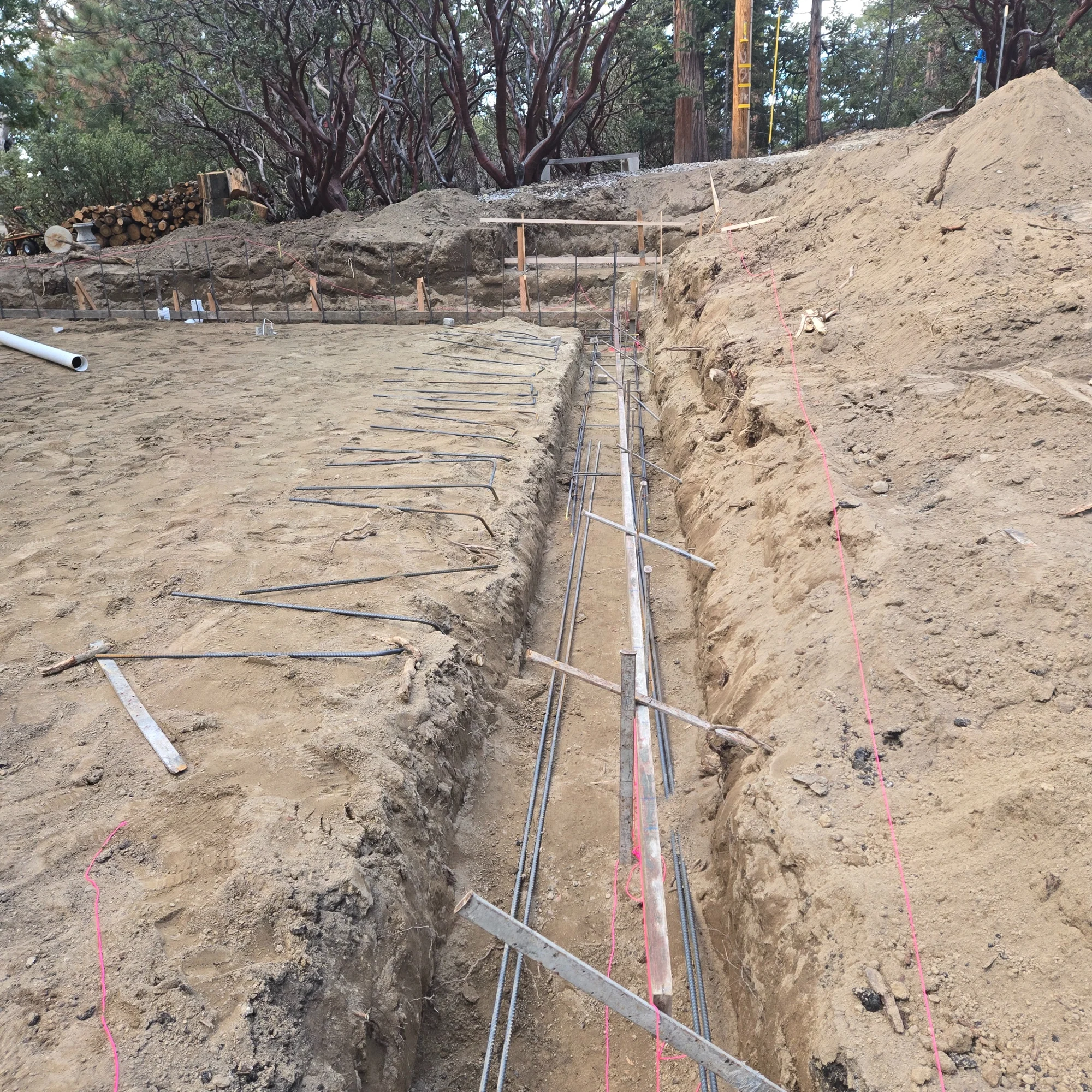
Access and staging
Dense lots mean narrow driveways, alley access, parked cars and nowhere to put a truck. Getting concrete to the pour is often harder than the pour, and it gets planned first.

Curing in cold air
Concrete cures by chemical reaction and cold slows that reaction down. A slab that never reaches strength because it was placed into cold air is a permanent problem, not a delay.
What concrete is up against here
Long runs on big lots
High desert properties are often large, which means long driveways and big slabs. Length multiplies movement, so joint spacing and layout matter more here than on a small urban pad, and a long drive poured without a joint plan will crack wherever it likes.
Wind and the finishing window
Sustained wind combined with very low humidity pulls water out of fresh concrete fast enough to close the finishing window early and craze the surface. Pours get planned around the forecast, not just the calendar.
Freeze and thaw is real at this elevation
The high desert genuinely freezes, and that changes the concrete conversation completely. Water gets into the pores, freezes, expands and works the surface apart from inside. Over a decade that is the difference between a sound slab and a pitted, spalling one. Air entrainment and sealing both matter here in a way they do not down in the valley.
Triple digits and hard freezes in one year
High desert concrete takes both extremes within twelve months, so it has to be built for both. That means the right mix, joints that allow real movement, and a sealing plan that gets followed rather than mentioned once.
Decomposed granite and alluvium
Much of the high desert is decomposed granite and alluvial material. Worked properly in lifts it compacts into an excellent base; dumped and raked flat it behaves badly and the slab tells you so within a few years.
How concrete fails, and why
Cracks radiating from a drain
Anything cast into a slab is a stress point. Drains, posts and penetrations all need isolation or steel around them, otherwise cracks start there.
Uneven cure color on a big pour
A large slab poured across changing weather or with loads arriving at different times can finish in visibly different shades. Sequencing and consistent mix control prevent it.
Deterioration at sprinkler heads
Constant water in one spot saturates the base and leaches the surface. It is a landscaping-meets-concrete problem and it is common.
Broken corners at driveways
Vehicles cut the corner where a drive meets the street, over the least supported concrete on the property. A thickened edge and steel at the corner fix it.
How a job runs
Communication
One point of contact, and you hear about anything that changes before it changes. Surprises on a concrete job are almost always avoidable.
Protecting the pour
Fresh concrete gets protected from sun, wind, rain and traffic. Most surface problems that show up later started in the first forty eight hours.
A repair aimed at the wrong cause is money spent twice.On repair work
Inspections
Where they apply, they get scheduled into the sequence so the pour is not waiting on a signature.
The finished job
Flat where it should be flat, sloped where it should drain, jointed on a plan, and clean when we leave.
Every community we cover in San Bernardino County
What we build
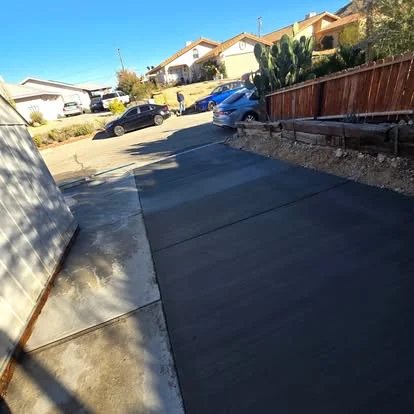
Concrete Driveways
The slab that carries a car every day of its life.
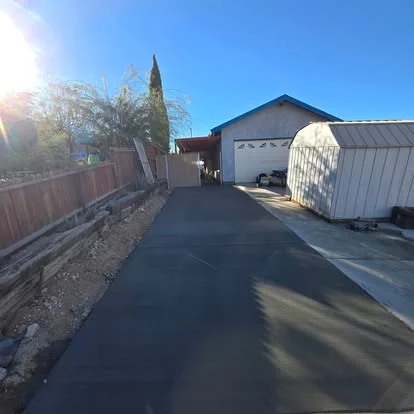
Concrete Driveway Replacement
Out to the dirt, rebuilt from the base up.
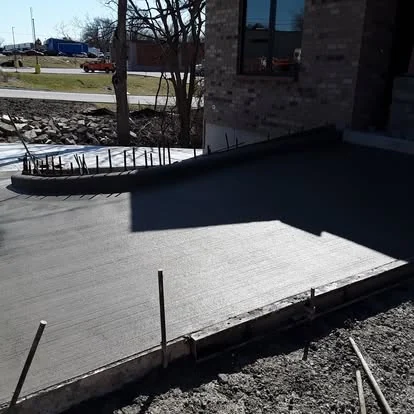
Concrete Driveway Repair
Fix what is broken and leave what is sound.
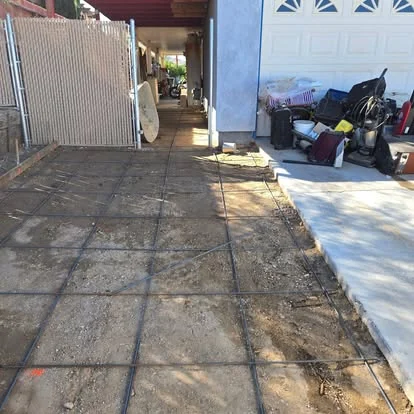
Concrete Patios
The outdoor room that starts as a flat pour.
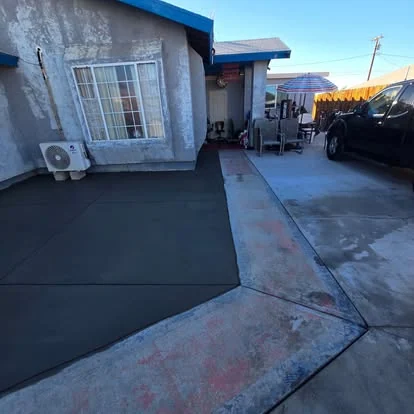
Concrete Patio Replacement
Take out the old slab, pour the one you actually wanted.
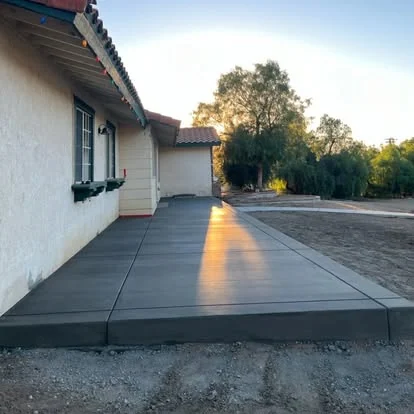
Concrete Patio Repair
Cracks, settled corners, and surfaces that have gone rough.
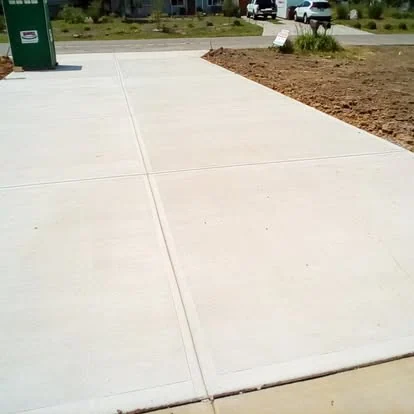
Concrete Walkways
Getting from the street to the door without a trip hazard.
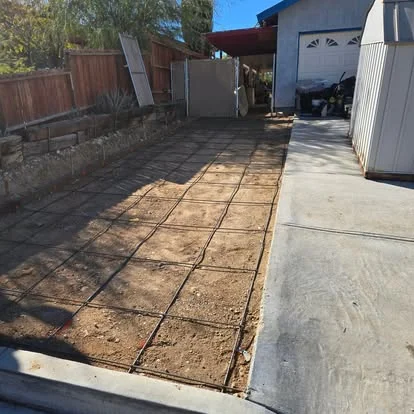
Concrete Sidewalks
Public-facing flatwork built to the spec the city will inspect.
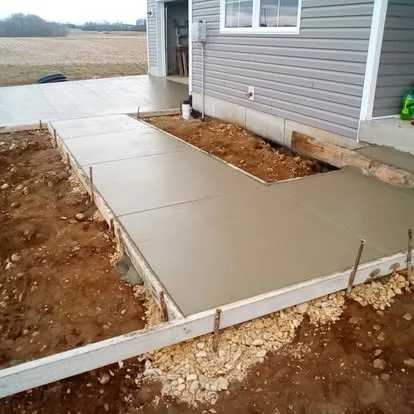
Concrete Sidewalk Repair
Lifted, cracked, or spalled panels made safe again.
Straight answers
How long before I can drive on a new slab?
Concrete takes most of its strength in the first week and keeps gaining for a month. Foot traffic is usually fine after a day or two. Vehicles wait longer, and we will give you the actual number for your pour, because thickness and weather both change it.
Will it crack?
Yes, eventually, and that is the material rather than a defect. The job is deciding where. Control joints put the crack on a line we cut instead of one it picks. A slab with no cracking plan will still crack, just somewhere you did not want.
Do you fix the base or just pour over it?
We fix the base. Pouring new concrete on ground that already failed once is how you get the same crack in the same place. If the base is the problem, that is the work.
How much does concrete cost?
It depends on access, thickness, base condition and finish, which is why we walk the job before giving a number. We will not quote a driveway off a photograph.
Can you match my existing concrete?
Usually close, rarely exact. Concrete changes color as it ages, so a new pour next to a ten year old slab will read newer for a while. We match thickness, finish and joint pattern so it looks intentional.
Working in San Bernardino County
Tell us where the job is and what it is. We will come out and look at it.