
The crew Highland calls
Flatwork and structural concrete for homes and businesses around Highland. Fourth generation, California license 1137822.
Talk to us about the job
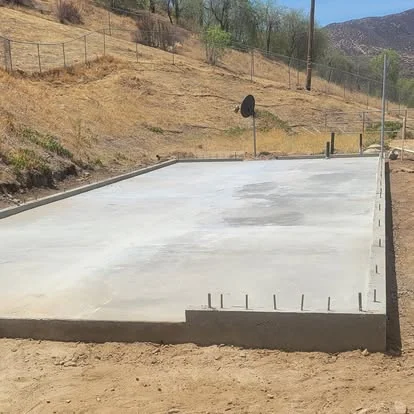
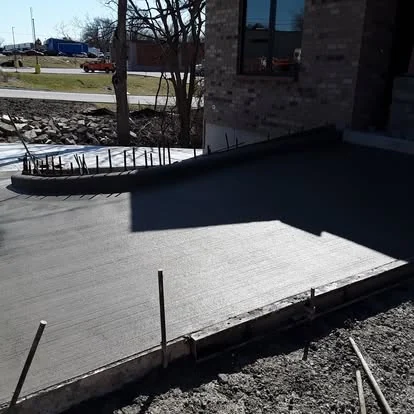
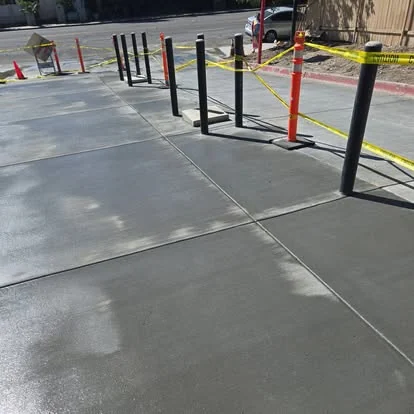
What concrete is up against around Highland
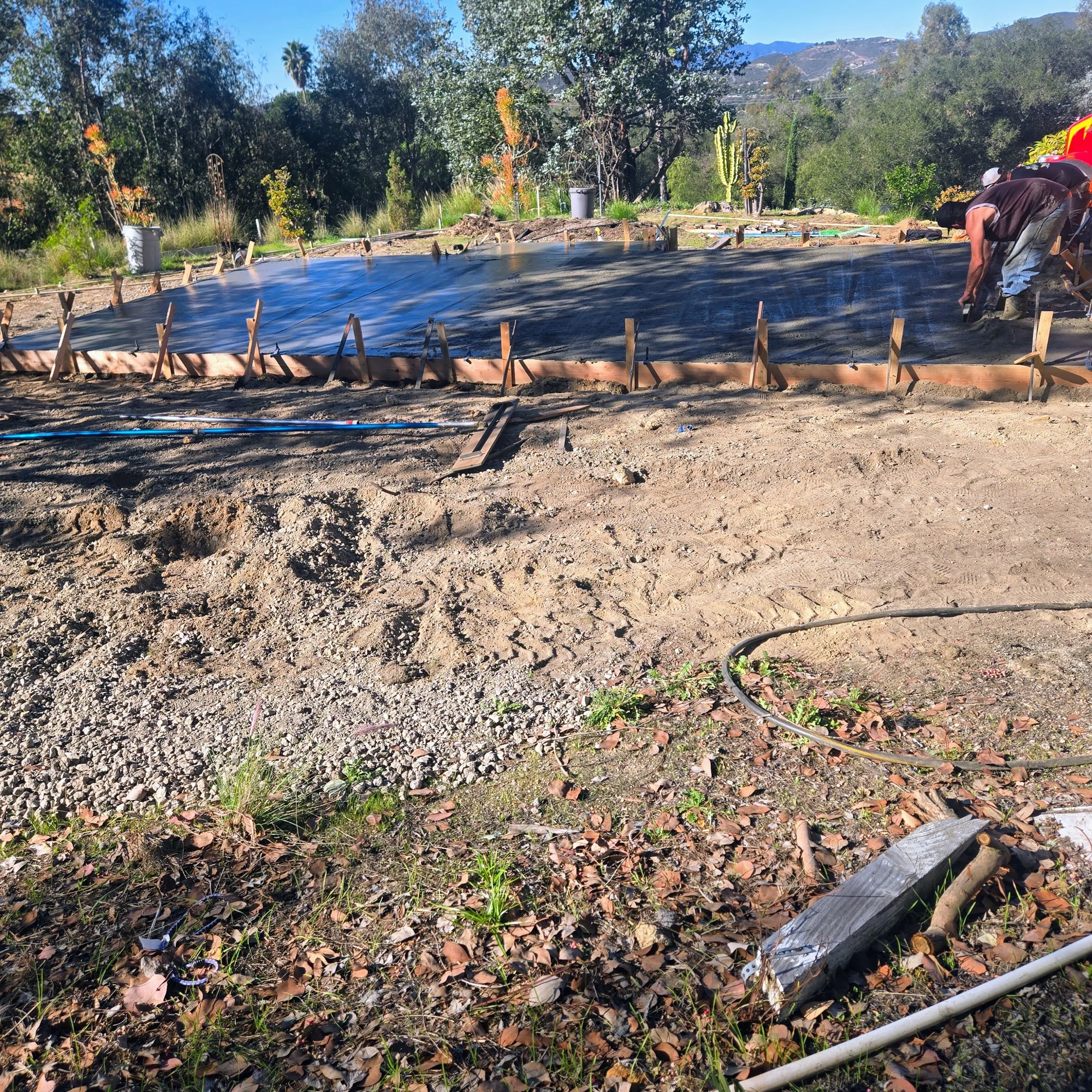
Curing in dry heat
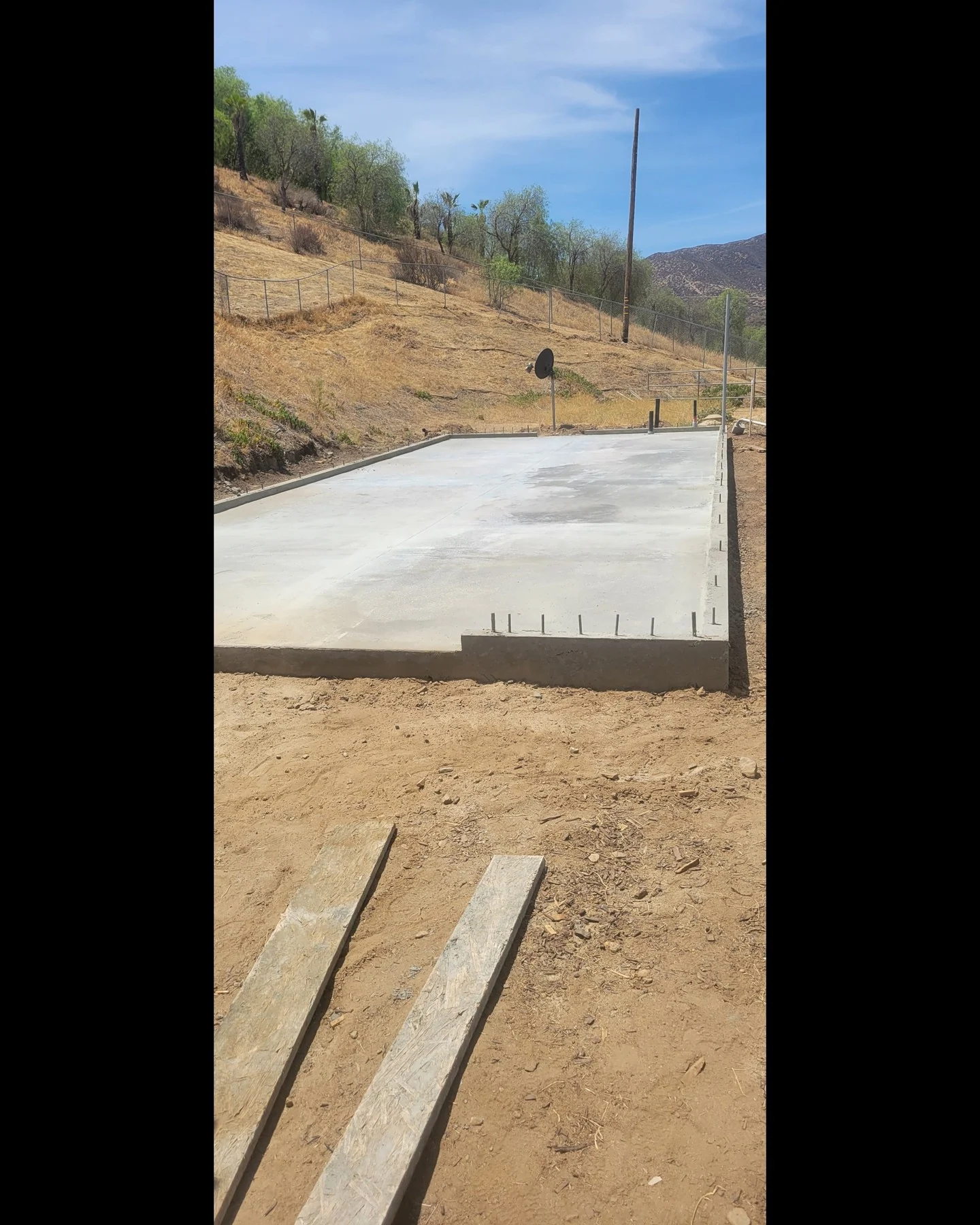
Low humidity and wind pull water out of a fresh slab faster than the concrete can use it. That is surface crazing and a weak top layer. Curing is an active step here, not something that just happens.
Water is the whole story
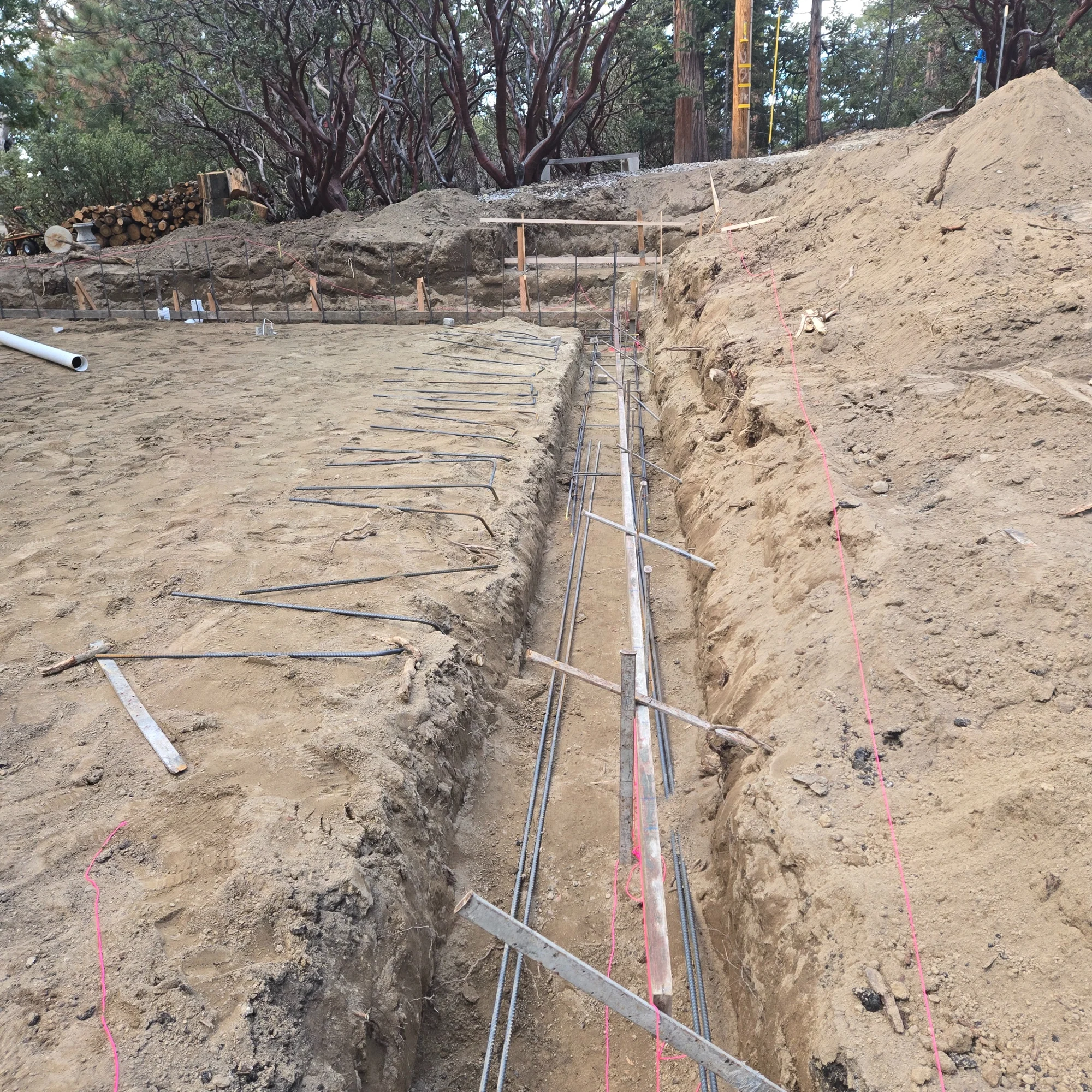
Almost every failed slab we are called to look at failed because water got somewhere it should not have. Into the base, under a footing, or through a joint nobody sealed. Drainage gets designed before the pour, not discovered afterward.
Old slabs and new ones together
A new pour tied hard to an old slab will crack at the joint, because the two will never move the same. They get isolated on purpose so each one can do what it wants.
Water routed off the slab
Slopes, low points and a path for water to leave are set before the pour, because afterward the drainage is permanent.
Joints planned on paper
Joint layout gets worked out before the pour, spaced to the thickness and placed where the slab wants to move anyway. Then it gets cut at the right time.
Pours scheduled to the heat
In summer we start early and keep the mix and the crew ahead of the temperature. Concrete does not wait for anybody.
What we build in Highland
Concrete Stairs
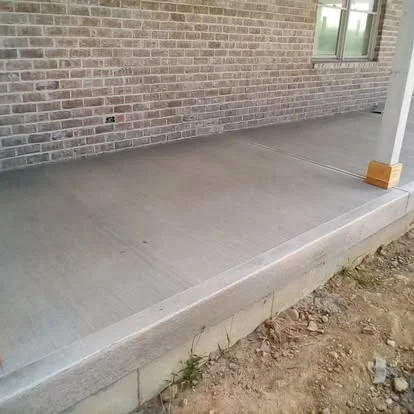
A formed flight that carries load and holds its geometry.
Front Porches
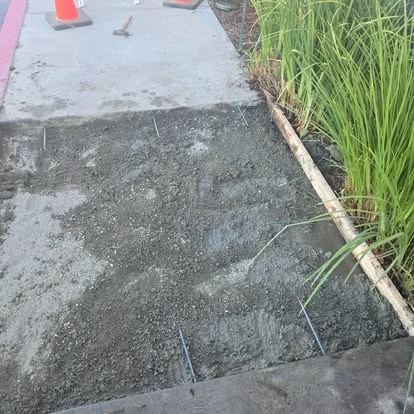
The first slab anybody sees.
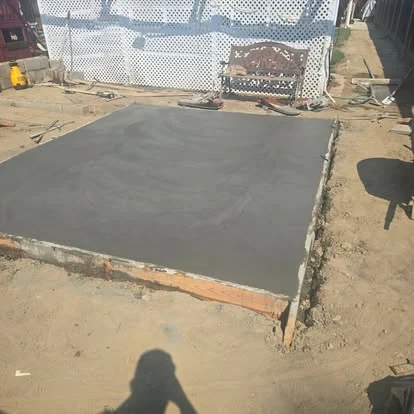
Back Porches
The slab that gets lived on.
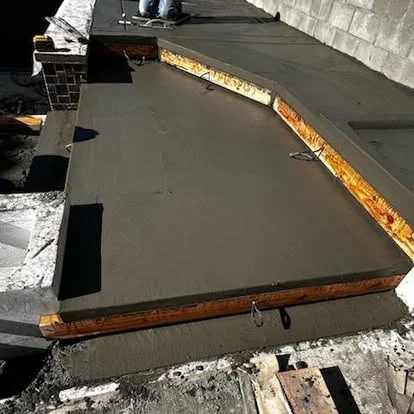
Concrete Courtyards
An enclosed slab where drainage has nowhere obvious to go.
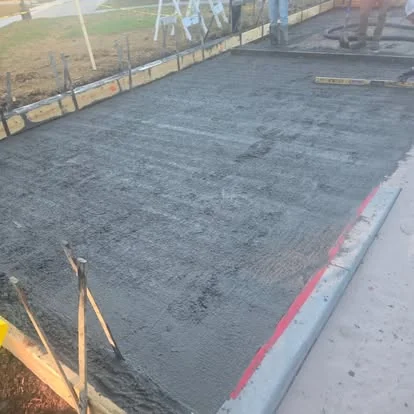
Concrete Slabs
The flat pour everything else is a version of.
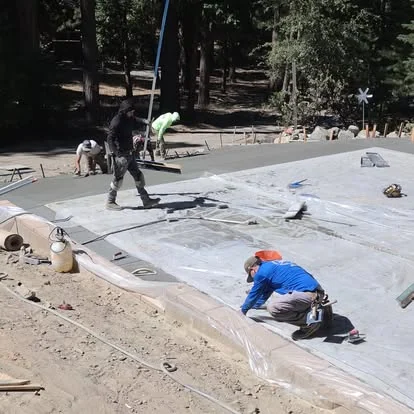
Concrete Slab Repair
Cracks and surface failure on a slab worth keeping.

Expansion Joint Installation
Giving the slab somewhere to go.
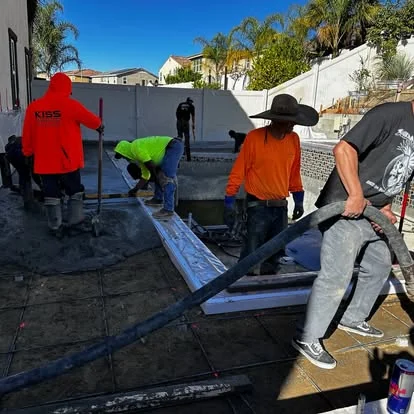
Control Joint Installation
Deciding where the crack goes.
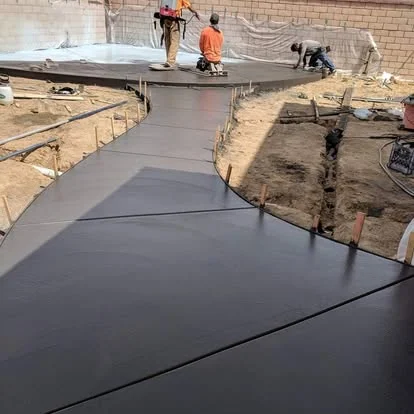
Concrete Repair
Fix the concrete that is worth fixing.
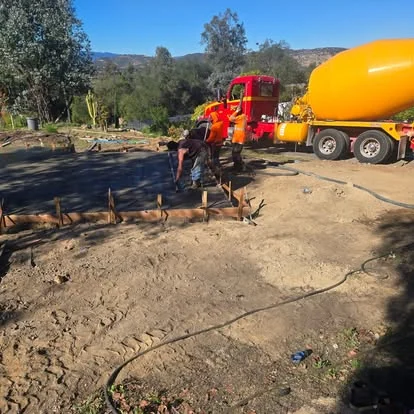
Warehouse Floors
Flat enough for racking and hard wheels.
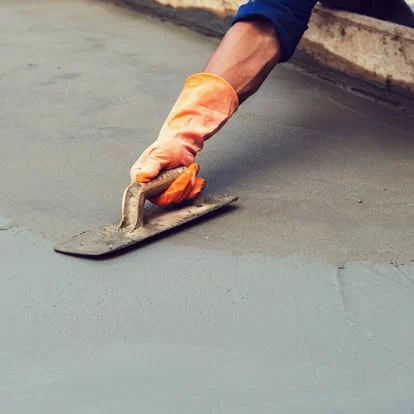
Industrial Floors
Impact, chemicals, and equipment loads.

Industrial Concrete
Heavy concrete for working facilities.
Pouring concrete around Highland
Older flatwork around here
A lot of valley concrete was poured thin, with light reinforcement, on a base that was never properly compacted. When it fails it is usually reporting on the ground rather than on the mix, and that is the difference between a repair that holds and one that comes back in a year.
Drainage on a flat lot
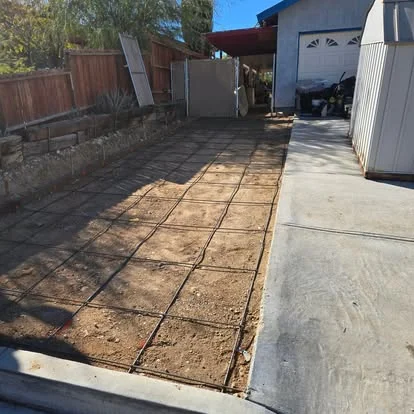
Valley lots are often close to level, which makes slope hard to find and easy to get wrong. Low points, cross-fall and where water actually leaves the property get worked out before the pour, because once the concrete is down the drainage is permanent.
What lasts here
A properly based, properly jointed slab with reinforcement sized to the load will outlast the house it sits beside. The variables that decide it are all underneath and all invisible once the pour is done, which is exactly why they get cut on cheap jobs.
Summer pours
Triple digit afternoons change how concrete behaves. It stiffens before it can be finished properly, the surface skins over while the body underneath is still soft, and water leaves the slab faster than the cement can use it. Valley pours start early, the mix gets adjusted for the heat, and curing is treated as an active step instead of something that happens on its own.
Concrete work around Highland
Flatwork, foundations and repair across Highland and the rest of San Bernardino County, poured by the same crew that answers the phone.
How concrete fails, and why
Cracks along a plumbing run
A trench under a slab that was not compacted is a soft line, and the slab cracks along it. Compaction in the trench matters as much as in the open.
Glazed surfaces that are slippery when wet
Over-troweling closes the surface to a polish. Indoors that can be a choice; on an exterior walk it is a hazard.
Deterioration under planters
Soil and constant moisture held against concrete leaches it and stains it. Anything permanently wet against a slab shortens its life.
Repairs that do not match
A repair poured with a different mix, finished differently, or cured differently will always read as a patch. Matching the finish and joint pattern is part of the job.
How a job runs
Preparation you may need to do
Moving vehicles, clearing the area, and sometimes irrigation being shut off. We will tell you in advance what is on you.
Demolition day
Saw cutting, breaking, loading and hauling. It is the loudest and dirtiest part and it usually happens first.
Width tells you less about a crack than movement does.On reading a slab
Pour day
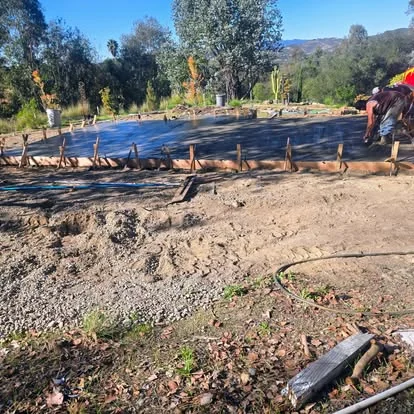
Early start in summer. The crew works continuously until the slab is placed and finished, because concrete sets on its own schedule.
Keeping off it
How long depends on the pour and the weather. You will get a real number, not a generic one.
Around Highland
Straight answers
Do I need a permit?
Structural work and anything in the public right of way generally does. A straight replacement often does not. We raise it before anything is broken out rather than at inspection.
Can you match the concrete I already have?
Usually close, rarely exact, because concrete changes color as it ages. We match thickness, finish and joint pattern so the result reads as one surface rather than a patch.
How long before I can drive on it?
Concrete takes most of its strength in the first week. Foot traffic is usually fine within a day or two; vehicles wait longer. On a valley summer pour the numbers shift, so you get the real ones for your slab rather than a generic answer.
Should I worry about hairline cracks in the first month?
Usually not. Concrete gives up water as it cures and gets slightly smaller doing it, and fine shrinkage cracking in that window is the material behaving normally. Anything that widens or lifts is different, and worth a call.
My sprinklers run along the driveway. Is that a problem?
It can be. Constant water at a slab edge keeps the base saturated, and in expansive soil that undermines the concrete from underneath. Where the water lands is worth looking at before blaming the slab.
Talk to us about Highland
Describe the slab and we will tell you what it needs, including when that is less than you expected.