

Aguanga driveways built for the grade
A long driveway on a mountain lot carries water downhill every time it rains and freezes and thaws all winter. Getting a loaded truck up it on pour day is its own problem, and we plan that before anything gets formed.
Talk to us about the job
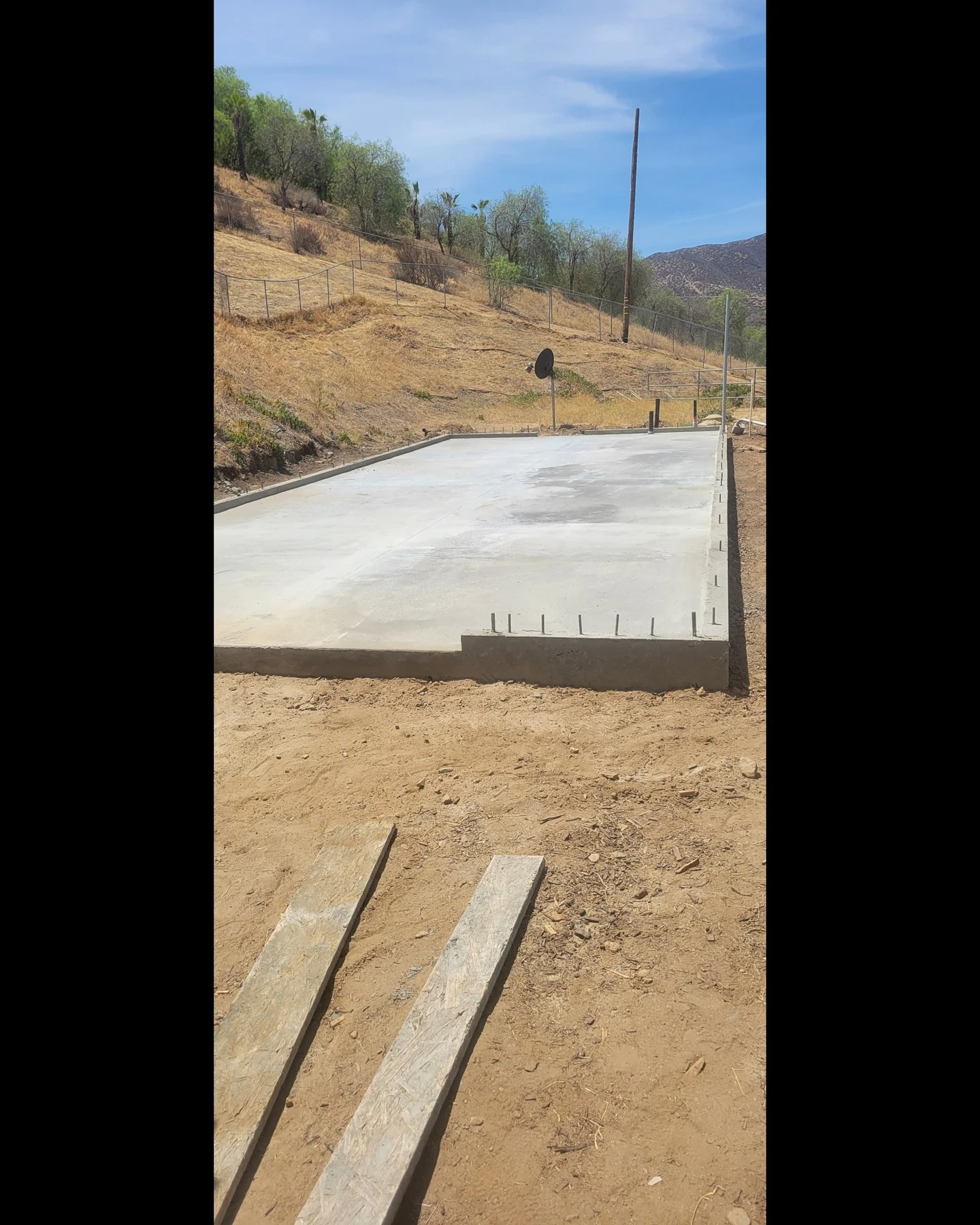
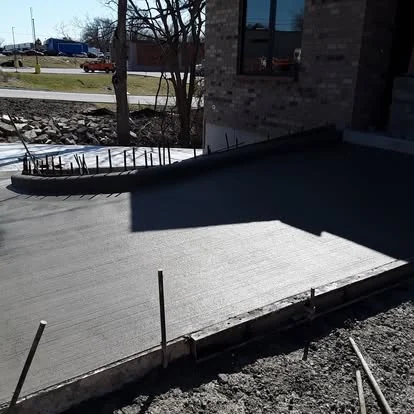
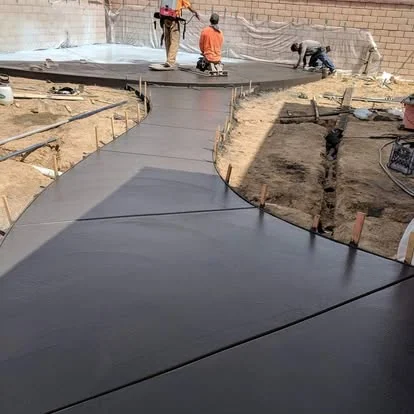

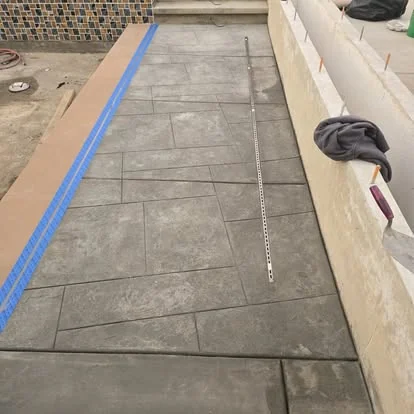

The rain decides the layout
A driveway on a grade turns into a channel whether anyone planned one or not. Every storm that lands on the lot above runs down the slab, and if nobody decided where that water leaves, it picks the spot for itself, usually the low corner by the garage or the edge where the base is weakest. On a sloped Aguanga lot we work out the drainage first and then pour the concrete driveway around it, because after the pour the water path is permanent.
Cross slope toward somewhere useful
We tip the slab slightly to one side so water sheets off the edge into a planted strip, a swale or a drain. Left flat across its width, a long run sends everything straight down the middle, picking up speed and grit the whole way.
Nothing pitched at the house
The last stretch by the garage gets the most care. Concrete that falls toward a building delivers its water to the foundation, so the grade there turns away from the walls, even when that means changing a plan you were already happy with.
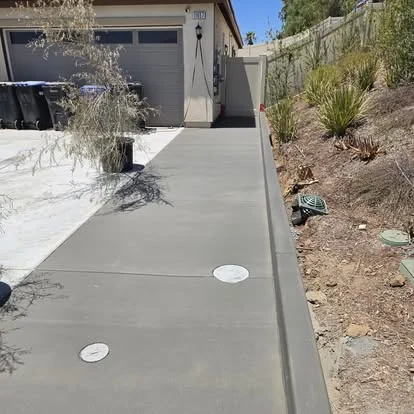
Drains set into the slab
Where the lot gives water nowhere to go, a round drain inlet goes into the slab at the low point and gets piped away. A raised curb along the uphill side keeps a planted bank from washing dirt across the concrete after every storm.
Cutting joints on a grade
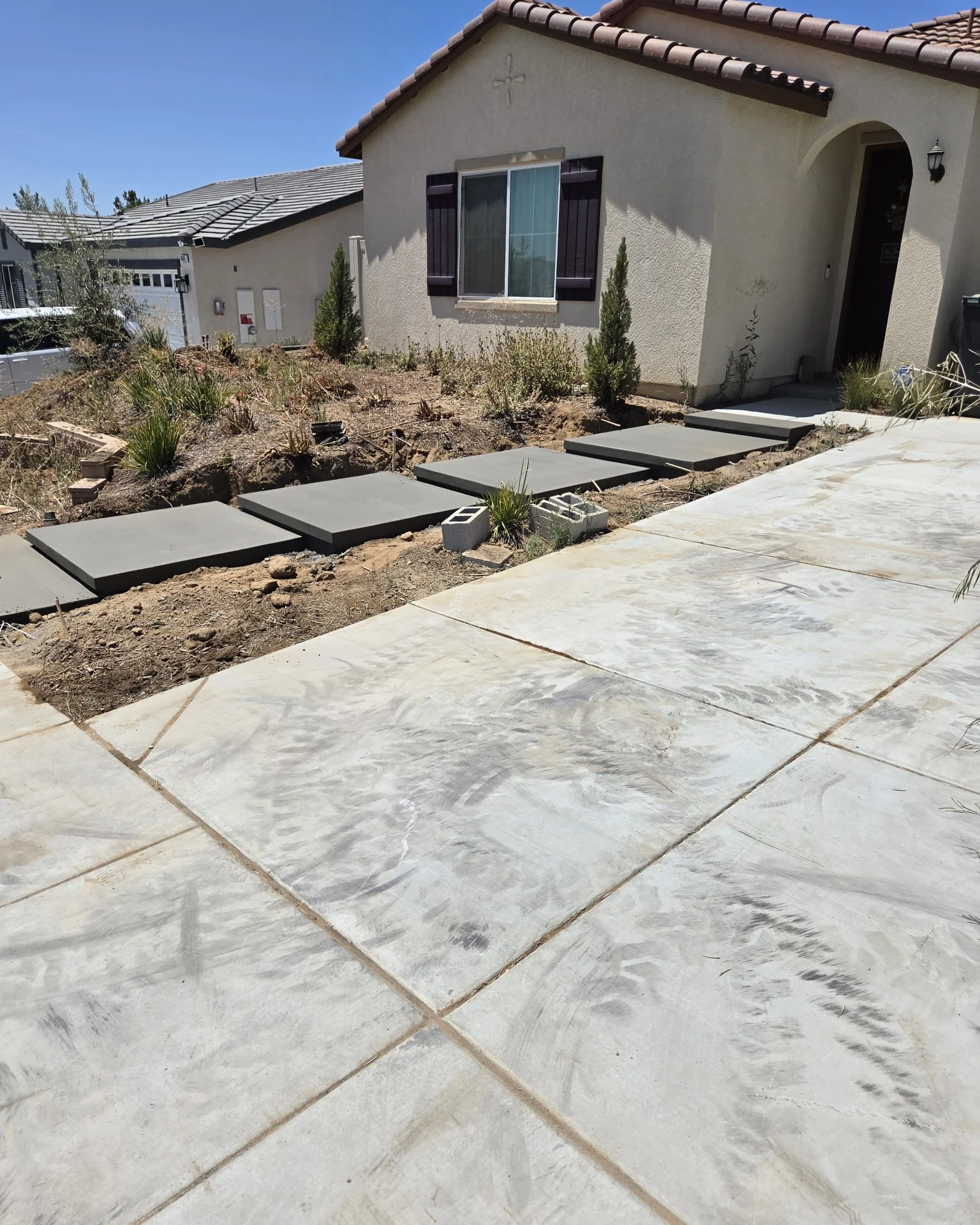
Concrete shrinks as it cures and moves every time the temperature swings between a freezing night and a warm afternoon. Joints give that movement a straight line to follow. We lay them out on paper before the pour and the saw goes on as soon as the slab will take it, because a joint cut after the slab has already cracked does nothing.
Panels kept close to square
A long narrow driveway tempts a crew to cut joints only across it. Long skinny panels crack down their middle, so a wide run also gets a joint along its length and every panel stays near square.
Where the slab changes shape
A turnaround, a flare at the garage or a notch around a mailbox post puts an inside corner in the slab. Those corners crack out on a diagonal unless a joint or extra steel runs from the point.
A full break at the garage
Where the driveway meets the garage slab or a footing, the two get separated full depth. The driveway moves with the seasons and the building stays put, so tying them together puts a crack a foot from your door.
Joints that stay open
A joint packed with grit cannot close when the slab expands, and its edges start to chip. Keeping joints sealed is one of the few things a driveway asks of you, and if yours already looks rough, we can come out and look at it.
What sits under the slab up here
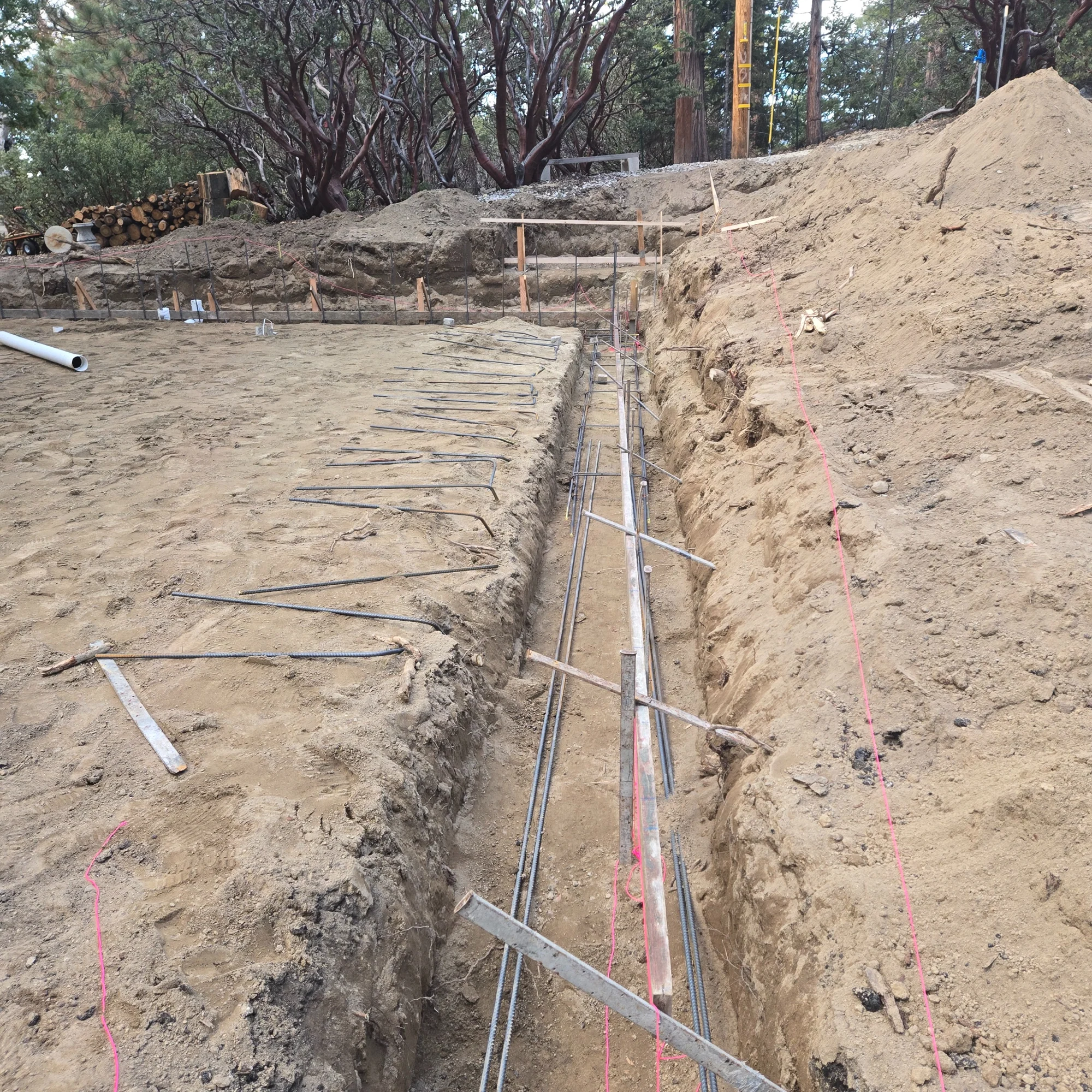
Most driveways that fail are failing from underneath. We cut to grade, dig out the soft spots and replace them with base compacted in lifts. On a mountain lot that base also has to stay drained, because water trapped under a slab is exactly what the freeze works on all winter.
Every winter, over and over
Water that soaks into concrete expands when it freezes and pries the surface open a little each time. Air entrained in the mix gives that ice room to grow, and on a driveway at this elevation it is part of the order, never an add-on.
Steel for what actually drives on it
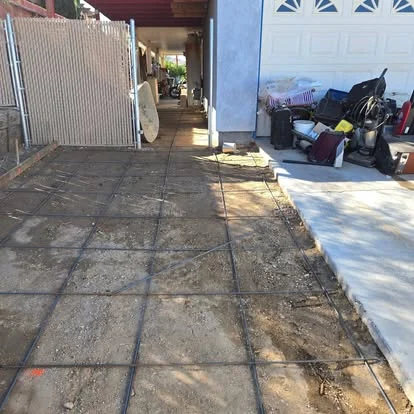
How thick it gets and how much steel goes in depend on the load and the ground. A driveway that sees a delivery truck or a loaded trailer gets built for that, and the rebar grid gets lifted onto supports as the pour goes, so it ends up inside the slab rather than under it.
Salt, ice and the sealer
Chloride spread for ice holds moisture against the slab and eats at the paste between the stones. A sealed driveway keeps that water out of the pores, so we tell you when to seal it and what to keep off it. Finished slabs are in the gallery if you want to see the surface we leave.
Getting a mixer up your road
On plenty of mountain jobs the hard part is reaching the pour at all. A narrow road with a tight turn at the bottom of a steep climb decides whether a loaded mixer makes it to the top of your driveway or whether the concrete gets pumped up from below. We check that on the first visit and price the job the way it will really be poured. If a trailer needs a place to park as well, an RV pad can go in on the same trip, and you can send the details of both at once.
When the concrete gets pumped
A pump truck sets up where the road is wide and firm and pushes concrete through a hose line to the forms. On a steep lot it is often the only way to place the whole pour in a day without rutting the yard.
A long run in sections
A long driveway does not have to go in all at once. We can stop at a planned joint and pour it in sections, so each one gets finished right instead of the far end stiffening while the crew works the near one. Call (951) 533-8821 to talk through how yours would go.
More concrete work in Aguanga
Driveway questions from mountain lots
How steep can a concrete driveway be?
There is a point where tires lose grip in winter and the crew cannot keep wet concrete from sagging downhill while they finish it. We judge that on site, and a steep run usually gets a coarser broom finish across the slope for traction.
Can you pour a driveway when it is cold?
Yes, with care. Cold slows the reaction that gives concrete its strength, and a slab placed into freezing air may never get there. We watch the forecast, pour in the warmer part of the day and protect the slab while it cures, and sometimes we move the date.
Do I need a drain in my driveway?
Only if the water has nowhere better to go. Most sloped driveways can shed water off one edge into a planted strip or a swale. When the low point sits against the garage or a wall, an inlet in the slab and a pipe to daylight is the cleaner answer.
Why does my old driveway have a crack straight across it?
Usually the joints were too far apart, too shallow or cut too late, so the slab relieved itself where it wanted. If both sides of the crack are still level, it is shrinkage. If one side sits higher, the ground moved and that needs a closer look.
Can a new driveway butt up to my existing garage slab?
It can sit right beside it, with a full depth isolation joint between the two. The garage slab and the driveway move differently through the year, and pouring them tight together is one of the most common reasons a driveway cracks a foot or so from the door.
Can you replace part of a driveway and keep the rest?
Often, yes. If the damage is limited to a few panels and the base under the rest is sound, we saw cut along joint lines, take out the broken section and pour it back. If the whole run is failing from below, patching it just postpones the job.
Tell us about the driveway
Send the length of the run, how steep it gets and what the road up to your lot looks like. Somebody comes out, walks the job and gives you a number built on what your lot needs.