
Concrete work across Rancho Cucamonga
From a single pad to a full foundation. We cover Rancho Cucamonga and the rest of San Bernardino County out of Hemet, with 32 years in the trade and a license to back it.
Talk to us about the job

What concrete is up against around Rancho Cucamonga
The base is the job
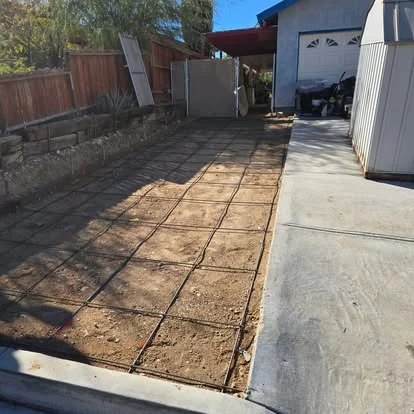
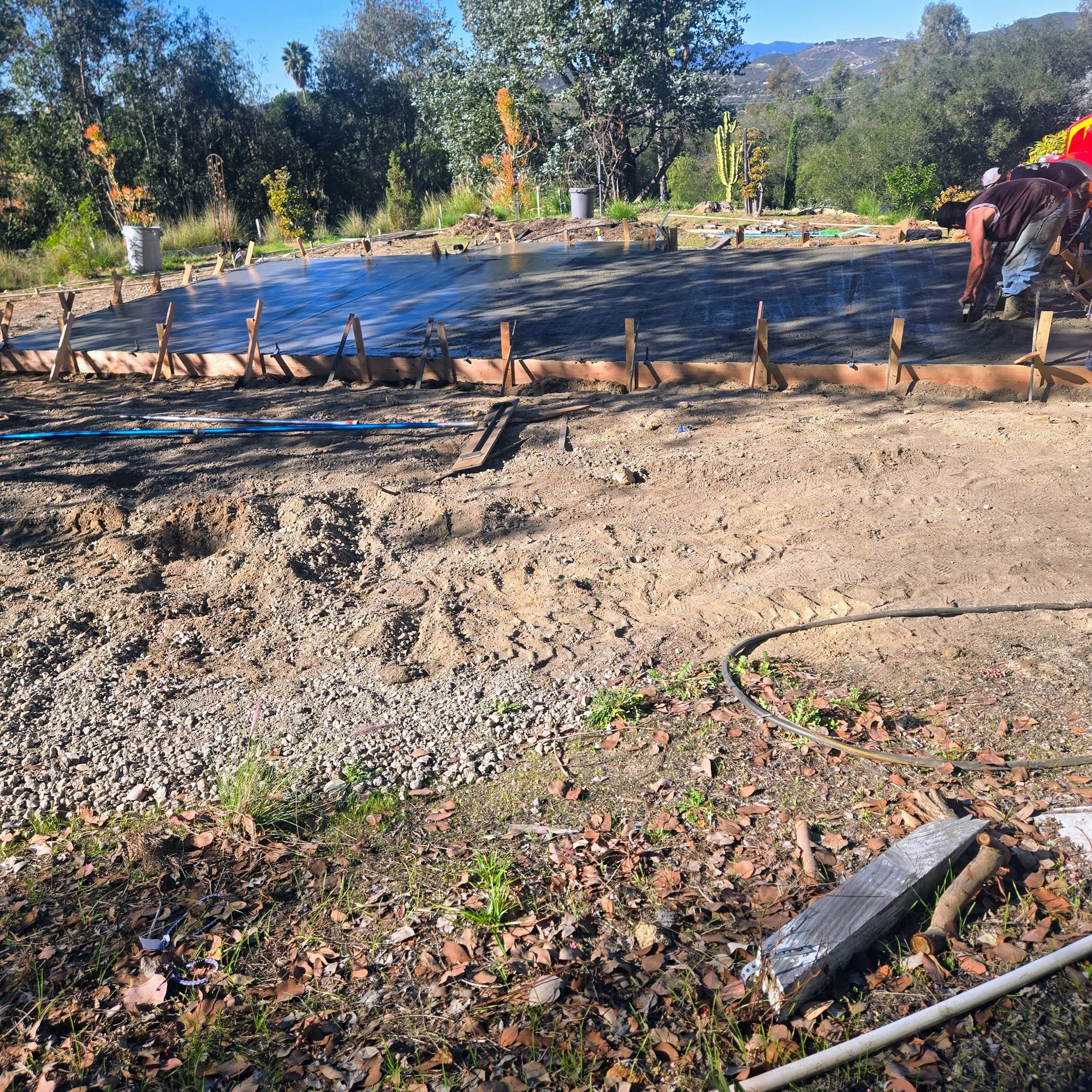
People judge concrete by the surface and it fails from underneath. Grade, material, lift thickness and compaction decide how a slab performs for thirty years. It is invisible when it is right.
Summer heat during the pour
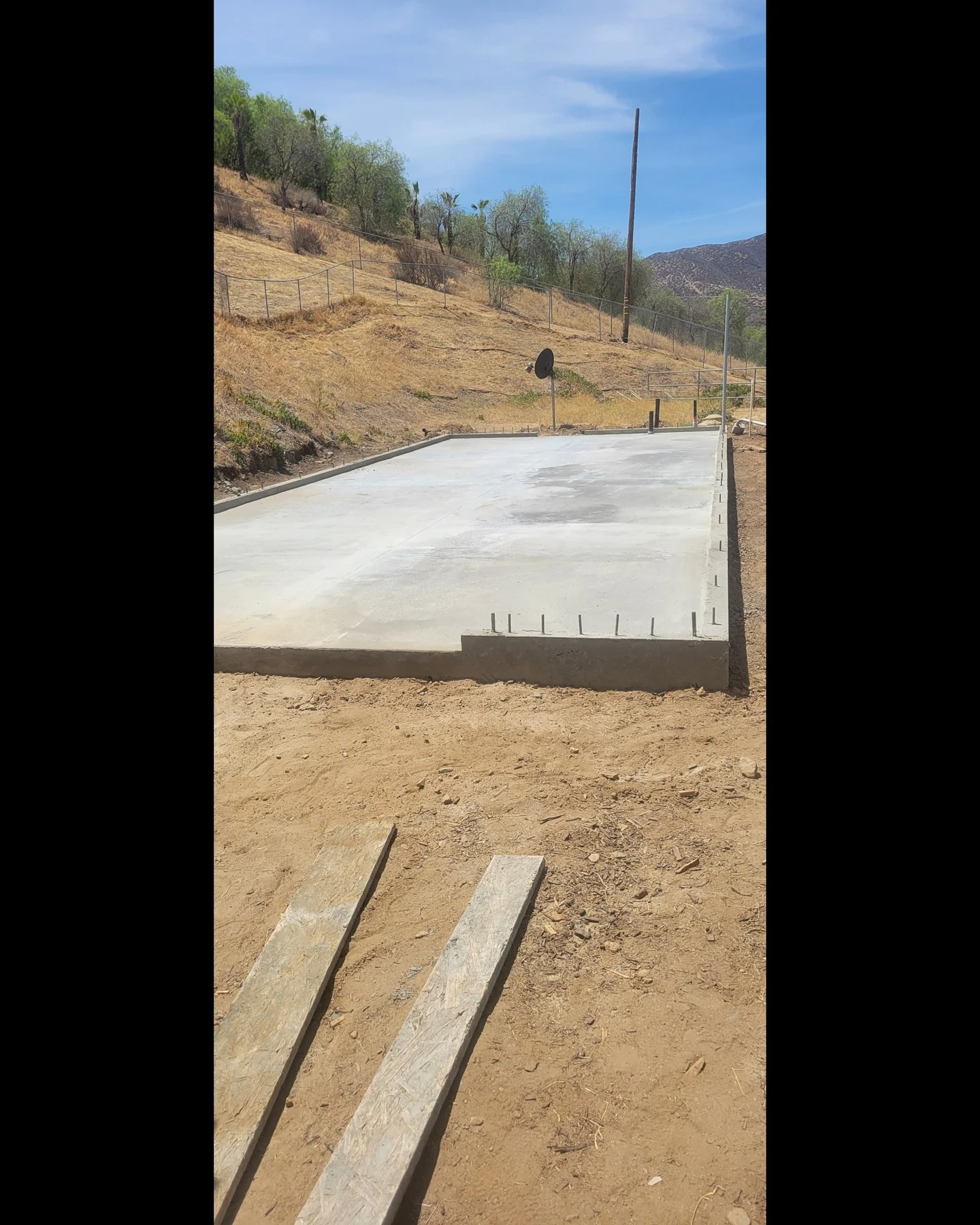
Concrete placed at a hundred and five degrees behaves nothing like concrete placed at seventy. It stiffens fast, the surface skins over while the body is still soft, and you get a finish that looks closed but is not. Hot weather pours get scheduled early and treated differently.
Irrigation next to flatwork
Sprinklers running against a slab edge keep the base saturated year round. In expansive soil that is a slow way to undermine your own driveway. Where the water lands matters.
Joints planned on paper
Joint layout gets worked out before the pour, spaced to the thickness and placed where the slab wants to move anyway. Then it gets cut at the right time.
Steel sized to the movement
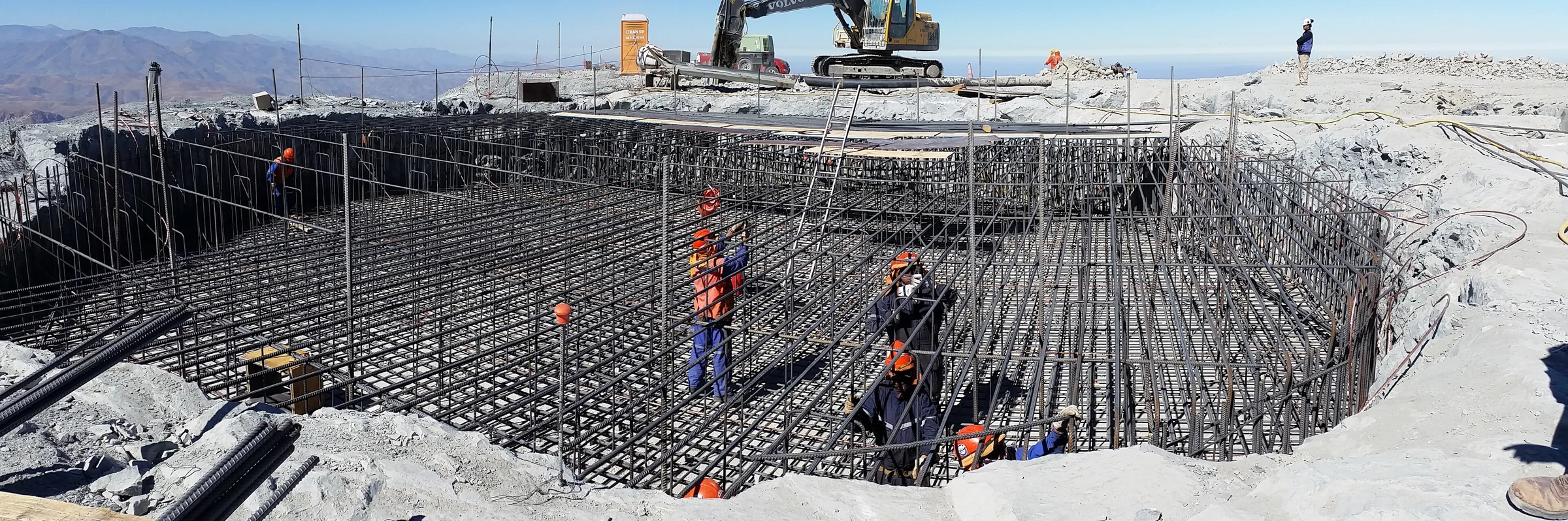
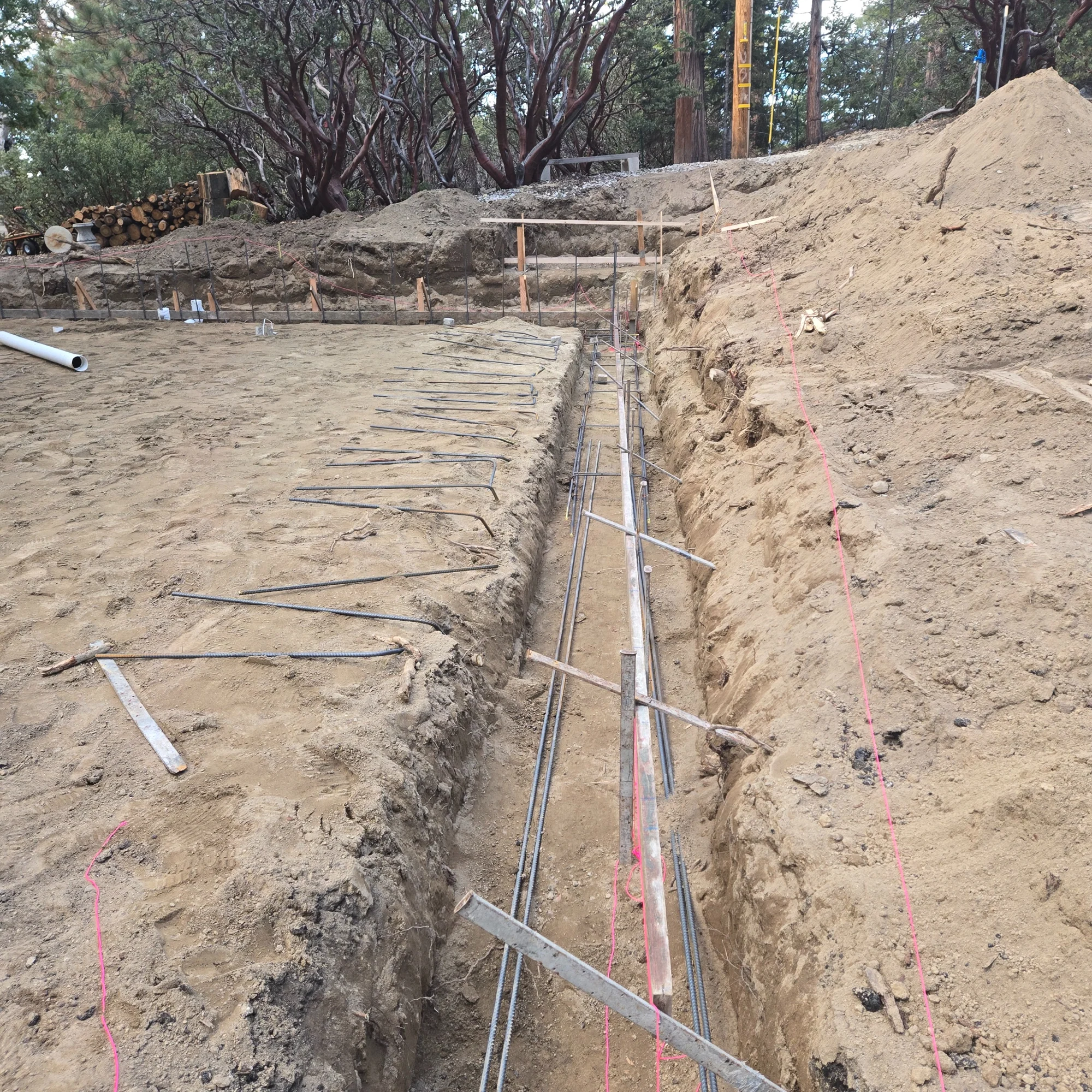
Reinforcement gets placed for what the soil is going to do, on chairs at the right height with real cover. Steel lying on the dirt does nothing at all.
Water routed off the slab
Slopes, low points and a path for water to leave are set before the pour, because afterward the drainage is permanent.
What we build in Rancho Cucamonga
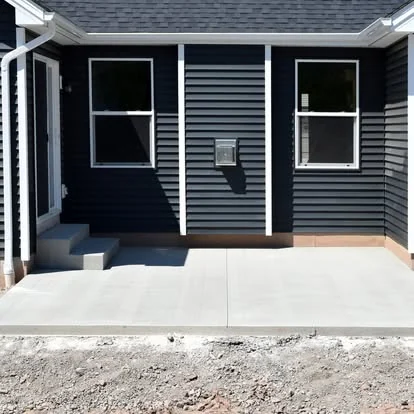
Concrete Slabs
The flat pour everything else is a version of.
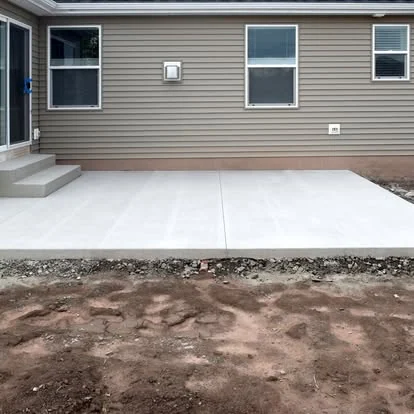
Concrete Slab Repair
Cracks and surface failure on a slab worth keeping.
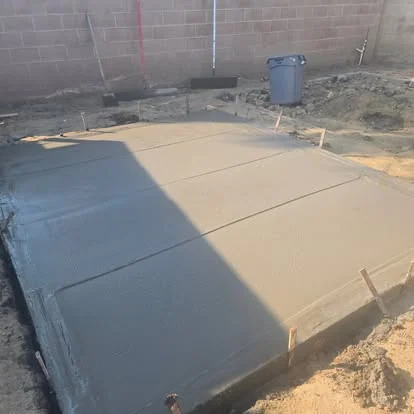
Concrete Slab Replacement
When the base failed, the slab follows.
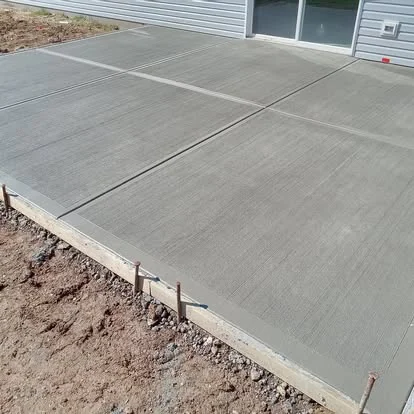
Garage Floors
Hot tires, dropped tools, and whatever ran off the car.
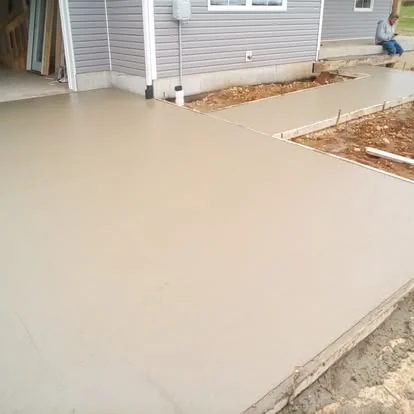
Garage Aprons
The strip between the driveway and the garage door.
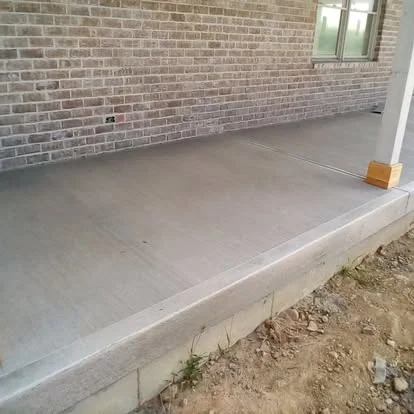
Basement Floors
A slab poured inside, where moisture has nowhere to go.
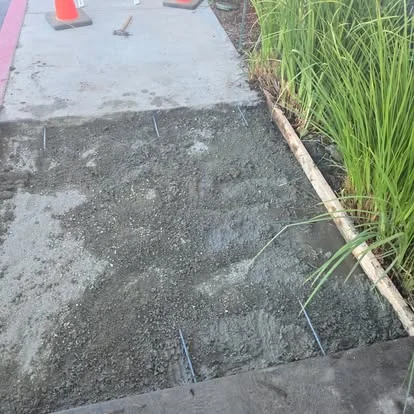
Concrete Repair
Fix the concrete that is worth fixing.
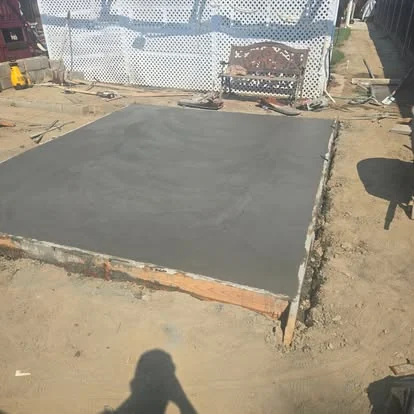
Concrete Crack Repair
Some cracks are cosmetic. Some are a message.
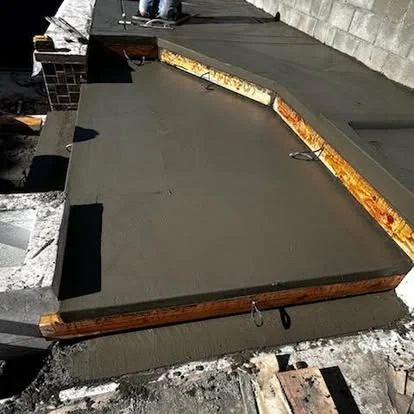
Spalled Concrete Repair
Surface flaking down to the aggregate.
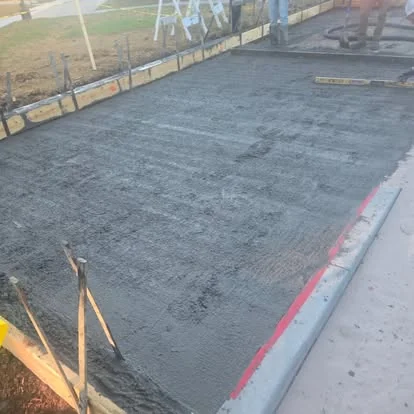
Concrete Trash Enclosures
Walls, slab, and apron as one detail.
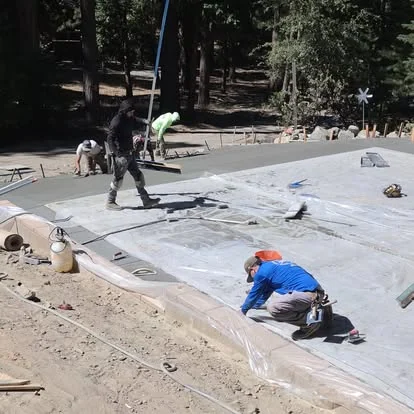
Concrete Aprons
The transition slab that takes the worst of it.

Drive Approaches
Where private property meets the public street.
Pouring concrete around Rancho Cucamonga
What lasts here
A properly based, properly jointed slab with reinforcement sized to the load will outlast the house it sits beside. The variables that decide it are all underneath and all invisible once the pour is done, which is exactly why they get cut on cheap jobs.
Summer pours
Triple digit afternoons change how concrete behaves. It stiffens before it can be finished properly, the surface skins over while the body underneath is still soft, and water leaves the slab faster than the cement can use it. Valley pours start early, the mix gets adjusted for the heat, and curing is treated as an active step instead of something that happens on its own.
Irrigation against the slab
Almost every valley property waters something, and sprinklers running along a slab edge keep the base saturated year round. In expansive soil that is a slow way to undermine your own driveway. Where the water lands is worth looking at before blaming the concrete.
Older flatwork around here
A lot of valley concrete was poured thin, with light reinforcement, on a base that was never properly compacted. When it fails it is usually reporting on the ground rather than on the mix, and that is the difference between a repair that holds and one that comes back in a year.
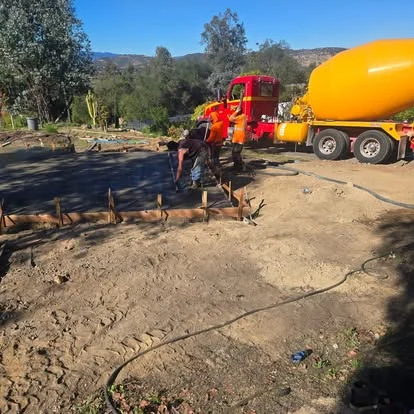
Concrete work around Rancho Cucamonga
Flatwork, foundations and repair across Rancho Cucamonga and the rest of San Bernardino County, poured by the same crew that answers the phone.
How concrete fails, and why
Thin slab cracking under vehicles
A four inch slab under a work truck or an RV will crack in the wheel path. Thickness has to come off the actual load, not off what is typical.
Joints in the wrong place
Joints spaced too far apart let the slab crack between them. The rule of thumb is roughly two to three feet of spacing per inch of thickness.
Surface loss at door thresholds
Water runs off a roof or a door and lands in the same line every time. Concentrated water wears concrete, and a drip line is a real design consideration.
Reinforcement too low
Steel sitting on the subgrade is doing nothing. It has to be lifted on chairs into the upper portion of the slab where tension actually occurs.
How a job runs
Scheduling
Weather moves concrete dates, particularly in summer. We would rather move a pour than place into conditions that will not finish or cure properly.
Site access
A mixer is a large, heavy vehicle. Where it can park and how far the concrete has to travel changes the method and sometimes the price. That is worked out in advance.
Steel lying on the dirt does nothing at all.On reinforcement
Protecting what stays
Existing flatwork, landscaping, and anything we are working next to gets protected. Concrete is messy while it happens.
Curing time
The slab is not finished when it looks finished. Curing continues for weeks and how it is protected in the first days affects the surface for the life of it.
Around Rancho Cucamonga
Straight answers
Does the clay soil here really matter that much?
Yes. Expansive clay swells with water and shrinks when it dries, every year. That movement is what cracks slabs and foundations, and it is handled in the base, the reinforcement and the drainage rather than in the finish.
My sprinklers run along the driveway. Is that a problem?
It can be. Constant water at a slab edge keeps the base saturated, and in expansive soil that undermines the concrete from underneath. Where the water lands is worth looking at before blaming the slab.
How thick should my driveway be?
It comes off what parks on it. A passenger car drive and one carrying a loaded work truck or an RV are not the same slab, and the wheel path is where a thin one cracks first.
How long before I can drive on it?
Concrete takes most of its strength in the first week. Foot traffic is usually fine within a day or two; vehicles wait longer. On a valley summer pour the numbers shift, so you get the real ones for your slab rather than a generic answer.
Can you pour in the middle of summer?
We do, and we start early. Triple digit afternoons stiffen the mix before it can be finished and pull water out of the slab, so hot weather pours get scheduled, mixed and cured differently. Sometimes the right answer is moving the date.
Pouring in Rancho Cucamonga
We would rather stand on the job than guess at it. Call and we will set a time to come and look.