
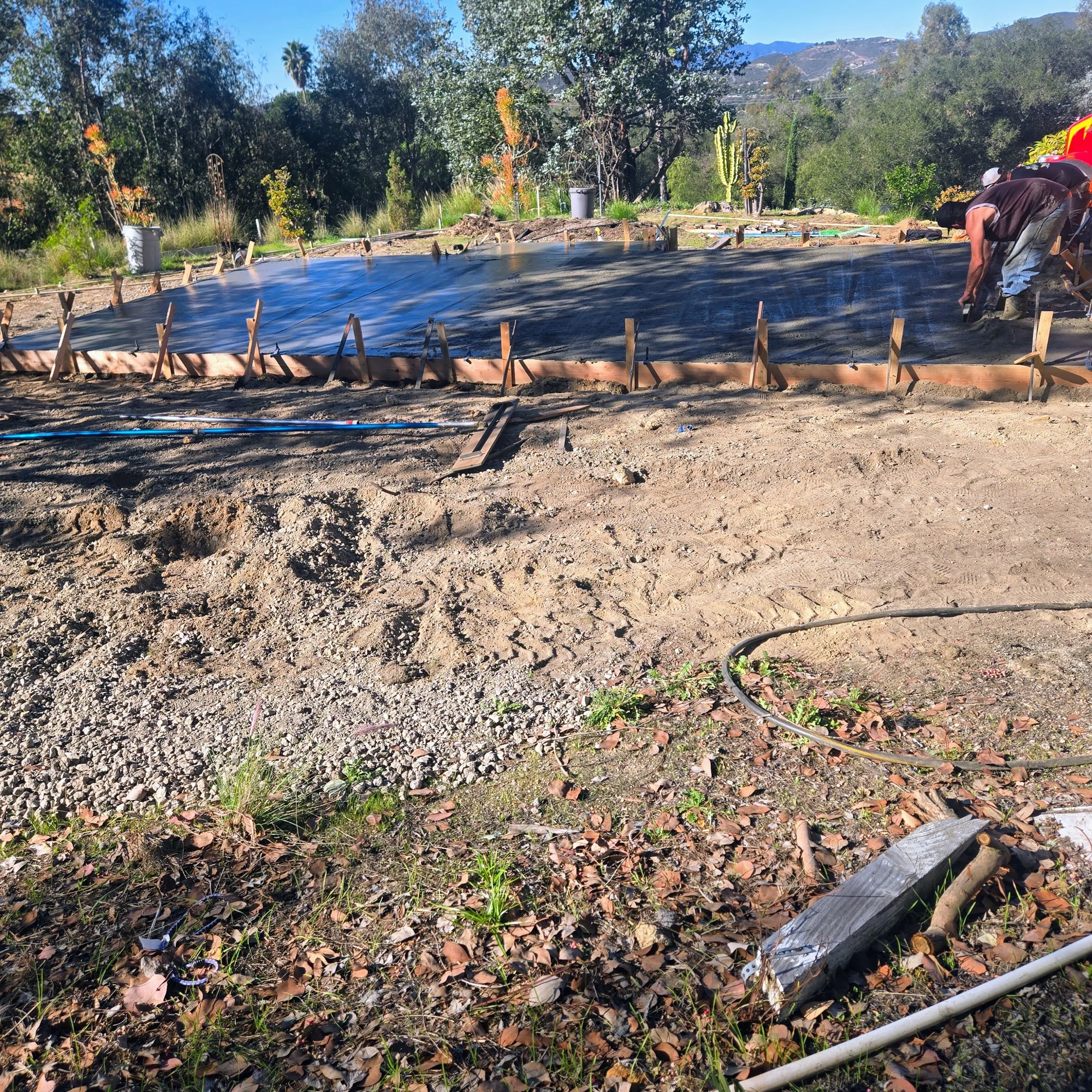
Baker slabs, built from the base up
Most concrete fails from underneath, so that is where we start. Serving Baker and San Bernardino County with 32 years in the trade behind every pour.
Talk to us about the job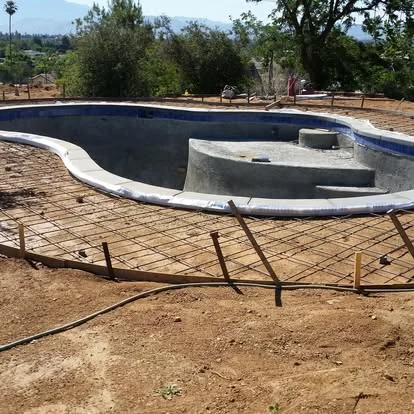
What concrete is up against around Baker
Winter scheduling
Placing concrete into a hard freeze is how you get a slab that never cures properly. Cold weather pours either get protection or get rescheduled.
Long runs and long cracks
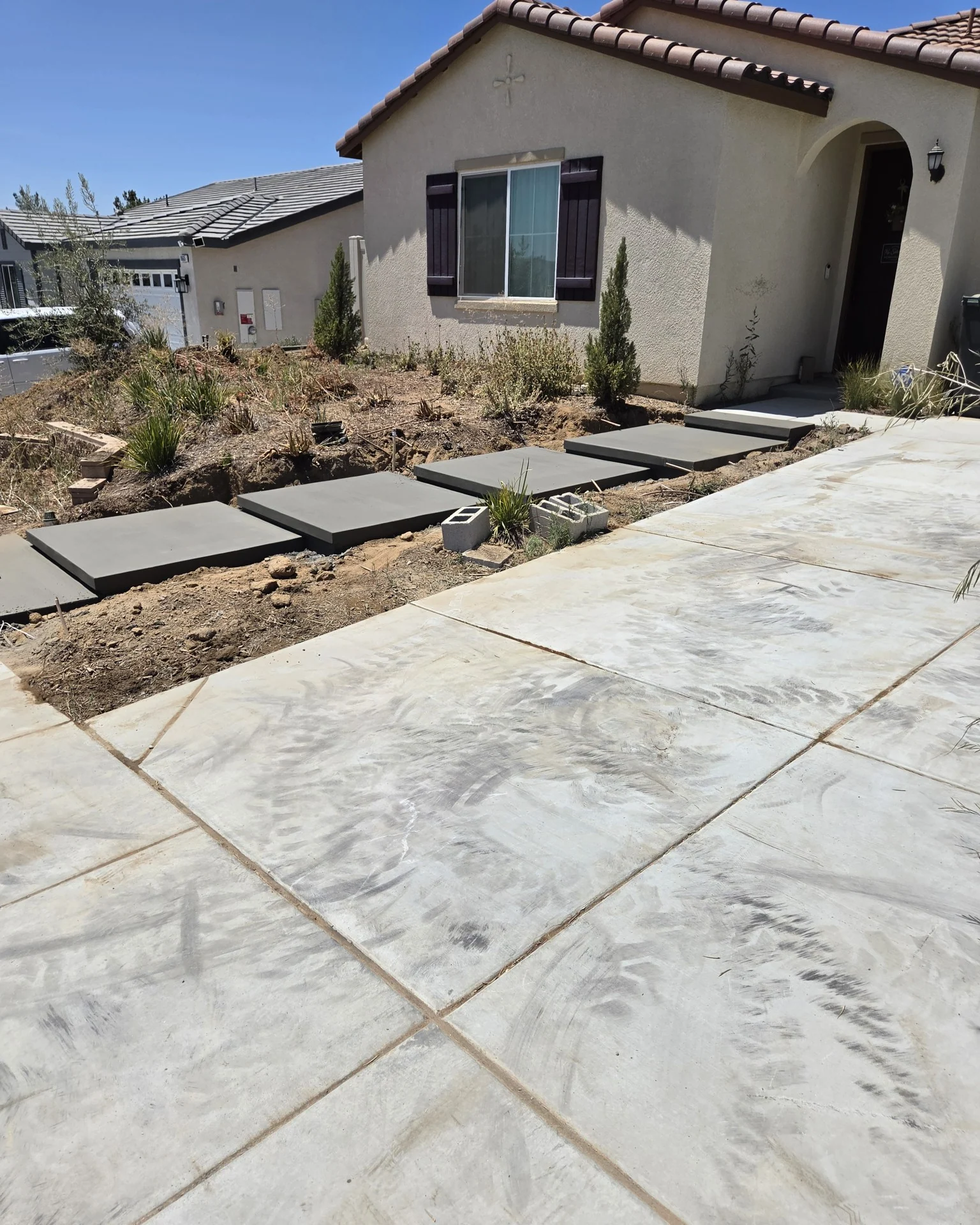
High desert lots are often big, which means long driveways and long slabs. Length multiplies movement, so joint spacing and layout matter more than on a small urban pad.
Wind and the finishing window
Sustained wind pulls water out of a fresh slab fast. Combined with low humidity it can close the finishing window early and leave a crazed surface. Pours get planned around the forecast.
Cleanup is part of the job
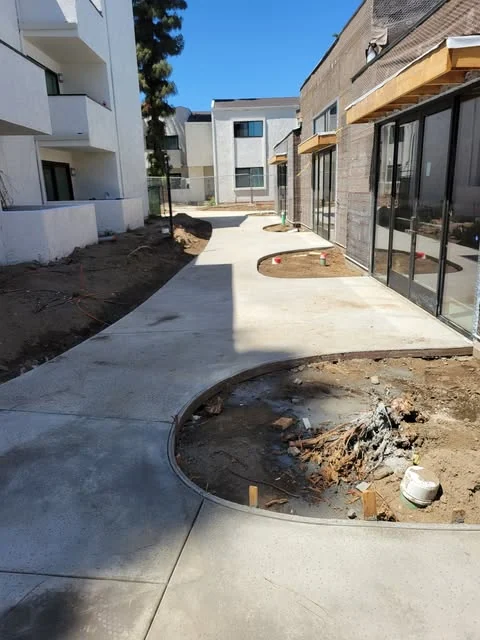
Washout handled properly, spoil hauled, surfaces cleaned. Concrete work is messy while it happens and should be invisible when it is done.
Joints planned on paper
Joint layout gets worked out before the pour, spaced to the thickness and placed where the slab wants to move anyway. Then it gets cut at the right time.
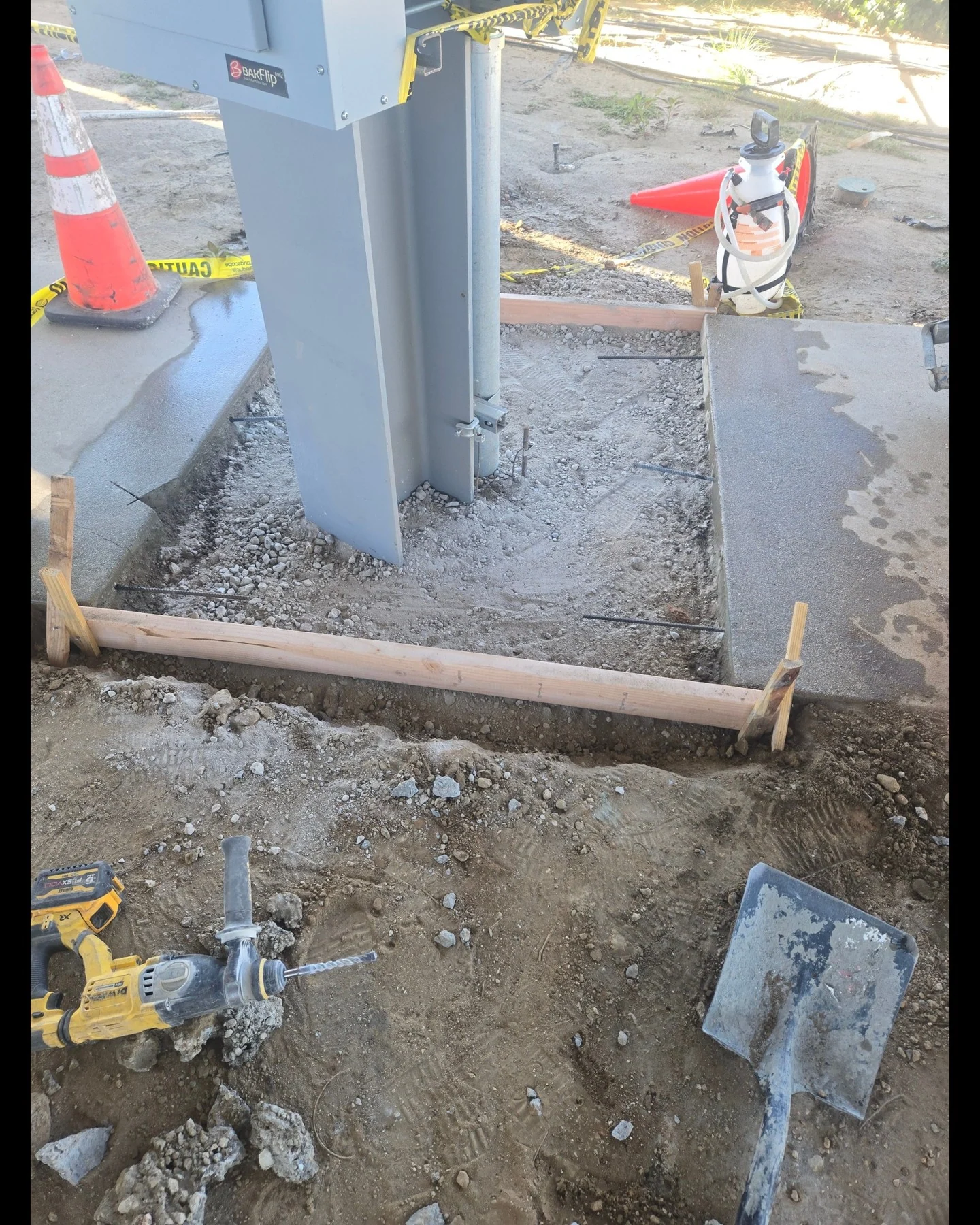
Base first, always
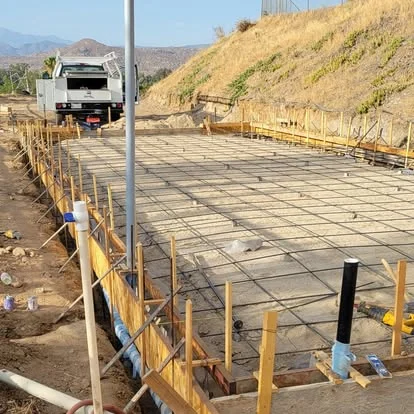
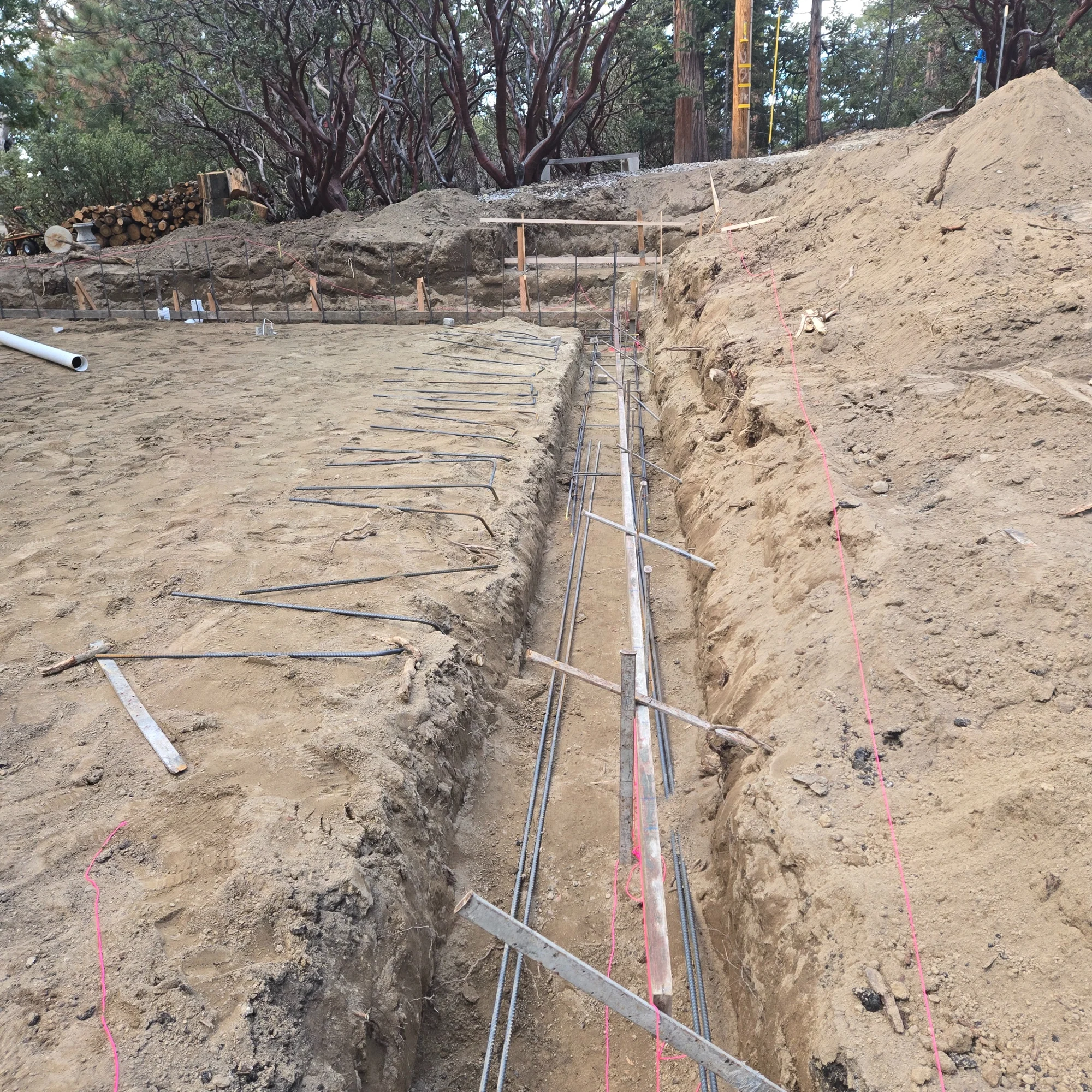
We cut to grade, fix the soft spots we find, and compact base in lifts before anything is formed. In expansive clay that step decides the whole outcome, so it is not where we save money.
What we build in Baker
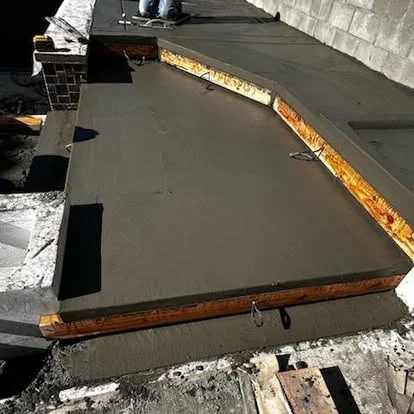
Outdoor Living Concrete
Kitchens, fire features, and seating built on concrete.
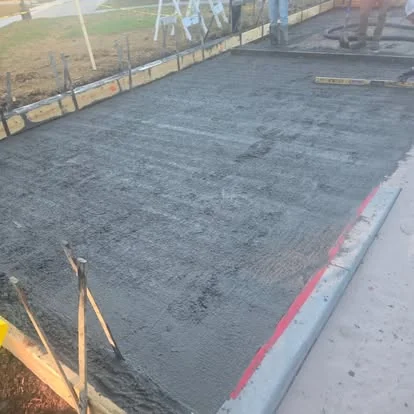
Concrete Driveways
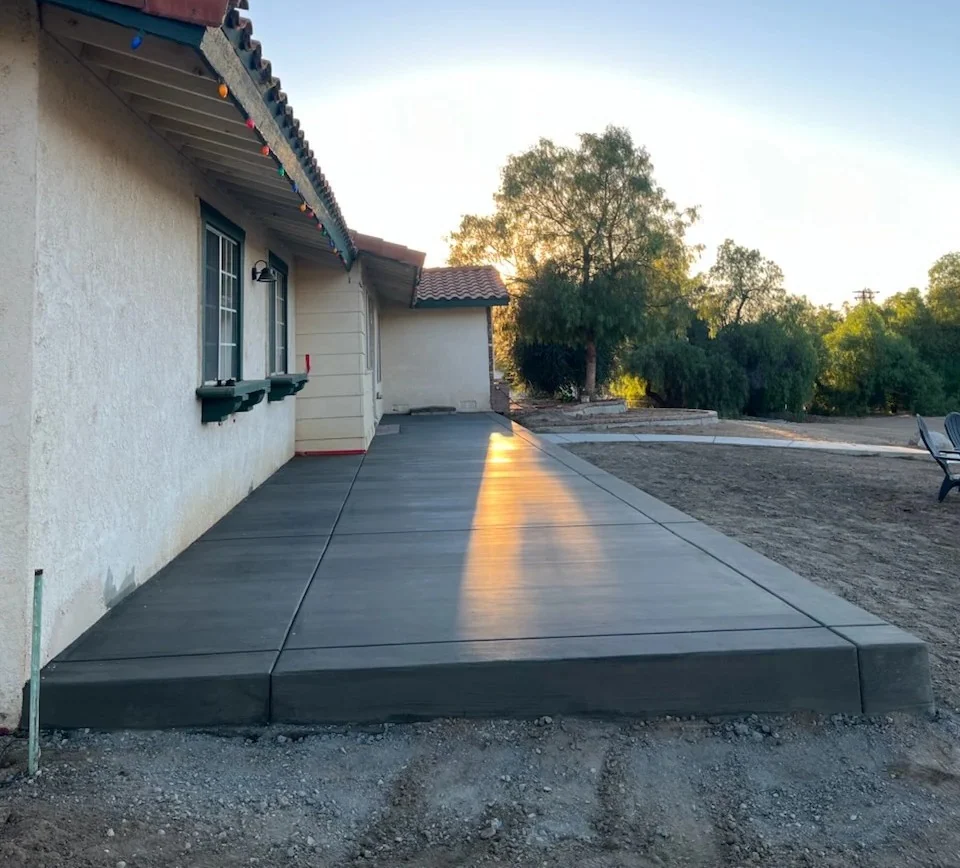
The slab that carries a car every day of its life.
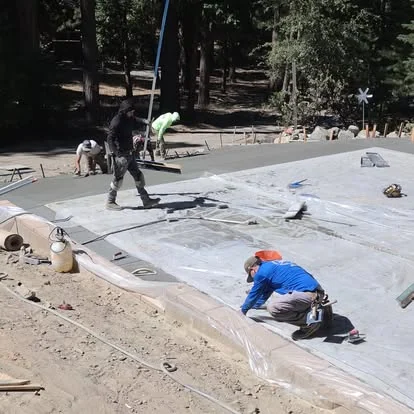
Concrete Driveway Replacement
Out to the dirt, rebuilt from the base up.

Concrete Driveway Repair
Fix what is broken and leave what is sound.
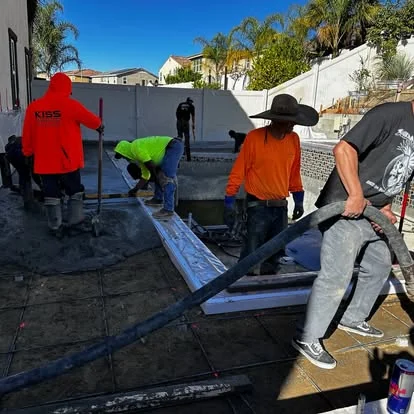
Concrete Patios
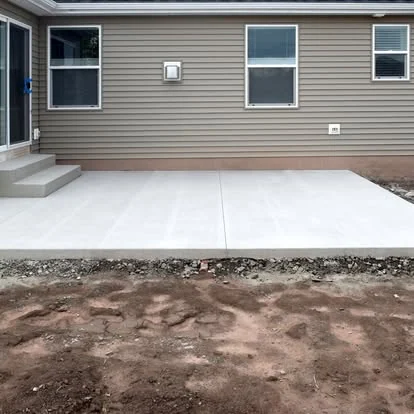
The outdoor room that starts as a flat pour.
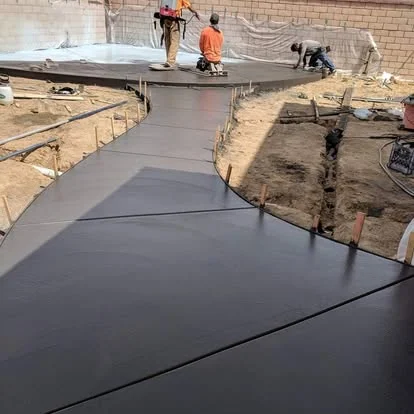
Concrete Patio Replacement
Take out the old slab, pour the one you actually wanted.
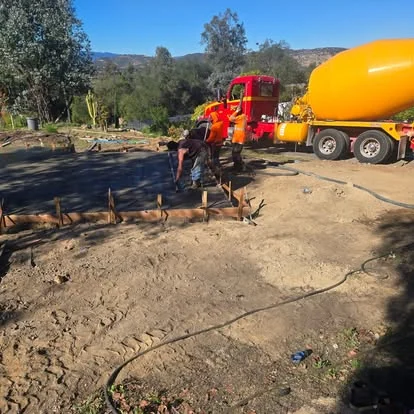
Control Joint Installation
Deciding where the crack goes.
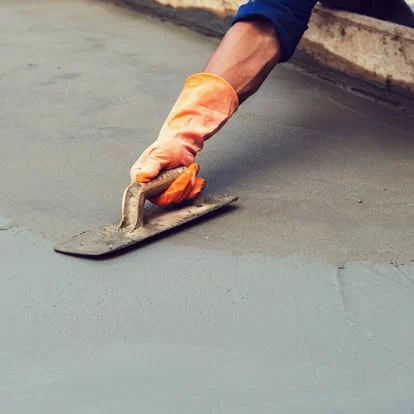
Concrete Repair
Fix the concrete that is worth fixing.

Concrete Crack Repair
Some cracks are cosmetic. Some are a message.
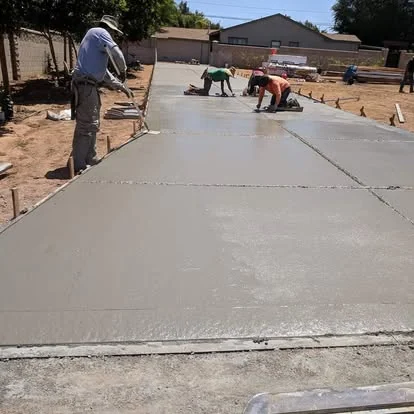
Utility Pads
Pads for meters, generators, and mechanical gear.
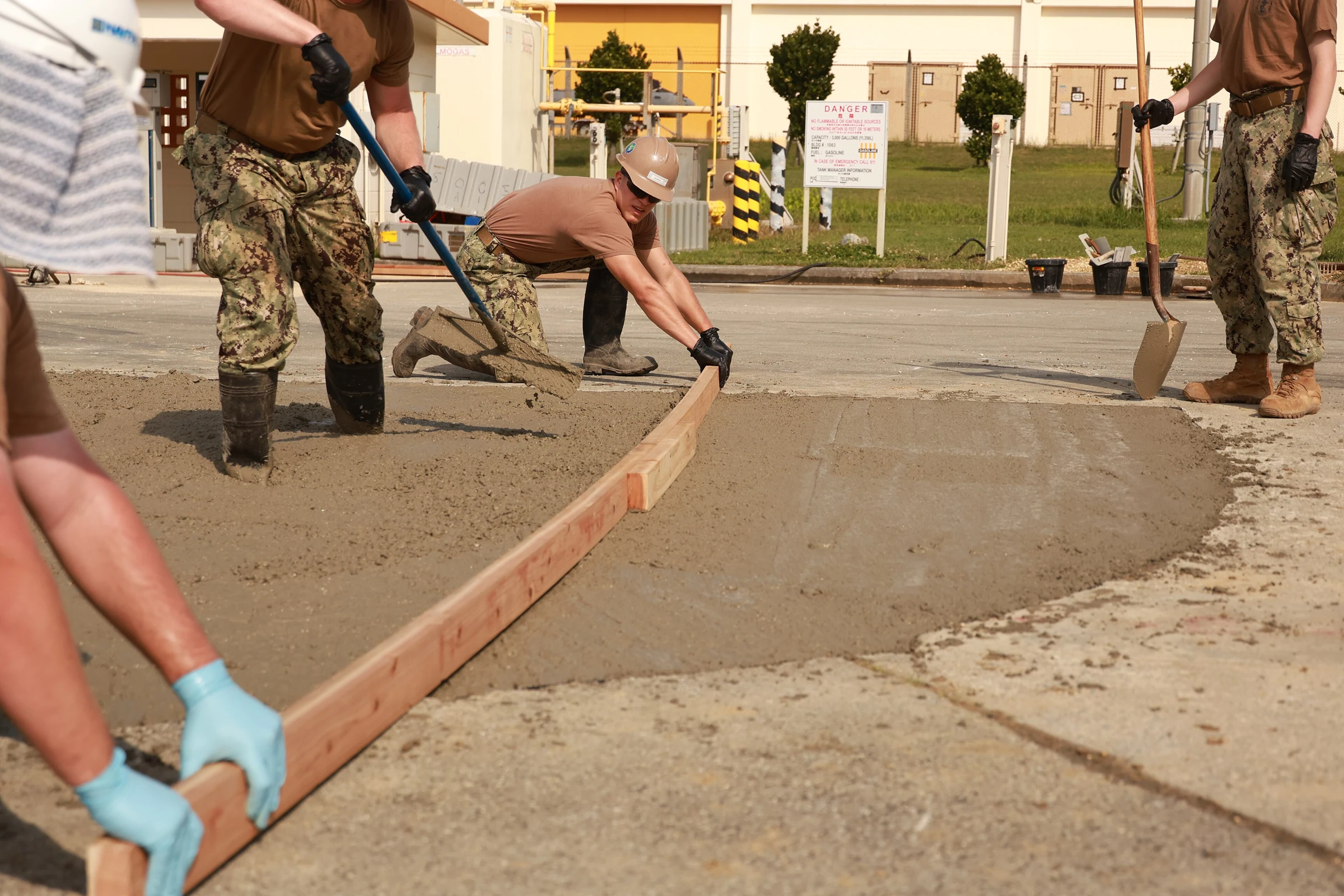
Bollard Foundations
The concrete that stops a vehicle.

Concrete Trash Enclosures
Walls, slab, and apron as one detail.
Pouring concrete around Baker
Wind and the finishing window
Sustained wind combined with very low humidity pulls water out of fresh concrete fast enough to close the finishing window early and craze the surface. Pours get planned around the forecast, not just the calendar.
Freeze and thaw is real at this elevation
The high desert genuinely freezes, and that changes the concrete conversation completely. Water gets into the pores, freezes, expands and works the surface apart from inside. Over a decade that is the difference between a sound slab and a pitted, spalling one. Air entrainment and sealing both matter here in a way they do not down in the valley.
Decomposed granite and alluvium
Much of the high desert is decomposed granite and alluvial material. Worked properly in lifts it compacts into an excellent base; dumped and raked flat it behaves badly and the slab tells you so within a few years.
Long runs on big lots
High desert properties are often large, which means long driveways and big slabs. Length multiplies movement, so joint spacing and layout matter more here than on a small urban pad, and a long drive poured without a joint plan will crack wherever it likes.
Concrete work around Baker
Flatwork, foundations and repair across Baker and the rest of San Bernardino County, poured by the same crew that answers the phone.
How concrete fails, and why
Thin slab cracking under vehicles
A four inch slab under a work truck or an RV will crack in the wheel path. Thickness has to come off the actual load, not off what is typical.
Joints in the wrong place
Joints spaced too far apart let the slab crack between them. The rule of thumb is roughly two to three feet of spacing per inch of thickness.
Surface loss at door thresholds
Water runs off a roof or a door and lands in the same line every time. Concentrated water wears concrete, and a drip line is a real design consideration.
Reinforcement too low
Steel sitting on the subgrade is doing nothing. It has to be lifted on chairs into the upper portion of the slab where tension actually occurs.
How a job runs
Preparation you may need to do
Moving vehicles, clearing the area, and sometimes irrigation being shut off. We will tell you in advance what is on you.
Demolition day
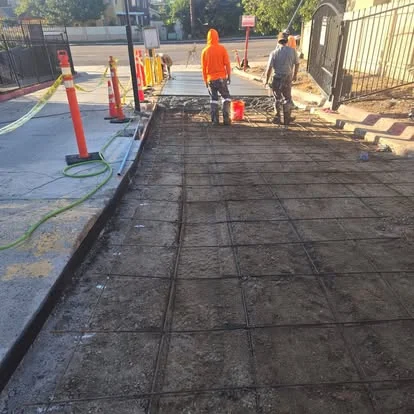
Saw cutting, breaking, loading and hauling. It is the loudest and dirtiest part and it usually happens first.
The honest answer is sometimes the cheaper one.On quoting
Pour day
Early start in summer. The crew works continuously until the slab is placed and finished, because concrete sets on its own schedule.
Keeping off it
How long depends on the pour and the weather. You will get a real number, not a generic one.
Around Baker
Straight answers
How does the wind affect a pour?
Sustained wind with very low humidity closes the finishing window early and crazes the surface. Pours get planned around the forecast, not just the calendar.
What soil is under most of these lots?
Decomposed granite and alluvium, mostly. Worked in lifts it compacts into excellent base; dumped and raked flat it behaves badly.
Does concrete really freeze up here?
Yes, and that changes the whole conversation. Water in the pores freezes, expands and works the surface apart from inside, which is why high desert slabs pit and spall in a way valley slabs do not. Air entrainment and sealing both matter here.
Is sealing worth it here?
More than anywhere else we work. Where freeze cycling is real, keeping water out of the pores is the difference between a slab that lasts and one that spalls.
Is delivery a problem this far out?
It can affect the window and how the pour is staged. We plan it honestly rather than discovering it with a truck on site.
Start with a site visit
No number goes out on a photograph. We come to Baker, look at the ground and the access, and price the work from that.