

Poured once, done right
Fontana driveways, patios, foundations and repair work. Licensed 1137822, fourth generation, and straight about what a job actually needs.
Talk to us about the job

What concrete is up against around Fontana
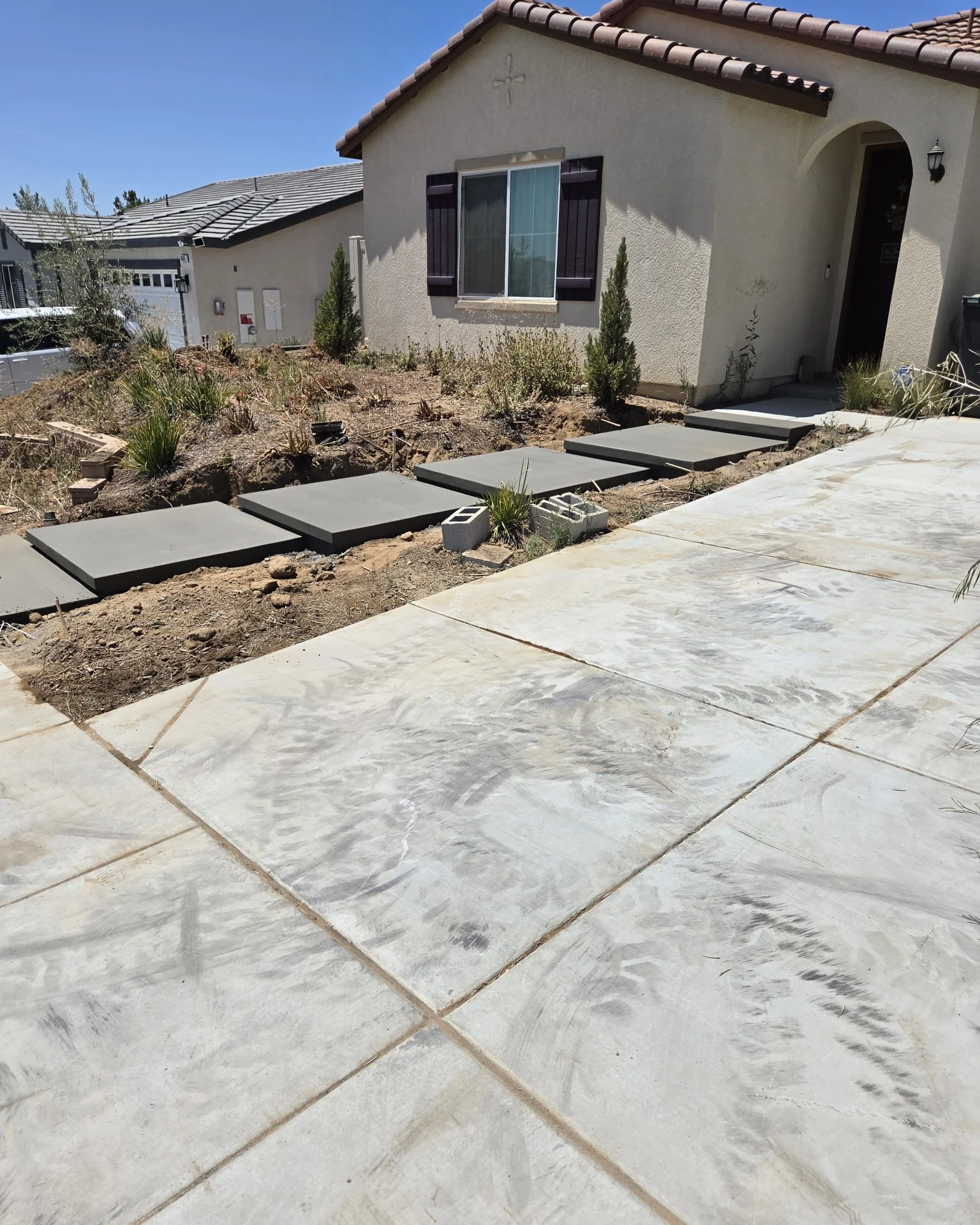
Matching what stays
Replacing part of a run means matching the thickness, the finish and the joint pattern of what stays, so the job reads as one surface rather than a patch.
Neighbors and noise
Saw cutting and breaking concrete is loud, and in a dense neighborhood that is a real constraint. Hours get worked out in advance.
Trip hazards and liability
A lifted panel on a public walk is a liability the property owner carries. Grinding a lip or replacing the panel is cheap next to a claim.
Cleanup is part of the job
Washout handled properly, spoil hauled, surfaces cleaned. Concrete work is messy while it happens and should be invisible when it is done.
Base first, always
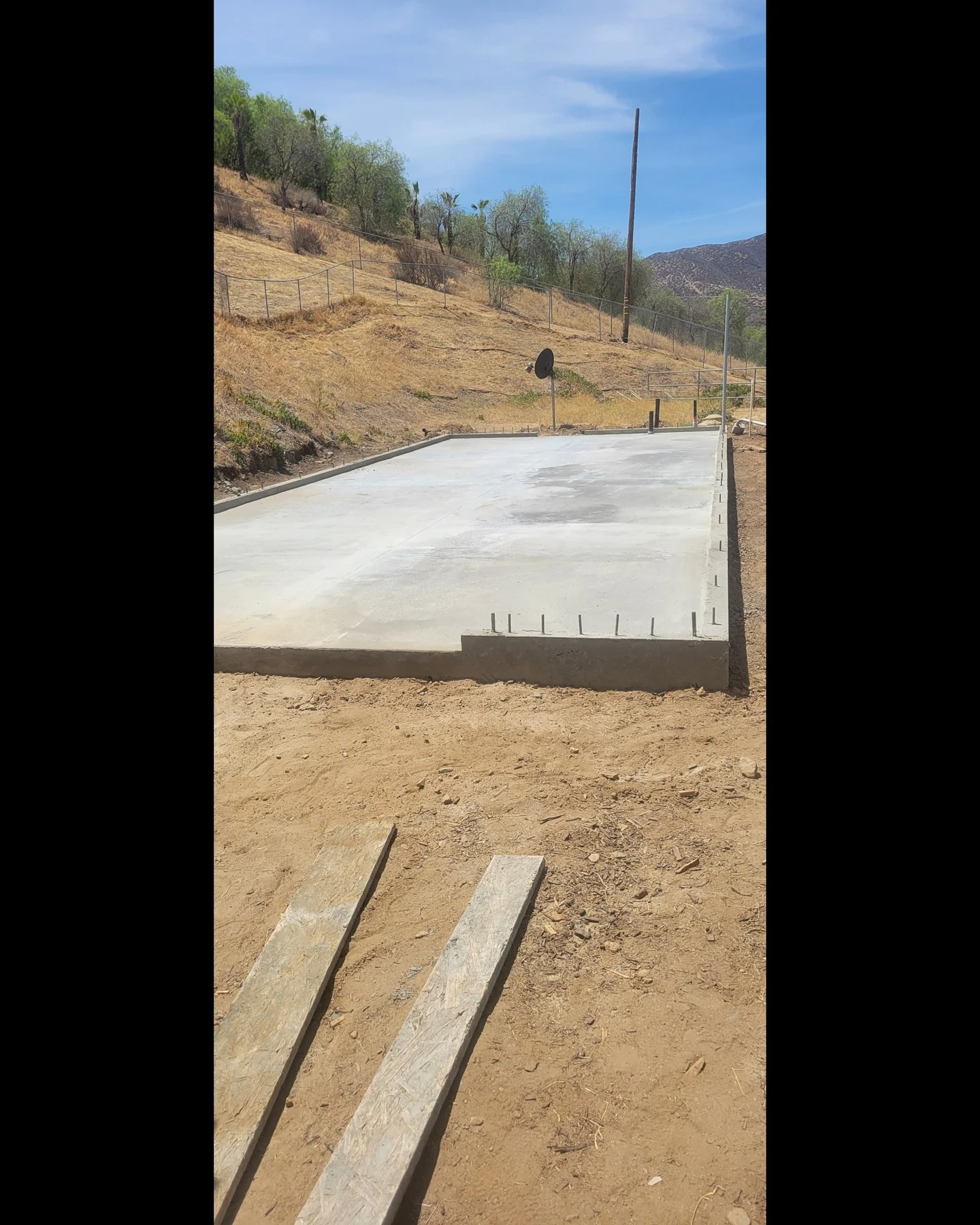
We cut to grade, fix the soft spots we find, and compact base in lifts before anything is formed. In expansive clay that step decides the whole outcome, so it is not where we save money.
Curing treated as a step
Fresh concrete gets protected from dry wind and sun until it has what it needs. Skipping that is how you get a dusty, weak top layer.
What we build in Fontana
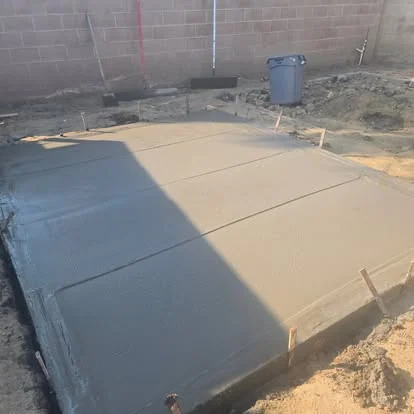
Concrete Patio Replacement
Take out the old slab, pour the one you actually wanted.
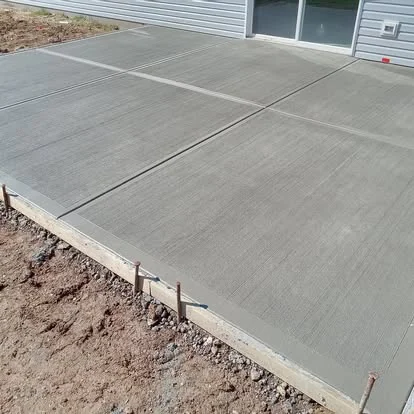
Concrete Patio Repair
Cracks, settled corners, and surfaces that have gone rough.
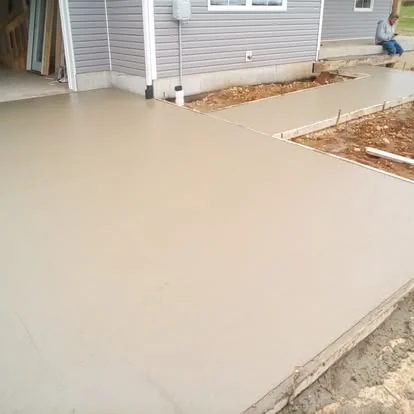
Concrete Walkways
Getting from the street to the door without a trip hazard.
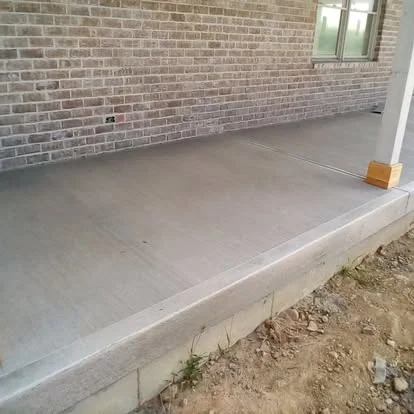
Concrete Sidewalks
Public-facing flatwork built to the spec the city will inspect.
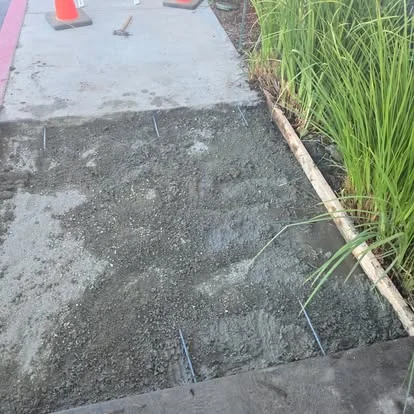
Concrete Sidewalk Repair
Lifted, cracked, or spalled panels made safe again.
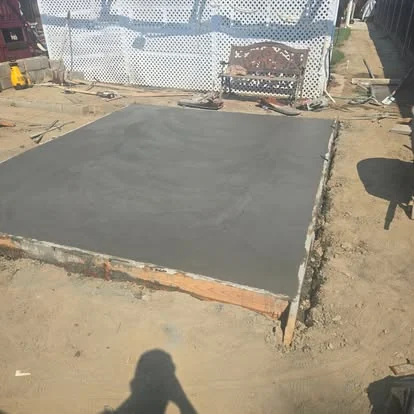
Concrete Sidewalk Replacement
Panel by panel, or the whole run.
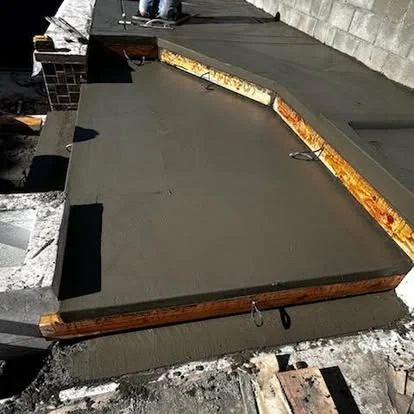
Concrete Resurfacing
A new surface on a sound slab.
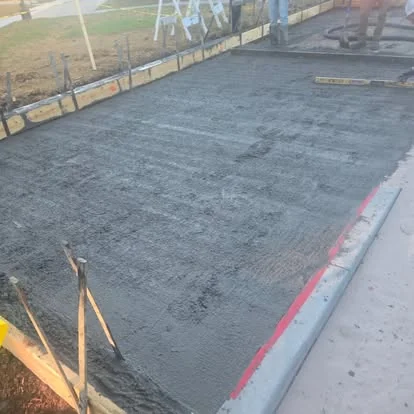
Concrete Leveling
Lifting a slab back to where it started.
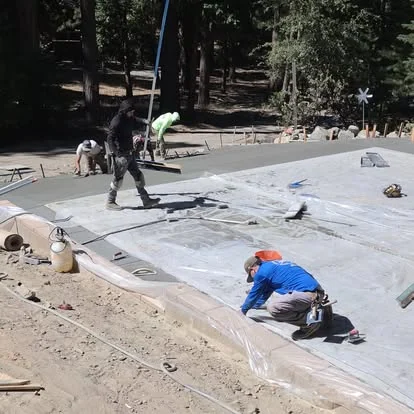
Concrete Grinding
Taking down high spots and trip lips.

Drive Approaches
Where private property meets the public street.
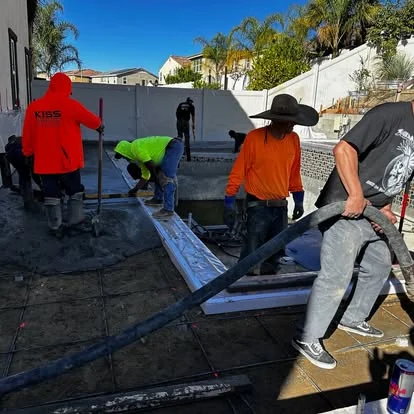
Concrete Curbs
Extruded or formed, straight and true.
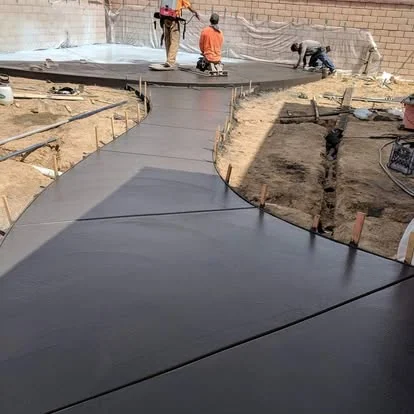
Concrete Gutters
Moving water where the grade will not.
Pouring concrete around Fontana
Permits and the right of way
Work in the public right of way, anything structural, and most full replacements need permits and inspection. We would rather have that conversation before anything is broken out than discover it when an inspector arrives.
Utilities nobody recorded
Older urban lots have services running in places no drawing shows. Anything cut or dug starts with locating, because finding a line with a saw is expensive and entirely avoidable.
Matching a run that stays
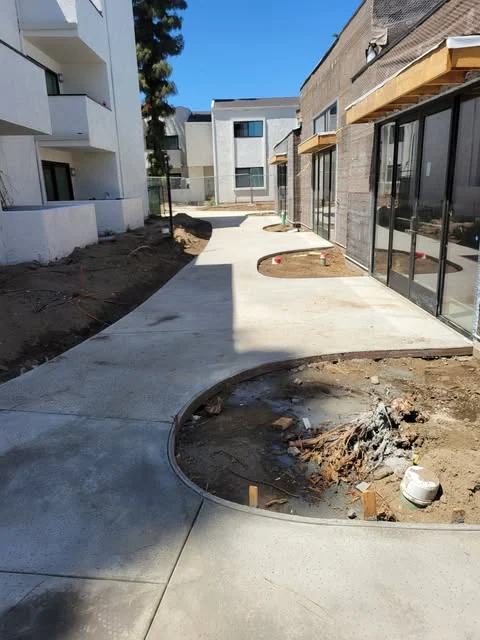
Replacing part of a walk or drive means matching thickness, finish and joint pattern to what remains, so the result reads as one surface rather than a patch. Color takes time to blend as concrete ages and we will be straight about that up front.
Older slabs and older assumptions
Much of the concrete in these neighborhoods was poured decades ago, thinner than we would build now and with lighter reinforcement over a base nobody tested. When it fails it is usually reporting on what is underneath, which is why we look at the cause before quoting the cure.
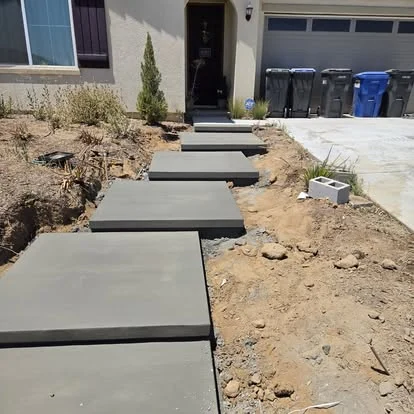
Concrete work around Fontana
Flatwork, foundations and repair across Fontana and the rest of San Bernardino County, poured by the same crew that answers the phone.
How concrete fails, and why
Thin slab cracking under vehicles
A four inch slab under a work truck or an RV will crack in the wheel path. Thickness has to come off the actual load, not off what is typical.
Joints in the wrong place
Joints spaced too far apart let the slab crack between them. The rule of thumb is roughly two to three feet of spacing per inch of thickness.
Surface loss at door thresholds
Water runs off a roof or a door and lands in the same line every time. Concentrated water wears concrete, and a drip line is a real design consideration.
Reinforcement too low
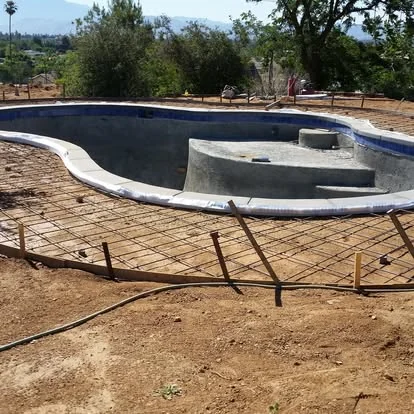
Steel sitting on the subgrade is doing nothing. It has to be lifted on chairs into the upper portion of the slab where tension actually occurs.
How a job runs
Preparation you may need to do
Moving vehicles, clearing the area, and sometimes irrigation being shut off. We will tell you in advance what is on you.
Demolition day
Saw cutting, breaking, loading and hauling. It is the loudest and dirtiest part and it usually happens first.
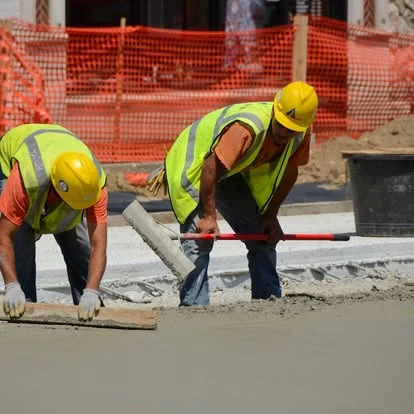
Knowing when to start floating is the part you cannot learn from a book.On finishing
Pour day
Early start in summer. The crew works continuously until the slab is placed and finished, because concrete sets on its own schedule.
Keeping off it
How long depends on the pour and the weather. You will get a real number, not a generic one.
Around Fontana
Straight answers
Can you match the neighboring concrete?
Close, not exact, since concrete ages. We match thickness, finish and joints so the run reads as one surface.
Can you get a truck to my property?
That gets worked out before the date is set. Narrow drives, alley access and parked cars all decide whether the concrete arrives by chute or by pump.
The concrete here is old and thin. Is that why it failed?
Often, along with a base nobody tested. Older urban flatwork was poured thinner with lighter steel, and when it fails it is usually reporting on what is underneath.
Can you replace just part of the walk?
Yes. Sidewalks fail in panels and can be replaced in panels, cut clean at the joints and matched to what stays in thickness, finish and joint pattern.
Am I liable for a lifted panel out front?
Generally the property owner carries that risk on a public walk, which is why grinding a lip or replacing a panel is cheap next to a claim.
Concrete work in Fontana
Call and we will come out, look at the job, and give you a number. Fontana sits inside the 100 mile radius we work out of Hemet.