
Rebar Installation
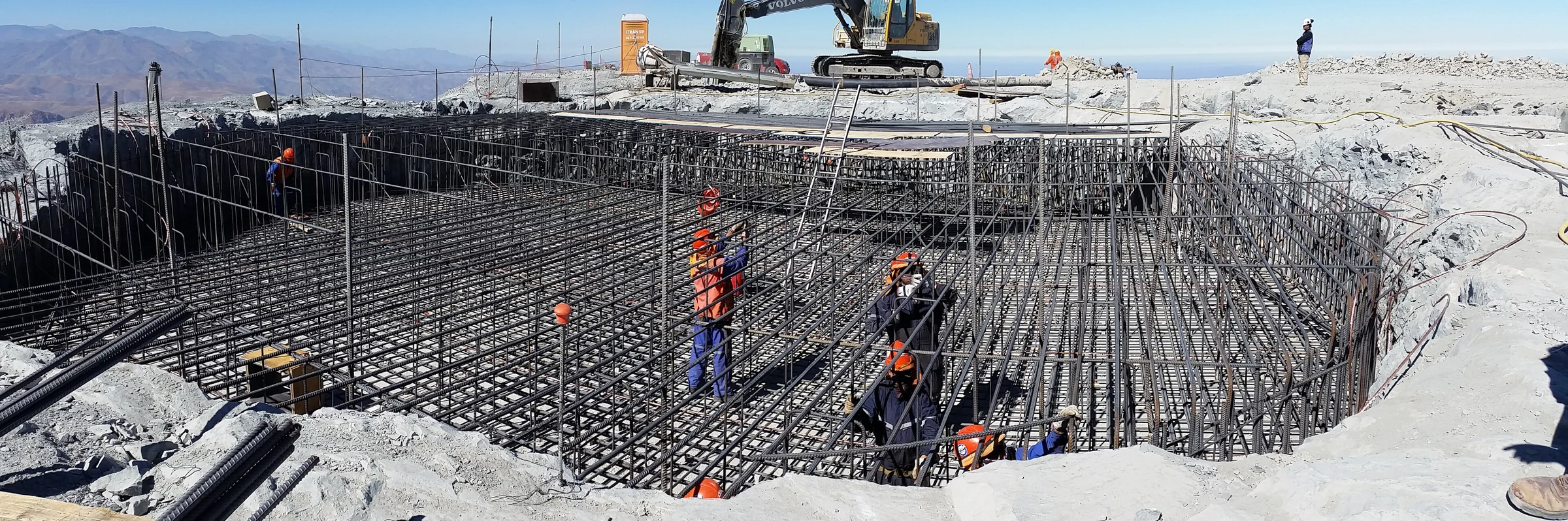
Rebar only works where it is. Cover, spacing, lap length and chairs are all specified, and an inspector checks them before the pour. Steel lying on the dirt does nothing.
Talk to us about the job
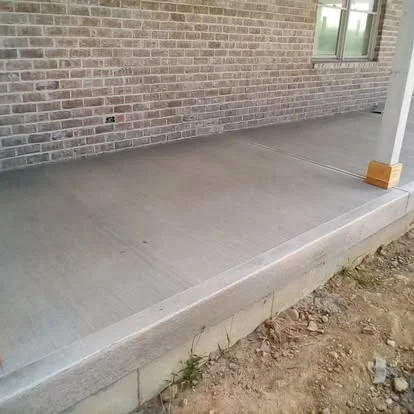


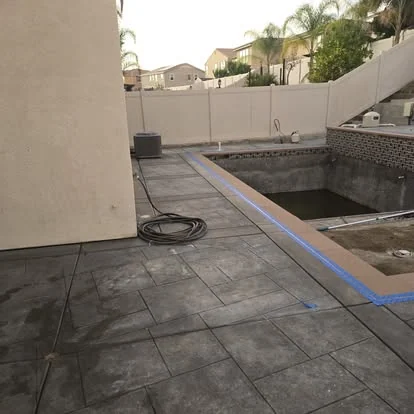
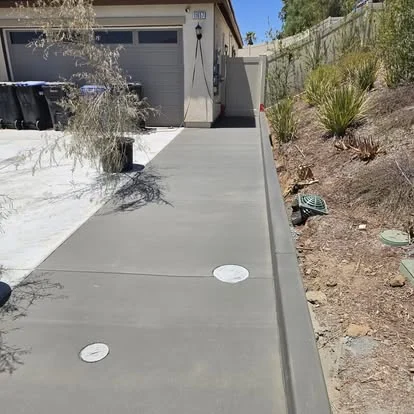

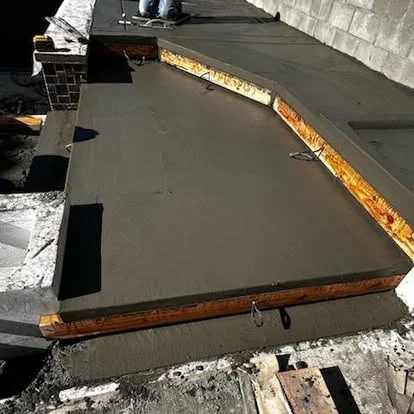
How the job runs
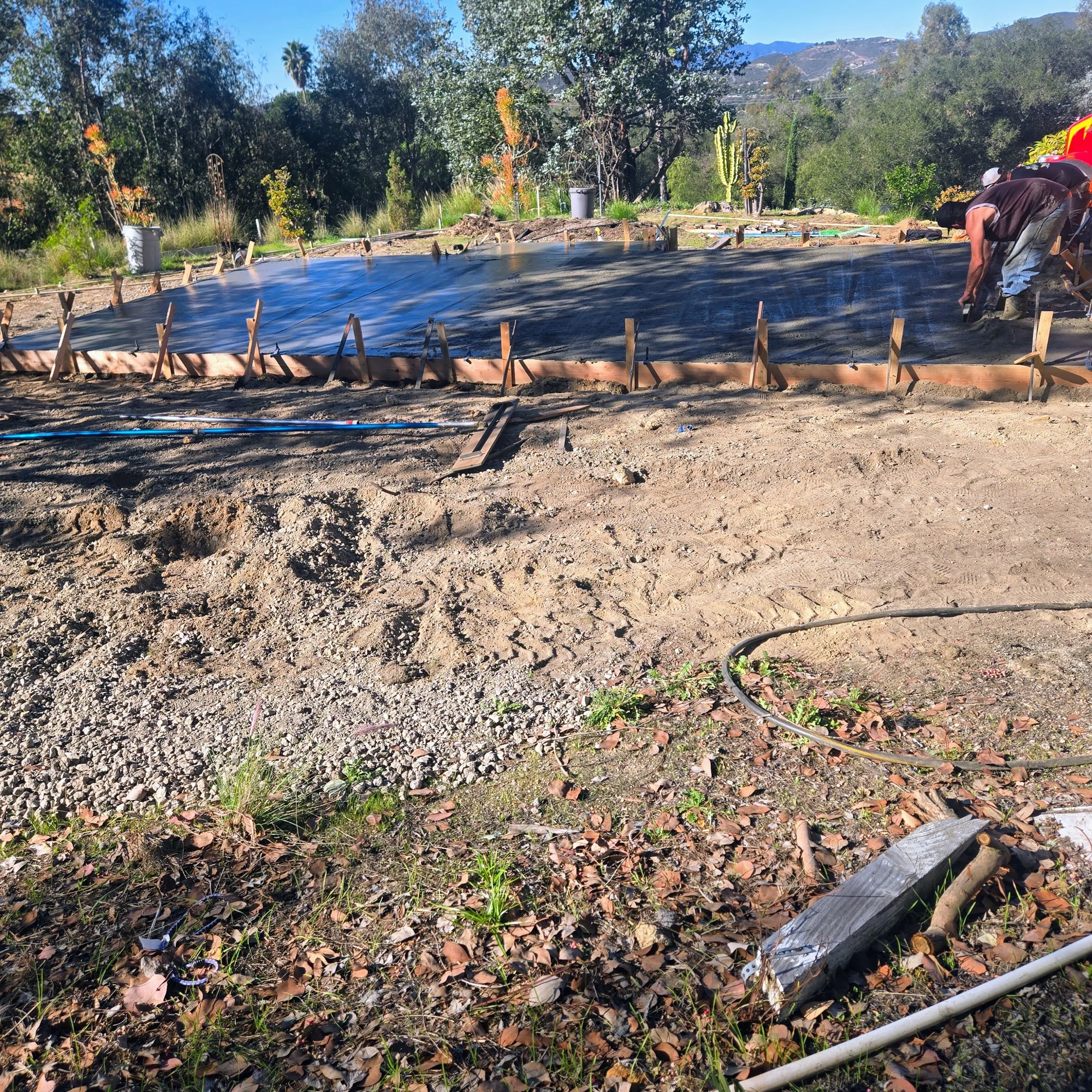
Walk it with you
A site visit before anything else, so the scope is built on what is actually there.
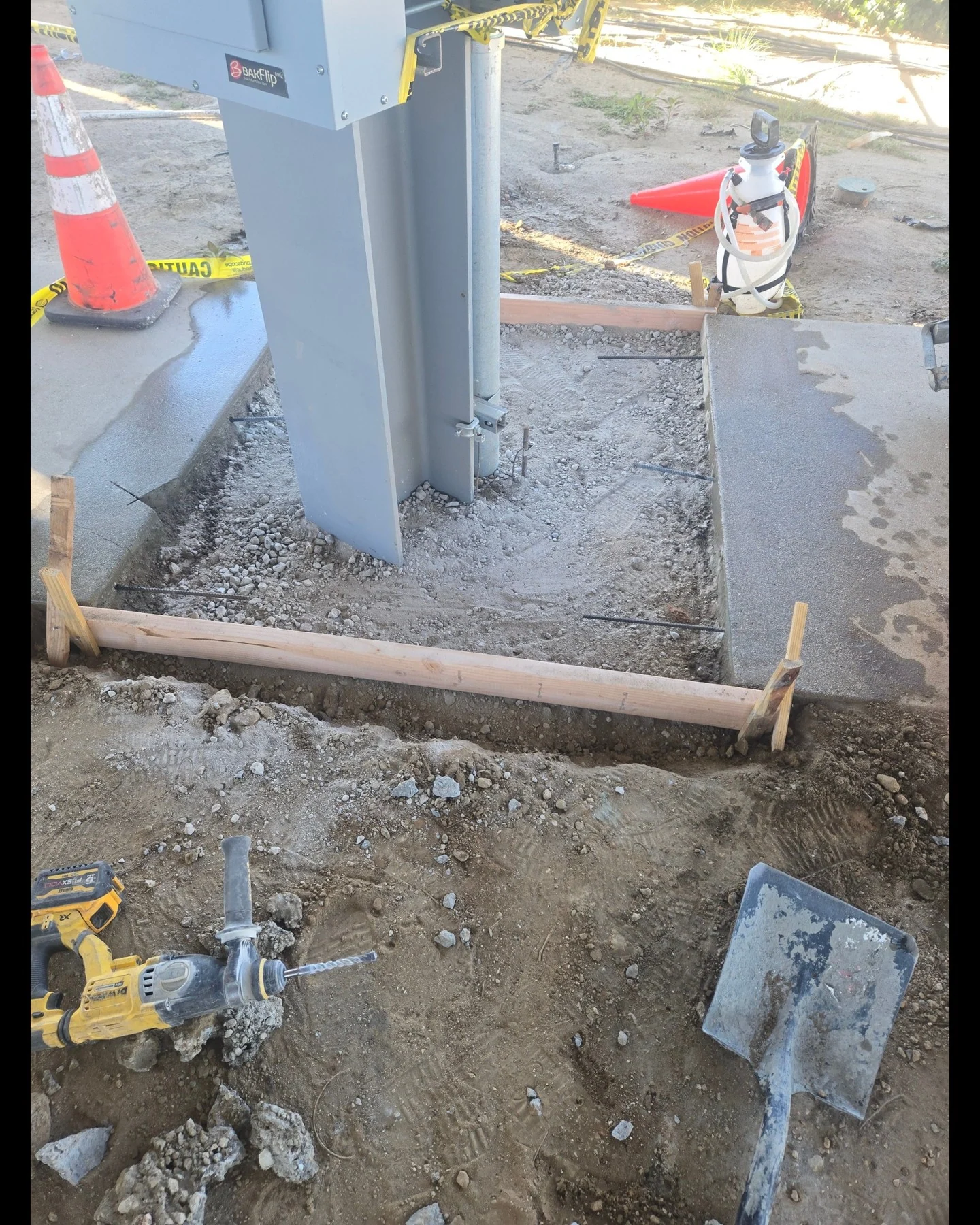
Tell you what it needs
Including when the honest answer is the smaller job.
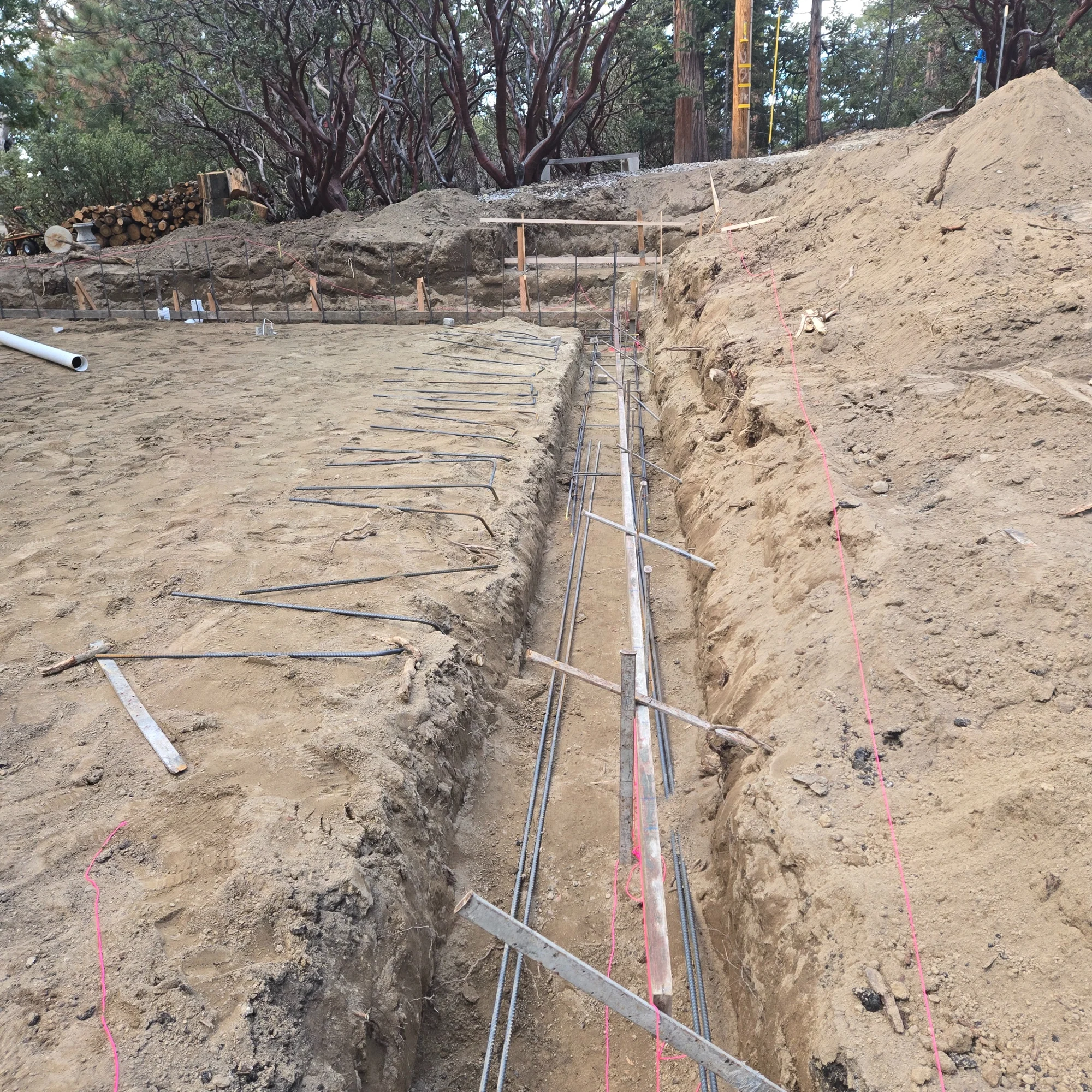
Fix what is under it
Grade and compaction done properly, because that is what the slab rides on.
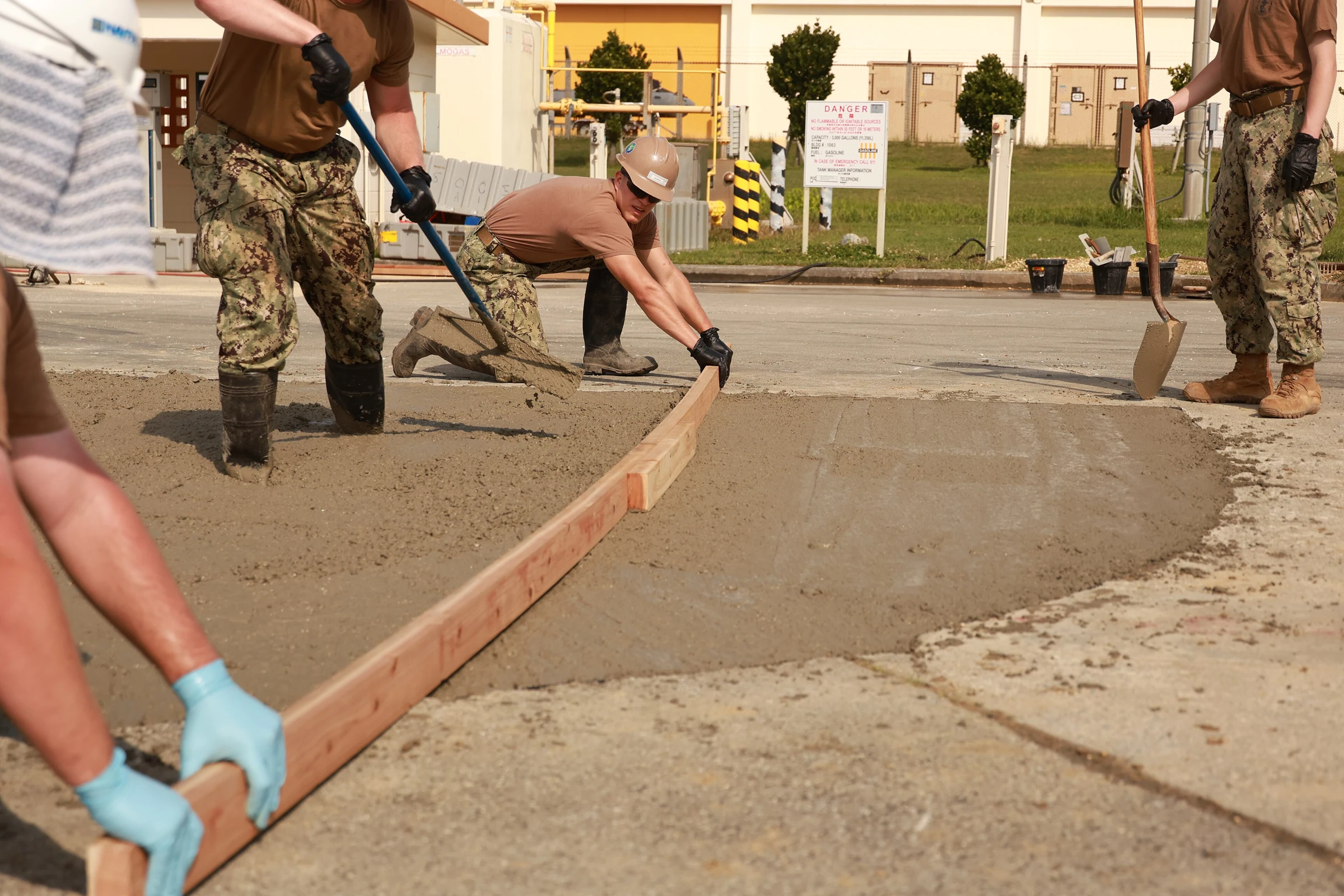
Build and pour
Forms, steel, placement, consolidation, finish. Each one in order and none of them rushed.
What this job actually needs
Engineered and inspected
Structural concrete is built from drawings and inspected at set points, with steel checked in place before anything is covered. Mix strength, bar size, spacing, lap length and cover are all specified rather than chosen on site.
Soil drives the design
In expansive clay the soil is the governing factor: footing depth, reinforcement, perimeter moisture control and sometimes treatment. A soils report tells us bearing capacity and behavior, and where there is one we build to it.
Cover protects the steel
Concrete cover is what keeps water and chloride away from reinforcement. Corroding steel expands and spalls the concrete off from inside, so cover is measured, not judged by eye.
Formwork is the trade inside the trade
Concrete is heavy and finds every weak brace, so the wall you get is the forms you built. Straight edges, plumb faces and correct dimensions are all decided before any concrete arrives.
What decides whether it lasts
Concrete is judged on the surface and it fails from underneath. The base, the steel, the joints and the cure are the whole job. A slab that was poured on bad ground will tell you so, usually in the third or fourth year.
Why fourth generation matters here
32 years on the tools means most of these problems have already been seen once. Reading a slab before quoting it is the part you cannot learn from a book, and it is the difference between a repair that holds and one that comes back.
What Southern California ground does to rebar installation
Drainage on a flat lot
Valley lots are often close to level, which makes slope hard to find and easy to get wrong. Low points, cross-fall and where water actually leaves the property get worked out before the pour, because once the concrete is down the drainage is permanent.
What lasts here
A properly based, properly jointed slab with reinforcement sized to the load will outlast the house it sits beside. The variables that decide it are all underneath and all invisible once the pour is done, which is exactly why they get cut on cheap jobs.
Irrigation against the slab
Almost every valley property waters something, and sprinklers running along a slab edge keep the base saturated year round. In expansive soil that is a slow way to undermine your own driveway. Where the water lands is worth looking at before blaming the concrete.
What the ground does here
The inland valleys run on expansive clay. It takes on water and swells, then dries out and shrinks, and it does that cycle every year. A slab poured on untreated clay rides that movement until something gives, which is why base preparation and reinforcement are the design rather than an upgrade. Where a soils report exists we build to it; where there is none, what we find during excavation tells us what the ground is going to do.

How concrete fails, and why
Failure that starts at the edge
Most slabs die from the outside in. Edges are thin, unsupported and exposed, which is why a thickened perimeter is worth the concrete it costs.
Water tracking under the slab
If water can get under concrete it will move fines out and leave voids. Drainage and base gradation both exist to stop that.
Cracks that open seasonally
A crack that closes in winter and opens in summer is expansive soil cycling. It is manageable and it is not going to be solved by filling it once.
Coatings peeling off
A coating is only as good as the prep under it. Profile, moisture content and cleanliness all decide whether it bonds or sheets off later.
How a job runs
Before we start
You get told what is being built, how long the concrete is unusable, and where the truck and the crew will be. Access gets sorted before the day, not on it.
The day of the pour
Concrete arrives on a schedule and does not wait. The crew works to the material, which means the pour is not a good day to renegotiate the scope.
Almost every failure we get called to look at is base, not concrete.On diagnosis
After the pour
Foot traffic usually after a day or so, vehicles longer. You get the real numbers for your slab, because thickness and weather both change them.
The first month
Concrete keeps gaining strength for weeks. Hairline shrinkage cracking in that window is normal and is not a failure. Anything that worries you, call and we will look.
Other foundations work
Concrete Foundations
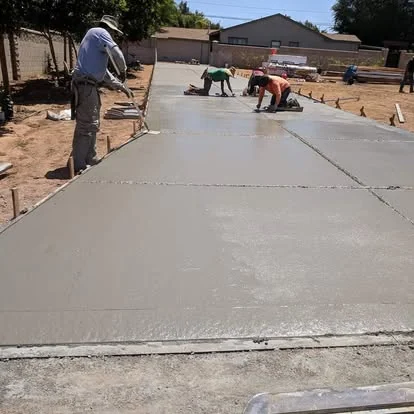
Everything above it depends on this.
Concrete Foundation Repair
Cracks, movement, and what is under the footing.
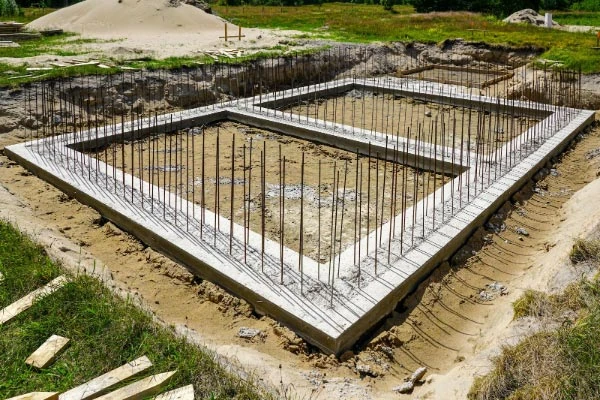
Concrete Footings
The spread that carries the load into the ground.
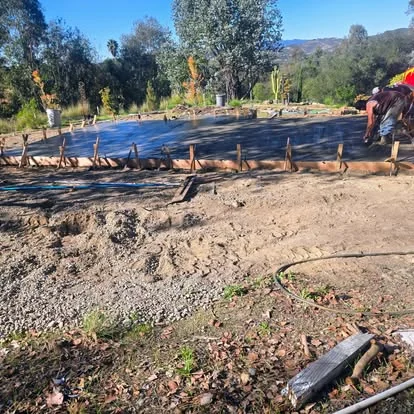
Stem Walls
The wall between footing and floor.
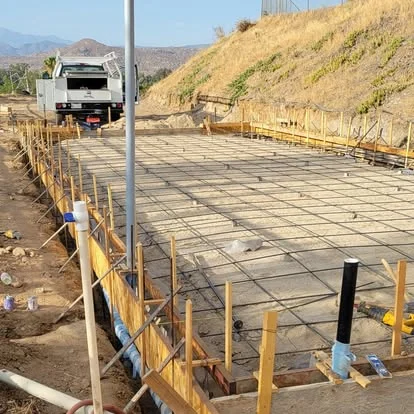
Foundation Walls
Formed walls that retain soil and carry structure.
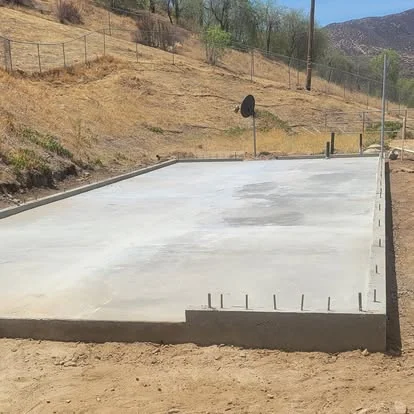
Slab-On-Grade Foundations
Footing and floor in one integrated pour.
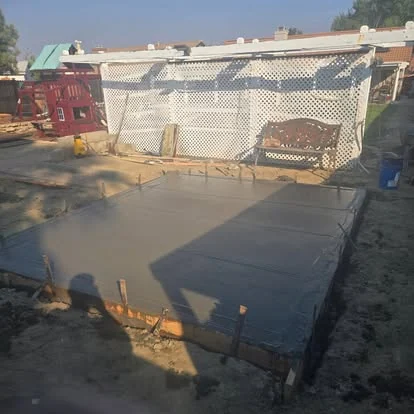
Concrete Building Pads
The engineered ground a building sits on.

Concrete Walls
Formed, poured, and straight.
Straight answers
What does expansive soil mean for my foundation?
Clay soils swell with water and shrink when they dry, and that movement is what cracks foundations. It gets handled in the design: footing depth, steel, moisture control, and sometimes soil treatment.
Do you pull the permits?
Structural concrete is permitted and inspected work. We would rather have that conversation before anything is dug than discover it at inspection.
Is my foundation crack structural?
Some are cosmetic shrinkage and some mean movement. Vertical displacement, a crack that widens along its length, or doors that have started sticking all point at movement. We look before advising.
Can you repair a foundation without replacing it?
Frequently. The question is always what caused it. Water, undersized footings and expansive soil all look similar at the crack and need different fixes.
Do you work from engineered plans?
For structural work, yes. Footings, stem walls, and anything carrying calculated load get built to the engineer’s drawings and inspected before they are covered.
Tell us what the job is
We walk the job, tell you what it needs, and give you a number. Hemet and roughly 100 miles around it.