
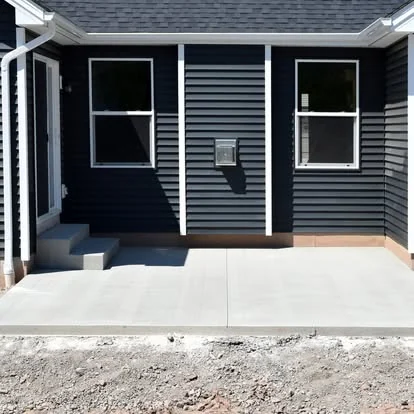
Anza steps that stay tight to the house
A front door that sits high off the ground needs steps you can trust in the dark with ice on them. We build them to an even rhythm with a flat landing at the top, and the whole set gets tied to the house so it stays put.
Talk to us about the job
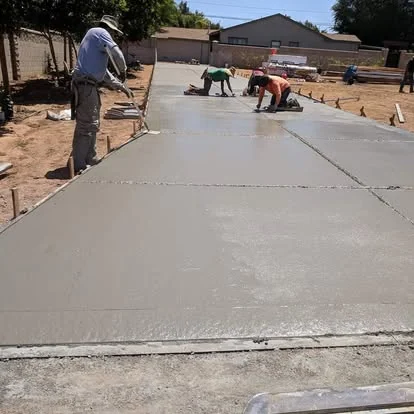

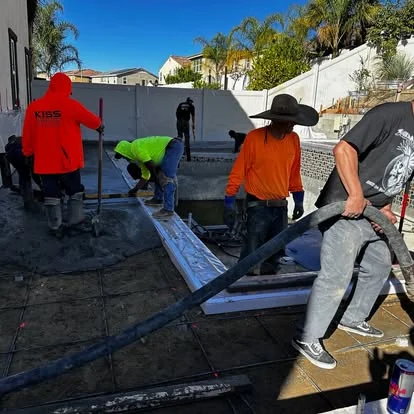
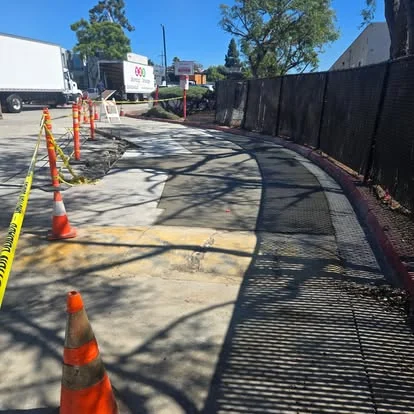
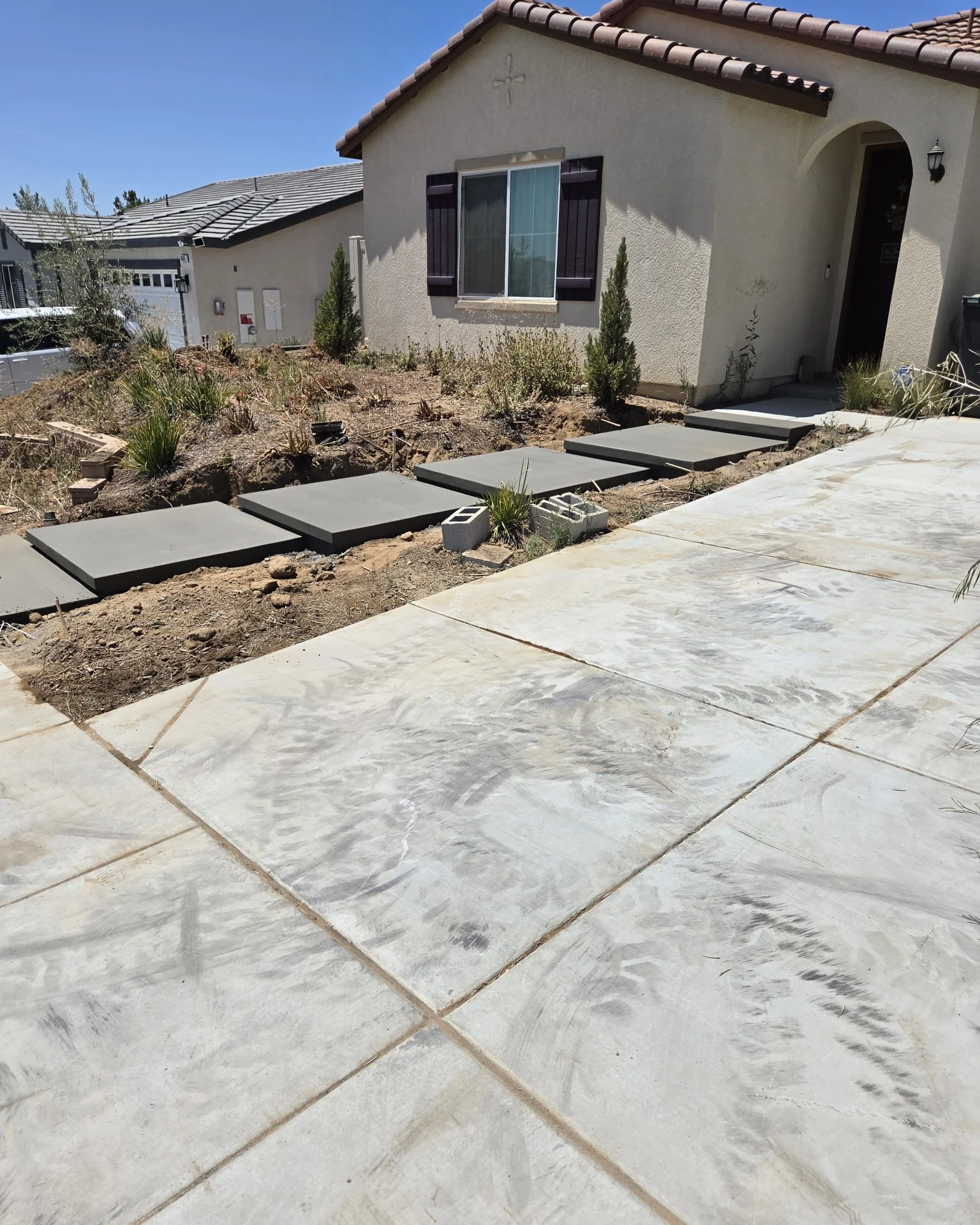
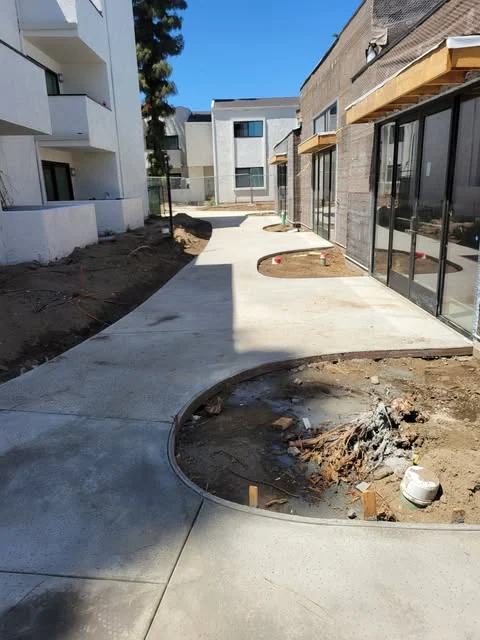

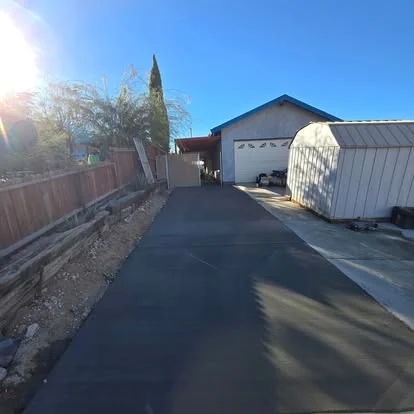
A door that sits high above the yard
On a sloped lot a door often ends up well above the ground in front of it. Making up that height takes a run of steps, and how that run gets laid out decides whether it feels natural or makes you watch every footfall. We measure the full rise from the ground to the threshold first, then divide it so every step comes out the same.
Every riser the same
A foot learns the height of the first step and expects the rest to match. One step that is a little taller or shorter than its neighbors is the one people catch a toe on, especially going down with their hands full. We form every riser and every tread to the same measure, top to bottom.
Breaking up a tall rise
When the rise is big, a straight run can end up steep. Breaking it with a landing partway, or turning the run along the house, gives you somewhere to stop and keeps the steps from feeling like a ladder. The layout comes from what the lot allows.
Rail posts go in first
If a railing is going on, the posts or sleeves for it go in before the concrete does, so nobody is drilling into a new tread edge later. Drilling near an edge is how a fresh step gets its first chip.
Wide enough to carry things up
Steps a little wider than the door they serve feel easy to use and leave room to carry something bulky up them. A narrow set squeezed between a planter and the wall is the kind people step off the side of.
A landing worth stopping on
We do not like a stair that ends right at the threshold. You want a landing at the top that is big enough to stand on while the storm door swings out toward you, or while you dig for keys with a bag in one arm. The landing is also where the steps start from, so it gets tied to the house more carefully than anything else in the set.
Doweled to the slab or footing
Steps poured as a separate block and simply pushed up against a foundation tend to settle on their own schedule, and a gap opens at the house. We drill and set steel into the existing footing or porch slab so the new concrete is held to it, and the bottom step gets a footing of its own.
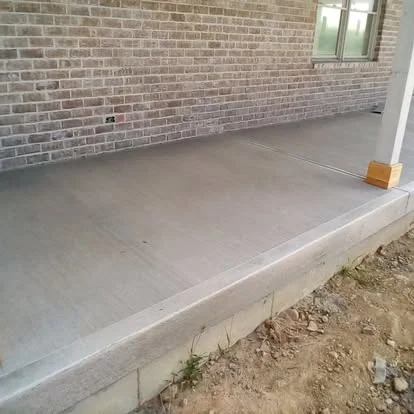
An edge you can find at night
A clean edge at the front of each tread and along the landing lets your eye find the step in low light. We tool the edges slightly rounded so they resist chipping, and we set the landing just below the door so nobody catches a heel on the threshold.
Where the roof drips
A porch roof keeps snow off the landing, but the water it sheds lands right at its edge and freezes there. We look at where the drip line falls before the steps get laid out, because a tread that catches roof water every thaw turns to ice every night.
Treads that shed water before it freezes
Ice on a step is worse than ice on a walk, because a slip on a stair turns into a fall down it. Most of that ice starts as water that had nowhere to go. Each tread on our concrete steps gets a slight pitch toward its front edge, so snowmelt runs off the nose and down to the ground instead of sitting in a puddle to freeze overnight. Snow shoveled off the landing ends up on the steps below unless it has somewhere else to go, so we plan room beside the set to pile it.
Every tread gets a little pitch toward its nose.On pitching treads
Grip on the tread
A smooth troweled tread is easy to clean and slick the moment it gets wet. We give the treads a broom finish running side to side, across the direction you walk, and keep a smooth tooled band at the edges where it helps you see the step.
Where the water goes after
Pitching the treads only moves the water, so we plan where it lands. The ground at the foot of the steps gets graded to carry water away from the house and off the walk, since a puddle at the bottom step on a cold night is just the next patch of ice.
When the old steps have pulled away
Older steps fail in a few familiar ways. The whole block drops and tips away from the house, leaving a gap at the top that fills with water and ice. The treads crack across or the noses break off. Or the steps were never even, and someone has been tripping on the same one for years. Sometimes settled steps can be lifted back where they belong, if the ground under them has stopped moving. When it has not, we break them out, haul them off and build the new set from a sound base. If yours look like that, send the details and tell us how many steps there are.
Meeting the walk at the bottom
The bottom step needs to land on something solid. Dirt at the foot of a stair washes out and leaves a lip that grows every season. We match the new steps to the walkway they meet, or pour the two together, and our page on concrete walkways in Anza covers the path out to where you park.
Pictures first, then a visit
Finished work from other jobs is in the gallery. Call (951) 533-8821 and someone will stop by to see them, or use the contact page if you would rather we called you.
More concrete work in Anza
Questions about the steps at your door
Why are my steps pulling away from the house?
Usually because they were poured as a separate block with nothing tying them to the foundation, and the ground under them settled. Water then gets into the gap, freezes and pushes it wider each winter. New steps get doweled into the footing or slab so they move with the house.
Can you fix one broken step instead of the whole set?
Sometimes. A chipped nose or a cracked tread on steps that are otherwise sound can be repaired. If the set has settled or tipped, patching one step leaves the others uneven and the gap at the house still open, so replacing the run is usually the better call.
How do you keep ice off concrete steps?
Most of it is built in. Each tread is pitched so water runs off the front, the surface gets a broom texture for grip, and the ground at the bottom is graded so melt drains away. After that, a bucket of sand by the door is kinder to the steps than rock salt.
Should new steps match my existing walkway?
They should meet it cleanly and look like they belong together. We match the finish and line up the bottom step with the walk, and if the old walk is cracked or sunk where the steps land, redoing that stretch in the same pour saves a second trip.
Do concrete steps need a footing?
They need solid ground under them. A set that rests on loose fill or bare dirt settles and tips. We dig to firm bearing, which up here is often rock or decomposed granite, and tie the steps to the house footing or porch slab so the two stay together.
Can new steps be poured in the winter?
Some winter weeks up here are the wrong time to pour anything outside, because cold slows the cure and water freezing in green concrete can leave it weak for good. If the old steps are failing in midwinter, we would rather book the pour for the first good stretch of weather than rush it.
A photo from the side
A side view of your steps shows us more than one from the front, because settling and the gap at the house show up there. Send it with the details and we will set a time to see them.