
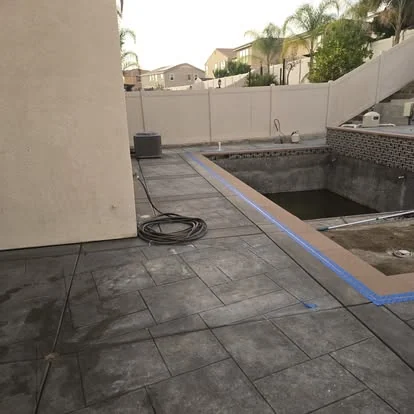
Banning pool decks that drain away from the water
The deck is the last big pour of a pool job and the part everybody walks on barefoot. We tie it to the coping, slope it toward the drains and give it a surface that grips when wet and stays easier on bare feet through a hot afternoon.
Talk to us about the job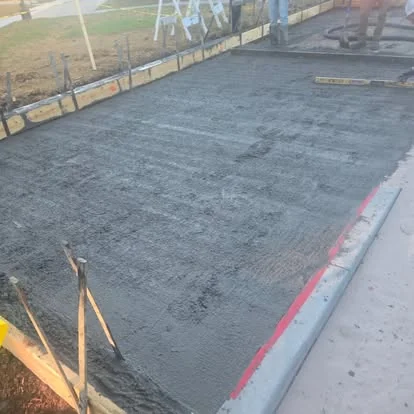

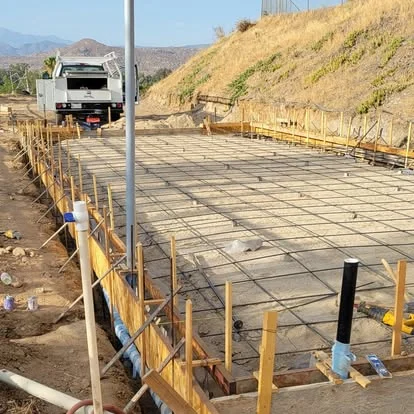
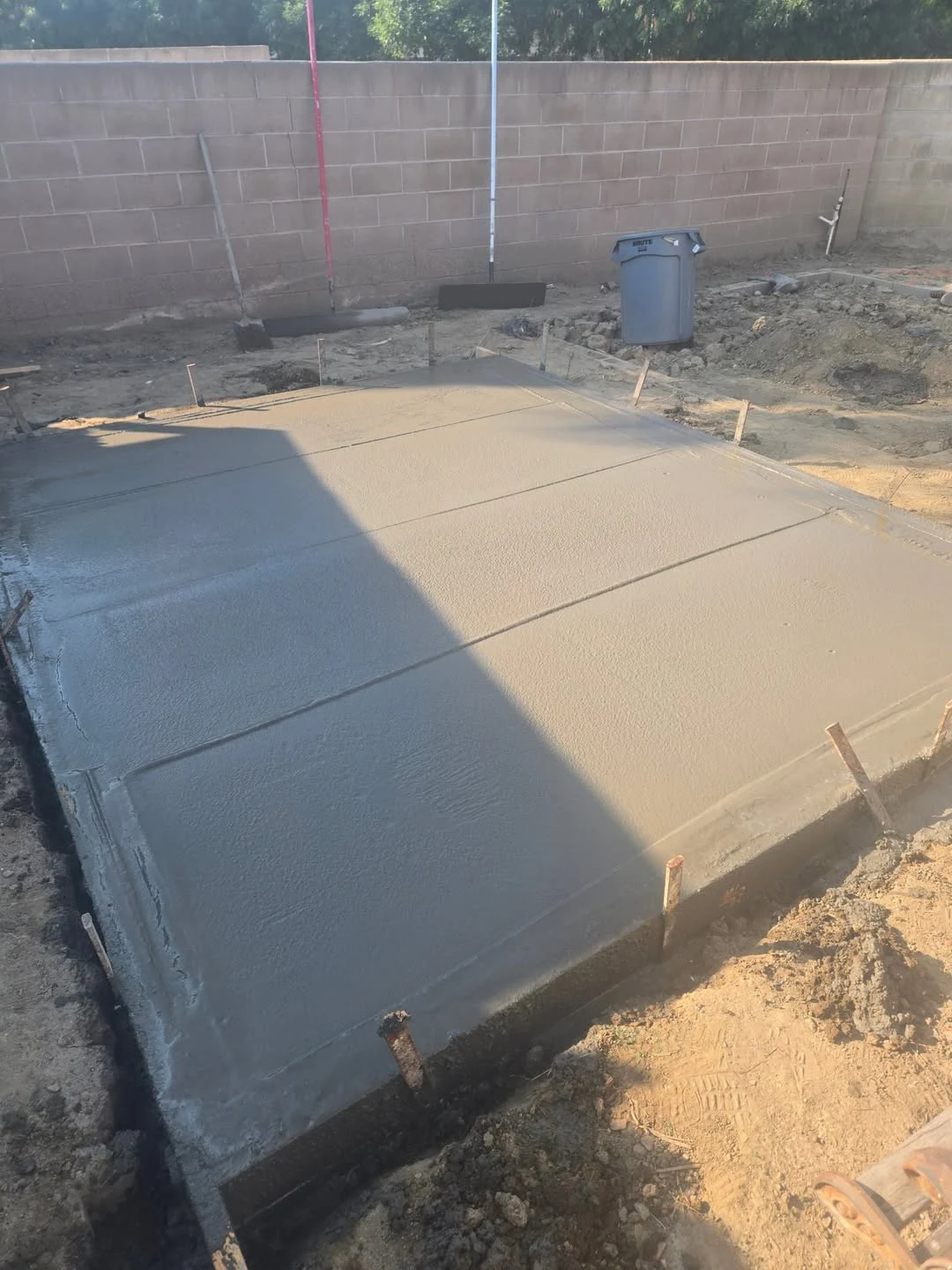
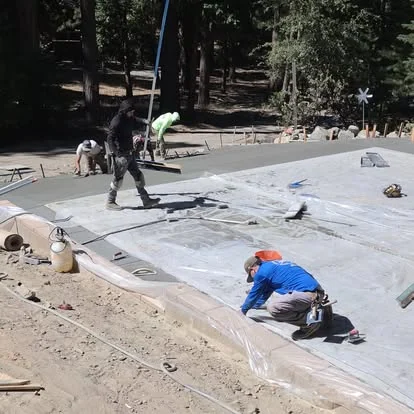
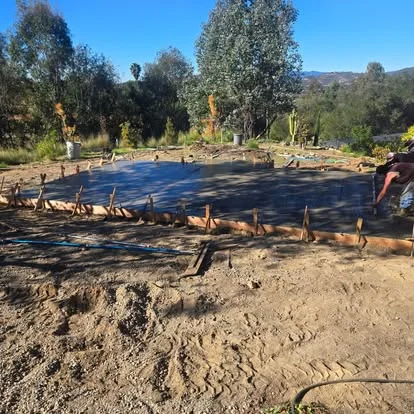
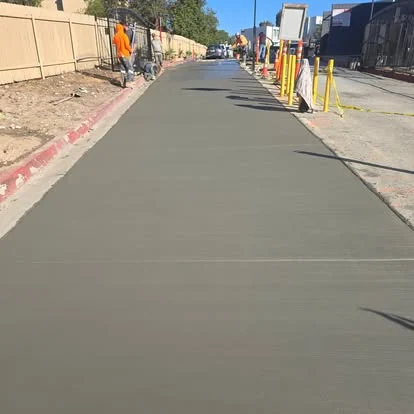
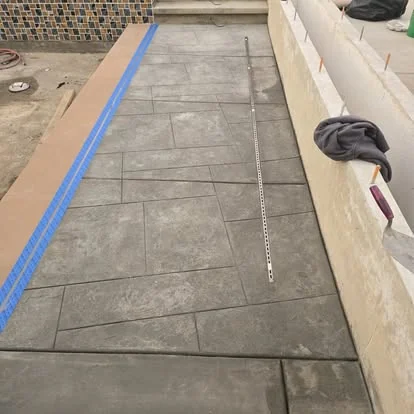
After the shell, against the coping
A deck goes in after the shell is built and the coping is set, so the concrete has a finished edge to meet. We tape the coping before the pour and bring the deck right up to its back edge, with a joint there that gets sealed so water cannot work down behind the coping. The pour date gets set around whoever built the shell, so the deck follows without a long gap. Once the coping is in, send the details and a copy of the pool plan.
Blue tape on the coping
Coping gets taped along its full length before any concrete arrives. It keeps splatter and slurry off the edge, and it comes off the same day so the line between the two stays sharp.
Equipment pad and plumbing runs
The pump, filter and heater need a pad of their own, and the plumbing between them and the pool usually runs under the deck. We find every line and stub before the steel goes down, so the bars and the forms work around them and a cleanout or valve stays reachable.
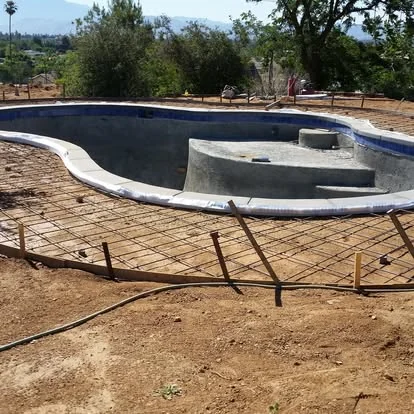
Forms around the shell
Where the deck ends at the yard, wood forms or bender board set the outer edge and its height. The inside edge is the coping itself, so the forms only have to hold the outside line.
Every bit of water heads for a drain
Splash-out, rain and the hose all land on the deck, and the deck has one job with that water: move it away from the pool and into a drain or onto the yard. A deck that tips back toward the water carries dirt, leaves and fertilizer into the pool every time it gets wet. We set the fall away from the coping all the way around and place deck drains where the low points land, so no corner is left holding a puddle.
Drains set before the pour
Deck drains get located on the low lines and set to grade with the forms, then the slope is built toward them. Adding a drain to a finished deck means cutting it open.
Away from the house as well
A deck often sits between the pool and the back of the house, so the slab has to clear both. Water leaves the deck on the yard side, never against the house wall or back over the coping.
Base under the deck
The pad around a new pool is often fill pushed back after the shell was dug. That fill gets compacted before the steel goes down, because loose dirt around a pool settles and takes the deck with it.
Bare feet, wet concrete and a hot afternoon
A pool deck gets walked on wet and barefoot, so the finish has to grip without scraping. A light broom, a salt finish or a textured knockdown all give a wet foot something to hold, and each feels different, so we talk through them with you before deciding. Through the summer on the pass the sun sits on the deck for hours, and a lighter color or an open texture stays more comfortable underfoot than a dark, smooth surface. The pool decks page walks through the full build.
Stamped and colored decks
Stamped patterns and integral color both work around a pool, and a slate texture gives a wet foot plenty to catch. The deeper the pattern, the more it holds water in its low spots, so we pick one that still drains.
Sealer changes the grip
A glossy sealer makes a stamped deck look wet all the time and makes it slicker when it really is. We use a sealer suited to a pool deck and can add a grit to it, and we tell you when it needs another coat.
Shade and where you sit
If an umbrella sleeve or a shade post is planned, it gets set in the deck before the pour. Ask about it now and it goes in clean, with no core drilling later.
Joints that bend with a free-form pool
A rectangle pool lets the deck joints run in straight lines. A kidney or free-form shell does not, and that curve is exactly where a deck likes to crack. We run joints out from the pool edge toward the outside of the deck, spaced so no panel gets long and skinny, and add one at every inside corner where the deck wraps a step, a planter or the equipment pad. On a hot, windy day the joints get cut as soon as the surface will hold the saw.
Steel around the whole curve
Rebar gets bent to follow the shell and sits on chairs across the whole deck, with extra bars at the narrow spots between the pool and a wall. Narrow strips are where a deck cracks across first.
Curing in the wind
A deck poured on a breezy day gets covered or sprayed with a curing compound right after finishing, so the surface stays tough enough for wet feet and splashed pool water.
Photos and a site visit
Decks and patios we have poured are in the gallery. Call us at (951) 533-8821 or reach us through the contact page, and we will walk the job around the shell before talking about a number.
More concrete work in Banning
What pool owners ask about the deck
When does the deck go in on a new pool?
After the shell is built and the coping is set, and once the plumbing and any deck drains are located. The deck meets the coping at a sealed joint, so the coping needs to be in place first. We set the date with whoever built the pool.
Which way should a pool deck slope?
Away from the pool, every time, toward deck drains or the yard. A deck that falls back toward the water washes dirt and debris into the pool and can push water behind the coping. The slope is gentle enough that lounge chairs still sit level.
What finish is least slippery around a pool?
Texture is what grips. Broom, salt and knockdown finishes all work, while a smooth hard trowel and a glossy sealer are the slick combination. We go over the options with you and pick one that suits who uses the pool.
Can a stamped deck work around a pool?
Yes. Stamped patterns and color are common around pools. The two things to watch are a pattern deep enough to hold water and a sealer that turns slick, so we pick both with grip in mind and tell you when the sealer needs redoing.
Why does a free-form deck need more joints?
Curves and narrow strips concentrate stress, and concrete cracks where stress collects. Joints run out from the pool edge and sit at every inside corner around steps and planters, so the deck breaks along lines we chose. A curved deck simply has more of those spots.
Where does the pool equipment go?
On its own pad, usually off to the side of the deck, with the plumbing to the pool running underneath. We locate those runs and any valves before the steel is placed, so the deck goes in around them and they stay reachable.
Bring the pool plan
Send the pool plan or a photo of the shell, tell us where the equipment sits, and mention the finish you have in mind. We come out and look at it, then give you pricing for the deck.