
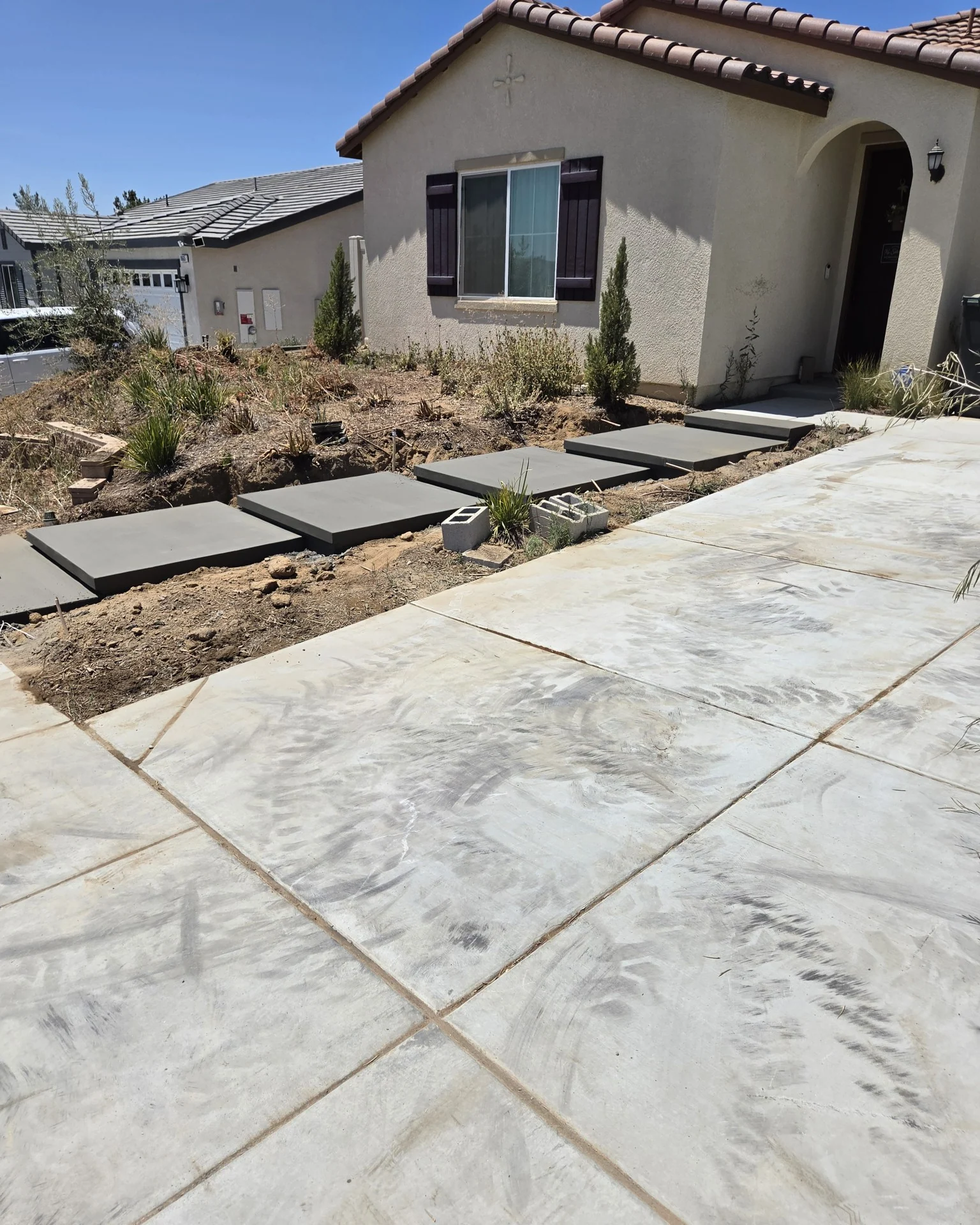
Anza’s concrete crew
Flatwork, foundations and repair across Anza and the rest of Riverside County. Fourth generation, 32 years in the trade, California license 1137822.
Talk to us about the job
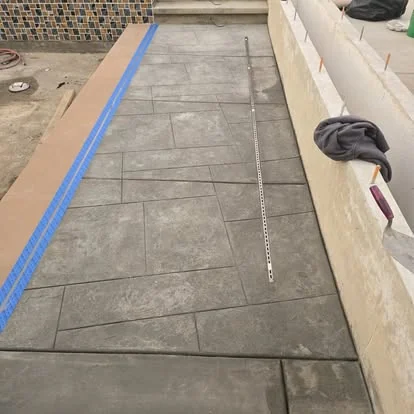
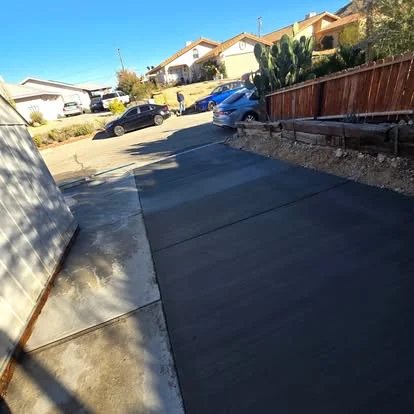
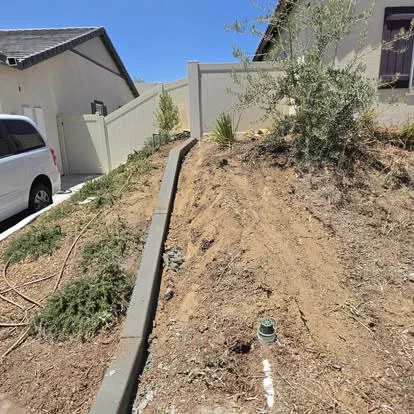
What concrete is up against around Anza
Snow, and what gets put on it
Deicing chemicals are harder on concrete than the cold is. Chloride holds moisture against the slab and attacks the paste holding the aggregate together. That drives both the mix and the sealing plan.
Freeze cycling at elevation
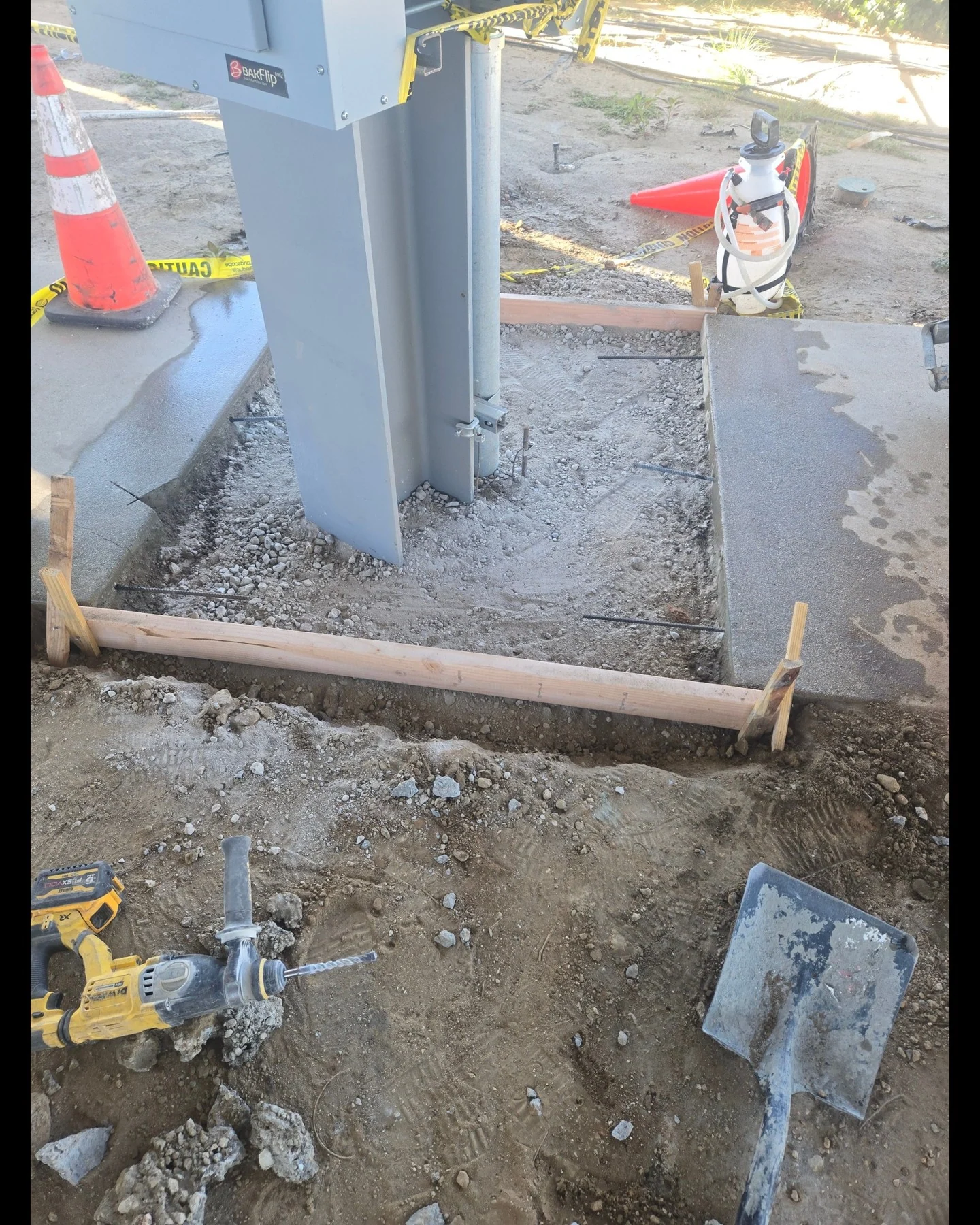
Up here concrete goes through the freeze and thaw cycle repeatedly every winter. Each cycle drives water deeper into the pores and pries the surface apart a little more. Air entrainment and sealing are not upgrades at this elevation.
Getting a truck to the work
Access is often the hardest part of a mountain job. Narrow roads, tight turns and grade all decide whether a mixer can reach the pour or whether it gets pumped. That is planned first, not last.
Steel sized to the movement
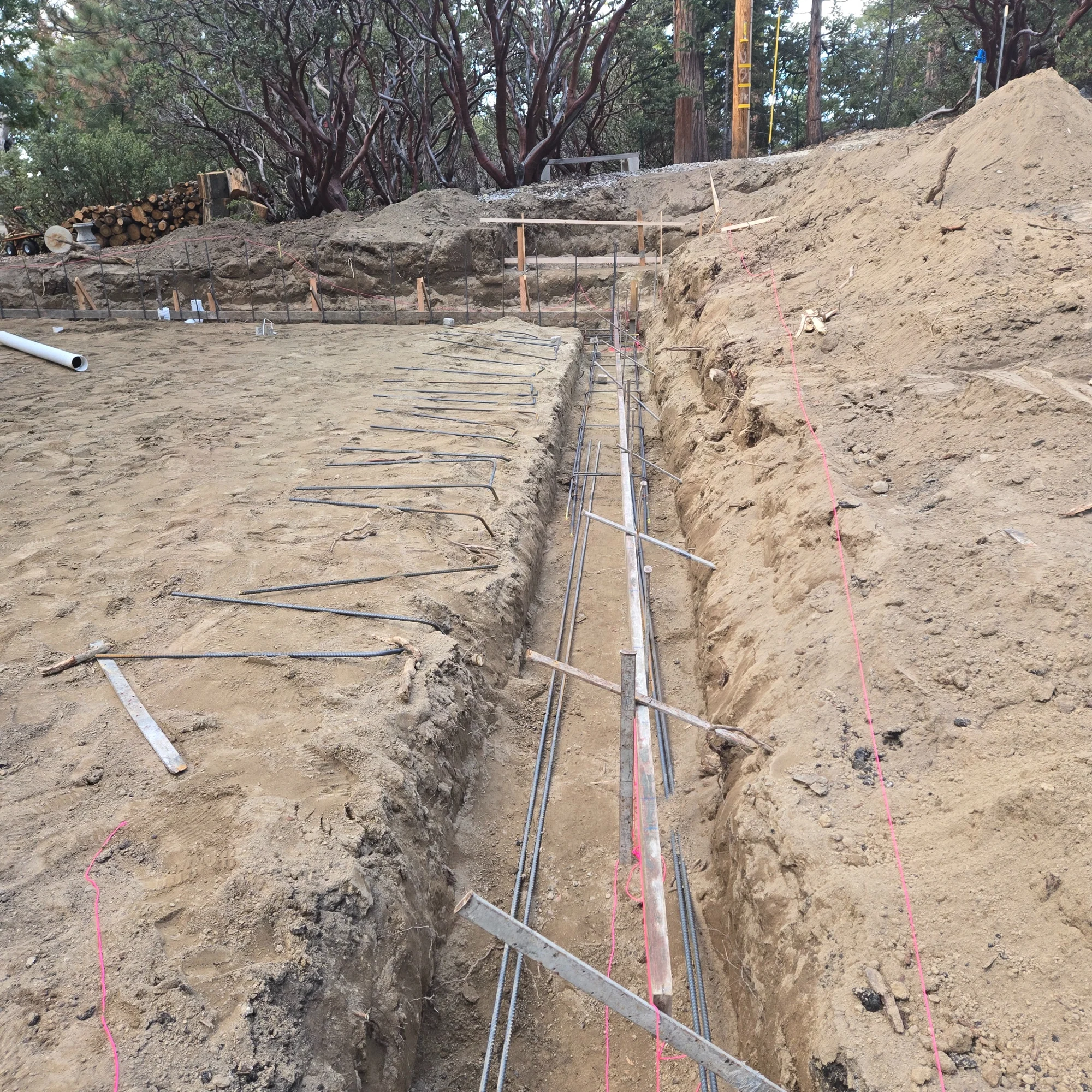
Reinforcement gets placed for what the soil is going to do, on chairs at the right height with real cover. Steel lying on the dirt does nothing at all.
Joints planned on paper
Joint layout gets worked out before the pour, spaced to the thickness and placed where the slab wants to move anyway. Then it gets cut at the right time.
Cleanup is part of the job
Washout handled properly, spoil hauled, surfaces cleaned. Concrete work is messy while it happens and should be invisible when it is done.
What we build in Anza
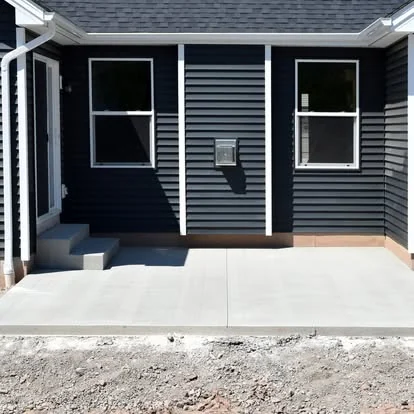
RV Pads
Heavy, concentrated, parked in one place for months.
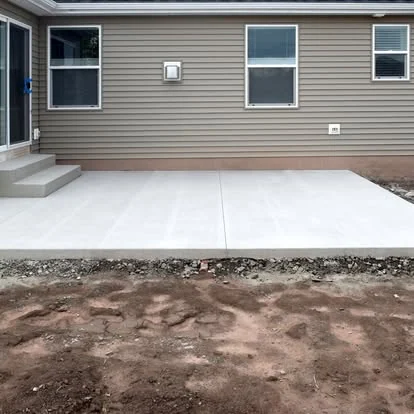
Boat Pads
Trailer tongue weight and a slab that has to stay level.
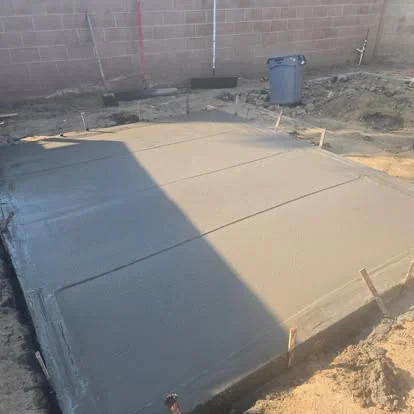
Parking Pads
Extra parking that is not the driveway.
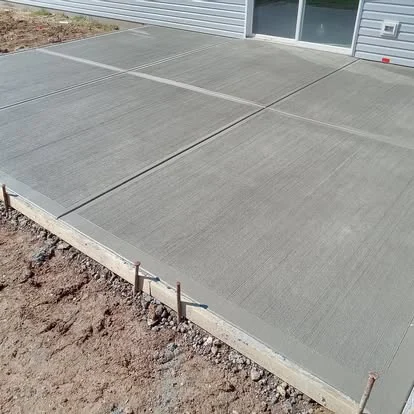
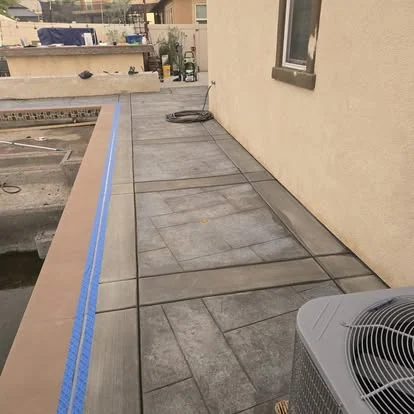
Concrete Pool Decks
Wet feet, chemicals, and sun all year.
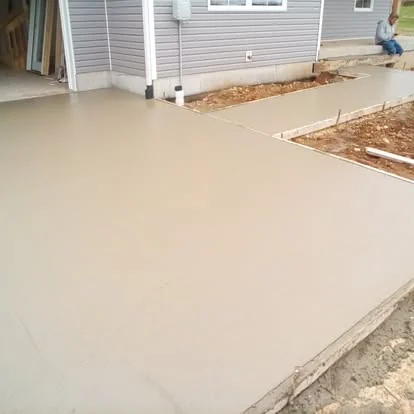
Concrete Pads
A pad sized to the thing that is going on it.
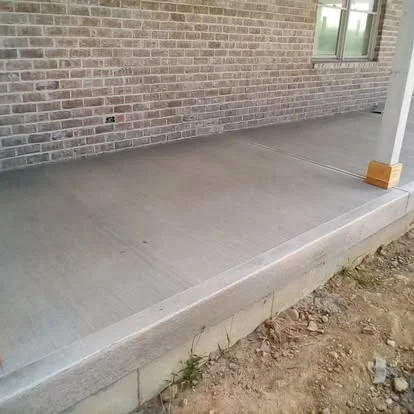
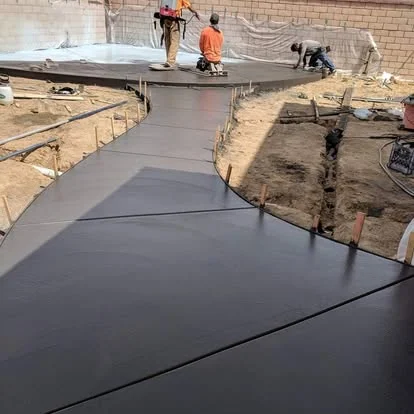
Residential Concrete Flatwork
All the flat concrete around a house, done by one crew.
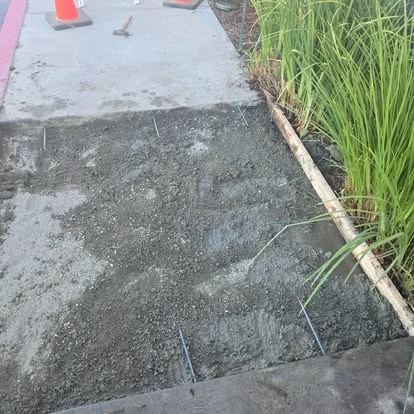
Concrete Resurfacing
A new surface on a sound slab.
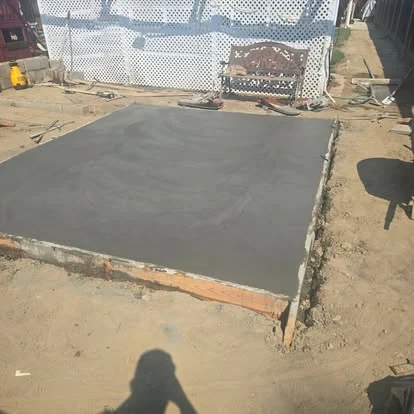
Concrete Leveling
Lifting a slab back to where it started.
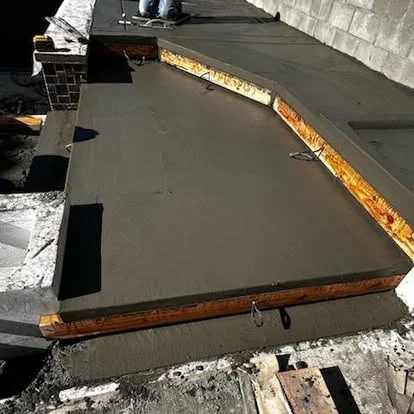
Concrete Grinding
Taking down high spots and trip lips.
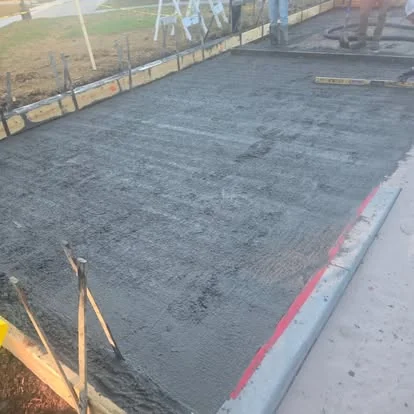
Concrete Parking Lot Replacement
A full lot rebuilt on a schedule that keeps you open.
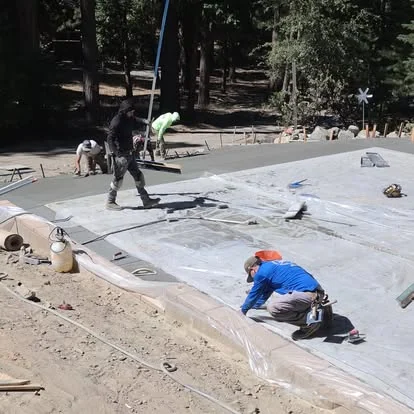
Concrete Loading Docks
The most abused concrete on any commercial property.

Dumpster Pads
A truck, a full bin, and the same spot every week.
Pouring concrete around Anza
Slope on nearly every lot
Mountain properties are rarely flat, which means stepped footings, retaining, and drainage with real consequences. Water on a slope finds the cheapest path down and it is usually the one you did not want.
A shorter pour season
There are months at elevation where placing exterior concrete is simply the wrong call. Concrete cures by chemical reaction and cold slows that reaction down, so a slab placed into a hard freeze may never reach strength. We schedule to the season.
Freeze cycling is the main enemy
At elevation concrete goes through freeze and thaw repeatedly every winter. Each cycle drives water deeper into the pores and pries the surface apart a little more. Air entrainment in the mix and keeping water out of the slab are not refinements up here, they are the reason a slab survives.
Rock and shallow bedrock
Shallow rock and decomposed granite are common up here. Rock can be an excellent bearing surface and a genuine excavation problem in the same afternoon, and it changes how footings get formed.

Concrete work around Anza
Flatwork, foundations and repair across Anza and the rest of Riverside County, poured by the same crew that answers the phone.
How concrete fails, and why
Cracks through a control joint
If a crack runs past a joint that was supposed to catch it, the joint was cut too shallow or too late. Depth needs to be about a quarter of the slab thickness.
Flatwork lifting at tree lines
Roots follow moisture, and the moisture is under your slab. Removing the slab without addressing the root just resets the clock.
Soft spots that appear later
Ground that was never properly compacted keeps consolidating under load. That is why compaction gets tested rather than eyeballed.
Efflorescence
White powder on the surface is salts carried out by moisture moving through the slab. It signals water movement, which is worth understanding even though the powder itself is harmless.
How a job runs
Getting a number
We walk the job, measure, and quote what it needs. No number goes out on a photograph and nothing gets quoted thin to win it.
How long it takes
Most residential flatwork is a few days from demolition to pour, plus curing. Structural work runs longer because of inspections.
Width tells you less about a crack than movement does.On reading a slab
Who is on site
The same crew that forms it pours it and finishes it. There is no handoff where the details get lost.
Afterwards
Sealing, joint maintenance, and keeping water off it are the things that decide whether you get twenty years or forty.
Around Anza
Straight answers
How does freeze and thaw affect concrete up here?
It is the main enemy. Each cycle drives water deeper into the pores and pries the surface apart a little more. Air entrainment in the mix and keeping water out of the slab are why a mountain slab survives.
Can a mixer truck reach my property?
That is one of the first things we check. Narrow roads, tight turns and grade decide whether a mixer reaches the pour or whether it gets pumped, and it is planned before anything is quoted.
My lot is steep. What does that mean?
Stepped footings, retaining where the grade changes, and drainage that has real consequences. Water on a slope finds the cheapest path down and it is usually not the one you wanted.
Should mountain concrete be sealed?
Yes, and maintained. Keeping water out of the pores is the single most effective thing you can do at this elevation.
Do you handle demolition and haul-off?
Yes. Access usually decides the method, and we protect what stays.
Start with a site visit
No number goes out on a photograph. We come to Anza, look at the ground and the access, and price the work from that.