

Concrete that outlasts the house
Driveways, patios, slabs and foundations for Indian Wells property owners. Fourth generation on the tools, licensed 1137822, working out of Hemet.
Talk to us about the job



What concrete is up against around Indian Wells
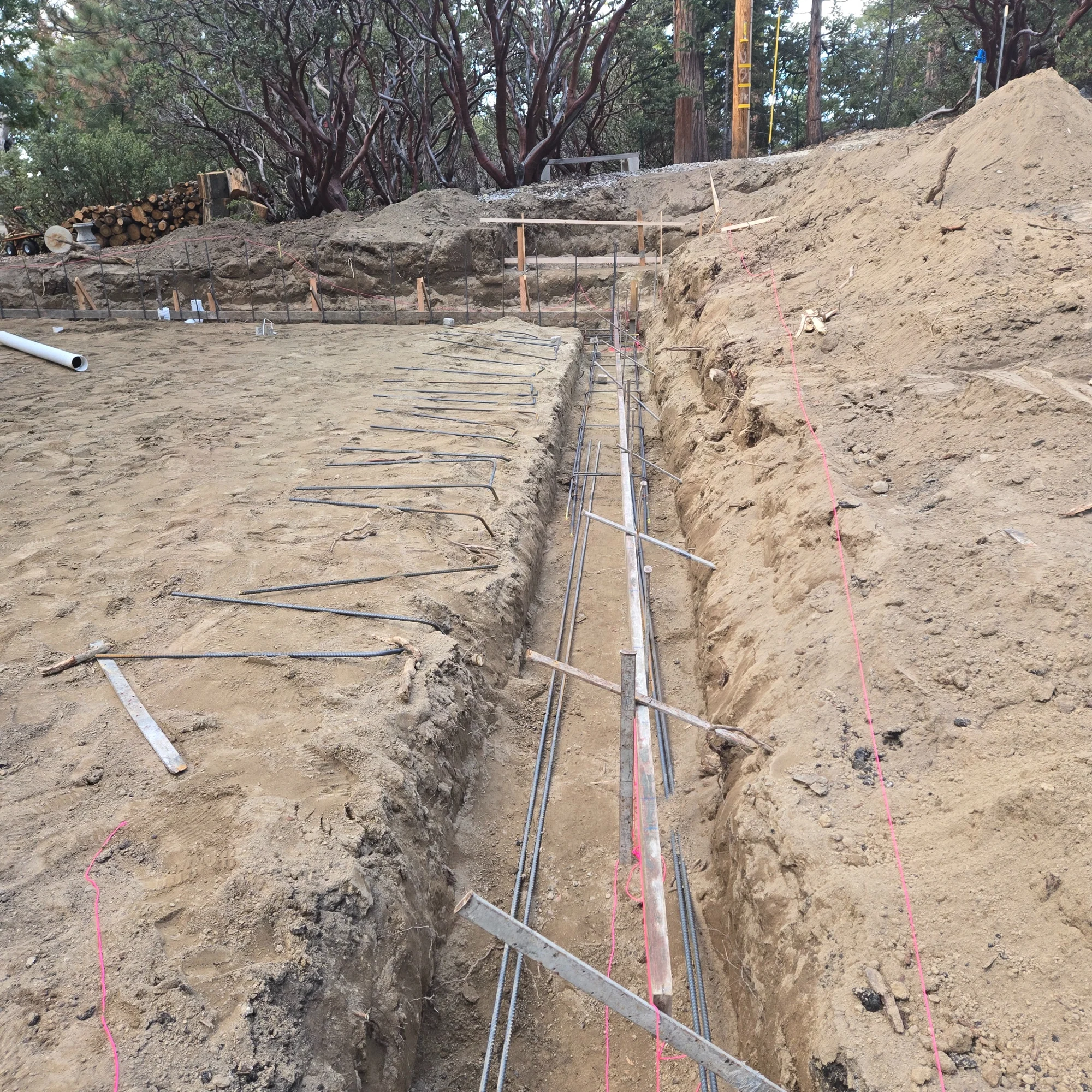
Sandy and alluvial ground
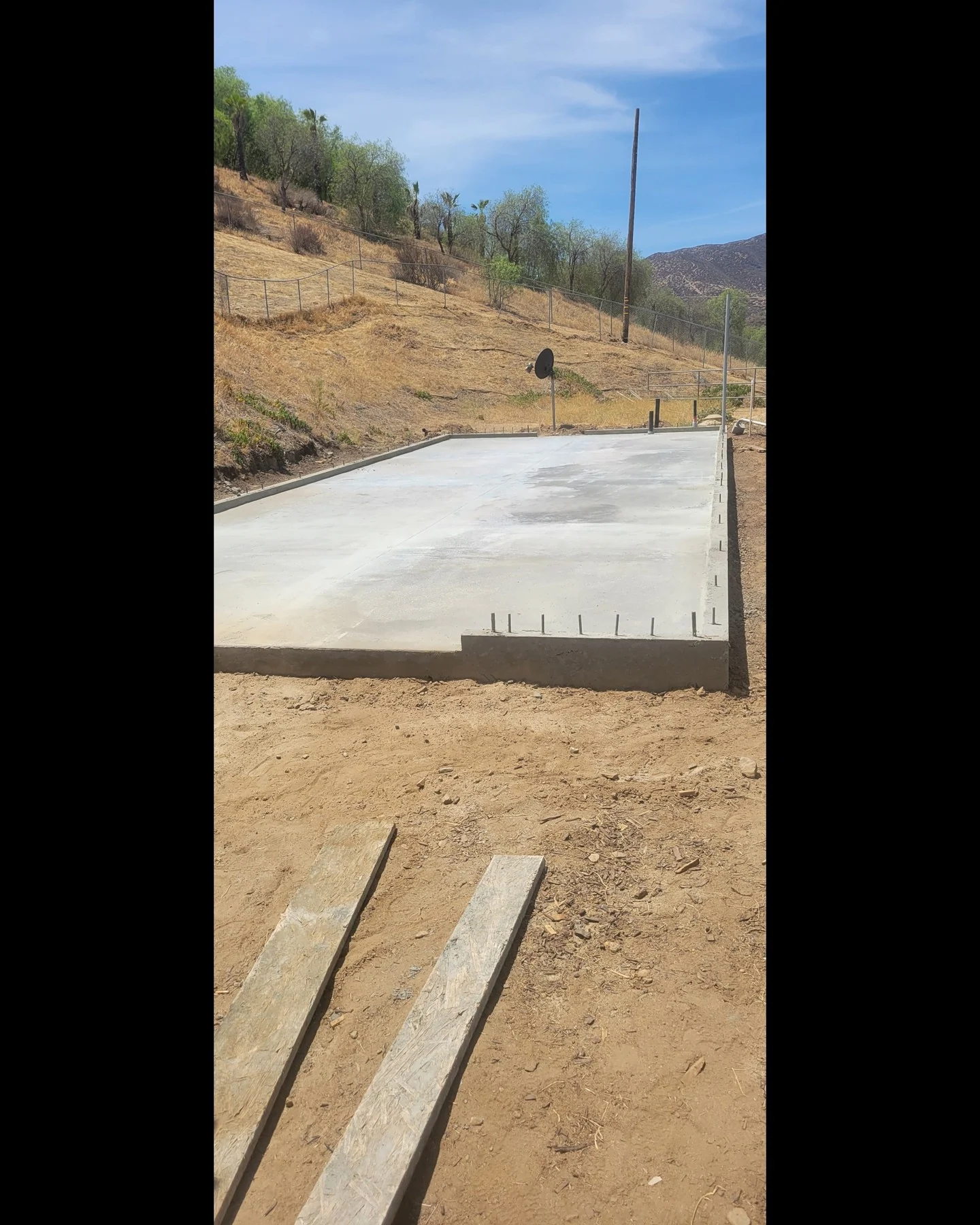
Desert soils drain well and compact differently from clay. That can be an advantage, but loose alluvial material has to be properly compacted in lifts or the slab settles unevenly.
Salts in the soil
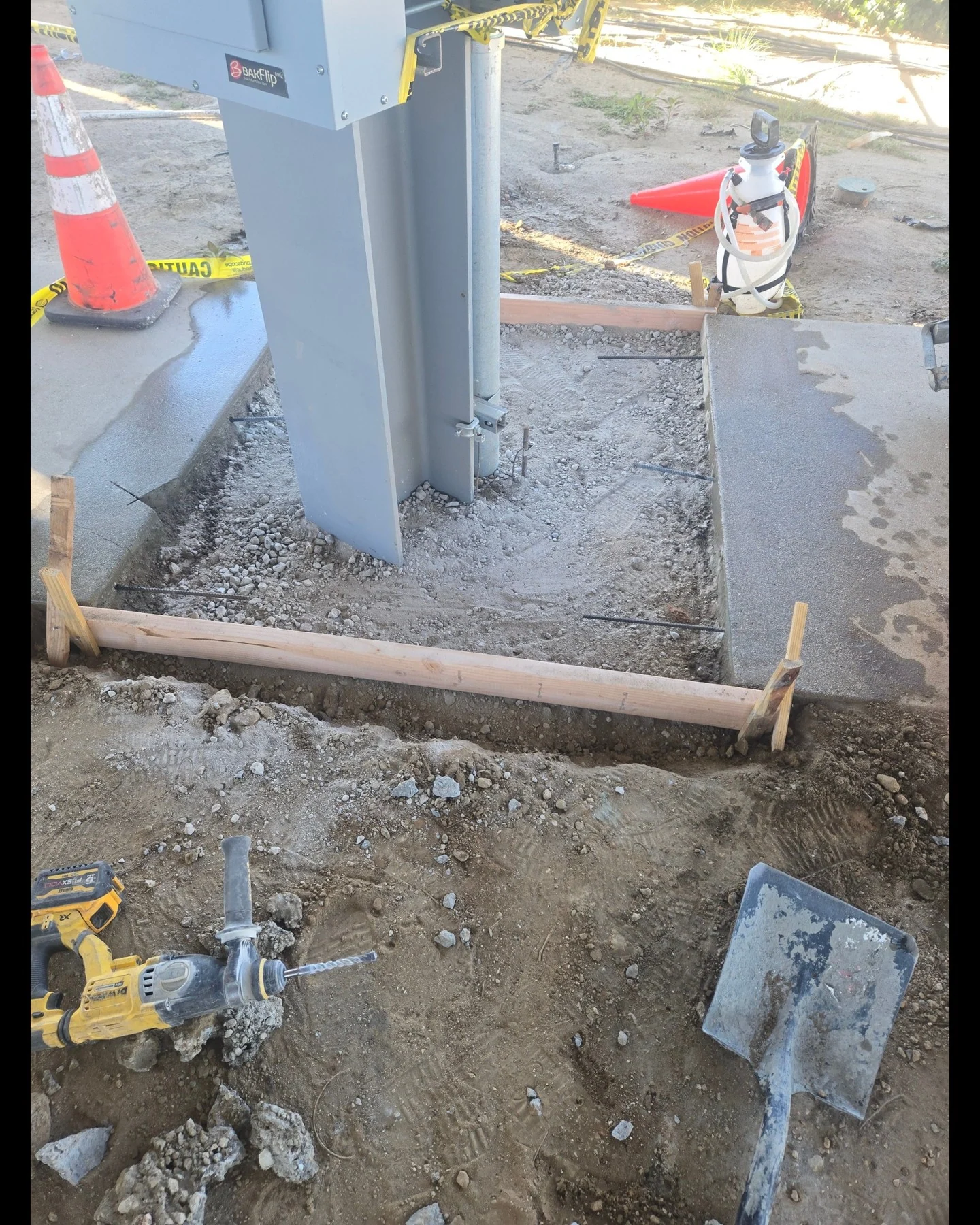
Parts of the low desert carry high salt and sulfate levels in the ground. Those attack cement paste and corrode steel. Where it is a factor, the mix and the cover over the steel both change.
Day to night swing
The desert can drop forty degrees after sundown. Concrete expands and contracts with that, every day, for its whole life. Joint spacing has to allow for a slab that never stops moving.
Water routed off the slab
Slopes, low points and a path for water to leave are set before the pour, because afterward the drainage is permanent.
Pours scheduled to the heat
In summer we start early and keep the mix and the crew ahead of the temperature. Concrete does not wait for anybody.
Curing treated as a step
Fresh concrete gets protected from dry wind and sun until it has what it needs. Skipping that is how you get a dusty, weak top layer.
What we build in Indian Wells
Front Porches
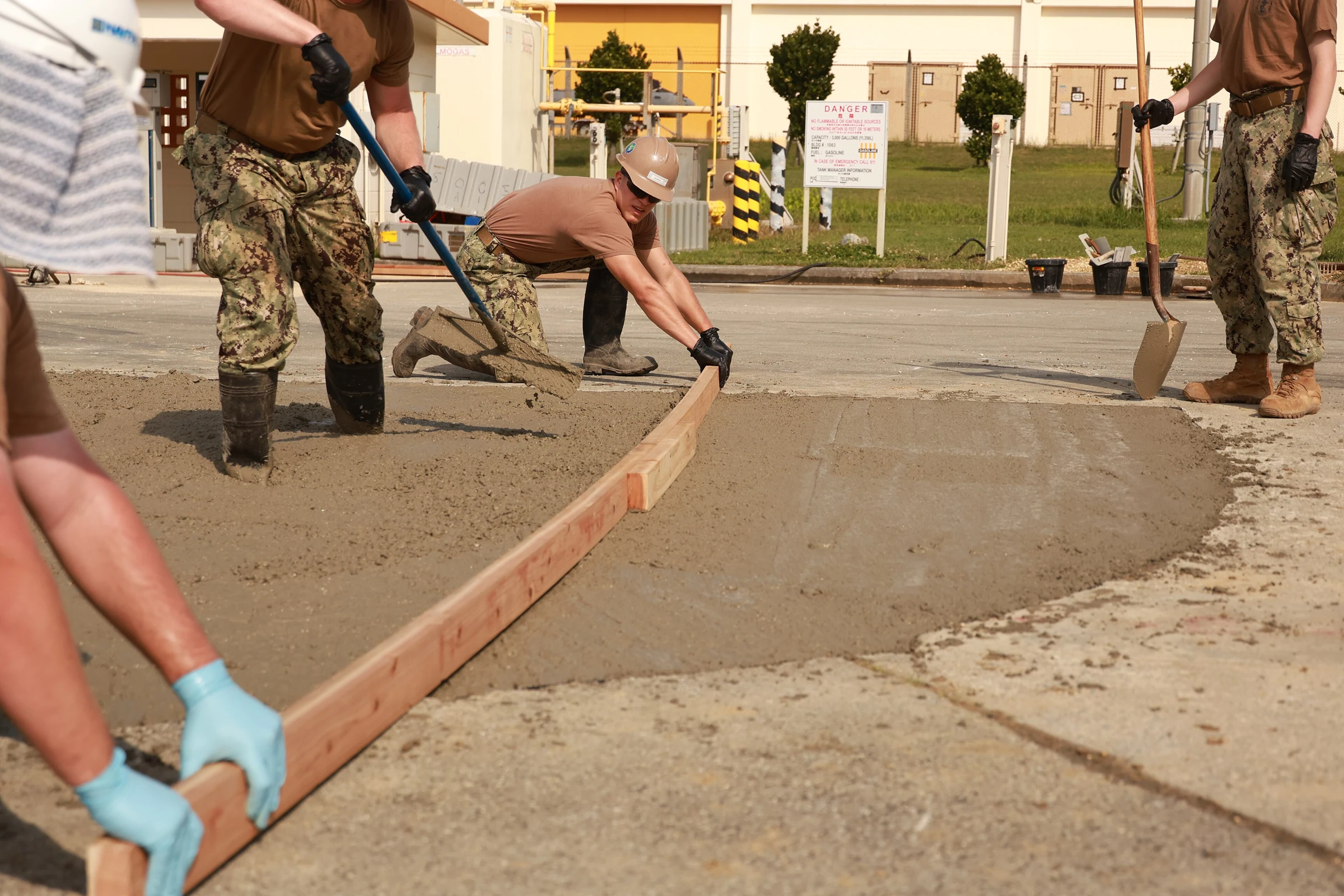
The first slab anybody sees.

Back Porches
The slab that gets lived on.
Concrete Courtyards
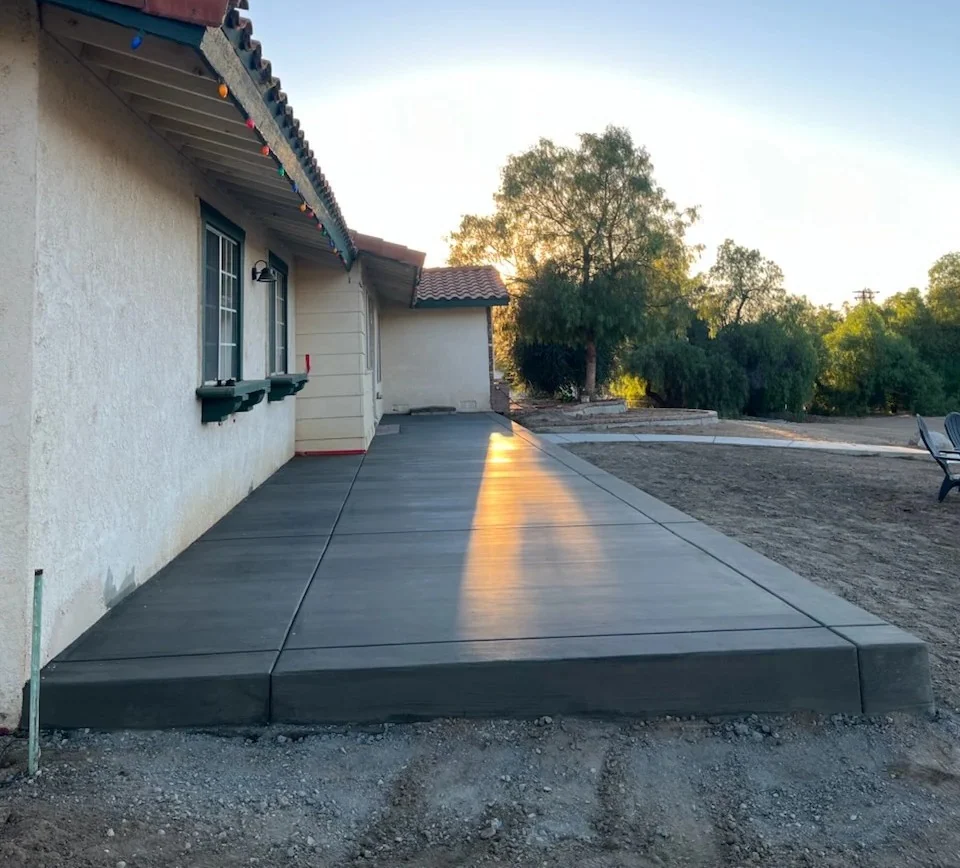
An enclosed slab where drainage has nowhere obvious to go.
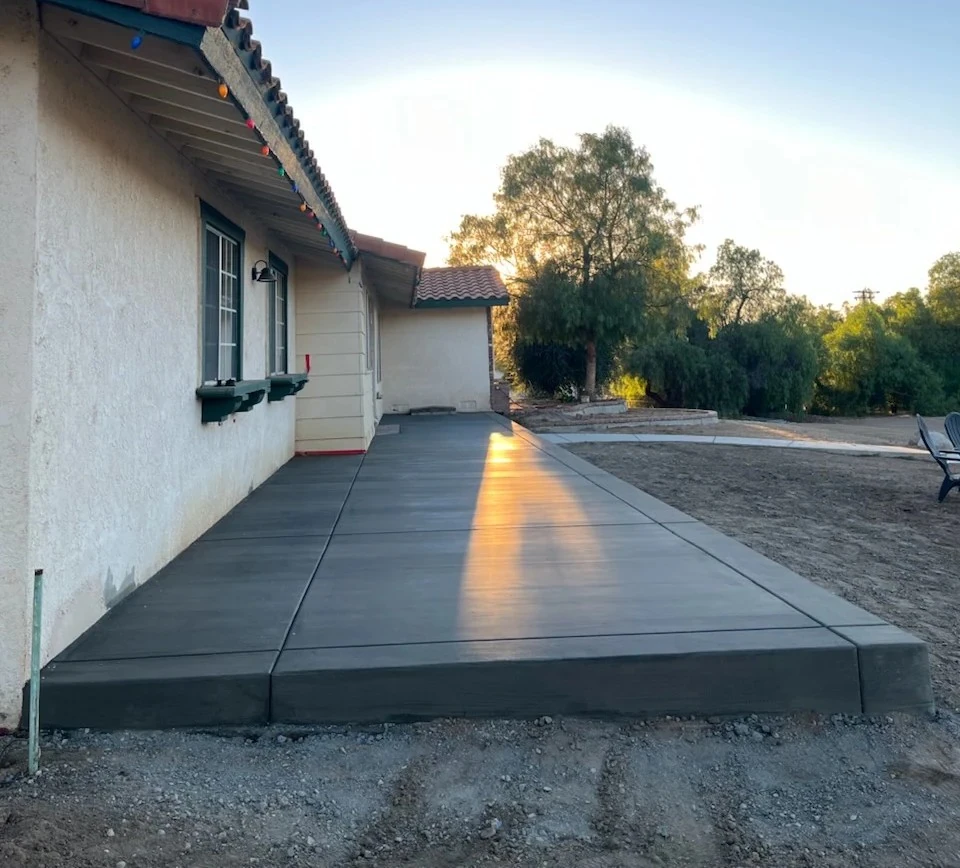
Concrete Slabs
The flat pour everything else is a version of.
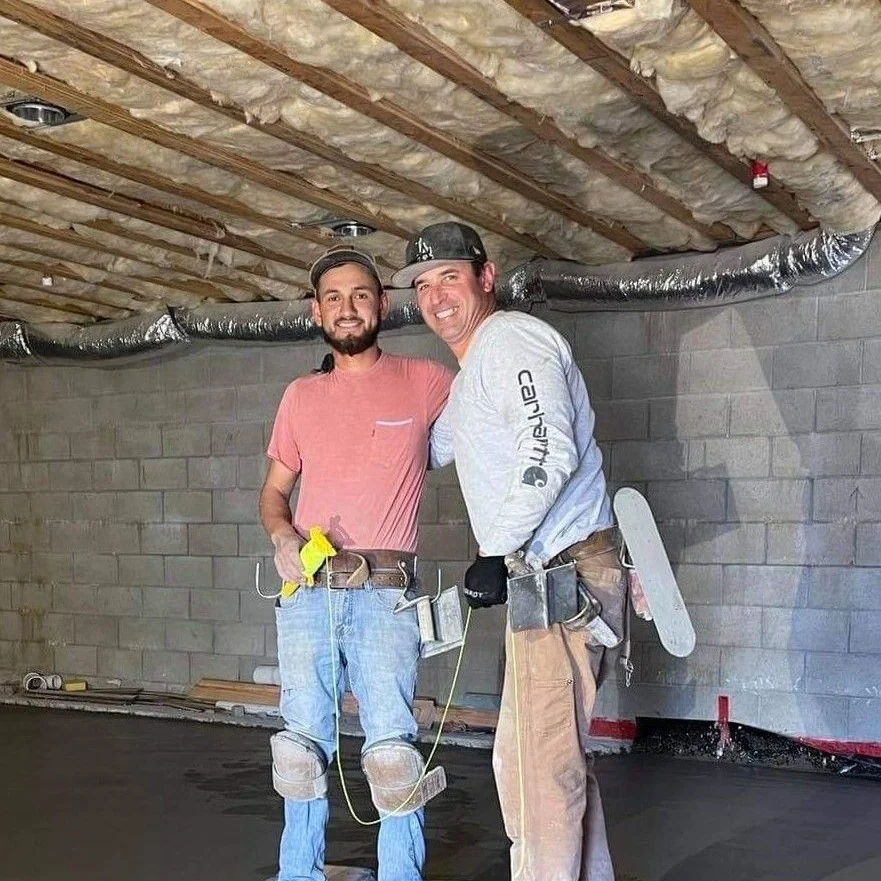
Concrete Slab Repair
Cracks and surface failure on a slab worth keeping.
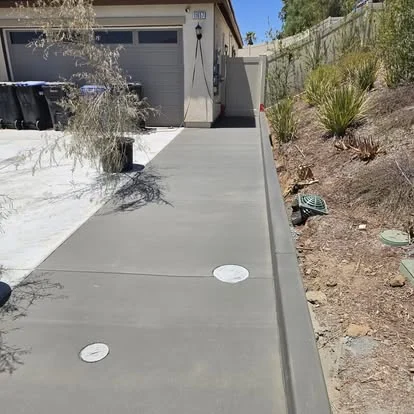
Concrete Slab Replacement
When the base failed, the slab follows.
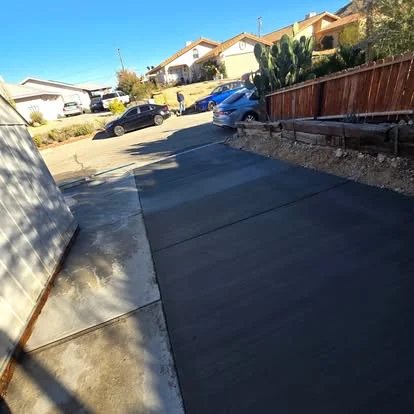
Control Joint Installation
Deciding where the crack goes.
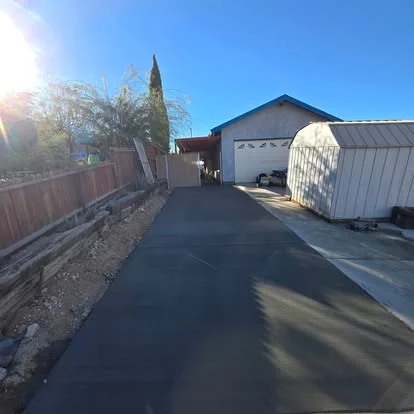
Concrete Repair
Fix the concrete that is worth fixing.
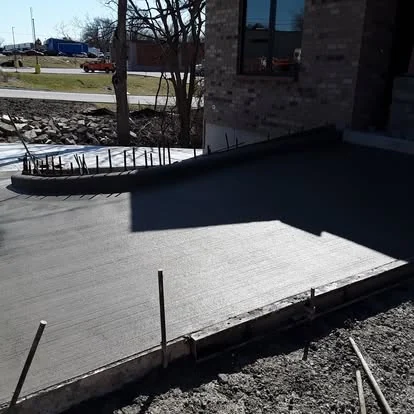
Concrete Crack Repair
Some cracks are cosmetic. Some are a message.
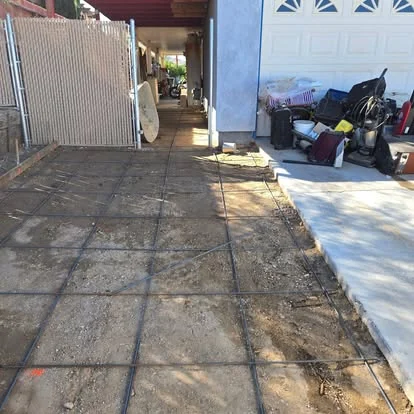
Industrial Floors
Impact, chemicals, and equipment loads.
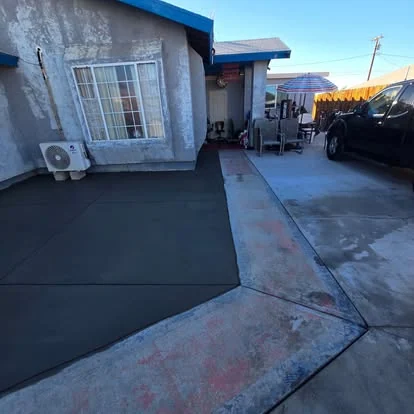
Industrial Concrete
Heavy concrete for working facilities.
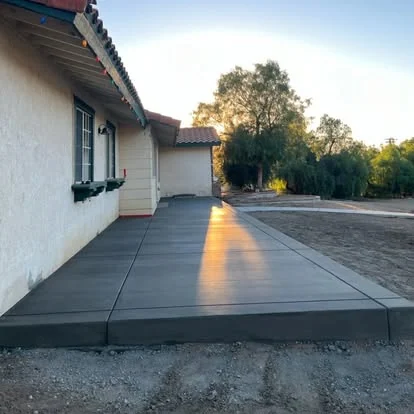
Tilt-Up Concrete
Panels cast flat on the slab, then stood up.
Pouring concrete around Indian Wells
The daily temperature swing
The desert can drop forty degrees after sundown, and concrete expands and contracts with that every single day for its whole life. Joint spacing has to allow for a slab that never stops moving, which is a different calculation from a mild coastal lot.
Salts and sulfates in the soil
Parts of the low desert carry high salt and sulfate levels. Those attack cement paste and corrode reinforcing steel, and where it is a factor both the mix design and the concrete cover over the steel change. It is worth knowing before pouring rather than after.
Sun on the finished surface
A dark slab in full desert sun becomes genuinely unusable barefoot, which matters around pools and on patios. Color and finish are a comfort decision here as much as an appearance one, and lighter, more textured surfaces earn their place.
Alluvial and sandy ground
Desert soils drain well and compact differently from clay. That can work in your favor, but loose alluvial material has to be placed and compacted in controlled lifts or the slab settles unevenly and cracks along the soft line.
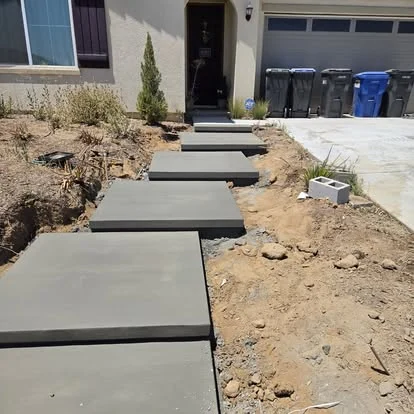
Concrete work around Indian Wells
Flatwork, foundations and repair across Indian Wells and the rest of Riverside County, poured by the same crew that answers the phone.
How concrete fails, and why
Cracks through a control joint
If a crack runs past a joint that was supposed to catch it, the joint was cut too shallow or too late. Depth needs to be about a quarter of the slab thickness.
Flatwork lifting at tree lines
Roots follow moisture, and the moisture is under your slab. Removing the slab without addressing the root just resets the clock.
Soft spots that appear later
Ground that was never properly compacted keeps consolidating under load. That is why compaction gets tested rather than eyeballed.
Efflorescence
White powder on the surface is salts carried out by moisture moving through the slab. It signals water movement, which is worth understanding even though the powder itself is harmless.
How a job runs
Preparation you may need to do
Moving vehicles, clearing the area, and sometimes irrigation being shut off. We will tell you in advance what is on you.
Demolition day
Saw cutting, breaking, loading and hauling. It is the loudest and dirtiest part and it usually happens first.
Pouring new concrete on ground that already failed once buys you the same crack.On replacement
Pour day
Early start in summer. The crew works continuously until the slab is placed and finished, because concrete sets on its own schedule.
Keeping off it
How long depends on the pour and the weather. You will get a real number, not a generic one.
Around Indian Wells
Straight answers
Why does the daily temperature swing matter?
The desert can drop forty degrees after sundown, and the slab expands and contracts with that every day for its whole life. Joint spacing has to allow for concrete that never stops moving.
What about salts in the desert soil?
Parts of the low desert carry high salt and sulfate levels that attack cement paste and corrode reinforcing steel. Where it is a factor the mix design and the cover over the steel both change.
Does wind affect the pour?
It does. Blowing sand landing inside the finishing window gets worked into the surface and stays there, so wind is a scheduling factor here the way rain is elsewhere.
Can you pour in desert summer heat?
Yes, with the schedule and the mix built around it. Placing at a hundred and fifteen means the concrete is stiffening as it leaves the chute, so pours move to first light and evaporation control during placement is not optional.
My patio gets too hot to walk on. Can that be fixed?
Color and finish both affect surface temperature, and a lighter, more textured surface is noticeably more comfortable. On a replacement that is a real choice to make up front.
Your Indian Wells slab
Tell us what it is and what it has to carry. We will be straight about what it needs and what it does not.