

Concrete work across Winchester
From a single pad to a full foundation. We cover Winchester and the rest of Riverside County out of Hemet, with 32 years in the trade and a license to back it.
Talk to us about the job

What concrete is up against around Winchester
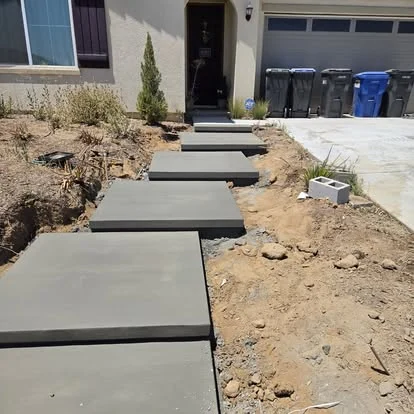
Water is the whole story
Almost every failed slab we are called to look at failed because water got somewhere it should not have. Into the base, under a footing, or through a joint nobody sealed. Drainage gets designed before the pour, not discovered afterward.
Clay that moves with the season
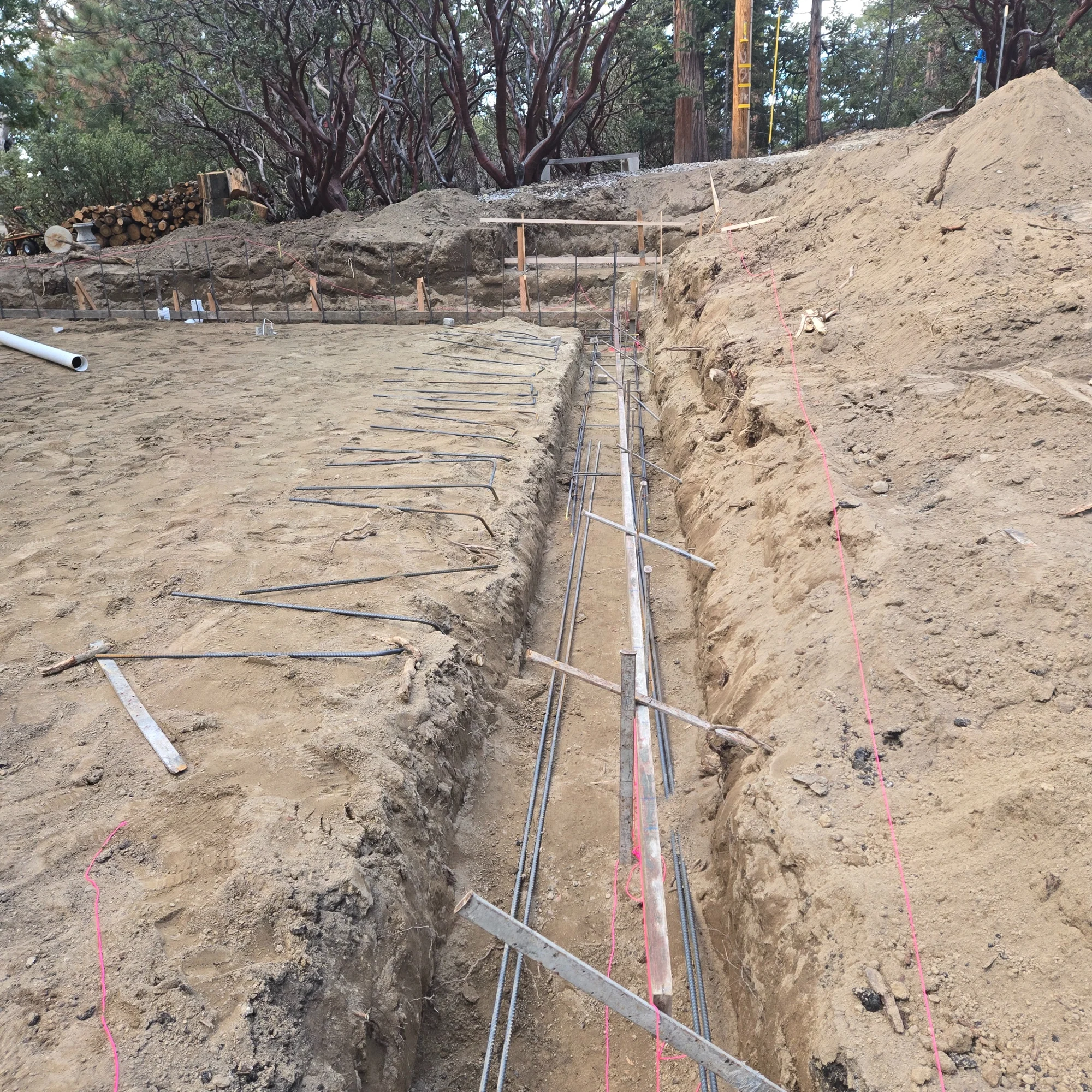
The soil through the San Jacinto Valley is expansive. It swells when it gets water and shrinks back when it dries, and it does that every year. A slab poured on untreated clay rides that movement until it cracks. The fix is in the base and the steel, decided before anybody orders concrete.
Summer heat during the pour
Concrete placed at a hundred and five degrees behaves nothing like concrete placed at seventy. It stiffens fast, the surface skins over while the body is still soft, and you get a finish that looks closed but is not. Hot weather pours get scheduled early and treated differently.
Water routed off the slab
Slopes, low points and a path for water to leave are set before the pour, because afterward the drainage is permanent.
Pours scheduled to the heat
In summer we start early and keep the mix and the crew ahead of the temperature. Concrete does not wait for anybody.
Steel sized to the movement
Reinforcement gets placed for what the soil is going to do, on chairs at the right height with real cover. Steel lying on the dirt does nothing at all.
What we build in Winchester
Boat Pads
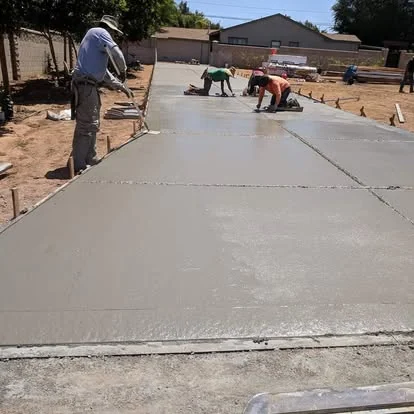
Trailer tongue weight and a slab that has to stay level.
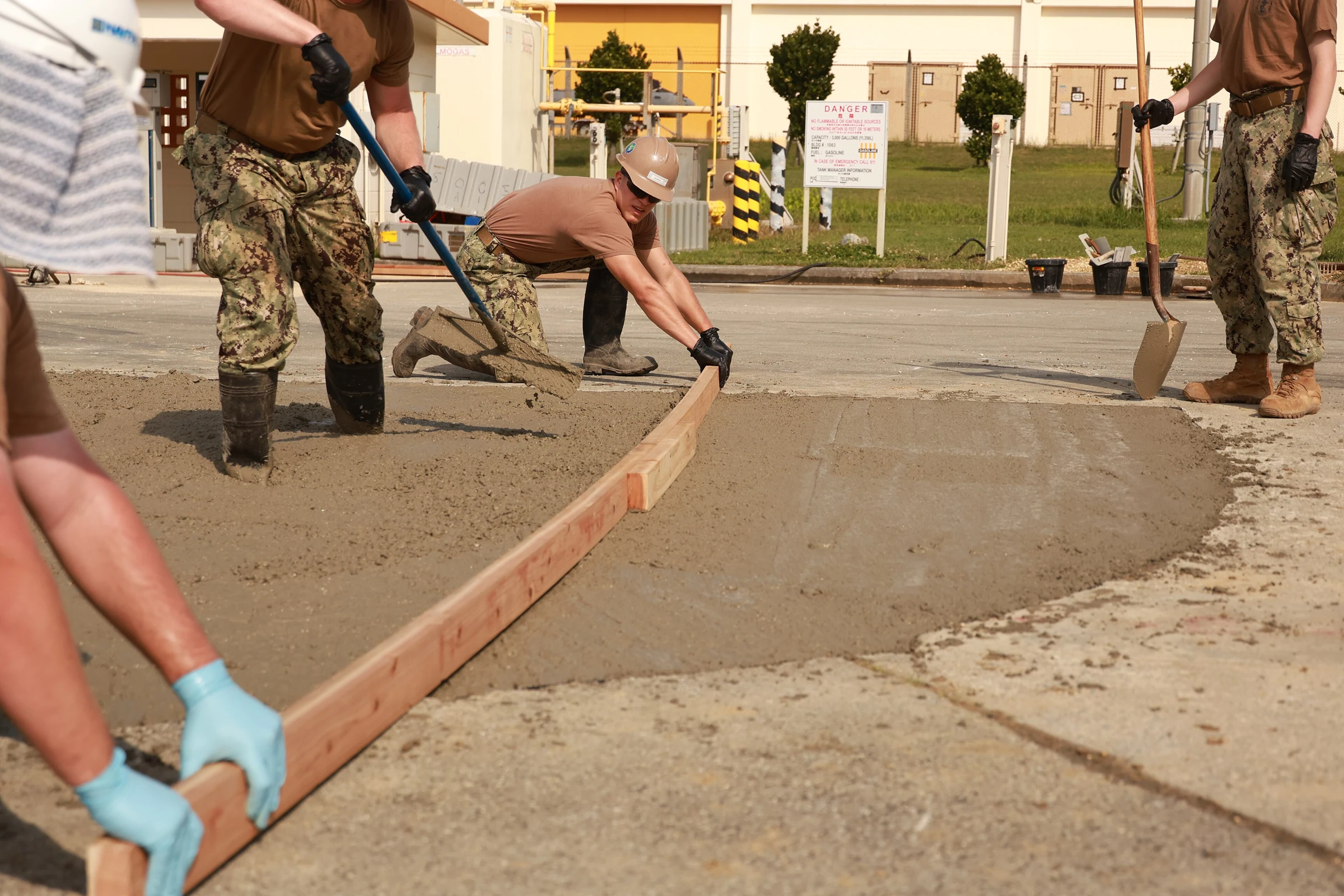
Parking Pads
Extra parking that is not the driveway.

Concrete Pool Decks
Wet feet, chemicals, and sun all year.
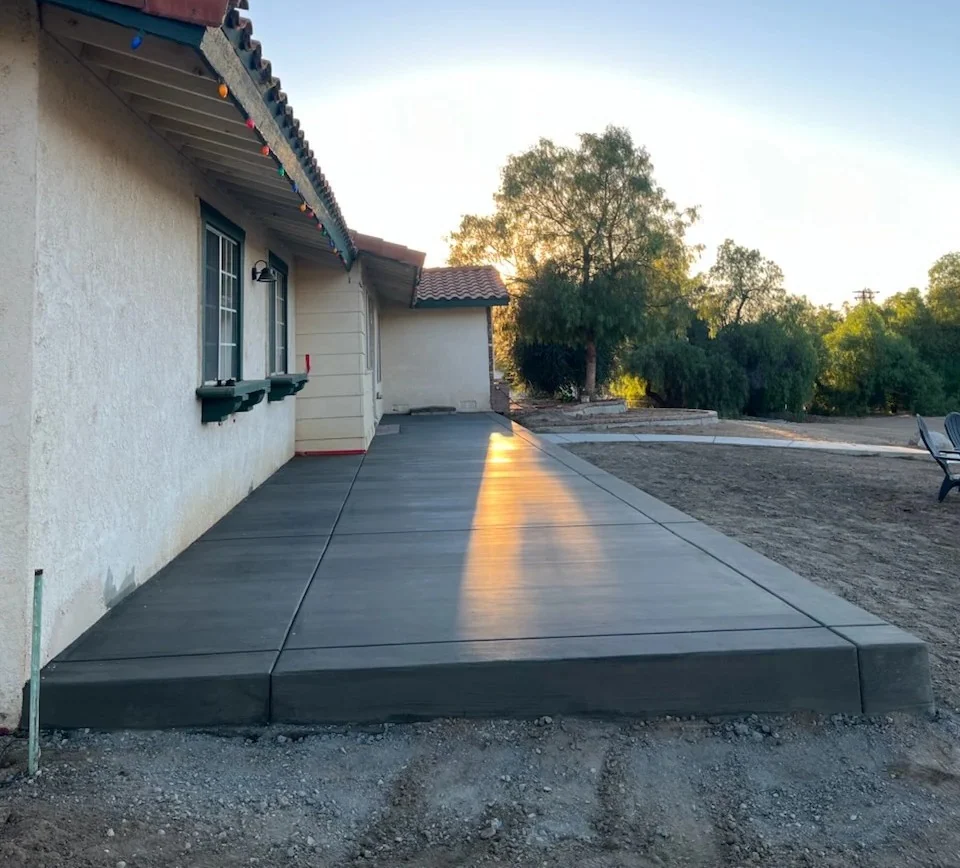
Concrete Pads
A pad sized to the thing that is going on it.
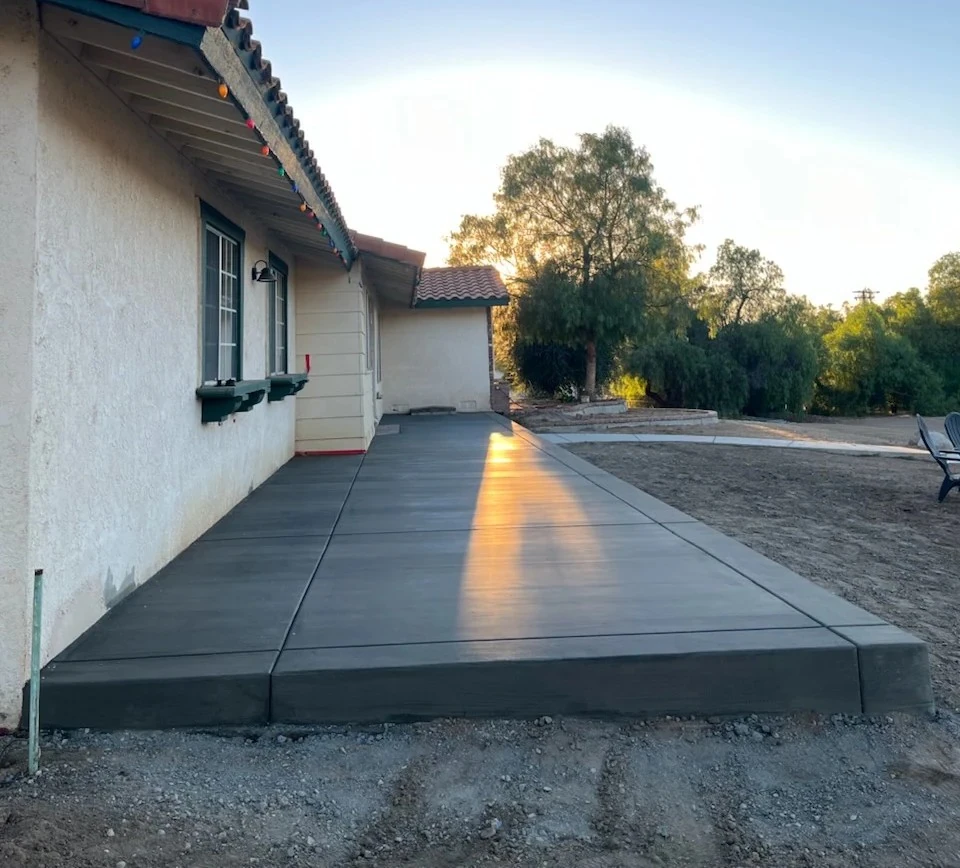
Residential Concrete Flatwork
All the flat concrete around a house, done by one crew.
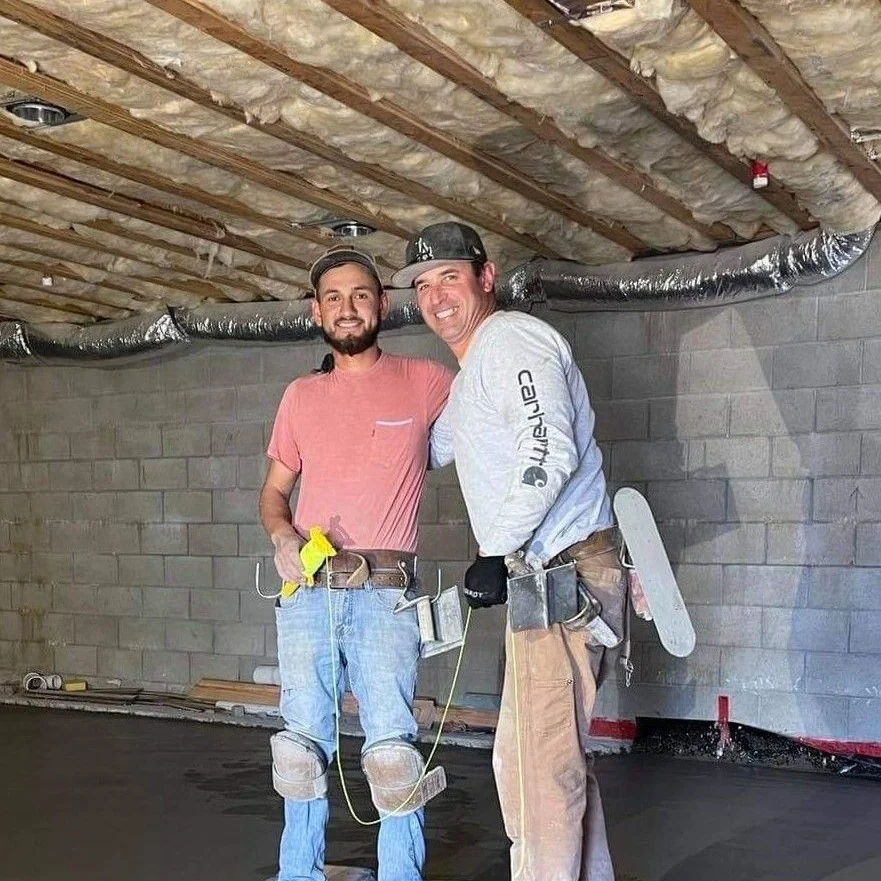
Backyard Concrete
The whole back of the property, planned as one pour.
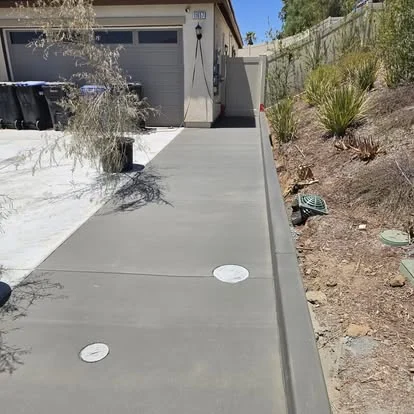
Concrete Repair
Fix the concrete that is worth fixing.
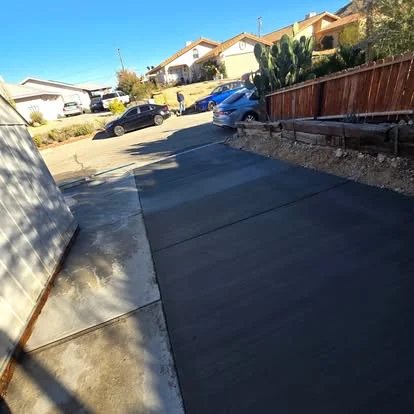
Concrete Crack Repair
Some cracks are cosmetic. Some are a message.
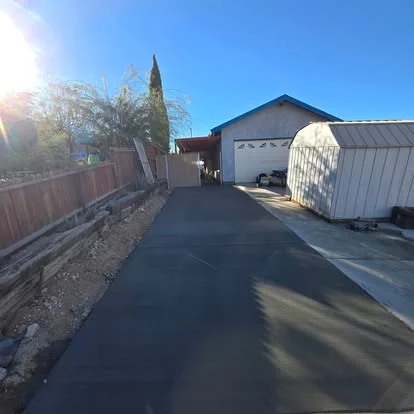
Spalled Concrete Repair
Surface flaking down to the aggregate.
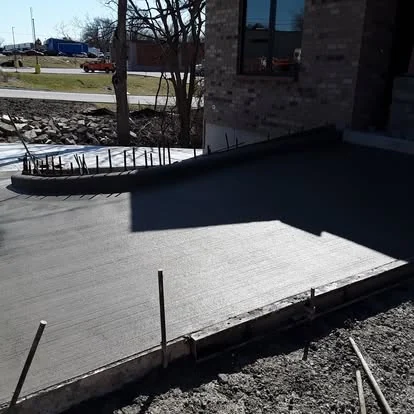
Equipment Pads
A level base for machinery that cannot move.
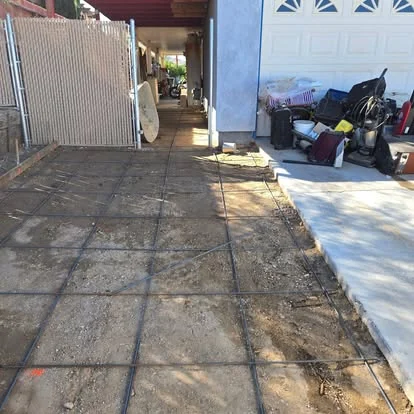
Transformer Pads
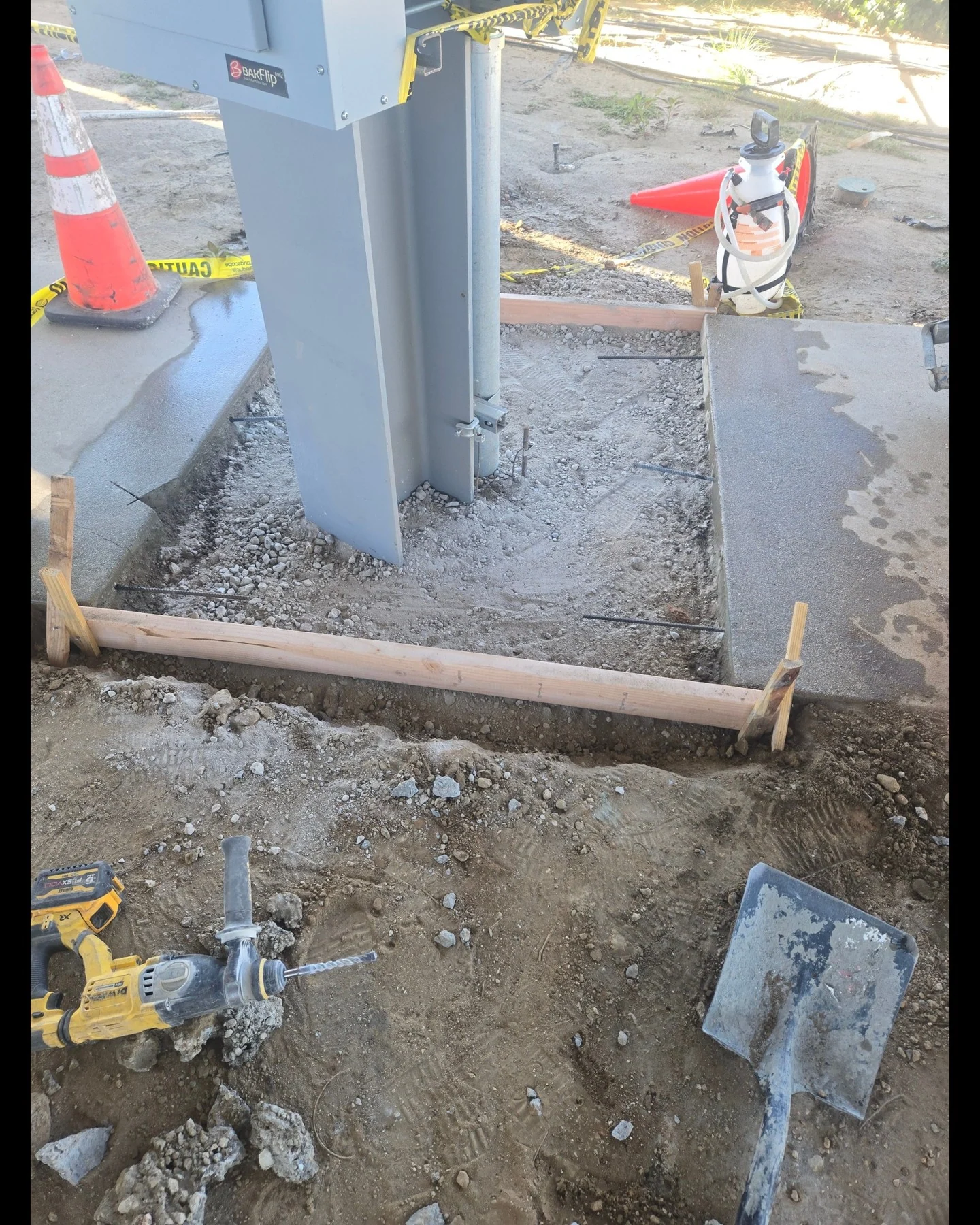
Utility pads built to the utility’s drawing.
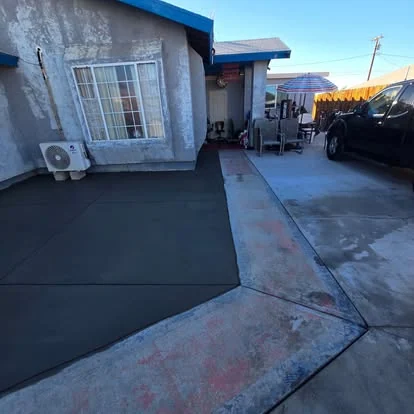
Utility Pads
Pads for meters, generators, and mechanical gear.
Pouring concrete around Winchester
What the ground does here
The inland valleys run on expansive clay. It takes on water and swells, then dries out and shrinks, and it does that cycle every year. A slab poured on untreated clay rides that movement until something gives, which is why base preparation and reinforcement are the design rather than an upgrade. Where a soils report exists we build to it; where there is none, what we find during excavation tells us what the ground is going to do.
Irrigation against the slab
Almost every valley property waters something, and sprinklers running along a slab edge keep the base saturated year round. In expansive soil that is a slow way to undermine your own driveway. Where the water lands is worth looking at before blaming the concrete.
Older flatwork around here
A lot of valley concrete was poured thin, with light reinforcement, on a base that was never properly compacted. When it fails it is usually reporting on the ground rather than on the mix, and that is the difference between a repair that holds and one that comes back in a year.
Drainage on a flat lot
Valley lots are often close to level, which makes slope hard to find and easy to get wrong. Low points, cross-fall and where water actually leaves the property get worked out before the pour, because once the concrete is down the drainage is permanent.
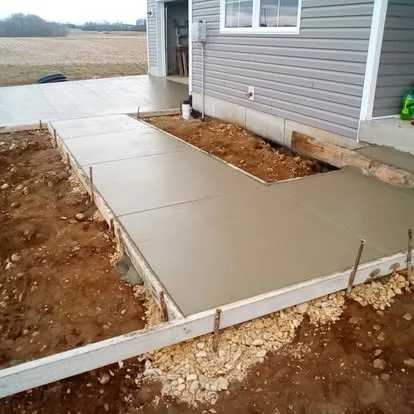
Concrete work around Winchester
Flatwork, foundations and repair across Winchester and the rest of Riverside County, poured by the same crew that answers the phone.
How concrete fails, and why
Settlement at the apron
The strip where a driveway meets a garage takes every vehicle and sits over backfill that was disturbed during construction. It settles more than the rest of the drive and it needs its own thickness and joint.
Heaving
A slab pushed upward is usually roots or expansive soil taking on water. Both get worse with irrigation, and neither is fixed by resurfacing the top.
Pop-outs
Small conical craters come from a particle of reactive aggregate near the surface expanding and blowing the concrete off above it. Cosmetic, and a repairable surface defect.
Dusting
A surface that chalks under a broom was finished or cured badly, or had water worked into it. Sealing helps; grinding and resurfacing fixes it.
How a job runs
The soil question
In expansive clay the soil drives the design. If there is a soils report we build to it; if not, what we find during excavation informs the base work.
Drainage
Where water goes gets decided before the pour, because afterward it is permanent. That sometimes means changing the plan to fix a problem you already had.
Width tells you less about a crack than movement does.On reading a slab
Joint layout
Joints are planned on paper and cut on time. Where they land is partly structural and partly how the finished slab reads.
Maintenance
Concrete is low maintenance, not no maintenance. Sealing and joint upkeep are the two things worth doing.
Around Winchester
Straight answers
What maintenance does concrete actually need?
Keep water moving off it, reseal when it needs it, and keep the joints maintained. Water is the common factor in nearly every concrete failure, so those three things buy years.
Should I worry about hairline cracks in the first month?
Usually not. Concrete gives up water as it cures and gets slightly smaller doing it, and fine shrinkage cracking in that window is the material behaving normally. Anything that widens or lifts is different, and worth a call.
Do you handle the demolition and haul-off?
Yes. Saw cutting to a clean line, breaking out, loading and hauling is part of the job, and we protect what stays and leave the ground ready for the new pour.
Can you match the concrete I already have?
Usually close, rarely exact, because concrete changes color as it ages. We match thickness, finish and joint pattern so the result reads as one surface rather than a patch.
Does the clay soil here really matter that much?
Yes. Expansive clay swells with water and shrinks when it dries, every year. That movement is what cracks slabs and foundations, and it is handled in the base, the reinforcement and the drainage rather than in the finish.
Ready to talk about it?
Call the shop. We cover Winchester and the rest of the county from Hemet, and we will come out and read the job before quoting.