
Concrete that outlasts the house
Driveways, patios, slabs and foundations for Cabazon property owners. Fourth generation on the tools, licensed 1137822, working out of Hemet.
Talk to us about the job
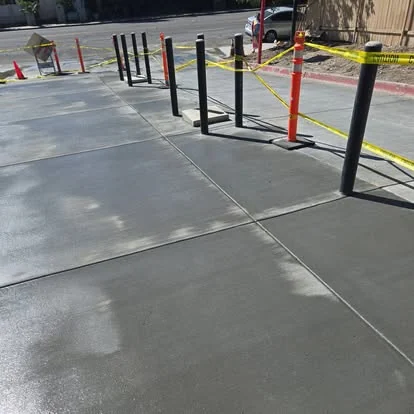
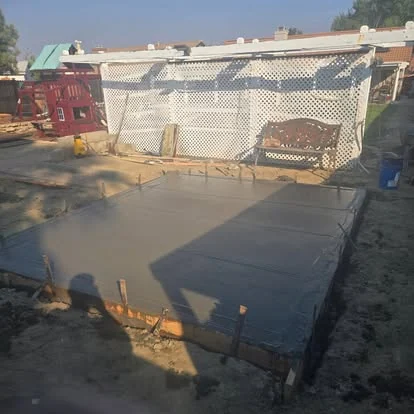

What concrete is up against around Cabazon
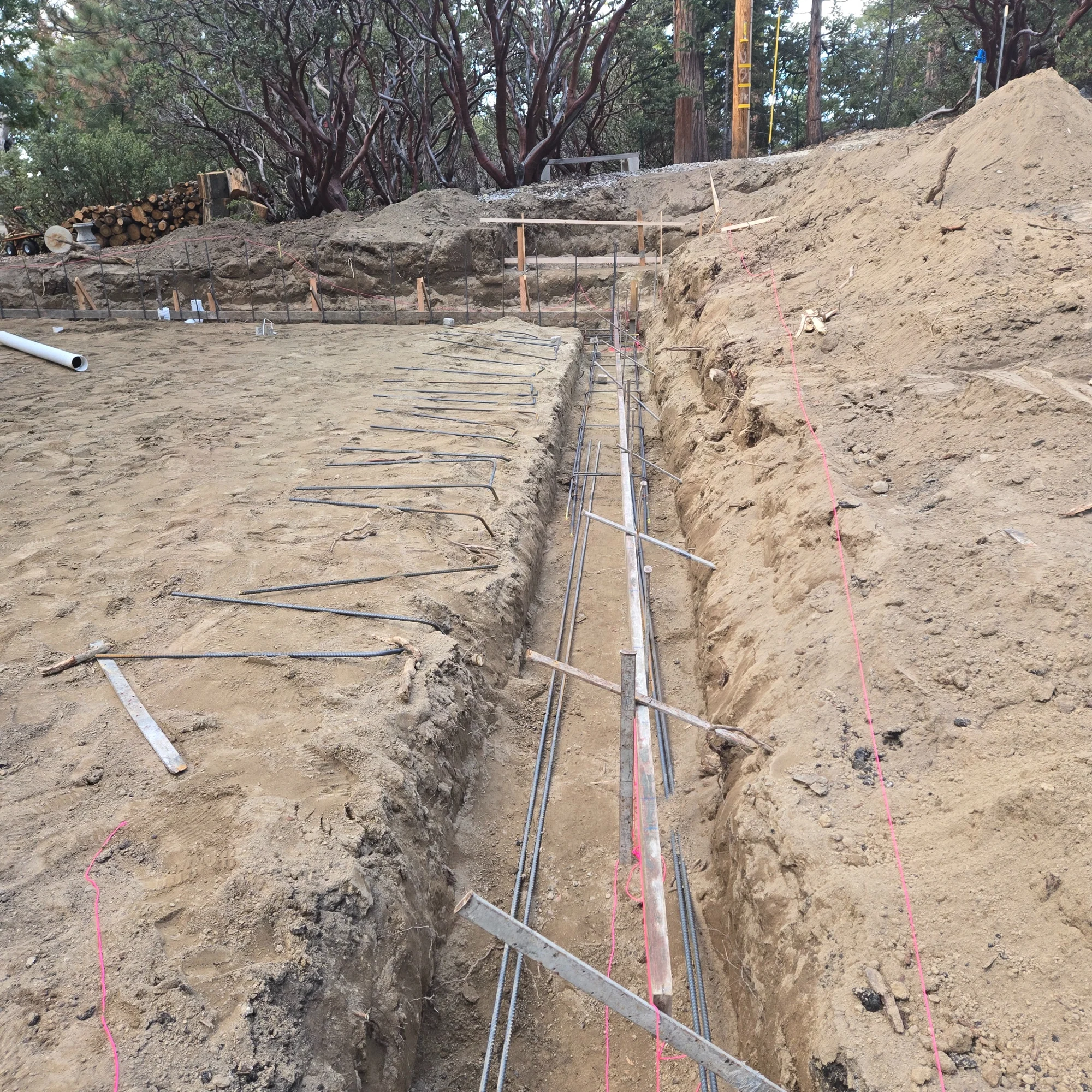
Irrigation on a desert lot
Landscape watering in the desert concentrates water in narrow bands right where the planting is. Next to a slab edge that creates exactly the moisture differential that moves concrete.
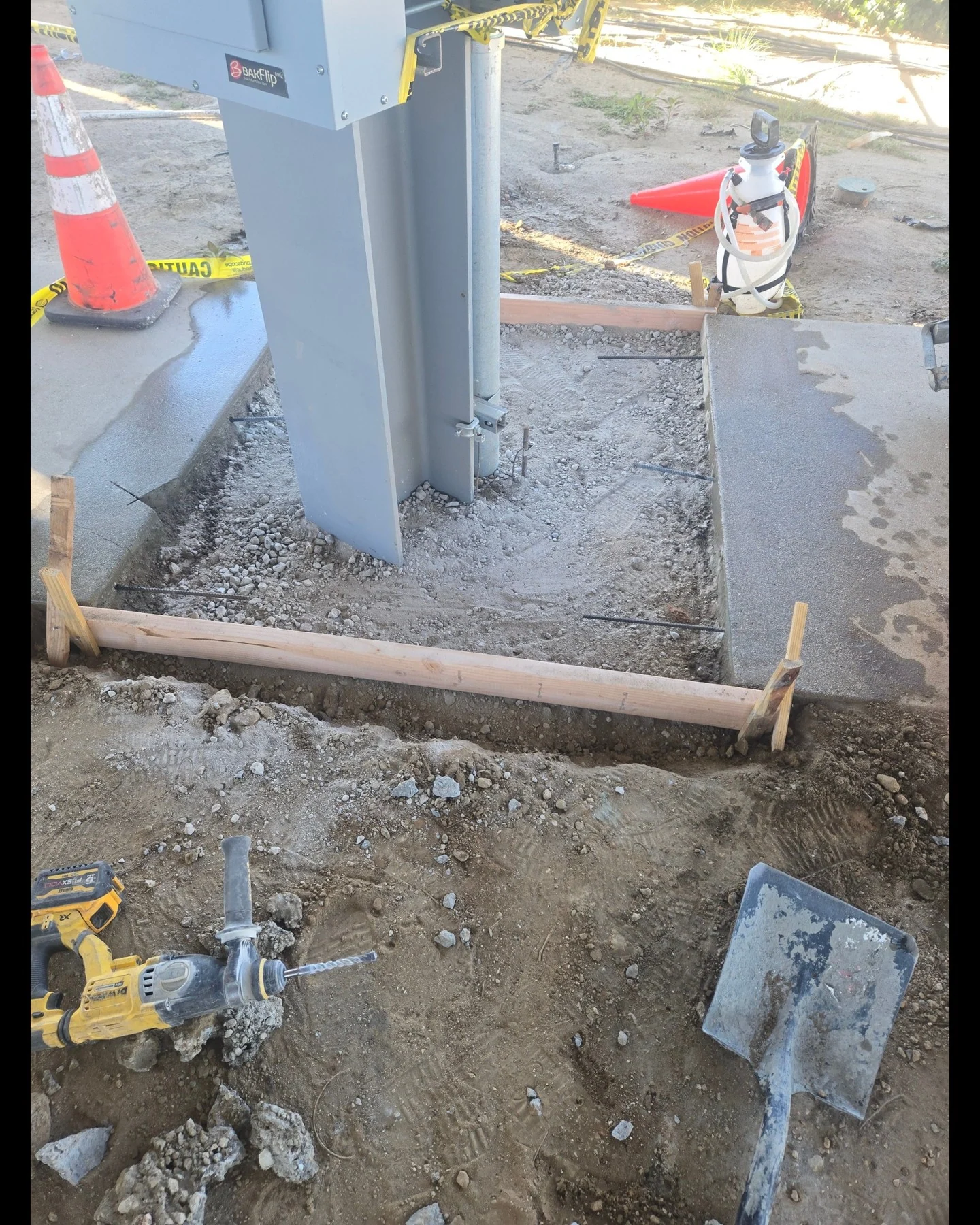
Sun on the finished surface
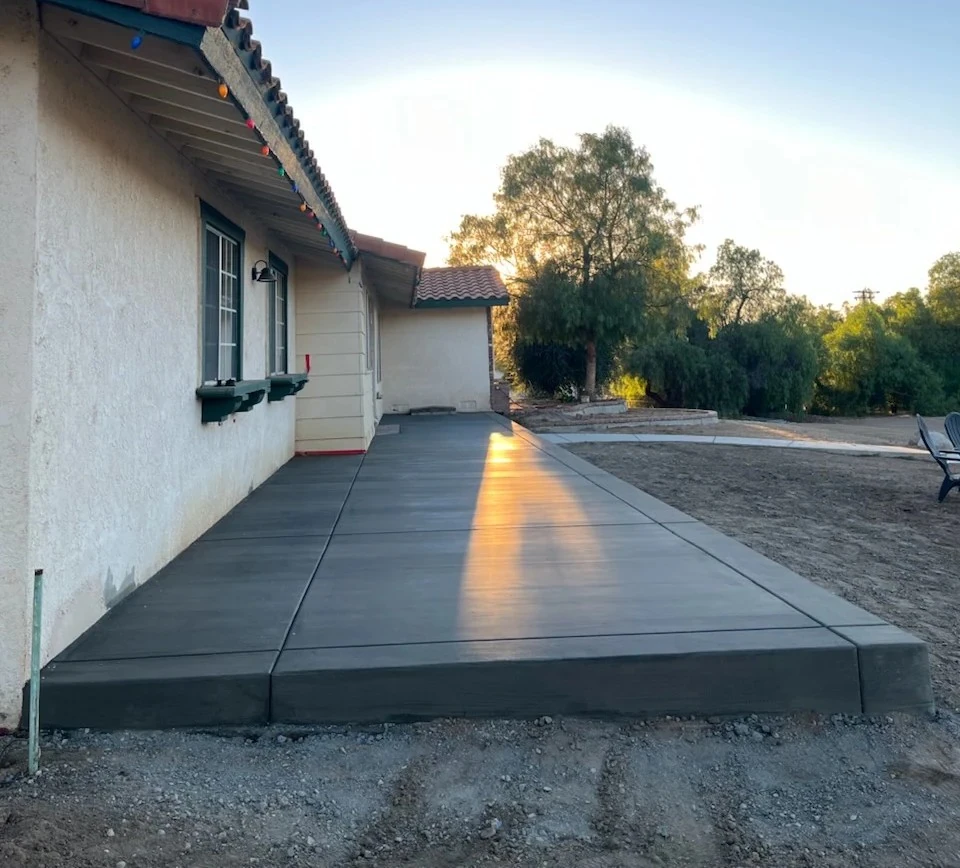
A dark slab in full desert sun gets hot enough to be unusable barefoot. Around pools and patios the color and the finish are a comfort decision as much as an appearance one.
Water loss before the slab sets
Single-digit humidity and wind will pull water out of fresh concrete fast enough to ruin the surface. Evaporation control during the pour is not optional at these temperatures.
Joints planned on paper
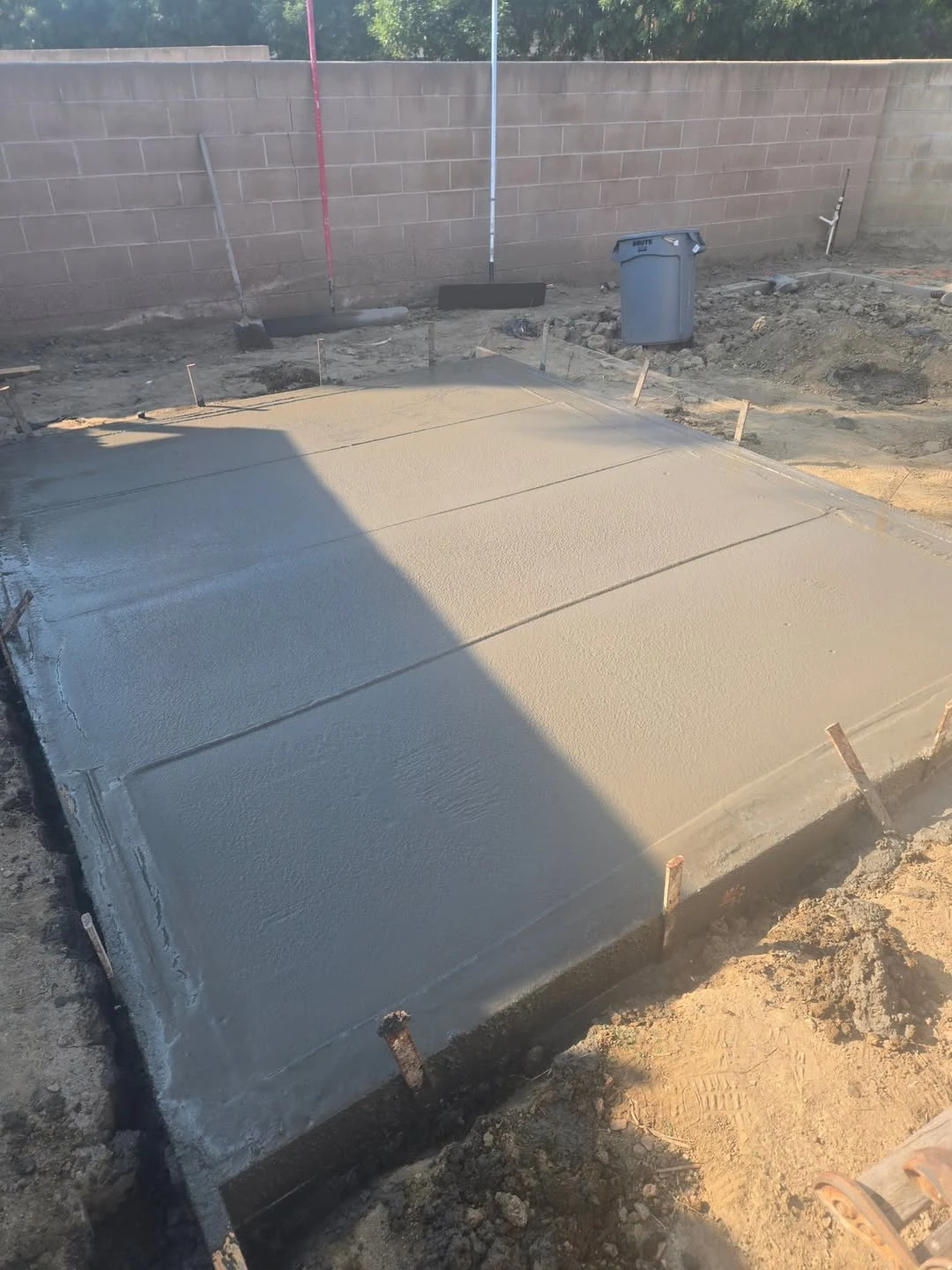
Joint layout gets worked out before the pour, spaced to the thickness and placed where the slab wants to move anyway. Then it gets cut at the right time.
Base first, always
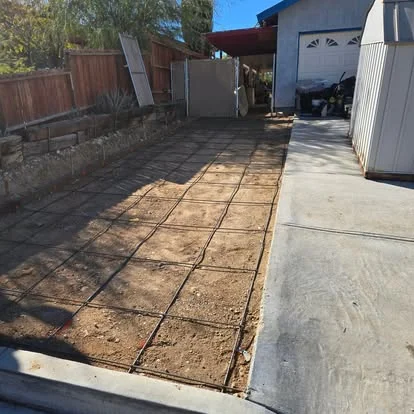
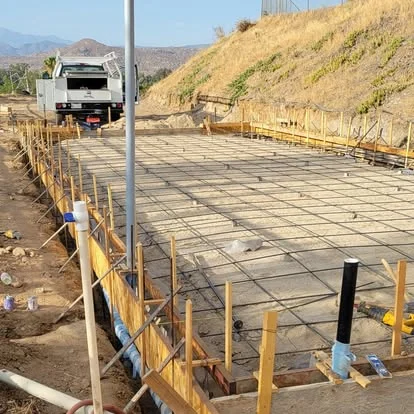
We cut to grade, fix the soft spots we find, and compact base in lifts before anything is formed. In expansive clay that step decides the whole outcome, so it is not where we save money.
One crew start to finish
The same people who form it pour it and finish it. There is no handoff where the details get lost.
What we build in Cabazon
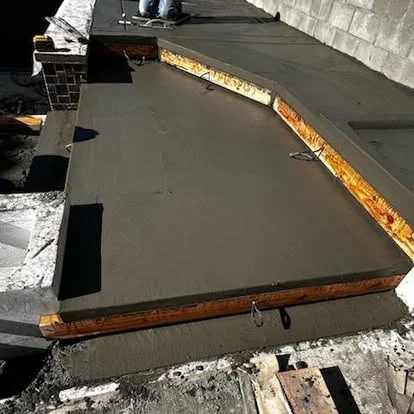
Outdoor Living Concrete
Kitchens, fire features, and seating built on concrete.
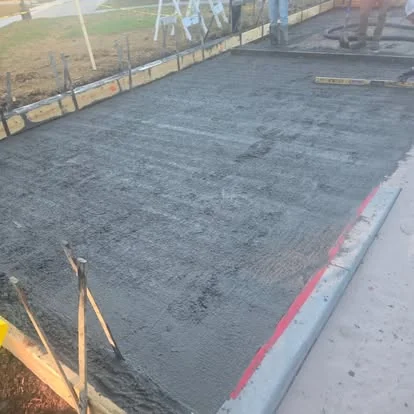
Concrete Driveways
The slab that carries a car every day of its life.
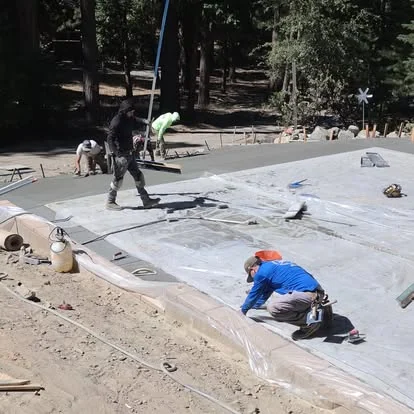
Concrete Driveway Replacement
Out to the dirt, rebuilt from the base up.

Concrete Driveway Repair
Fix what is broken and leave what is sound.
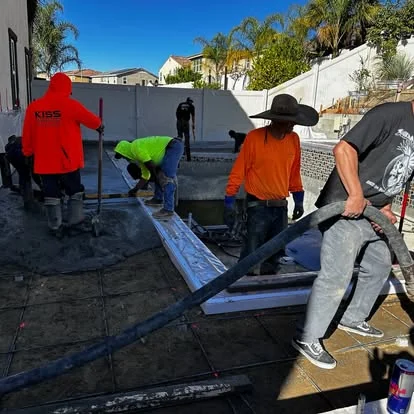
Concrete Patios
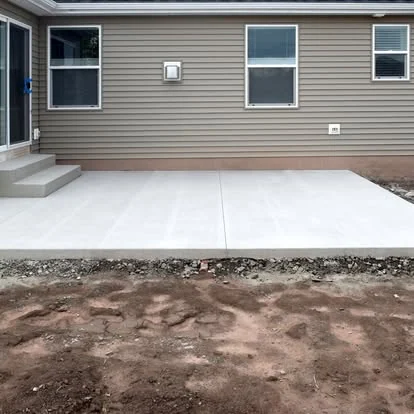
The outdoor room that starts as a flat pour.
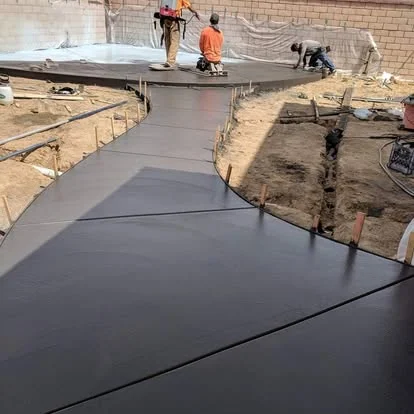
Concrete Patio Replacement
Take out the old slab, pour the one you actually wanted.
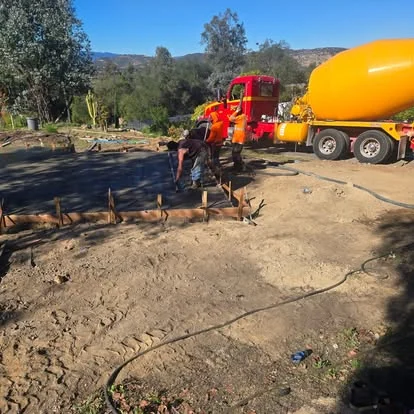
Concrete Demolition
Controlled demolition, including reinforced sections.
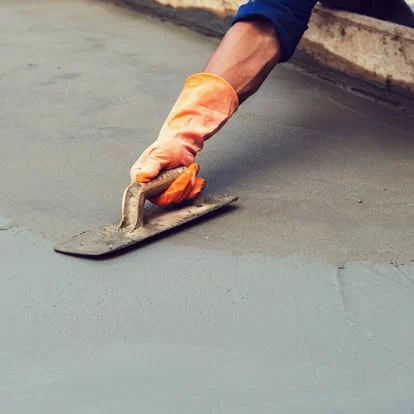
Concrete Saw Cutting
A straight, clean cut to a measured depth.

Expansion Joint Installation
Giving the slab somewhere to go.
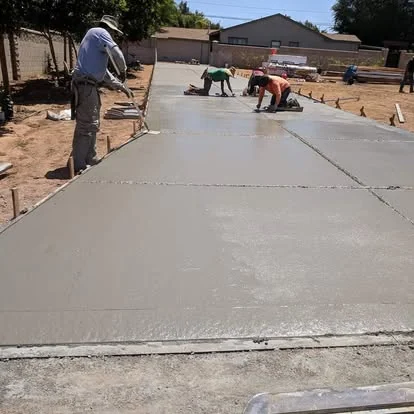
Industrial Floors
Impact, chemicals, and equipment loads.
Industrial Concrete
Heavy concrete for working facilities.
Tilt-Up Concrete
Panels cast flat on the slab, then stood up.
Pouring concrete around Cabazon
The daily temperature swing
The desert can drop forty degrees after sundown, and concrete expands and contracts with that every single day for its whole life. Joint spacing has to allow for a slab that never stops moving, which is a different calculation from a mild coastal lot.
Salts and sulfates in the soil
Parts of the low desert carry high salt and sulfate levels. Those attack cement paste and corrode reinforcing steel, and where it is a factor both the mix design and the concrete cover over the steel change. It is worth knowing before pouring rather than after.
Wind during finishing
Blowing sand landing on a slab inside the finishing window gets worked into the surface and stays there. Wind is a scheduling factor in the desert the same way rain is elsewhere.
Sun on the finished surface
A dark slab in full desert sun becomes genuinely unusable barefoot, which matters around pools and on patios. Color and finish are a comfort decision here as much as an appearance one, and lighter, more textured surfaces earn their place.
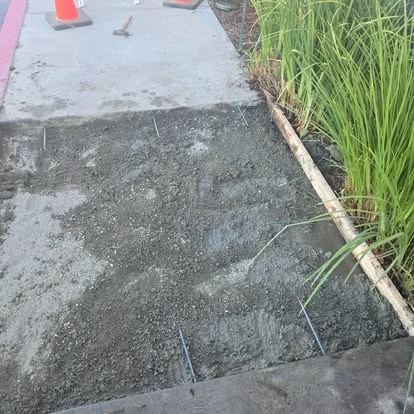
Concrete work around Cabazon
Flatwork, foundations and repair across Cabazon and the rest of Riverside County, poured by the same crew that answers the phone.
How concrete fails, and why
Failure that starts at the edge
Most slabs die from the outside in. Edges are thin, unsupported and exposed, which is why a thickened perimeter is worth the concrete it costs.
Water tracking under the slab
If water can get under concrete it will move fines out and leave voids. Drainage and base gradation both exist to stop that.
Cracks that open seasonally
A crack that closes in winter and opens in summer is expansive soil cycling. It is manageable and it is not going to be solved by filling it once.
Coatings peeling off
A coating is only as good as the prep under it. Profile, moisture content and cleanliness all decide whether it bonds or sheets off later.
How a job runs
Preparation you may need to do
Moving vehicles, clearing the area, and sometimes irrigation being shut off. We will tell you in advance what is on you.
Demolition day
Saw cutting, breaking, loading and hauling. It is the loudest and dirtiest part and it usually happens first.
Pouring new concrete on ground that already failed once buys you the same crack.On replacement
Pour day
Early start in summer. The crew works continuously until the slab is placed and finished, because concrete sets on its own schedule.
Keeping off it
How long depends on the pour and the weather. You will get a real number, not a generic one.
Around Cabazon
Straight answers
My patio gets too hot to walk on. Can that be fixed?
Color and finish both affect surface temperature, and a lighter, more textured surface is noticeably more comfortable. On a replacement that is a real choice to make up front.
What about salts in the desert soil?
Parts of the low desert carry high salt and sulfate levels that attack cement paste and corrode reinforcing steel. Where it is a factor the mix design and the cover over the steel both change.
How long before I can drive on it?
Foot traffic is usually a day or two, vehicles longer. Desert heat changes the early curve, so you get the real numbers for your pour.
Do you handle the demolition and haul-off?
Yes, including saw cutting to a clean line and hauling the spoil. The site gets left ready to pour.
Does wind affect the pour?
It does. Blowing sand landing inside the finishing window gets worked into the surface and stays there, so wind is a scheduling factor here the way rain is elsewhere.
Pouring in Cabazon
We would rather stand on the job than guess at it. Call and we will set a time to come and look.