
Aguanga slabs, built from the base up
Most concrete fails from underneath, so that is where we start. Serving Aguanga and Riverside County with 32 years in the trade behind every pour.
Talk to us about the job


What concrete is up against around Aguanga
Curing in cold air
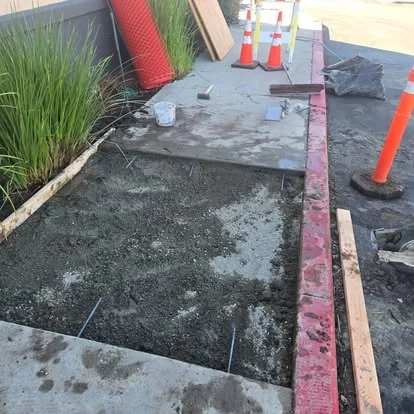
Concrete cures by chemical reaction and cold slows that reaction down. A slab that never reaches strength because it was placed into cold air is a permanent problem, not a delay.
Freeze cycling at elevation
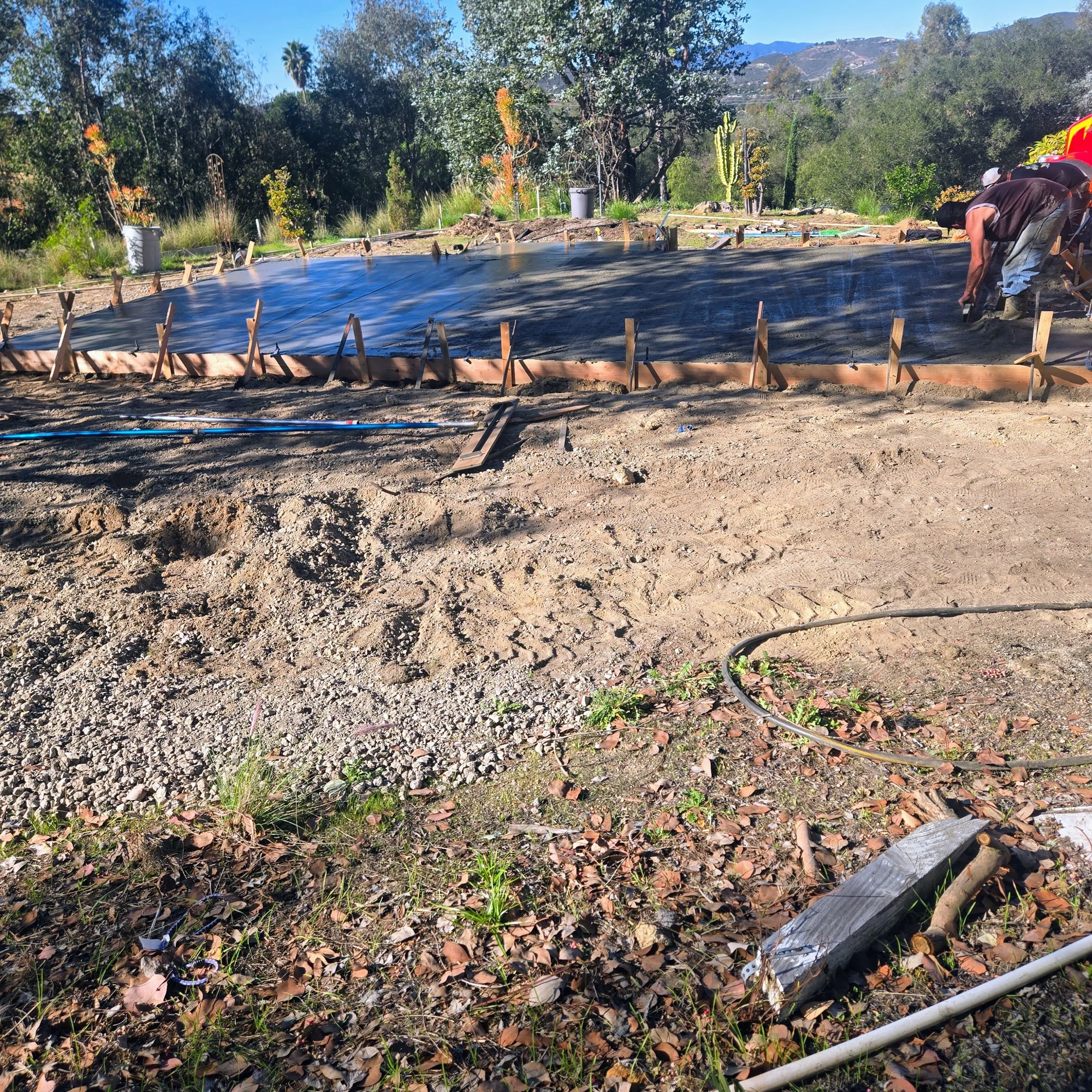
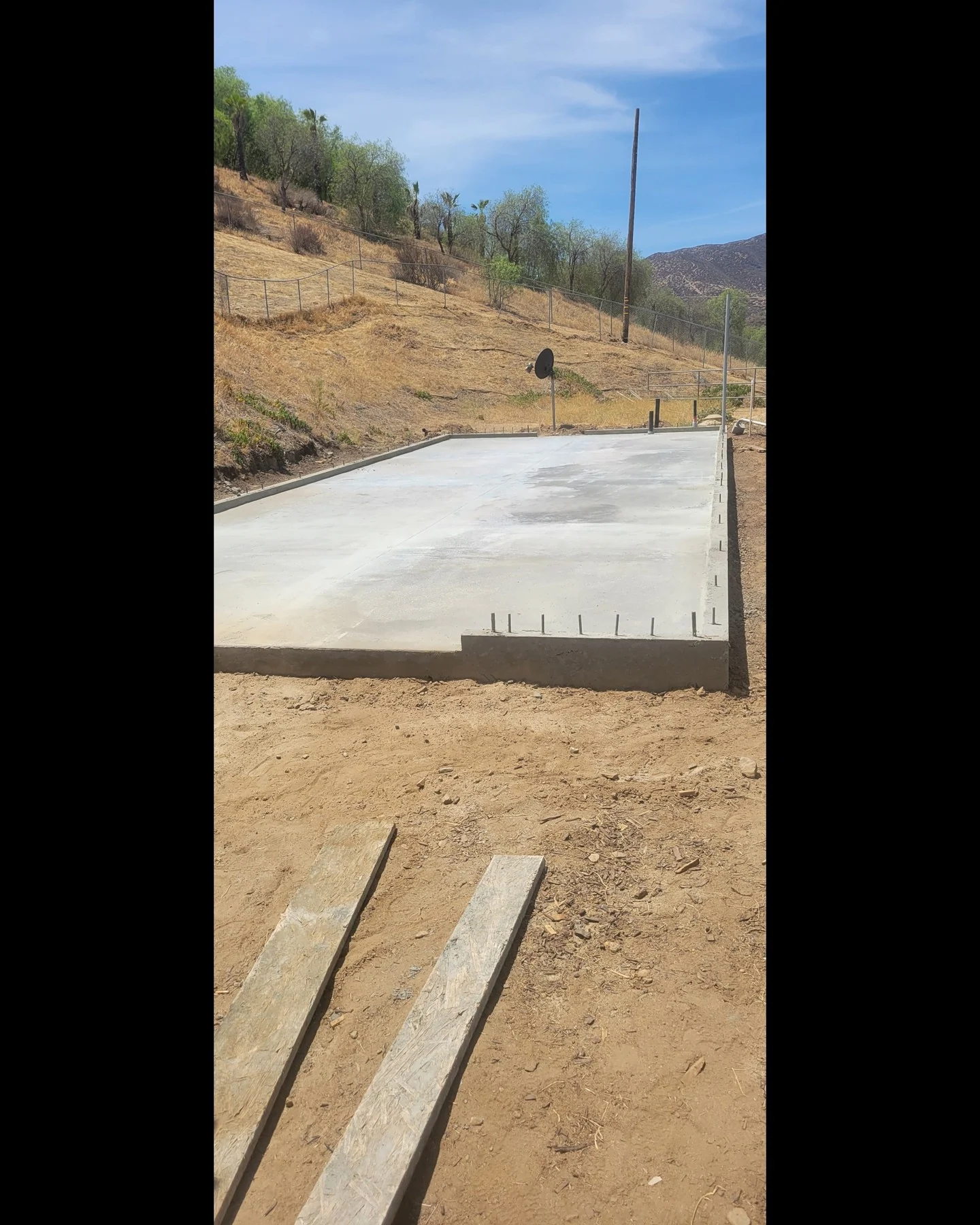
Up here concrete goes through the freeze and thaw cycle repeatedly every winter. Each cycle drives water deeper into the pores and pries the surface apart a little more. Air entrainment and sealing are not upgrades at this elevation.
Slope on almost every lot
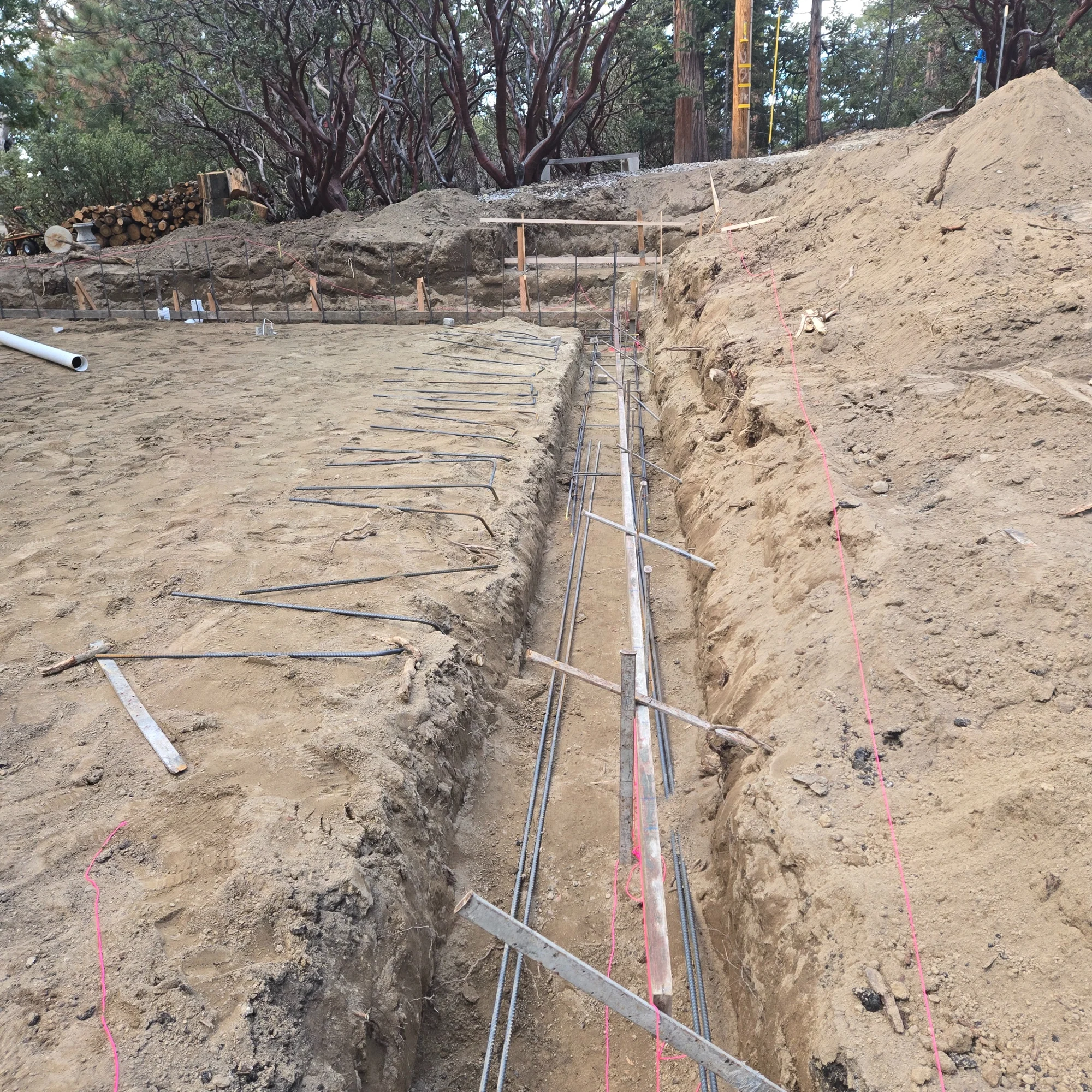
Mountain properties are rarely flat. That means stepped footings, retaining, and drainage that has real consequences if it is wrong. Water on a slope finds the cheapest path down.
One crew start to finish
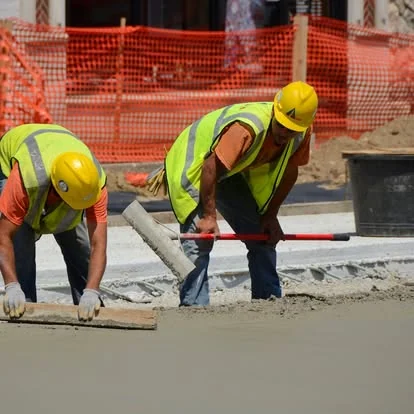
The same people who form it pour it and finish it. There is no handoff where the details get lost.
Base first, always
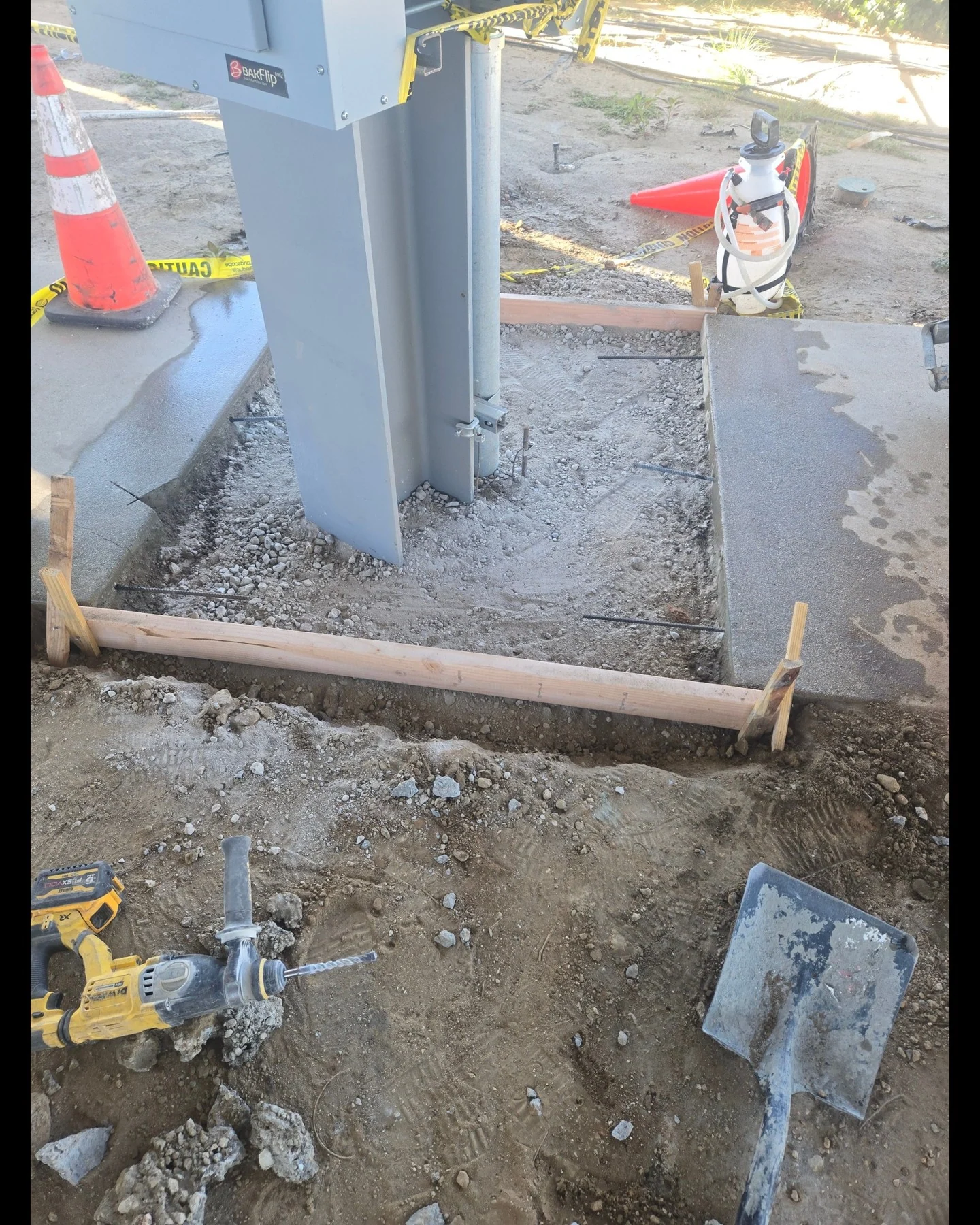
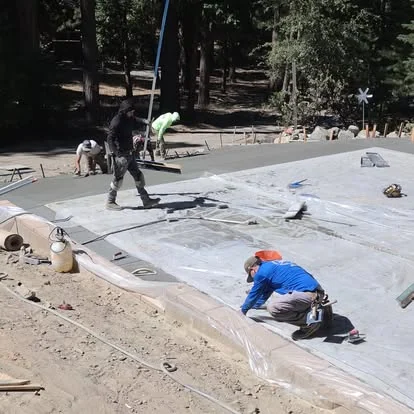
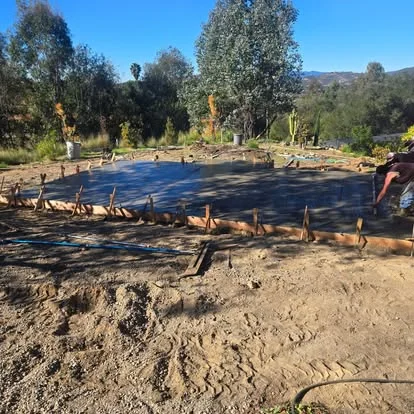
We cut to grade, fix the soft spots we find, and compact base in lifts before anything is formed. In expansive clay that step decides the whole outcome, so it is not where we save money.
Cleanup is part of the job
Washout handled properly, spoil hauled, surfaces cleaned. Concrete work is messy while it happens and should be invisible when it is done.
What we build in Aguanga
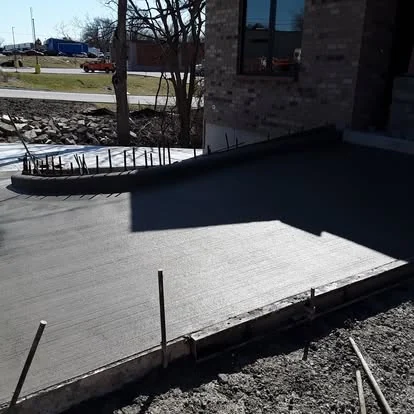
Concrete Patios
The outdoor room that starts as a flat pour.
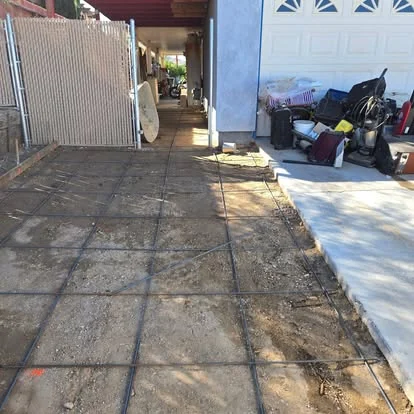
Concrete Patio Replacement
Take out the old slab, pour the one you actually wanted.
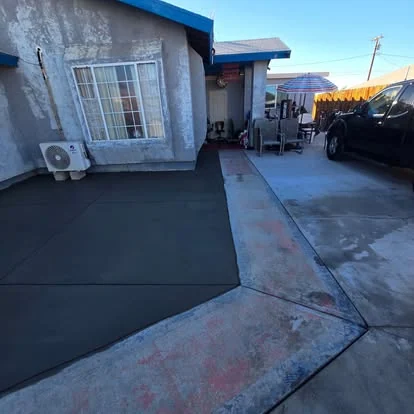
Concrete Patio Repair
Cracks, settled corners, and surfaces that have gone rough.
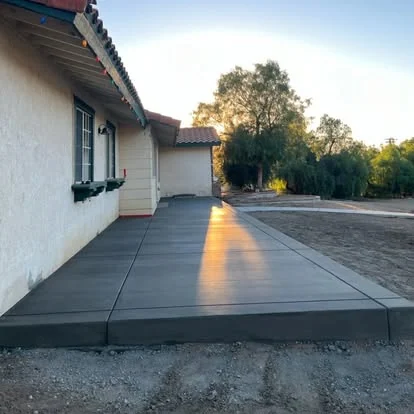
Concrete Walkways
Getting from the street to the door without a trip hazard.
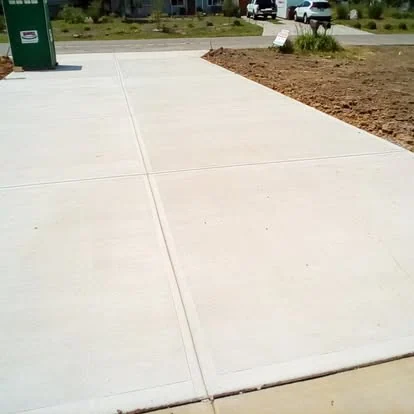
Concrete Sidewalks
Public-facing flatwork built to the spec the city will inspect.
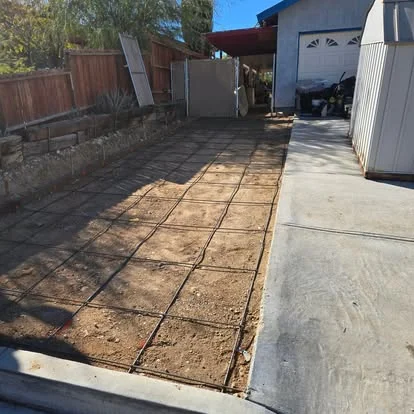
Concrete Sidewalk Repair
Lifted, cracked, or spalled panels made safe again.
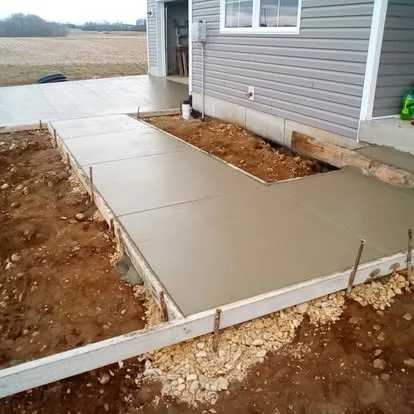
Control Joint Installation
Deciding where the crack goes.
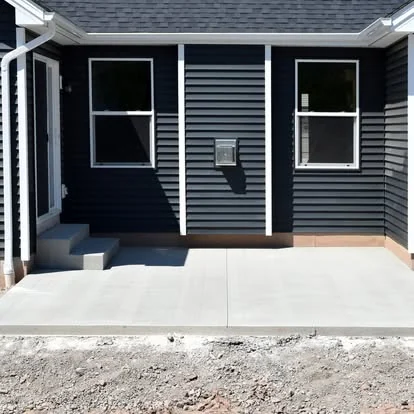
Concrete Repair
Fix the concrete that is worth fixing.
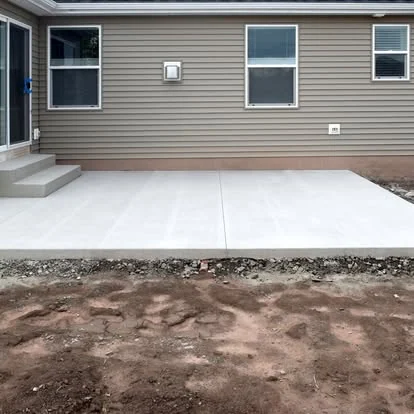
Concrete Crack Repair
Some cracks are cosmetic. Some are a message.
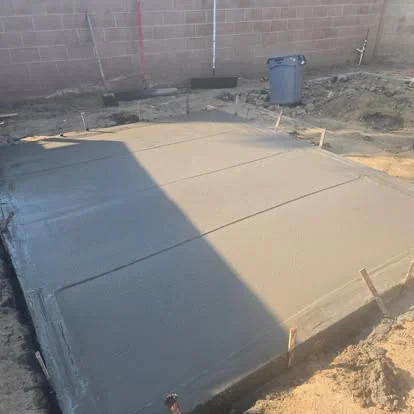
Concrete Parking Lot Replacement
A full lot rebuilt on a schedule that keeps you open.
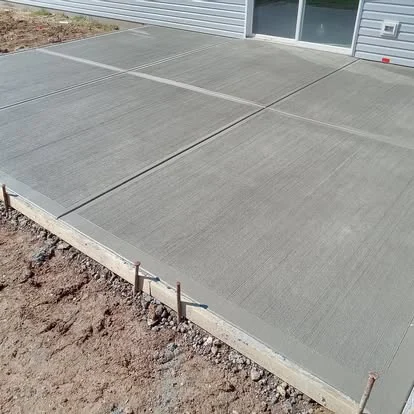
Concrete Loading Docks
The most abused concrete on any commercial property.
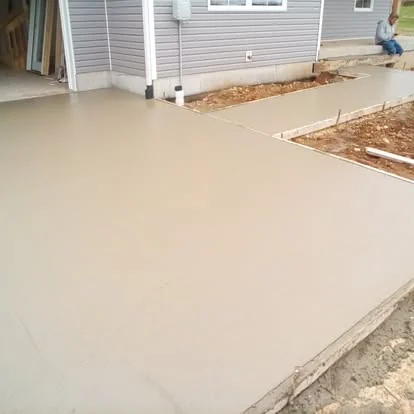
Dumpster Pads
A truck, a full bin, and the same spot every week.
Pouring concrete around Aguanga
Slope on nearly every lot
Mountain properties are rarely flat, which means stepped footings, retaining, and drainage with real consequences. Water on a slope finds the cheapest path down and it is usually the one you did not want.
Freeze cycling is the main enemy
At elevation concrete goes through freeze and thaw repeatedly every winter. Each cycle drives water deeper into the pores and pries the surface apart a little more. Air entrainment in the mix and keeping water out of the slab are not refinements up here, they are the reason a slab survives.
Deicing chemicals
What gets put on concrete in winter is harder on it than the cold. Chloride holds moisture against the slab and attacks the paste binding the aggregate, so the sealing plan and the mix both account for it.
Getting concrete to the work
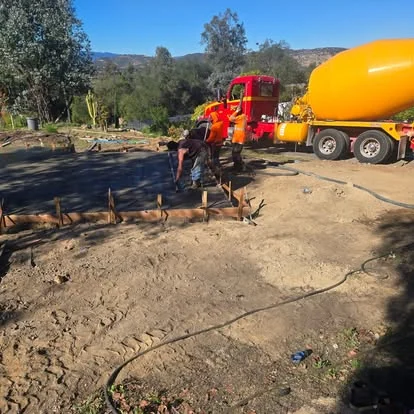
Access is often the hardest part of a mountain job. Narrow roads, tight turns and grade decide whether a mixer reaches the pour or whether it gets pumped, and that gets planned before anything is quoted.
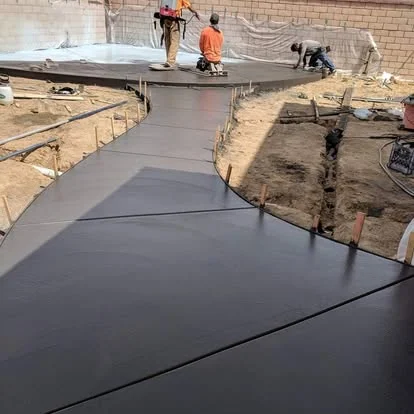
Concrete work around Aguanga
Flatwork, foundations and repair across Aguanga and the rest of Riverside County, poured by the same crew that answers the phone.
How concrete fails, and why
Cracks after a hot pour
Concrete placed into extreme heat stiffens before it can be finished properly and shrinks harder as it cools. Hot weather practice exists for exactly this reason.
Wide joints that collect debris
Joints that were cut too wide or have lost their sealant fill with grit, which then prevents the slab from closing and spalls the joint edges.
A patch that failed
New material on old concrete only holds if the substrate was prepared and a bonding agent used. A patch troweled onto a dusty surface lets go within a season.
Movement at a retaining wall
Retaining walls fail from water pressure behind them more often than from the soil weight. Drainage behind the wall is the design.
How a job runs
The soil question
In expansive clay the soil drives the design. If there is a soils report we build to it; if not, what we find during excavation informs the base work.
Drainage
Where water goes gets decided before the pour, because afterward it is permanent. That sometimes means changing the plan to fix a problem you already had.
Once the slab is down, the drainage is permanent.On grading
Joint layout
Joints are planned on paper and cut on time. Where they land is partly structural and partly how the finished slab reads.
Maintenance
Concrete is low maintenance, not no maintenance. Sealing and joint upkeep are the two things worth doing.
Around Aguanga
Straight answers
How does freeze and thaw affect concrete up here?
It is the main enemy. Each cycle drives water deeper into the pores and pries the surface apart a little more. Air entrainment in the mix and keeping water out of the slab are why a mountain slab survives.
Can a mixer truck reach my property?
That is one of the first things we check. Narrow roads, tight turns and grade decide whether a mixer reaches the pour or whether it gets pumped, and it is planned before anything is quoted.
My lot is steep. What does that mean?
Stepped footings, retaining where the grade changes, and drainage that has real consequences. Water on a slope finds the cheapest path down and it is usually not the one you wanted.
Should mountain concrete be sealed?
Yes, and maintained. Keeping water out of the pores is the single most effective thing you can do at this elevation.
Do you handle demolition and haul-off?
Yes. Access usually decides the method, and we protect what stays.
Get a number for your Aguanga job
Tell us what you are building. Somebody comes out, reads the site, and prices what it actually needs rather than what fits a template.