
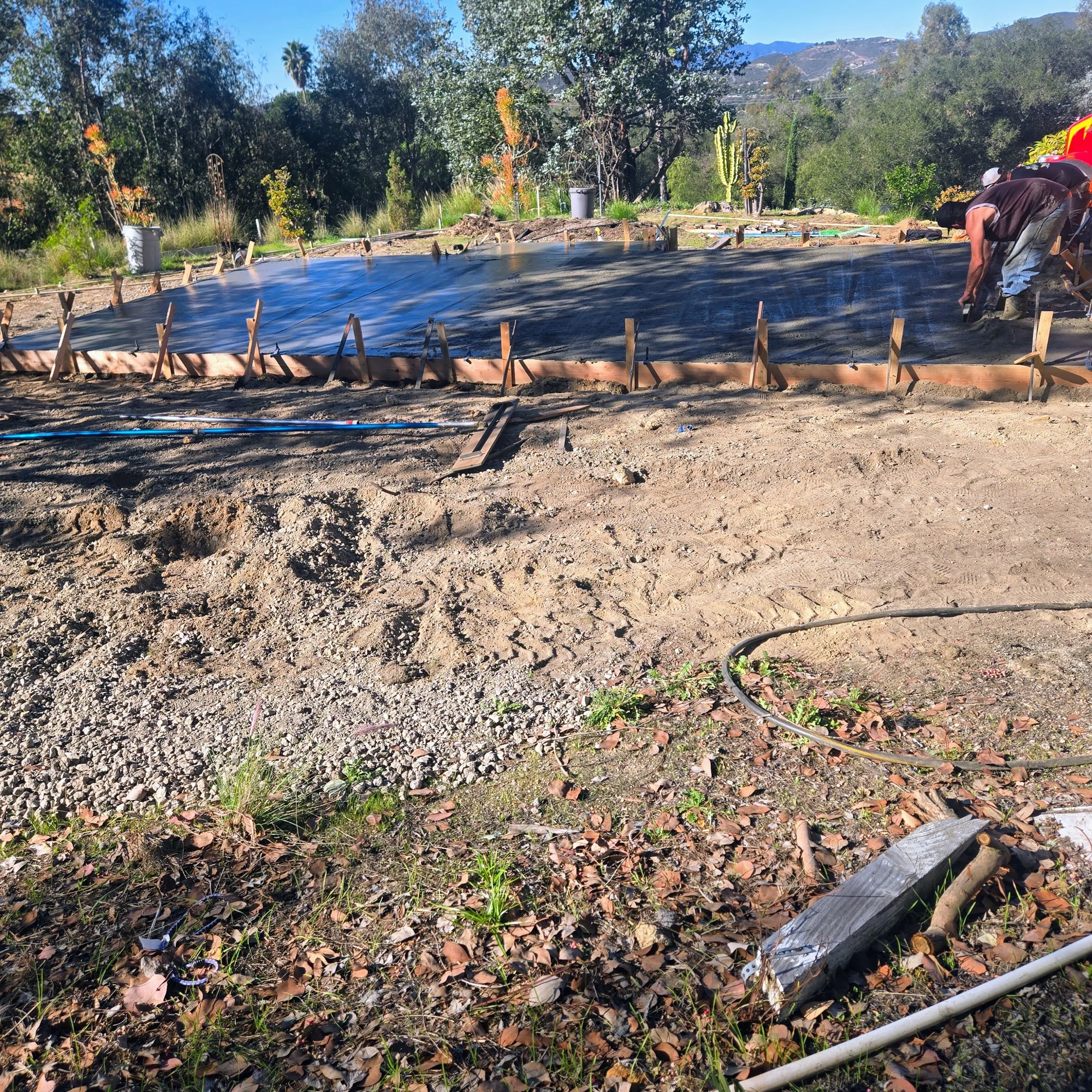
Poured once, done right
Santa Monica driveways, patios, foundations and repair work. Licensed 1137822, fourth generation, and straight about what a job actually needs.
Talk to us about the job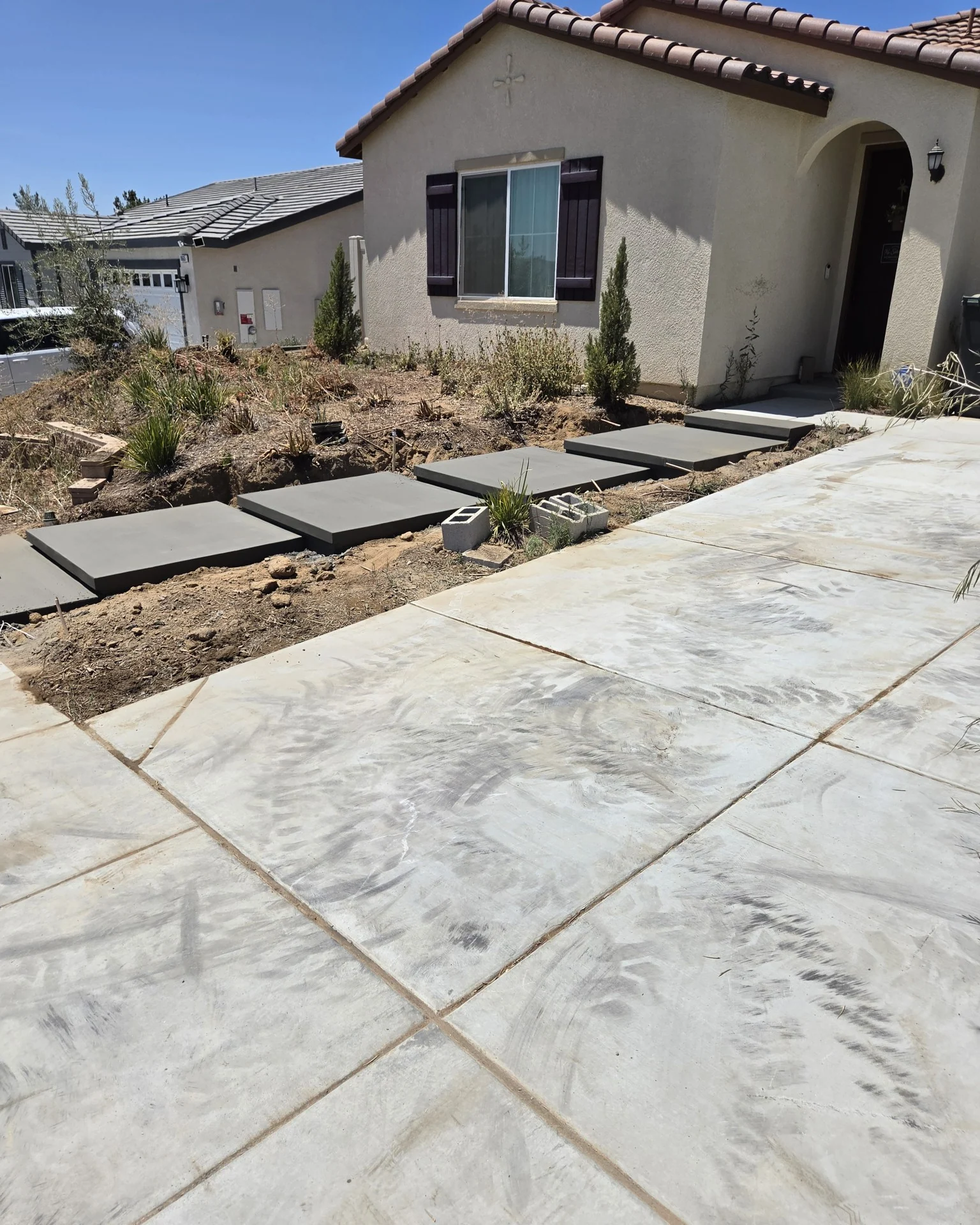

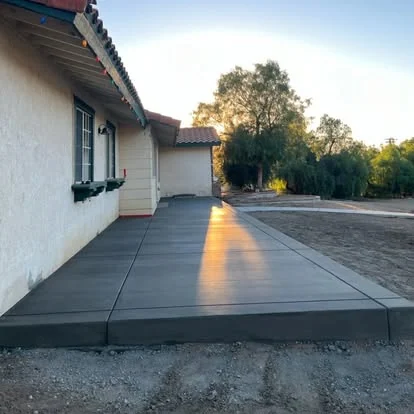
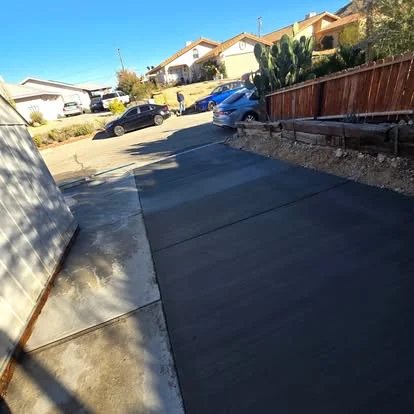
What concrete is up against around Santa Monica
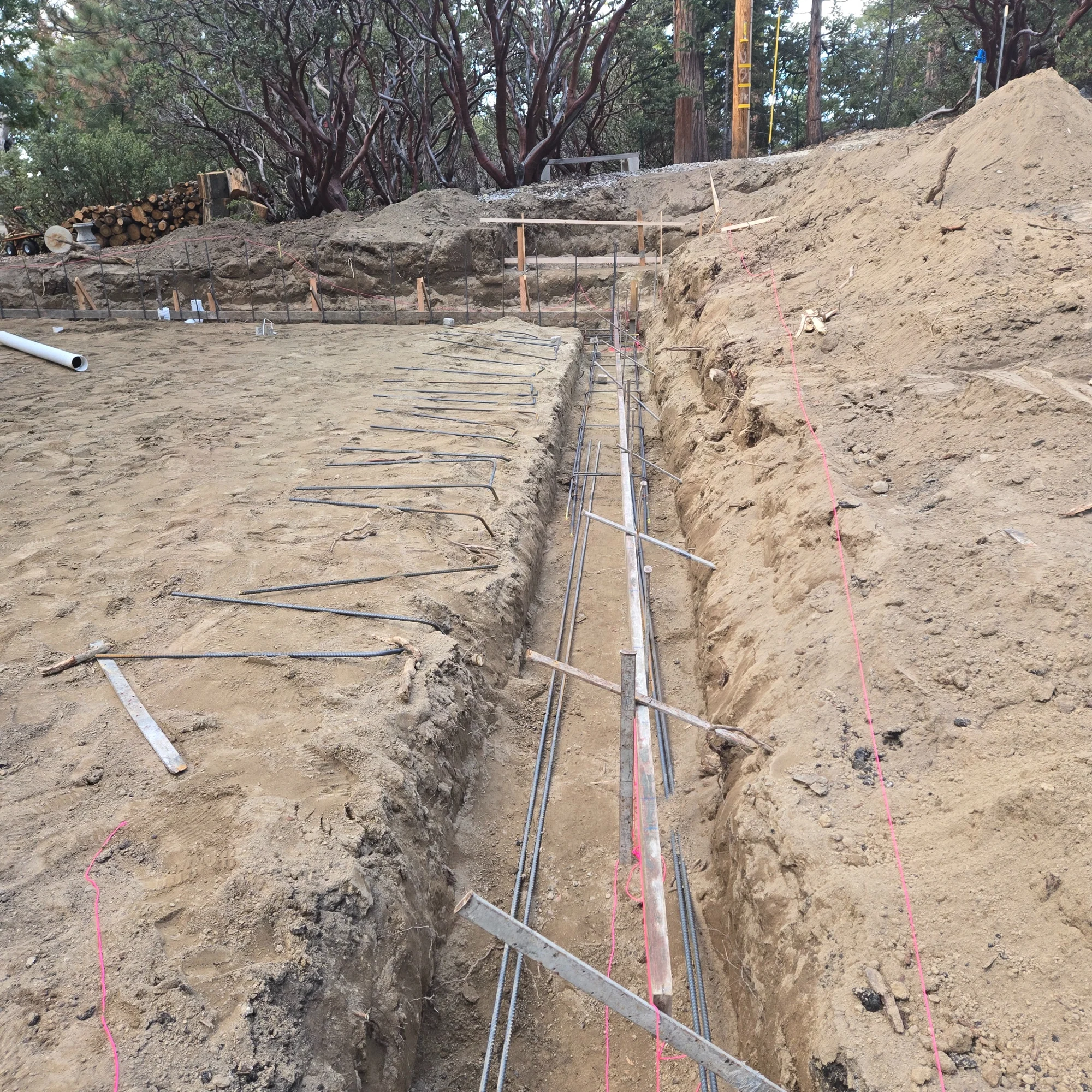
Pool and spa surrounds
On the coast pool decks get salt from the air as well as chlorine from the water. Slip resistance and a surface that will not degrade under both is the specification.
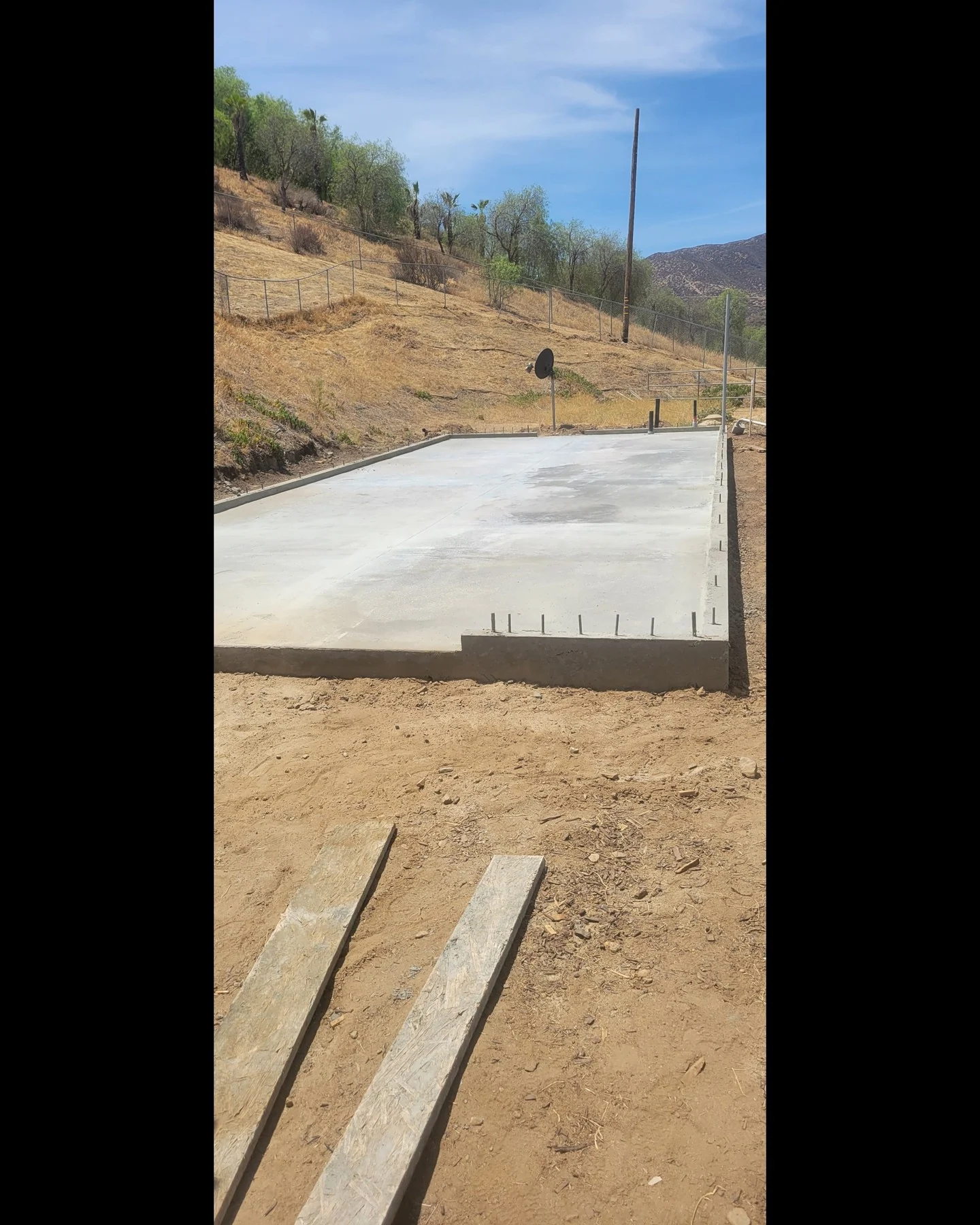
Older coastal slabs
A lot of coastal flatwork is decades old and was poured with less cover over the steel than we would use now. Rust staining and edge spalling usually mean the steel is going, not just the surface.
Wind off the water
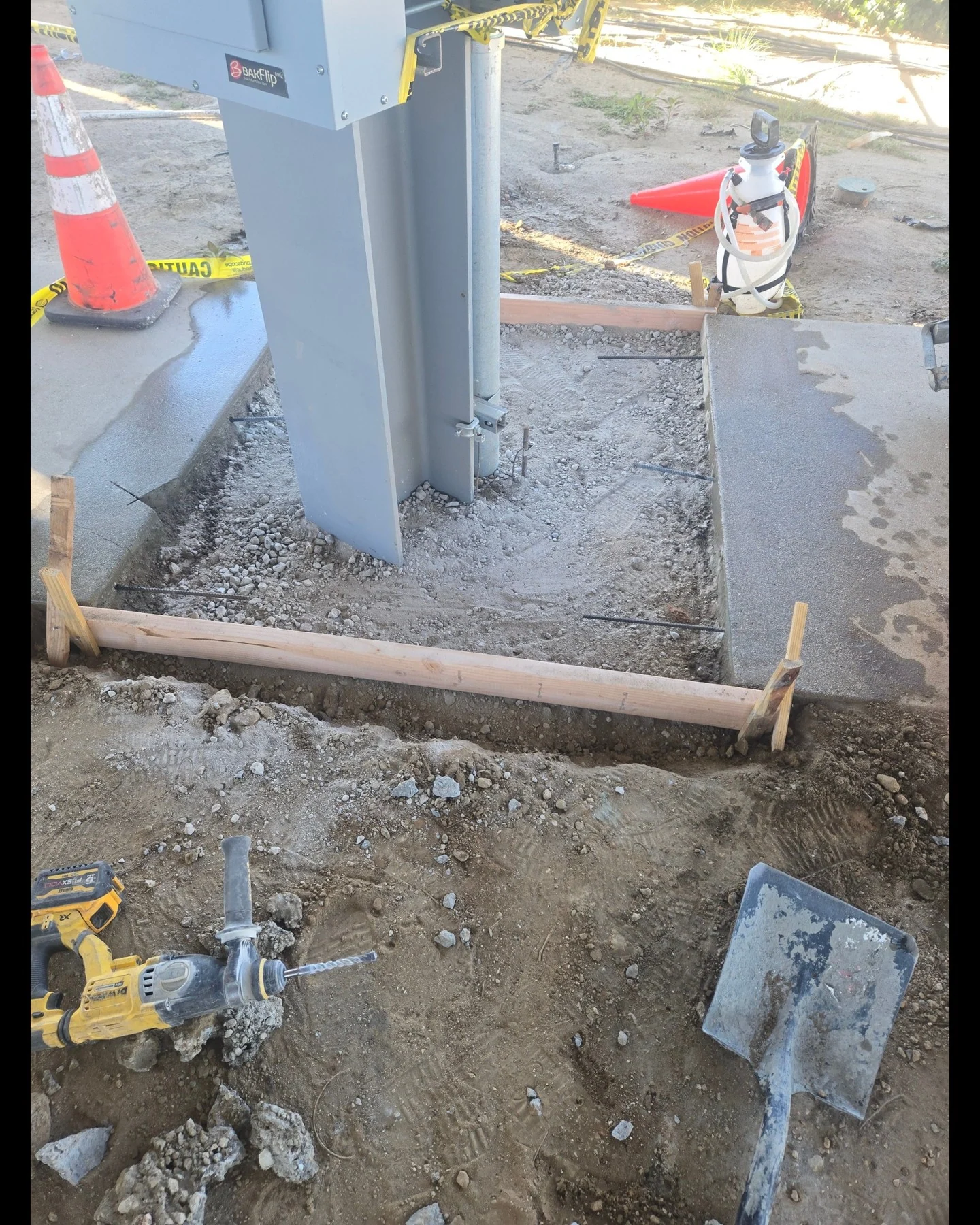
Onshore wind during a pour accelerates surface drying even when the air is humid. It gets managed the same way heat does.
Joints planned on paper
Joint layout gets worked out before the pour, spaced to the thickness and placed where the slab wants to move anyway. Then it gets cut at the right time.
Pours scheduled to the heat
In summer we start early and keep the mix and the crew ahead of the temperature. Concrete does not wait for anybody.
Honest diagnosis before a number
We look at what failed and why before quoting. Sometimes the answer is a repair and sometimes it is a rebuild, and we will tell you which even when the smaller job is ours to lose.
What we build in Santa Monica

Garage Aprons
The strip between the driveway and the garage door.
Basement Floors
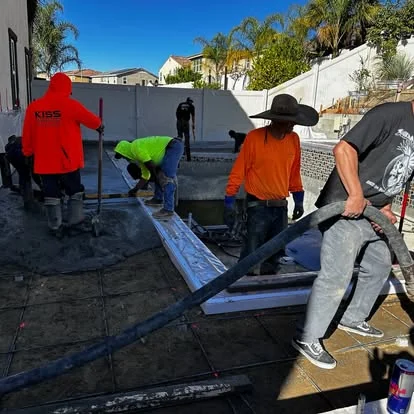
A slab poured inside, where moisture has nowhere to go.
RV Pads
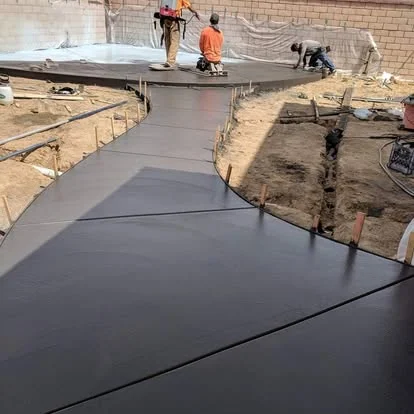
Heavy, concentrated, parked in one place for months.
Boat Pads
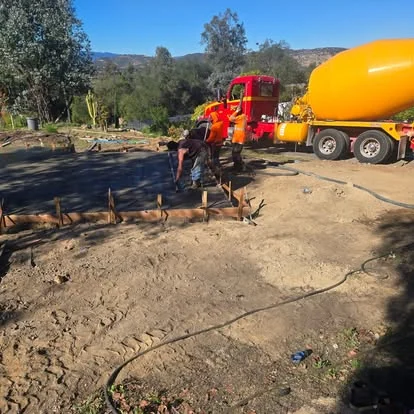
Trailer tongue weight and a slab that has to stay level.
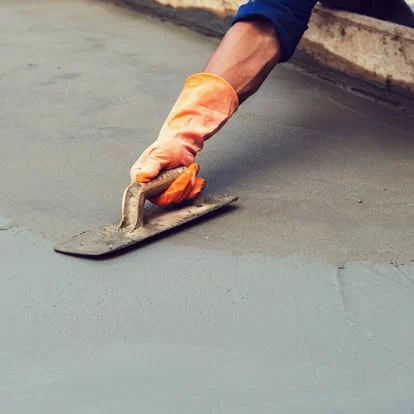
Parking Pads
Extra parking that is not the driveway.

Concrete Pool Decks
Wet feet, chemicals, and sun all year.
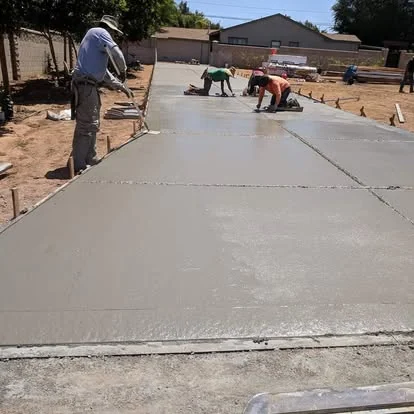
Concrete Saw Cutting
A straight, clean cut to a measured depth.
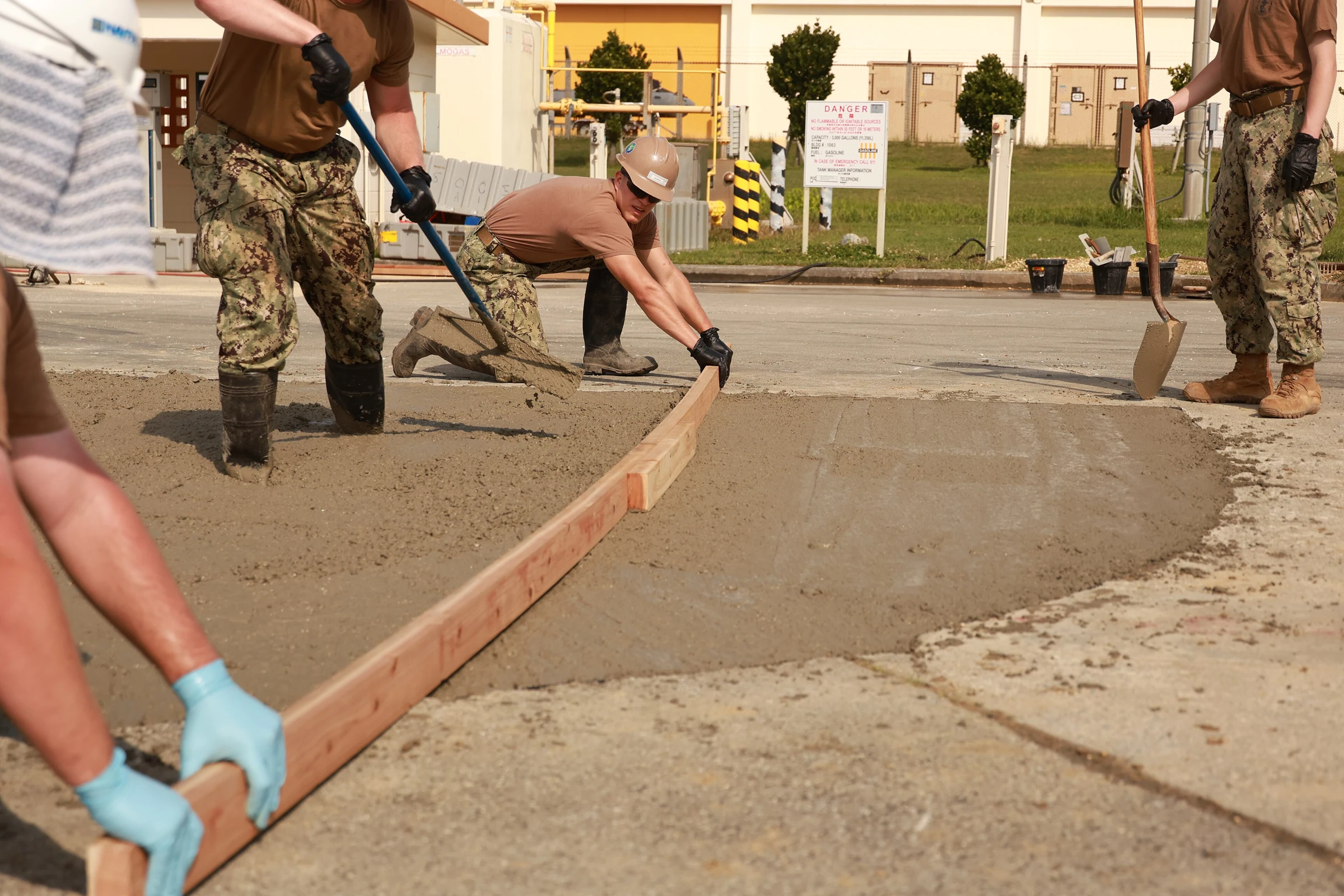
Expansion Joint Installation
Giving the slab somewhere to go.
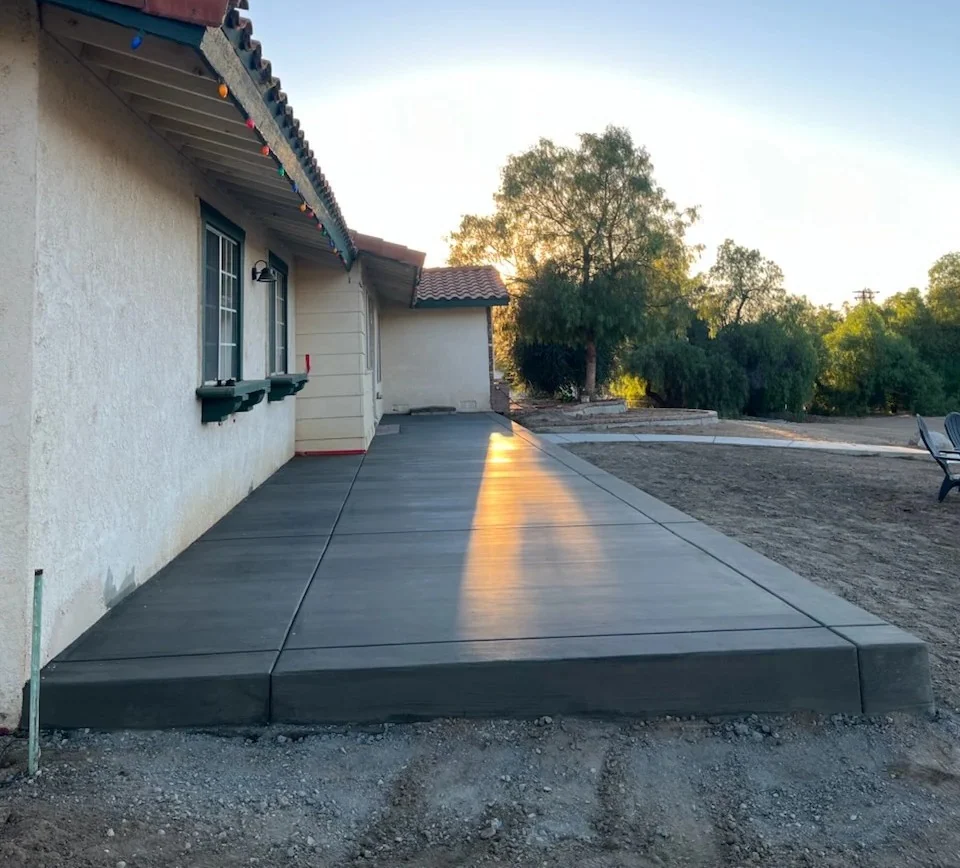
Control Joint Installation
Deciding where the crack goes.
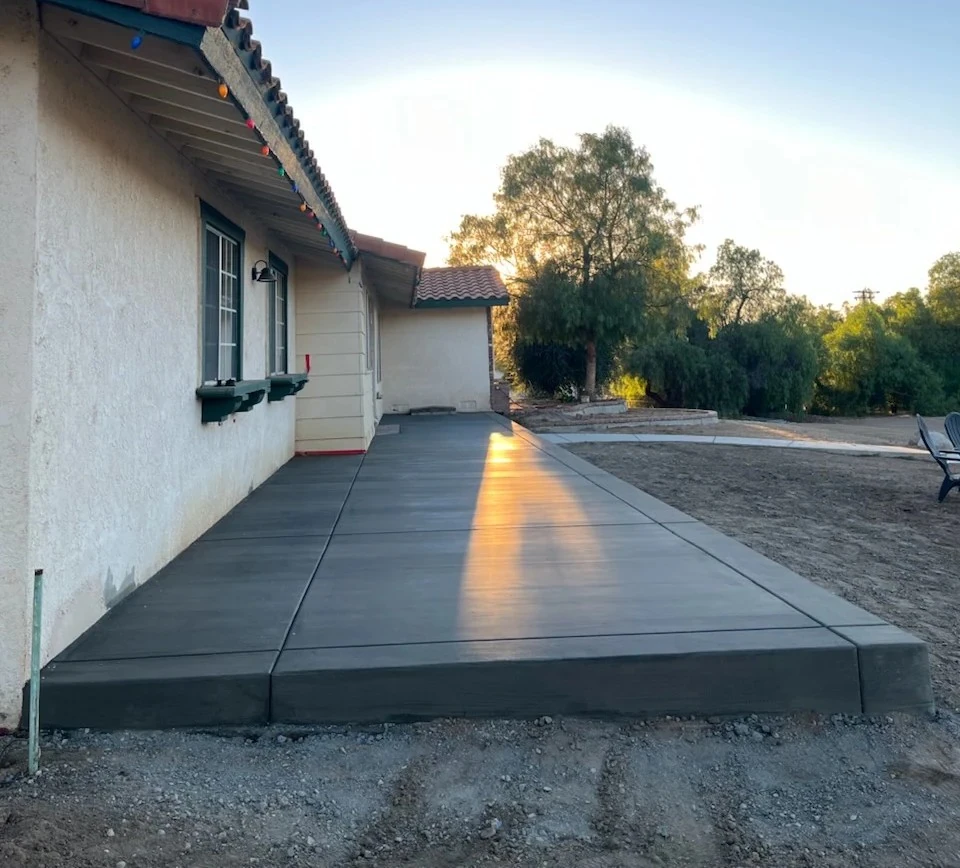
Concrete Gutters
Moving water where the grade will not.
ADA Concrete Ramps
Built to the slope the tape measure will confirm.
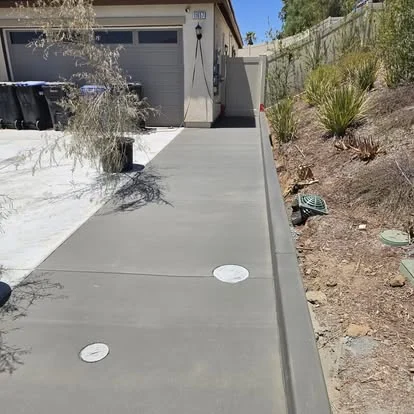
ADA Sidewalks
Accessible routes that hold their tolerances.
Pouring concrete around Santa Monica
A milder climate with a slower problem
The coast does not deliver the inland heat or the mountain freezing. What it delivers is constant moisture and salt, which is a slower and more corrosive problem, and it shows up as edge spalling and rust staining on older slabs.
Humidity changes the finishing
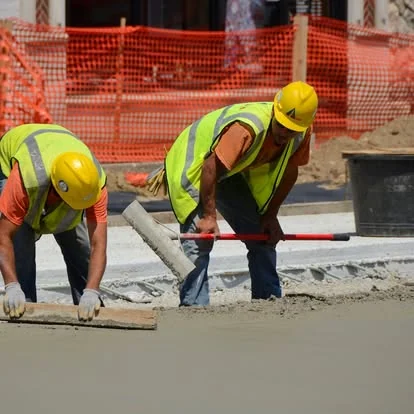
Higher humidity slows evaporation, which sounds helpful and actually changes the timing of every finishing step. Bleed water sits on the surface longer, and floating too early seals it in and weakens the top layer.
Sandy soils and moving water
Coastal ground is frequently sand. It drains beautifully and it can be undermined by water moving through it, so compaction and understanding where water travels matter more than clay-style soil treatment.
Pool decks near the ocean
A coastal pool deck takes salt from the air as well as chlorine from the water, plus bare feet. Slip resistance and a surface that holds up under both is the specification, not an upgrade.
Concrete work around Santa Monica
Flatwork, foundations and repair across Santa Monica and the rest of Los Angeles County, poured by the same crew that answers the phone.
How concrete fails, and why
Cracks after a hot pour
Concrete placed into extreme heat stiffens before it can be finished properly and shrinks harder as it cools. Hot weather practice exists for exactly this reason.
Wide joints that collect debris
Joints that were cut too wide or have lost their sealant fill with grit, which then prevents the slab from closing and spalls the joint edges.
A patch that failed
New material on old concrete only holds if the substrate was prepared and a bonding agent used. A patch troweled onto a dusty surface lets go within a season.
Movement at a retaining wall
Retaining walls fail from water pressure behind them more often than from the soil weight. Drainage behind the wall is the design.
How a job runs
Weather calls
Rain on fresh concrete damages the surface, and extreme heat shortens the finishing window. Both can move a date, and we will tell you why.
Sequence on bigger jobs
Demolition, earthwork, forming, steel, pour, joints, cure. Each step has to finish before the next one starts, and inspections land between some of them.
Width tells you less about a crack than movement does.On reading a slab
Changes mid-job
Anything found underground can change the scope. If that happens you hear about it before work continues, with what it means.
What normal looks like after
Some hairline cracking, some color variation, and joints doing their job. We will tell you what is expected so you know what is not.
Around Santa Monica
Straight answers
What about sandy soil near the water?
It drains beautifully and it can be undermined by moving water. Compaction and understanding where water travels matter more here than clay-style treatment.
My pool deck gets slippery. Can that be fixed?
Yes, with the right texture. A coastal pool deck takes salt from the air and chlorine from the water plus bare feet, so slip resistance is the specification rather than an upgrade.
Should I seal coastal concrete?
Yes, and the reason is chloride rather than freezing. Different mechanism, same maintenance, and skipping it eventually costs you the reinforcement.
Does humidity change the pour?
It changes the timing of every finishing step. Bleed water sits longer, and floating too early seals it in and weakens the top layer.
How long before I can drive on it?
Foot traffic a day or two, vehicles longer. Mild coastal temperatures are kind to a cure and you still get the real numbers.
Ready to talk about it?
Call the shop. We cover Santa Monica and the rest of the county from Hemet, and we will come out and read the job before quoting.