
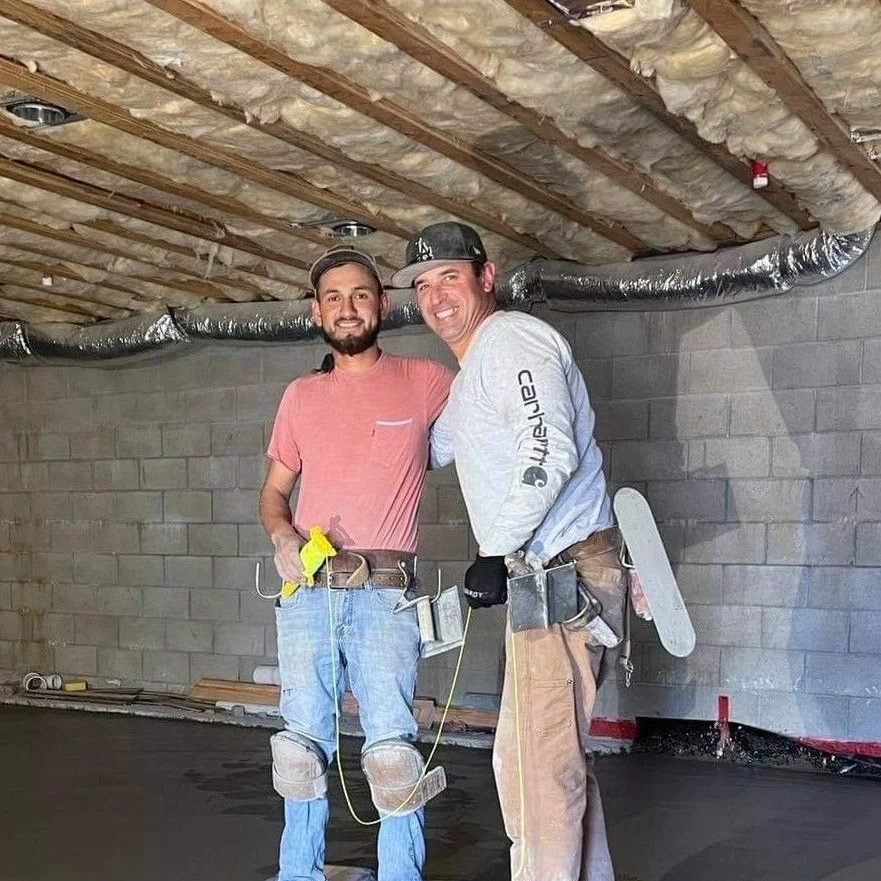
Anza garage floors that take a working truck
Up here a garage is usually a shop. Trucks come in wet, a tractor gets parked for the winter, and snow melts off everything onto the slab. We pour garage floors for that kind of use, sloped and sealed to handle it.
Talk to us about the job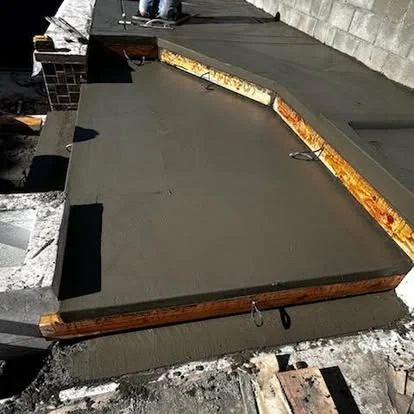
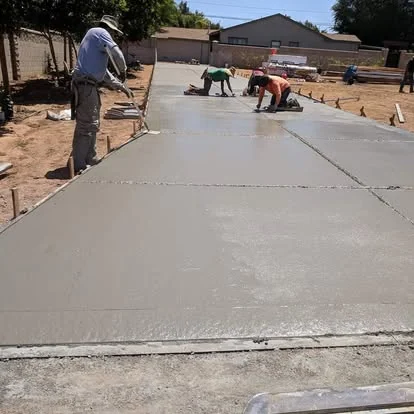

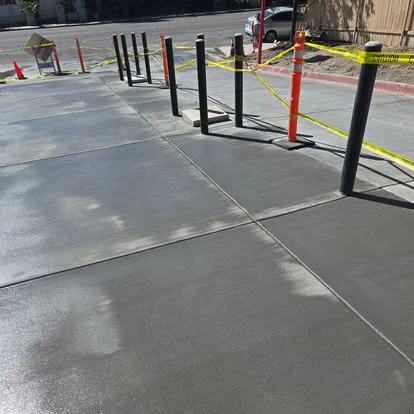
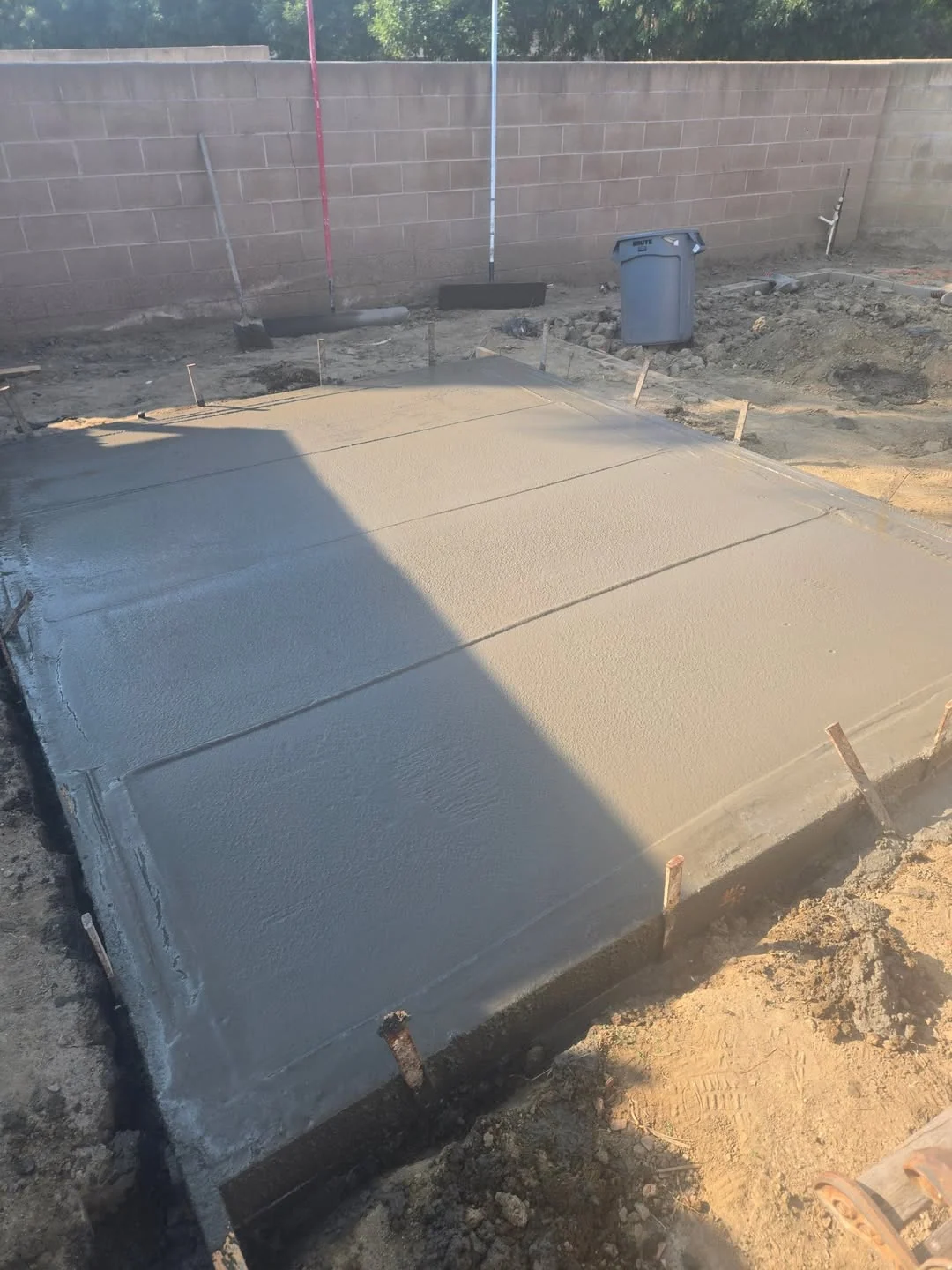
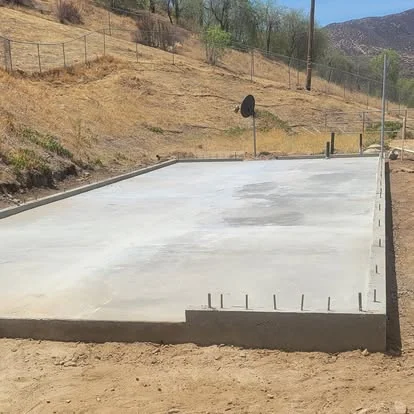
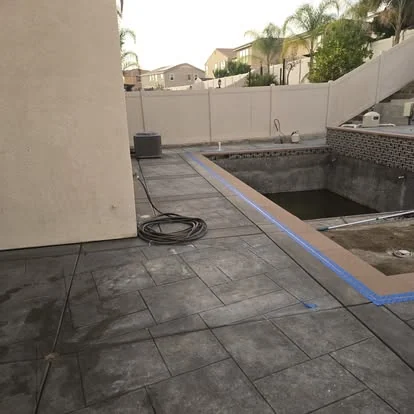
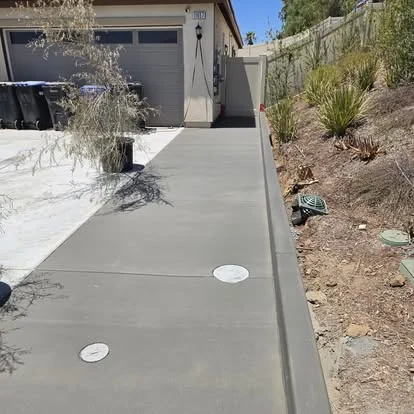
A garage that works like a shop
On a rural lot the garage rarely holds just a car. It holds the truck you drive every day, a trailer backed in out of the weather, maybe a tractor, and a bench along one wall. That changes what the floor carries and how we build it. A trailer tongue sits on one small spot for weeks, and a jack stand puts the weight of a truck onto a foot about the size of your hand. A shop floor also takes dropped tools, jack stands and the odd spill of oil, so the surface has to be hard and tight. Before we talk finish, we ask what parks inside and what gets worked on in there. How we approach a garage floor starts from that list.
Sized to the heaviest thing inside
Slab thickness, steel and base come from the load and the ground under it. A floor that only sees a pickup is a different pour than one that holds a loaded flatbed or a tractor with a bucket on the front. Tell us the worst case and we build for that.
Rock and decomposed granite underneath
Shallow rock and decomposed granite are common up here, and they show up the moment the digging starts. Rock sitting high under one corner gets dealt with, so the slab does not bear on something hard at one end and loose fill at the other.
Letting meltwater find the door
A truck that comes in off a snowy road carries slush in its wheel wells and underneath, and it melts on the floor overnight. On a dead flat slab that water sits in a puddle right where you walk. We pour the floor with a slight fall toward the overhead door, so snowmelt and wash water run outside instead of gathering under the vehicle. If you like to hose the floor out, the same fall carries that away too. When you are ready to talk about yours, send the details.
Chains and chloride off the truck
Tire chains scar a soft surface, and the slush dripping off a truck often carries the deicing chloride people put down on roads. Chloride holds water against the concrete and eats at the paste that binds the stone. Air entrained in the mix and a sealed surface give a garage floor a fighting chance against both.
Hot tires and the sealer
Tires coming off a long drive are hot, and hot tires pull at a sealed surface. Some sealers soften under them and lift in patches where you park. On a garage floor we choose the finish and the sealer together with that in mind, and we tell you which one we are using.
The apron, where the floor meets the yard
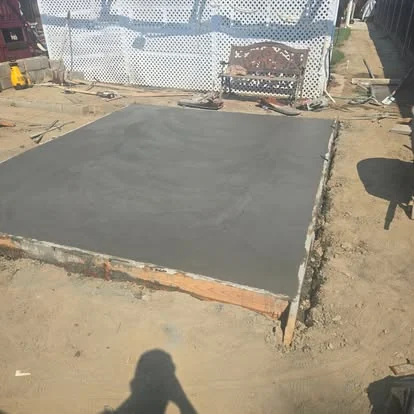
The strip of concrete outside the garage door is where a protected floor meets open ground, and open ground up here freezes. Wet soil swells a little as it freezes and lifts whatever sits on it, then settles back in spring. When the apron and the garage slab are locked together, the apron heaves and cracks right at the door. We treat the approach as its own pour with its own base, even when it goes in the same day as the floor.
A joint at the door line
We set a full depth joint where the garage floor ends and the apron begins. The inside slab stays put on its protected base while the apron rides out the winter, and neither one drags the other along.
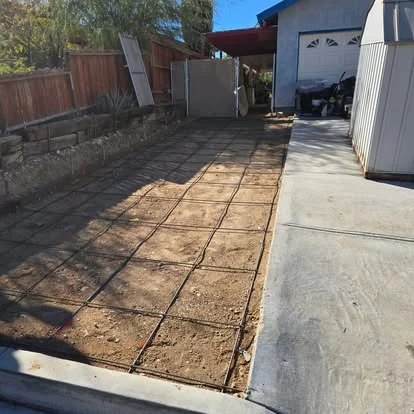
Steel tied, then lifted
Rebar for the approach gets tied into a grid on the prepared base first. Before the truck arrives the grid goes up onto chairs, so the steel ends up inside the concrete with cover above and below. The edge that tires climb over gets steel carried right out to it.
Tying into what is already there
Where the new approach meets an existing driveway or walk, we match the height and separate the two with a joint. If you want a path from the garage to the house as well, our walkway work in Anza can go in on the same visit.
Drains and sleeves go in first
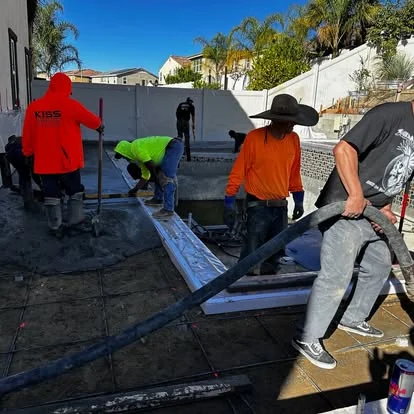
Once a floor is down, anything under it means a saw and a breaker. So before the forms go in we ask about the things people remember too late: a floor drain, power out to a bench in the middle of the shop, a water line to a utility sink, conduit for a heater. Sleeves and boxes get set and checked before the truck shows up. Getting that truck to the garage is part of the same plan, because on a narrow road with tight turns the mixer may not make it to the door, and then we pump.
Timing the outside work
The floor has walls around it, but the apron sits in the open and freezes with the yard. Some winter months up here are the wrong time to pour outside concrete, so we time that part of the work to the season and tell you if it means waiting.
When you want to talk it over
Send a few photos of the space through the contact page along with what you park and work on. Floors we have poured are in the gallery, and if you would rather talk, call (951) 533-8821 and we can come out and look at it.
More concrete work in Anza
What people ask about a shop floor
Should a garage floor slope toward the door?
Yes, slightly. A truck brings snow and slush in on its wheels, and that water needs a way out other than standing under the vehicle. A gentle fall to the overhead door carries snowmelt and wash water outside, and you will barely notice it when you walk across the floor.
Can you replace the floor in a garage that is already built?
Yes. The old slab gets broken out and carried through the overhead door, the base under it gets checked and recompacted, and the new floor goes in between the existing walls. Getting concrete inside matters more here, so it comes in by chute, by wheelbarrow or by pump.
What does road salt do to a garage floor?
The chloride that drips off a truck holds moisture against the surface and attacks the paste that holds the stone together. Over a few winters that shows up as a rough, flaking patch where you park. A mix with air in it and a sealed surface slow that down a great deal.
Why did the sealer on my old garage floor peel?
Often it is the tires. Hot tires pull at a sealed surface, and some sealers soften under that heat and come up where the vehicle sits. Moisture moving up through the slab can lift a coating too. We pick the finish and the sealer together for a floor that cars really park on.
Should the apron be poured with the garage floor?
It can go in the same day, but it gets treated as its own slab. The apron sits on open ground that freezes and moves, and the garage floor does not. A full depth joint at the door line lets the apron move without cracking the floor inside.
Can you put a drain in the floor?
Yes, and that is a decision to make before anything gets poured. Drains, sleeves for power and water lines all get set and checked ahead of the pour. Cutting them in later means sawing and breaking out concrete you just had poured, and the patch never quite matches.
What goes in the garage
Send a list of what goes in the garage, from the daily truck to the tractor that comes in for winter, plus a photo of the space. We look at it in person before we put a number on anything.