
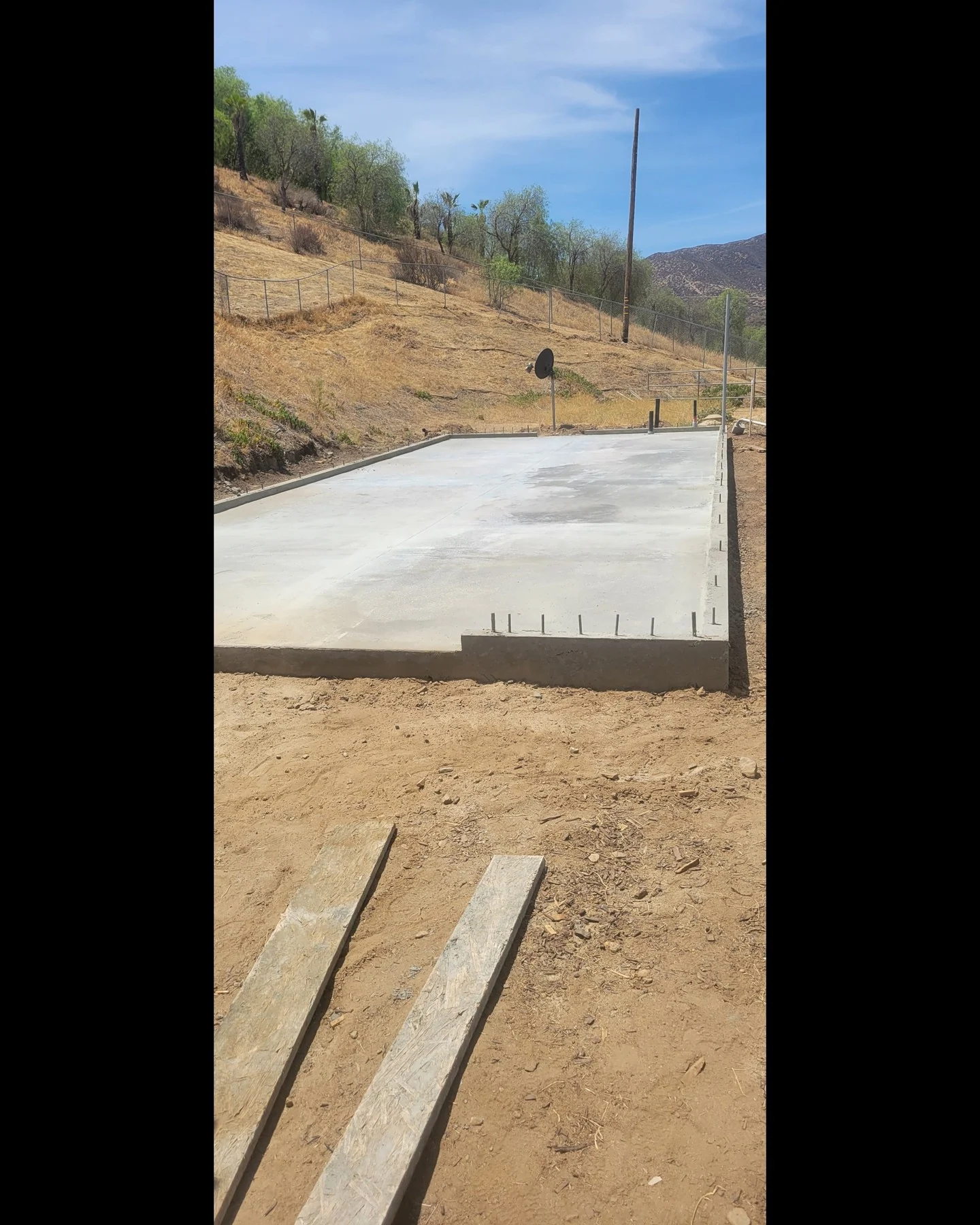
Poured once, done right
Placentia driveways, patios, foundations and repair work. Licensed 1137822, fourth generation, and straight about what a job actually needs.
Talk to us about the job
What concrete is up against around Placentia
Summer heat during the pour
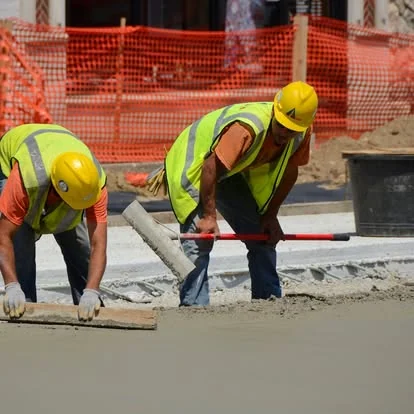
Concrete placed at a hundred and five degrees behaves nothing like concrete placed at seventy. It stiffens fast, the surface skins over while the body is still soft, and you get a finish that looks closed but is not. Hot weather pours get scheduled early and treated differently.
The base is the job
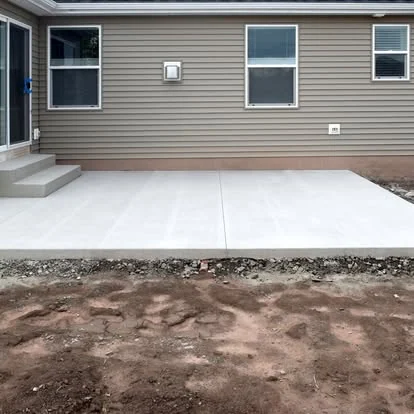
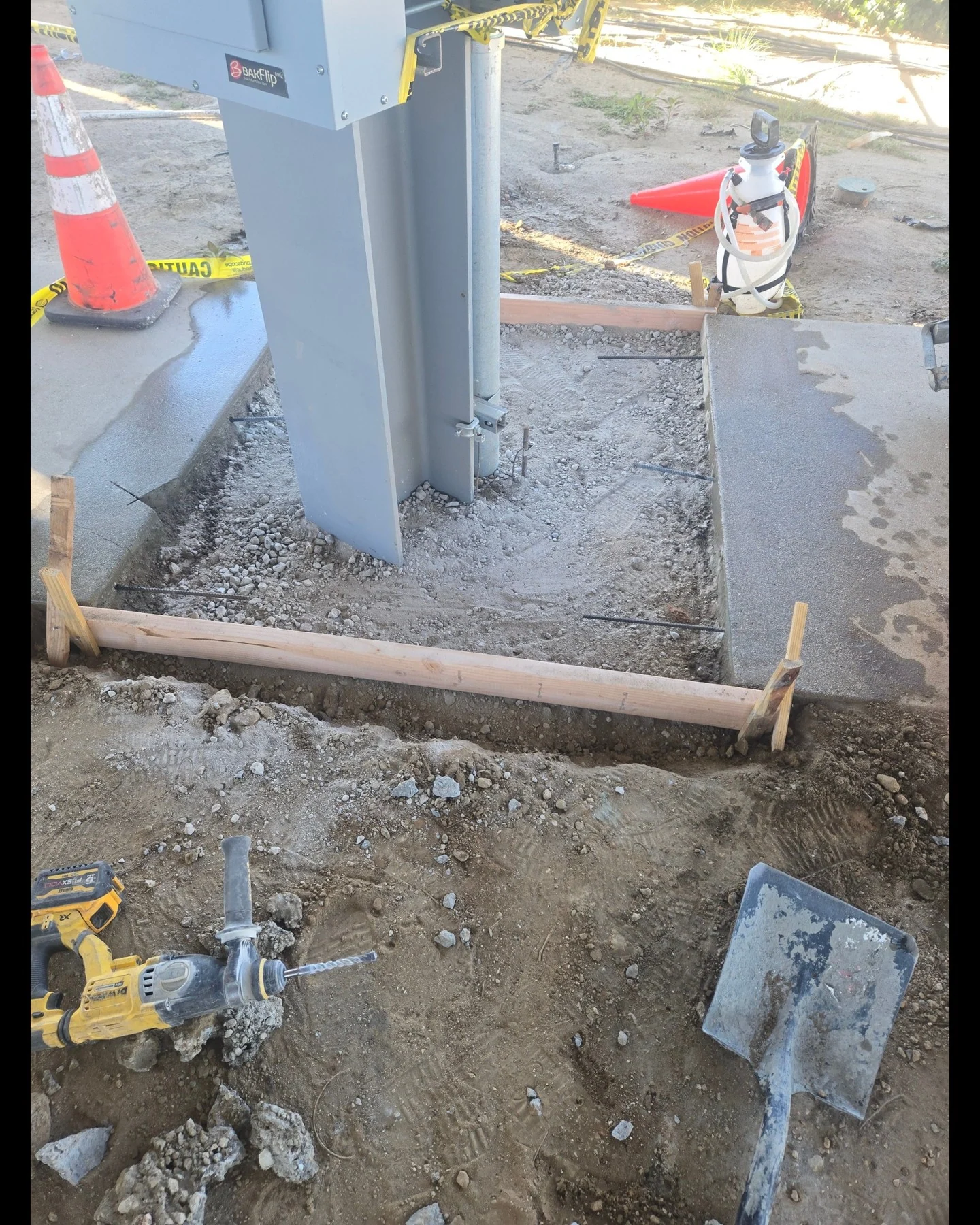
People judge concrete by the surface and it fails from underneath. Grade, material, lift thickness and compaction decide how a slab performs for thirty years. It is invisible when it is right.
Clay that moves with the season
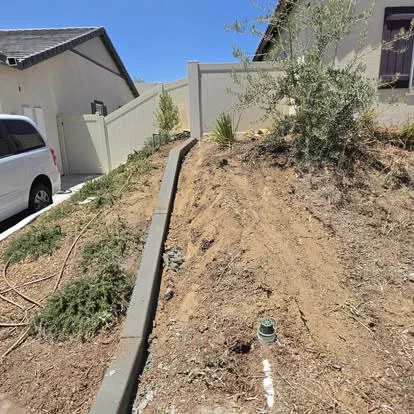
The soil through the San Jacinto Valley is expansive. It swells when it gets water and shrinks back when it dries, and it does that every year. A slab poured on untreated clay rides that movement until it cracks. The fix is in the base and the steel, decided before anybody orders concrete.
Joints planned on paper
Joint layout gets worked out before the pour, spaced to the thickness and placed where the slab wants to move anyway. Then it gets cut at the right time.
Base first, always
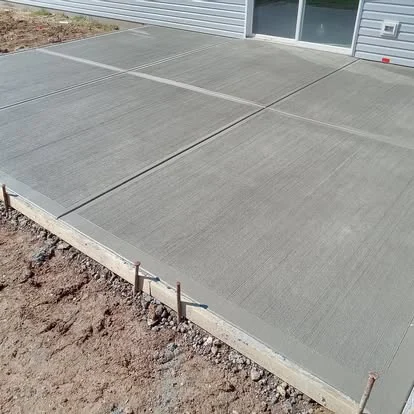
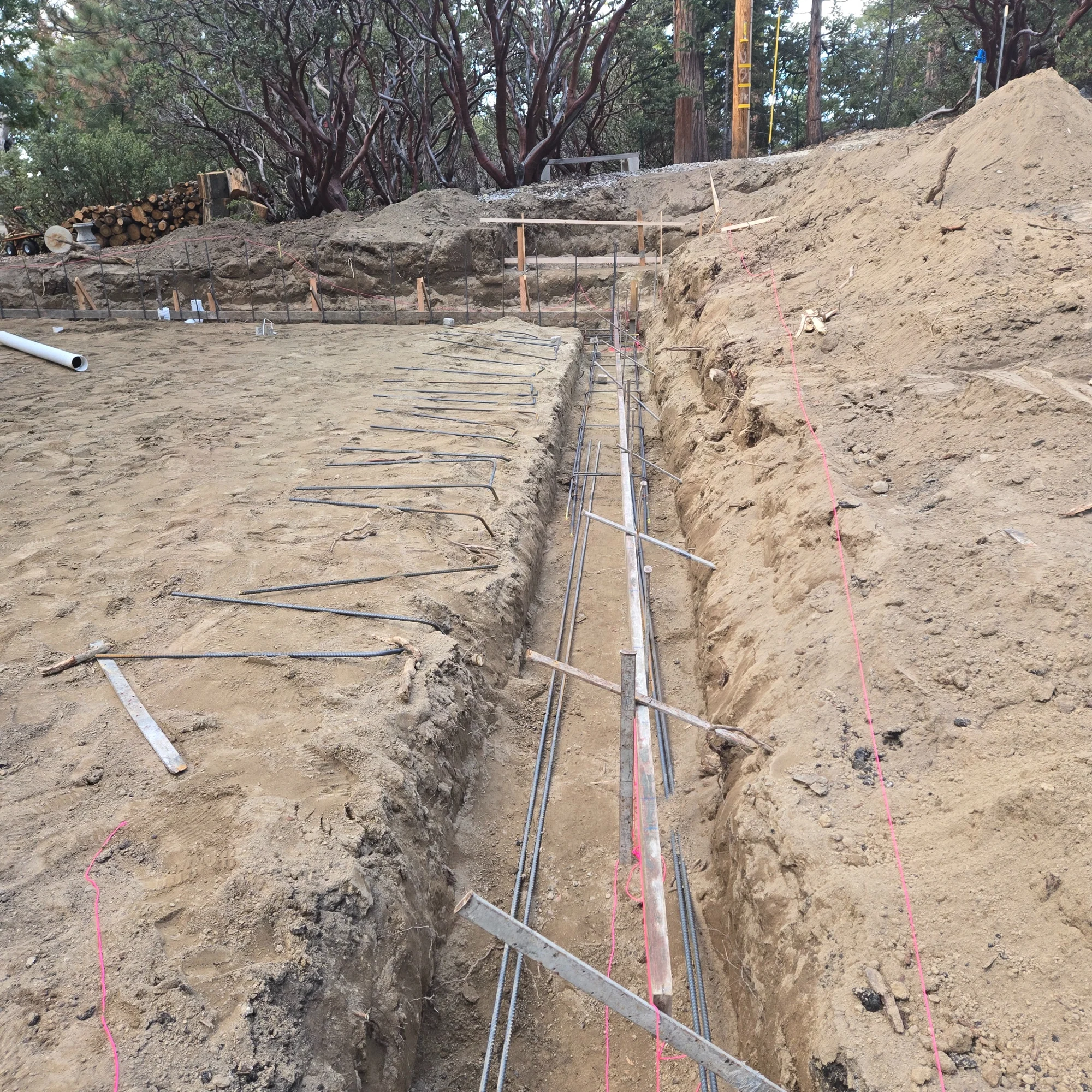
We cut to grade, fix the soft spots we find, and compact base in lifts before anything is formed. In expansive clay that step decides the whole outcome, so it is not where we save money.
Water routed off the slab
Slopes, low points and a path for water to leave are set before the pour, because afterward the drainage is permanent.
What we build in Placentia
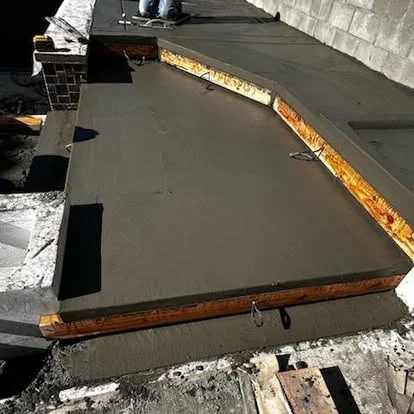
Residential Concrete Flatwork
All the flat concrete around a house, done by one crew.
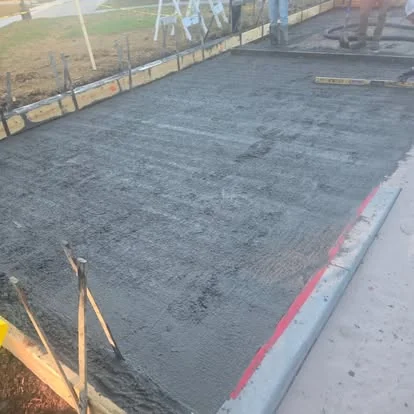
Backyard Concrete
The whole back of the property, planned as one pour.
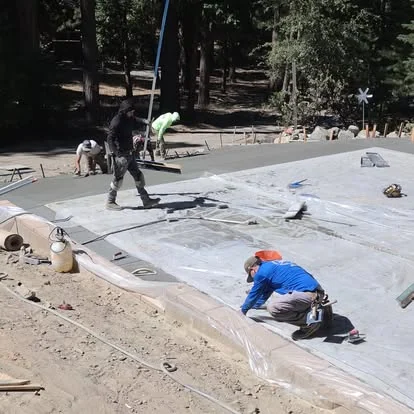
Outdoor Living Concrete
Kitchens, fire features, and seating built on concrete.

Concrete Driveways
The slab that carries a car every day of its life.
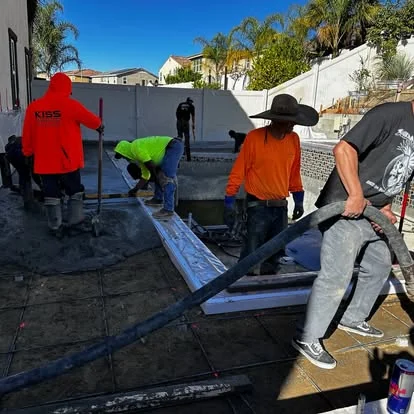
Concrete Driveway Replacement
Out to the dirt, rebuilt from the base up.
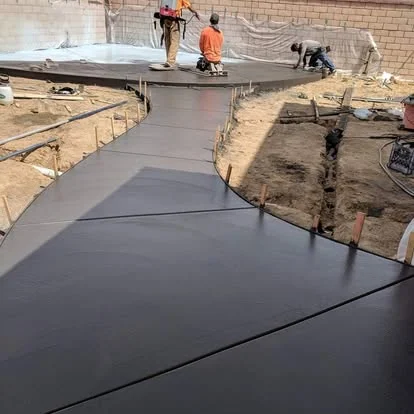
Concrete Driveway Repair
Fix what is broken and leave what is sound.
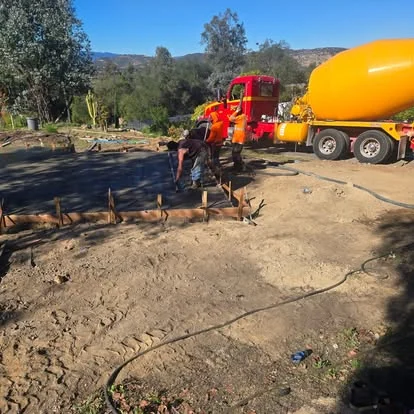
Control Joint Installation
Deciding where the crack goes.
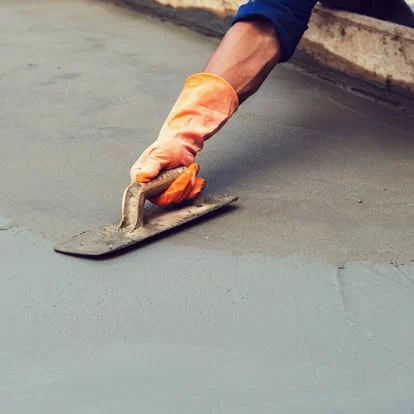
Concrete Repair
Fix the concrete that is worth fixing.

Concrete Crack Repair
Some cracks are cosmetic. Some are a message.
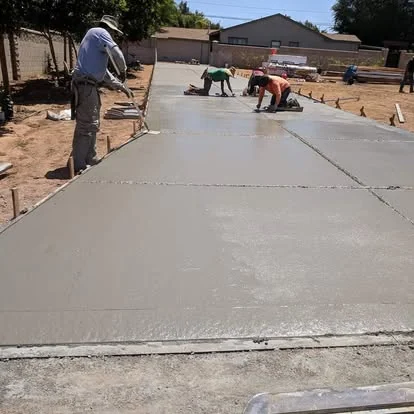
Concrete Drainage Channels
Formed channels that carry water on purpose.
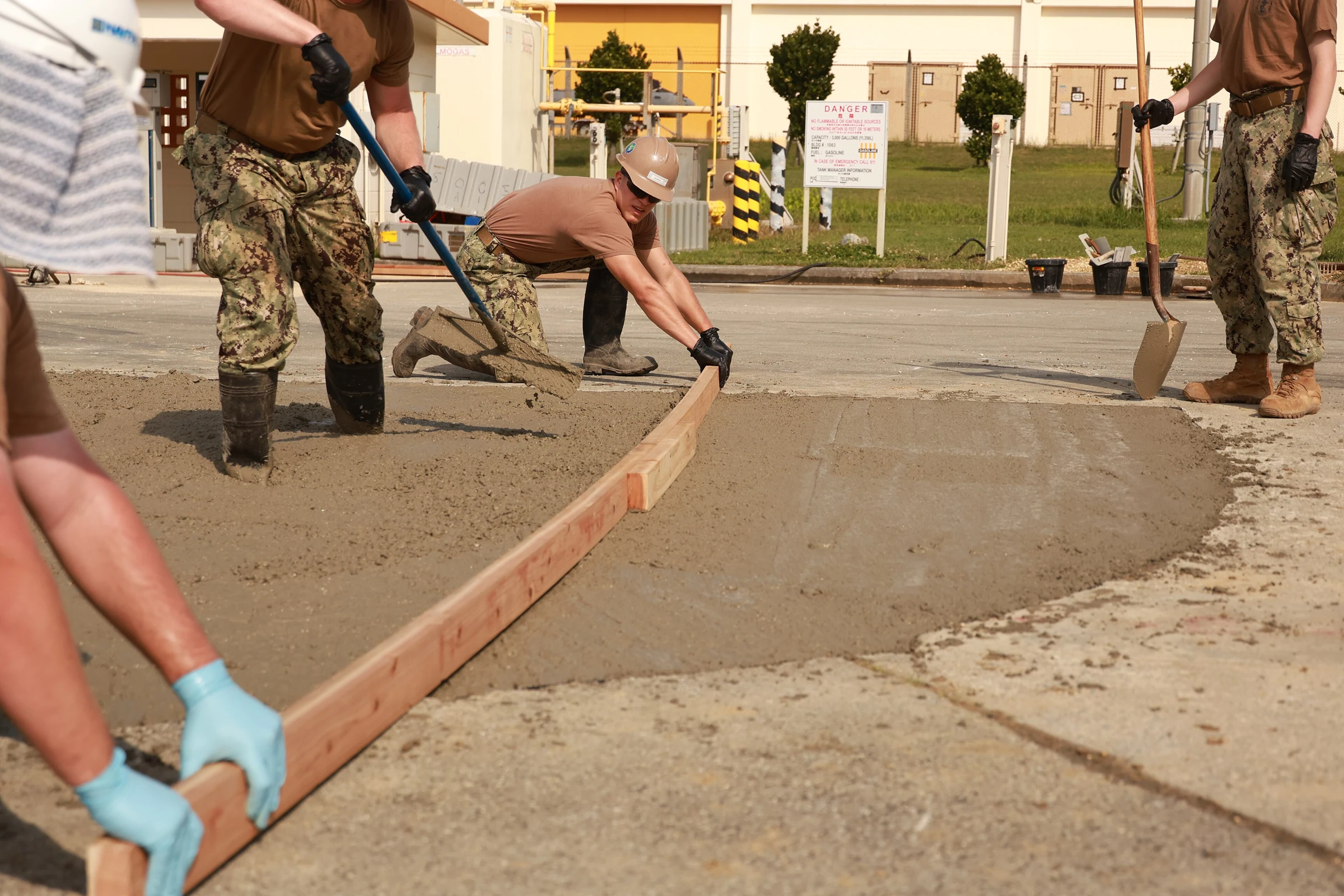
Commercial Concrete Flatwork
Flatwork built to a plan set and an inspection.
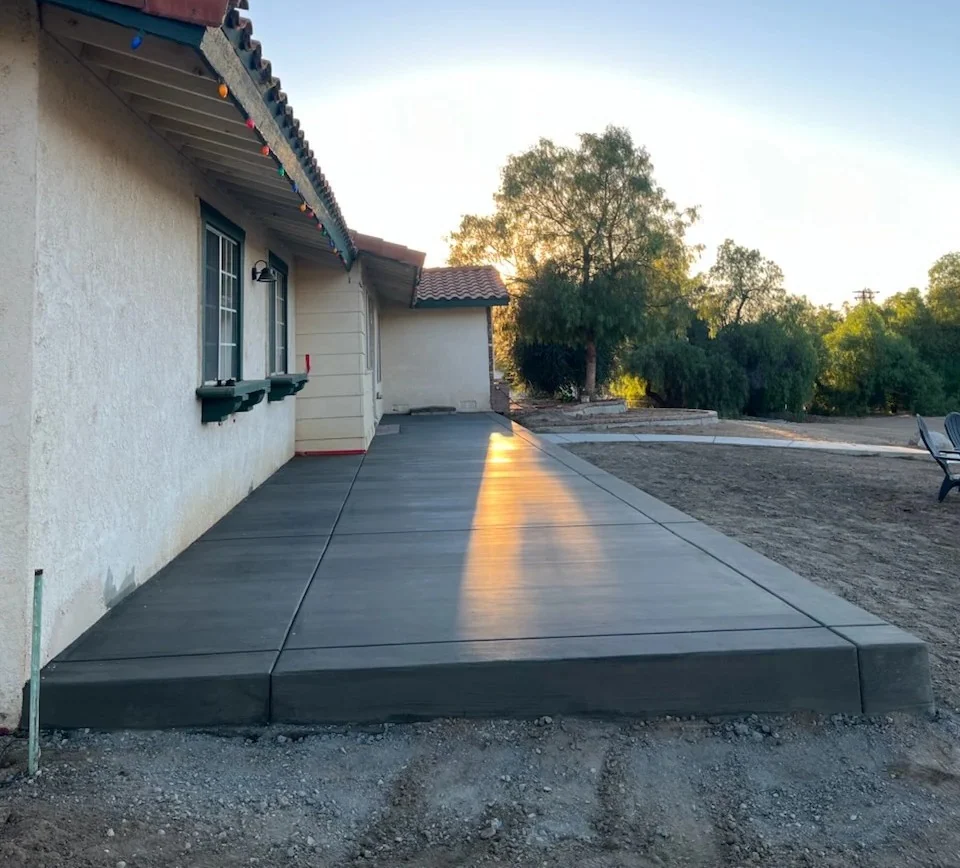
Commercial Concrete Slabs
Slabs sized for racking, equipment, and forklifts.
Pouring concrete around Placentia
Older flatwork around here
A lot of valley concrete was poured thin, with light reinforcement, on a base that was never properly compacted. When it fails it is usually reporting on the ground rather than on the mix, and that is the difference between a repair that holds and one that comes back in a year.
Drainage on a flat lot
Valley lots are often close to level, which makes slope hard to find and easy to get wrong. Low points, cross-fall and where water actually leaves the property get worked out before the pour, because once the concrete is down the drainage is permanent.
Summer pours
Triple digit afternoons change how concrete behaves. It stiffens before it can be finished properly, the surface skins over while the body underneath is still soft, and water leaves the slab faster than the cement can use it. Valley pours start early, the mix gets adjusted for the heat, and curing is treated as an active step instead of something that happens on its own.
What lasts here
A properly based, properly jointed slab with reinforcement sized to the load will outlast the house it sits beside. The variables that decide it are all underneath and all invisible once the pour is done, which is exactly why they get cut on cheap jobs.
Concrete work around Placentia
Flatwork, foundations and repair across Placentia and the rest of Orange County, poured by the same crew that answers the phone.
How concrete fails, and why
Cracks through a control joint
If a crack runs past a joint that was supposed to catch it, the joint was cut too shallow or too late. Depth needs to be about a quarter of the slab thickness.
Flatwork lifting at tree lines
Roots follow moisture, and the moisture is under your slab. Removing the slab without addressing the root just resets the clock.
Soft spots that appear later
Ground that was never properly compacted keeps consolidating under load. That is why compaction gets tested rather than eyeballed.
Efflorescence
White powder on the surface is salts carried out by moisture moving through the slab. It signals water movement, which is worth understanding even though the powder itself is harmless.
How a job runs
Permits and inspection
Structural work and anything in the public right of way gets permitted and inspected. We raise that at the start rather than at the pour.
Utilities
Anything dug or cut starts with locating. Finding a line with a saw is expensive and avoidable.
Almost every failure we get called to look at is base, not concrete.On diagnosis
Noise and disruption
Breaking and cutting concrete is loud. We will tell you which days those are so you can plan around them.
Cleanup
Washout handled properly, spoil hauled off, surfaces washed. The site should look finished when we leave.
Around Placentia
Straight answers
How long before I can drive on it?
Concrete takes most of its strength in the first week. Foot traffic is usually fine within a day or two; vehicles wait longer. On a valley summer pour the numbers shift, so you get the real ones for your slab rather than a generic answer.
Should I worry about hairline cracks in the first month?
Usually not. Concrete gives up water as it cures and gets slightly smaller doing it, and fine shrinkage cracking in that window is the material behaving normally. Anything that widens or lifts is different, and worth a call.
My sprinklers run along the driveway. Is that a problem?
It can be. Constant water at a slab edge keeps the base saturated, and in expansive soil that undermines the concrete from underneath. Where the water lands is worth looking at before blaming the slab.
Do I need a permit?
Structural work and anything in the public right of way generally does. A straight replacement often does not. We raise it before anything is broken out rather than at inspection.
Can you match the concrete I already have?
Usually close, rarely exact, because concrete changes color as it ages. We match thickness, finish and joint pattern so the result reads as one surface rather than a patch.
Pouring in Placentia
We would rather stand on the job than guess at it. Call and we will set a time to come and look.