
Anza walkways that keep the mud outside
On a lot where people park on dirt or gravel, every trip to the house in a wet month brings the yard in with it. A concrete walk gives you a clean, firm line to the door that you can shovel and stay upright on.
Talk to us about the job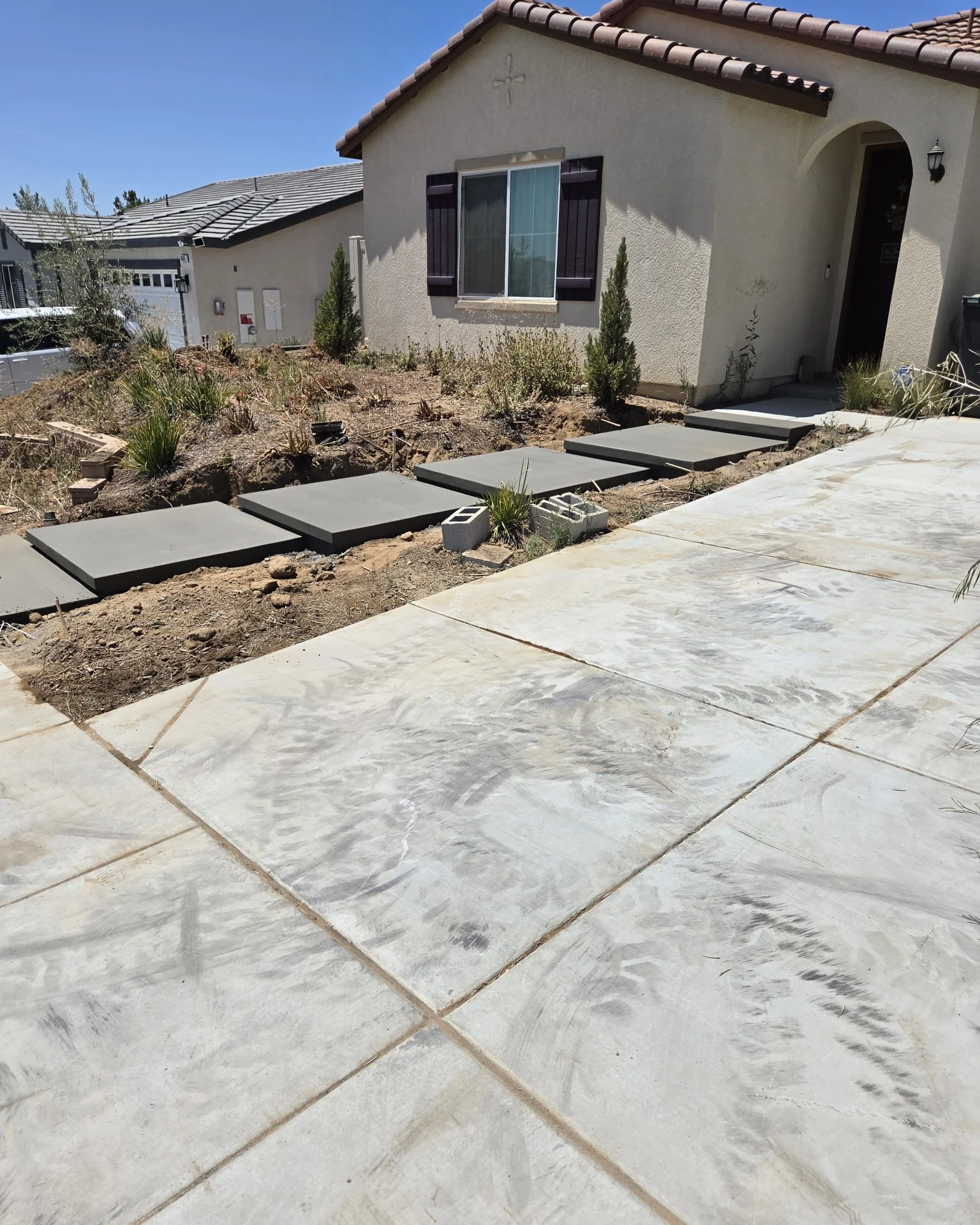

Put the path where feet already go
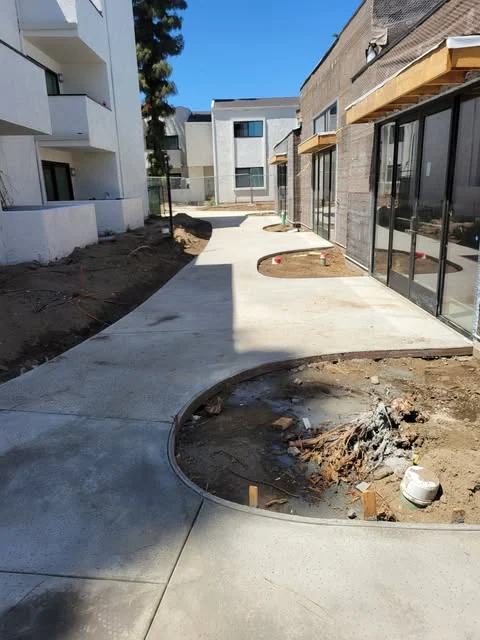
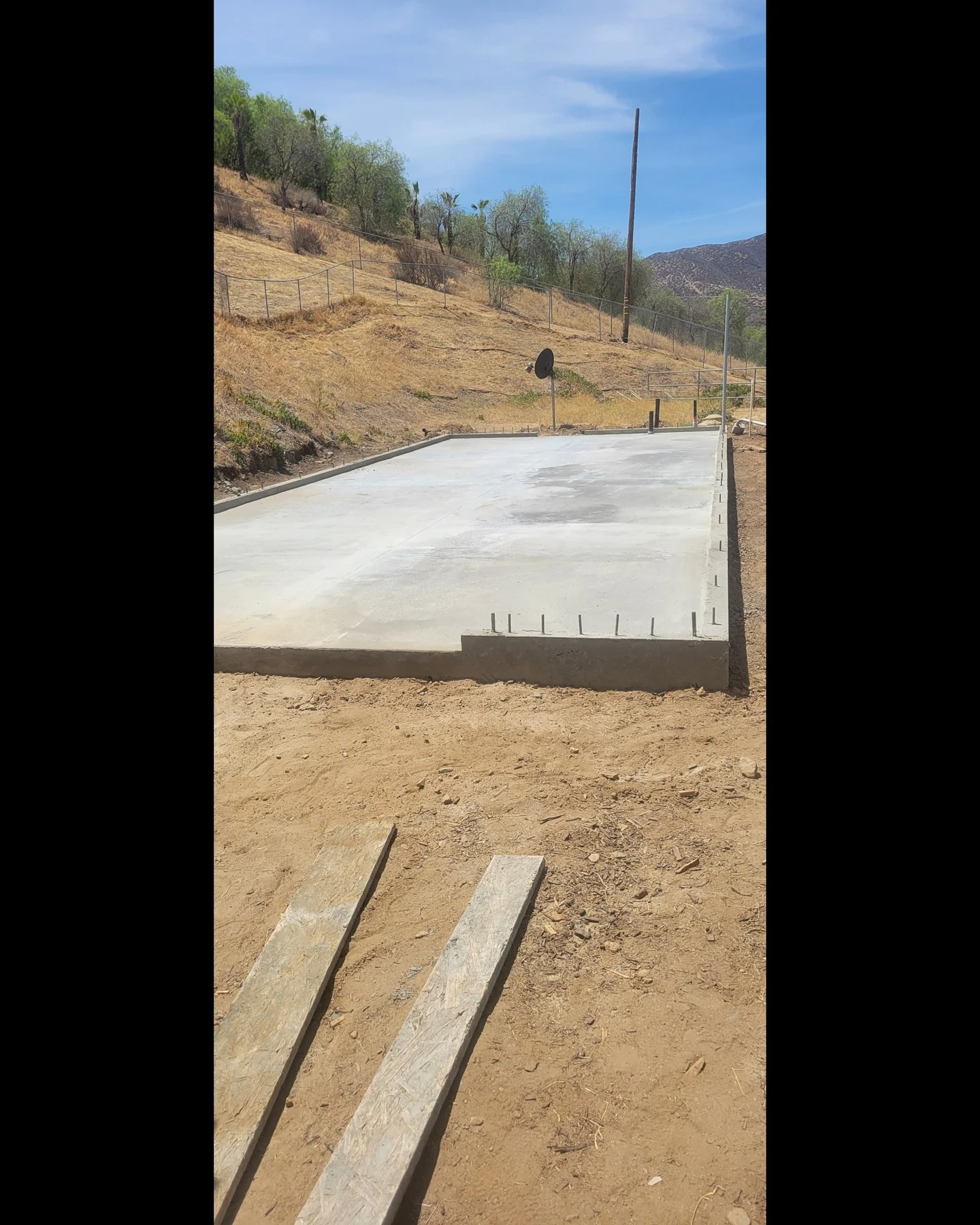
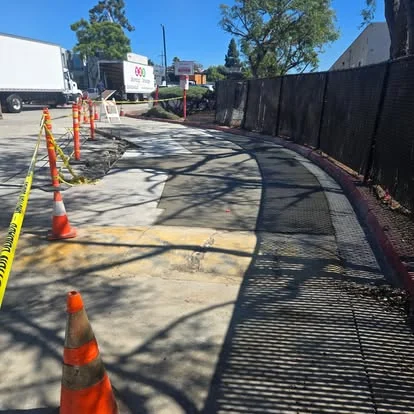
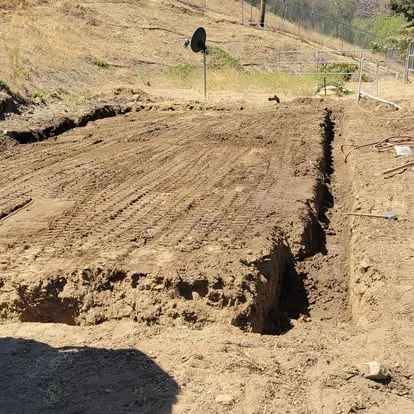
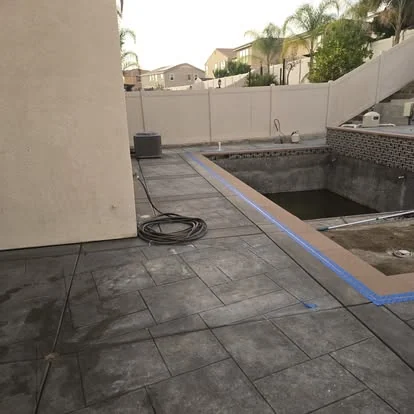
Before we set a stake, we look for the trail already worn into the ground between where you park and the door you really use. That line is the walkway people will follow, whatever gets drawn on paper. A path that makes them cut a corner gets ignored, and the corner beside the new concrete turns to mud. We follow the worn line where it makes sense, straighten it where it wanders for no reason, and make it wide enough for two people side by side. A walk that bends gently is easier to shovel than one with sharp turns. Our concrete walkway work starts from that walk around the yard with you.
From the gravel to the slab
Where the walk starts at a dirt or gravel parking area, the first stretch takes the most grit and the most mud. We start the concrete far enough out that you step onto it before your boots reach the soft ground.
The door you use counts most
Plenty of families come and go through a side or kitchen door and save the front for company. If that is your house, the everyday door gets the walkway first, and the front can follow later.
Pitch it so it does not ice over
A walk that holds water at dusk holds ice by morning. Up here the ground goes through freeze and thaw over and over each winter, so a puddle on a path becomes a slick patch every cold night. We build each walkway with a slight cross slope, so rain and snowmelt leave over one edge instead of sitting in the middle. The walk always falls away from the house, never toward it, so the runoff is not handed to the foundation. Shade matters too: a stretch of walk on the north side of the house can stay frozen for days after the rest has dried, so we pay extra attention to the fall there.
Where the runoff lands
The water leaving the walk has to land somewhere. We send it toward open ground or a bed that can take it, never into a low spot at the foot of the path where it freezes across tomorrow’s route.
Shovels and ice melt
You will shovel this walk, and someone will probably throw ice melt on it. Ice melt does more damage to concrete than the cold ever does, so the mix gets air entrained and the surface gets sealed. Sand gives you grip without the chemical.
Grip for frosty mornings
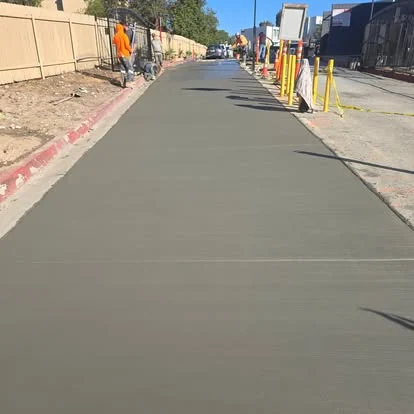
Smooth troweled concrete looks clean on a dry afternoon and turns into a skating rink under a skim of frost. For a walk used through snow season, we drag a broom across the surface while the concrete is still green, which leaves fine ridges for your boots to bite into. The ridges run across the path, so a foot coming down meets them head on. Edges get a rounded tool so they do not chip when a shovel catches them. If your old walk is cracked and heaving, tell us about it and we will look at whether the base can be saved.
Joints a heel will not catch
Control joints across a walk get tooled or cut clean and narrow, so a heel or the tip of a cane rides over them. We space them so the panels come out about as long as the walk is wide, which is where a narrow slab wants to crack anyway.
Sealing once it cures
After the walk has cured, a penetrating sealer keeps water out of the pores, and water in the pores is what freeze and thaw pries apart. We tell you when to do it and what to keep off the surface in the meantime.
Edges against beds, gravel and granite
Most walks here run between something soft: a planting bed, a strip of gravel, or decomposed granite that has packed down unevenly. Those edges are where a walk usually gives out first, since the ground beside it washes away and leaves the slab edge hanging. We dig past the soft material, build the base, and set the finished concrete a touch above the bed so dirt and mulch wash off it rather than onto it. Steel edging or a header board along a bed keeps the soil from creeping back over the concrete.
Mesh lifted into the slab
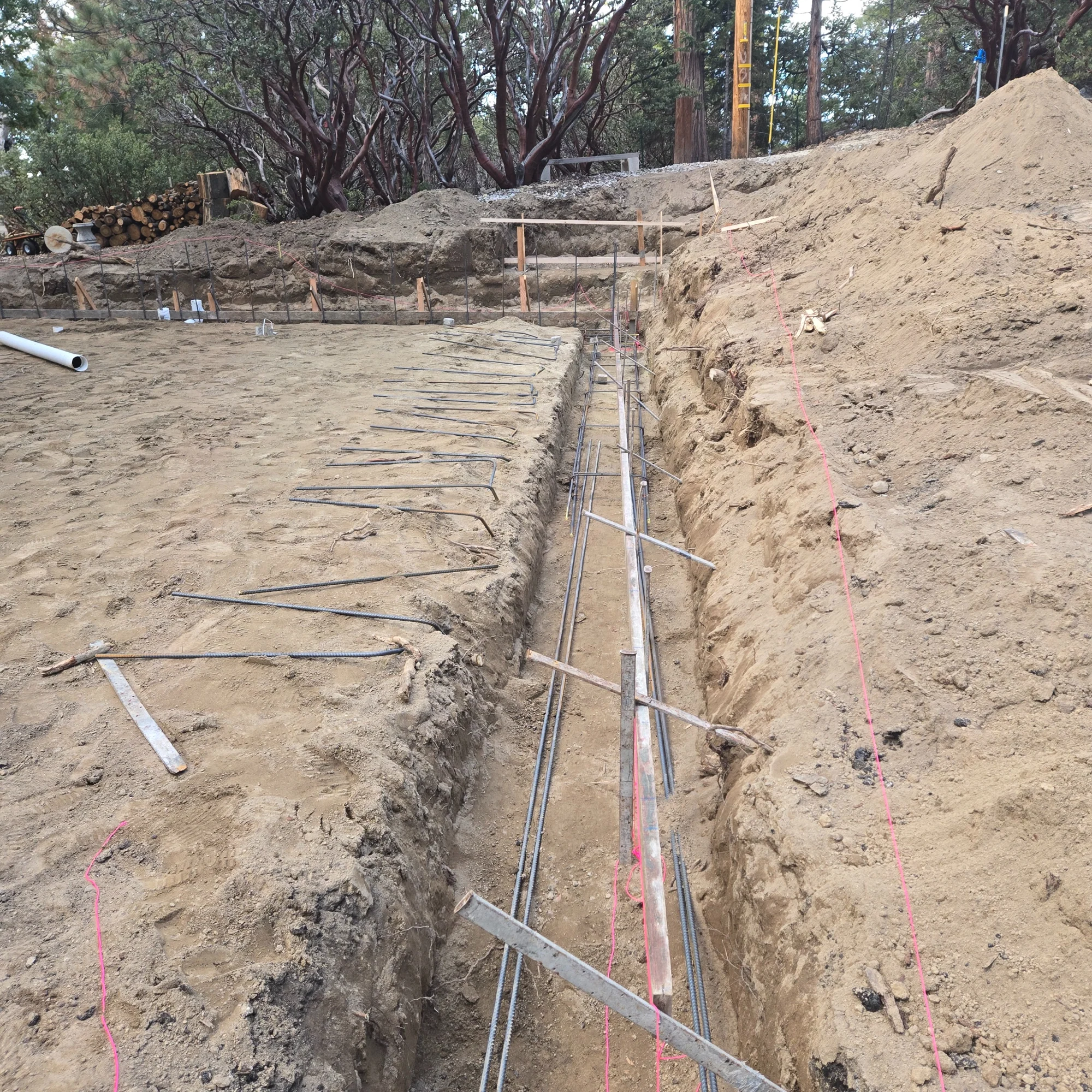
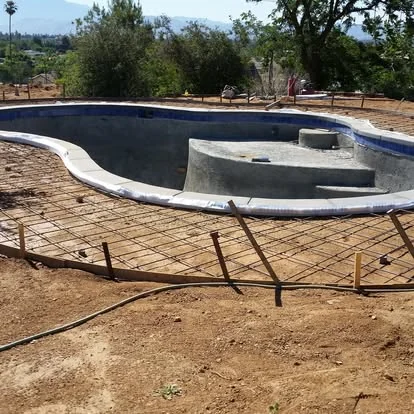
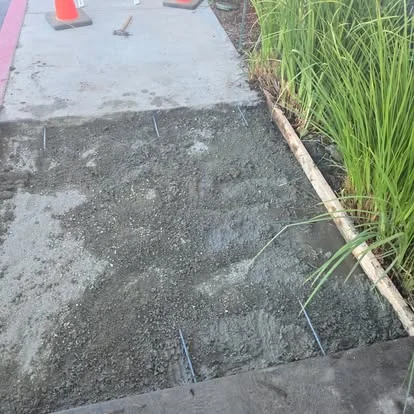
Wire mesh or rebar goes in over a compacted gravel base inside the forms, held up so it ends up in the concrete instead of under it. On a long, narrow walk that steel keeps the pieces together when a crack does come.
Where the walk meets the steps
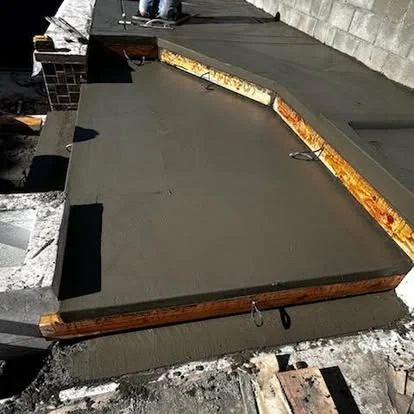
A walk usually ends at a step or a porch, and that seam is where water gets in and the two settle apart. We match the heights and set a joint there. If the steps themselves are worn out, our steps work in Anza can be done alongside.
Getting it on the calendar
Send the details with a rough sketch of where you park and which door you use. There are finished walks in our gallery, or call (951) 533-8821 and we will walk the job with you.
More concrete work in Anza
Walkway questions from snow season
How wide should a walkway be?
Wide enough that two people can walk side by side, or one person can carry something bulky without stepping off into the dirt. A path that feels tight gets walked around, and that wears a muddy track along its edge. We lay it out with you standing on the ground.
Will a concrete walk get icy?
Any outdoor surface can get icy. A walk that drains off to one side and carries a broom finish across its width holds far less of it, because water runs away instead of freezing in a sheet. Sand helps on the worst mornings.
Is it safe to use ice melt on a new walkway?
Hold off through the first winter if you can and use sand instead. Salt keeps the surface wet and breaks down the paste between the stones, and young concrete takes that the hardest. After that, a sealed surface with air in the mix stands up to it far better.
Can you replace a walk that has heaved near the house?
Yes. We break it out, find out why it moved, and fix that first. Often it is water gathering at the house or a soft edge that washed out. Pouring new concrete over the same problem just hands you the same walk back in a few winters.
Do you pour walks next to planting beds?
All the time. The edge beside a bed needs a solid base dug below the soft soil, and the walk sits slightly higher so mulch and dirt wash off it. Sprinklers aimed at the slab edge keep the base wet, so we look at those as well.
Can the walk and new steps be done together?
Usually that is the better way. Matching the heights at the seam and setting the joint is easier when both pieces are new, and the crew is already there with the mixer. Tell us about both when you send the details.
Show us where you park
Send a photo of where the truck sits and the door you use most, plus anything in between that turns to mud. We will come out and look at it and lay out the line on the ground with you.