
Poured once, done right
Carlsbad driveways, patios, foundations and repair work. Licensed 1137822, fourth generation, and straight about what a job actually needs.
Talk to us about the job


What concrete is up against around Carlsbad
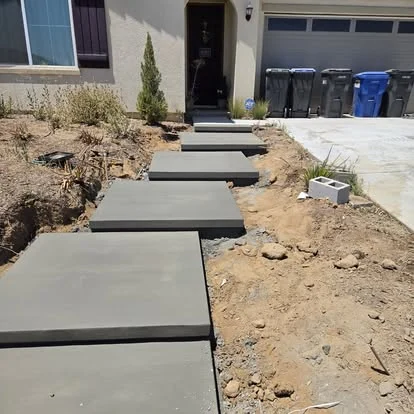
Older coastal slabs
A lot of coastal flatwork is decades old and was poured with less cover over the steel than we would use now. Rust staining and edge spalling usually mean the steel is going, not just the surface.
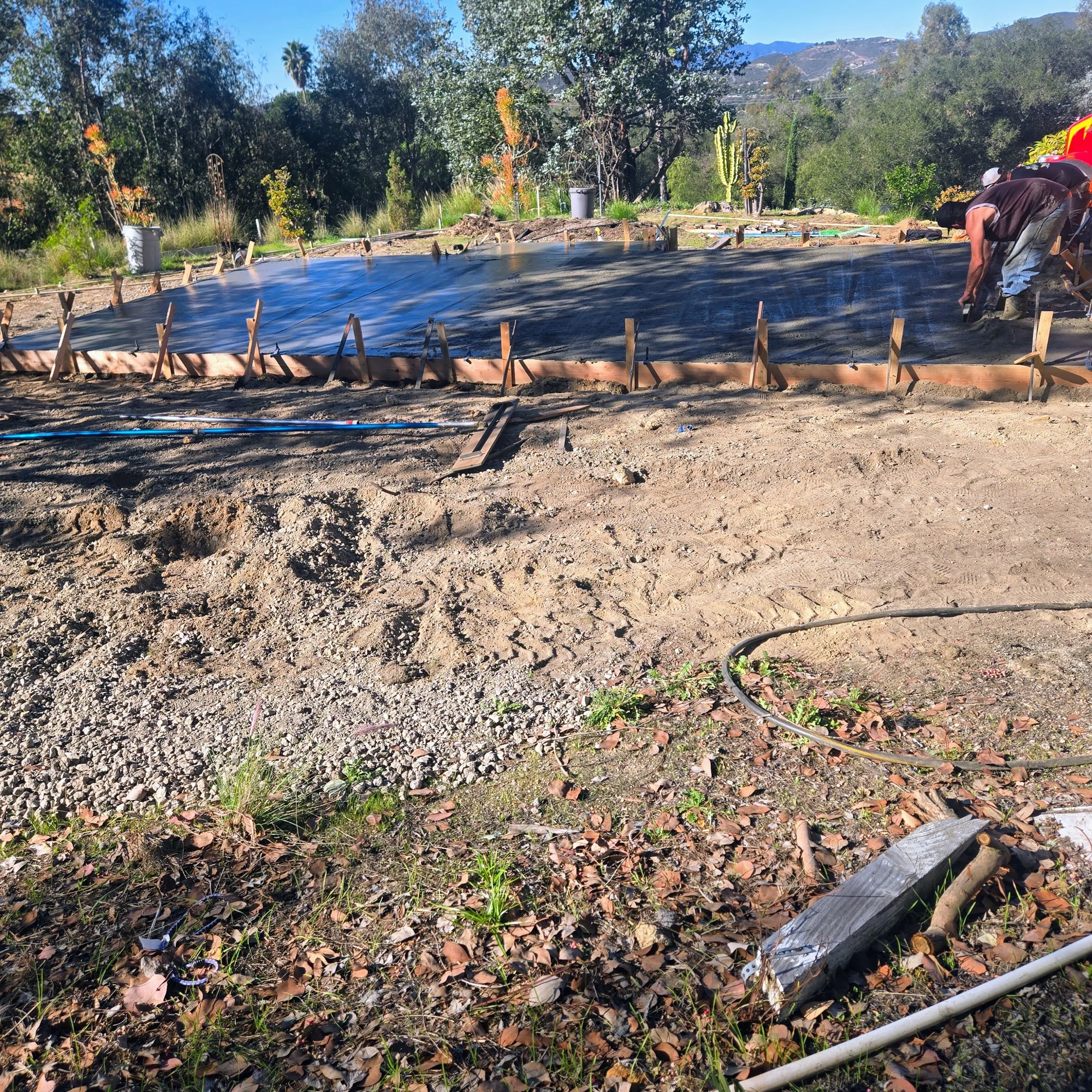
Pool and spa surrounds
On the coast pool decks get salt from the air as well as chlorine from the water. Slip resistance and a surface that will not degrade under both is the specification.
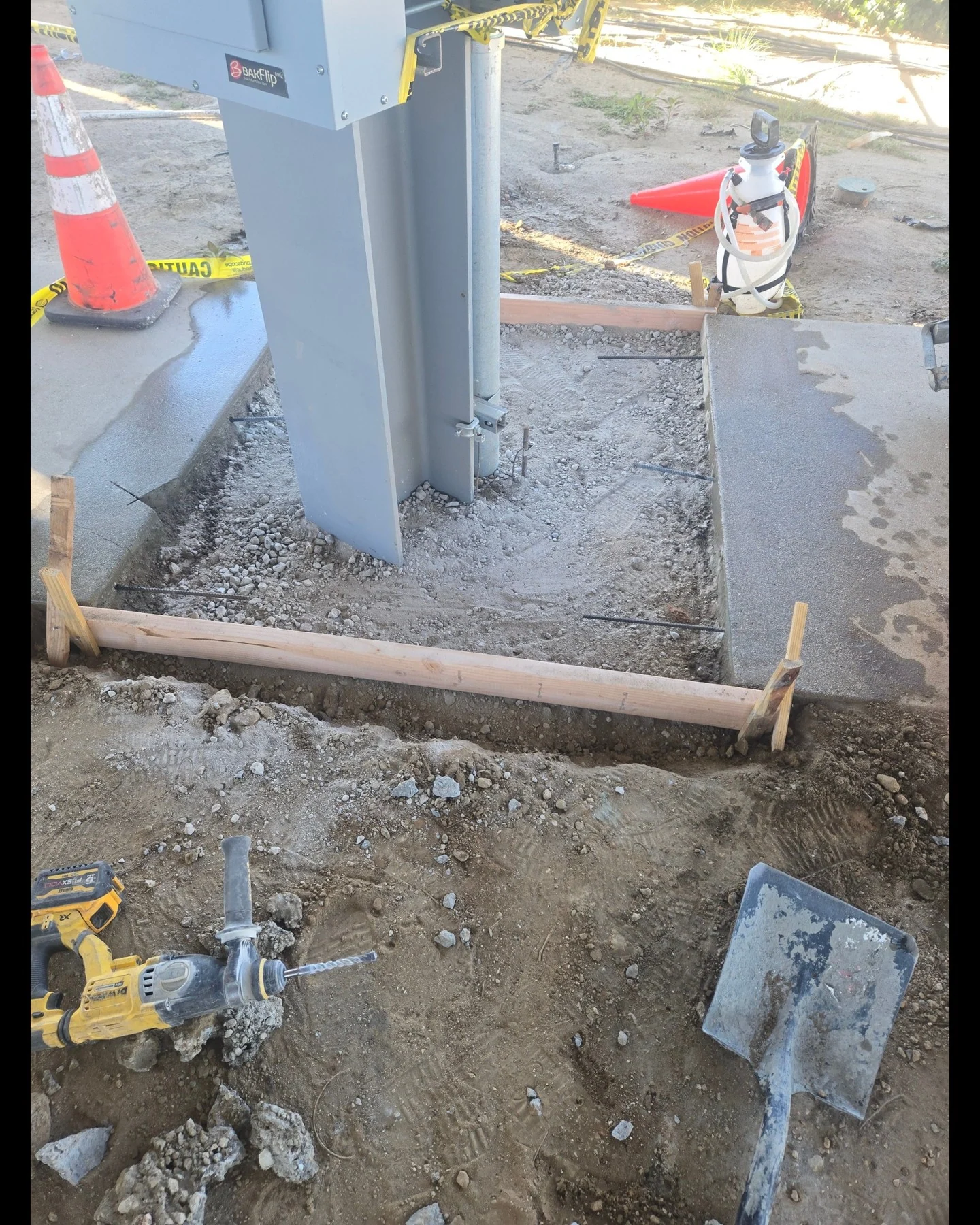
Sealing against chloride
Sealing on the coast is about keeping chloride out of the pores rather than keeping water from freezing. Different reason, same maintenance.
Curing treated as a step
Fresh concrete gets protected from dry wind and sun until it has what it needs. Skipping that is how you get a dusty, weak top layer.
Pours scheduled to the heat
In summer we start early and keep the mix and the crew ahead of the temperature. Concrete does not wait for anybody.
Honest diagnosis before a number
We look at what failed and why before quoting. Sometimes the answer is a repair and sometimes it is a rebuild, and we will tell you which even when the smaller job is ours to lose.
What we build in Carlsbad

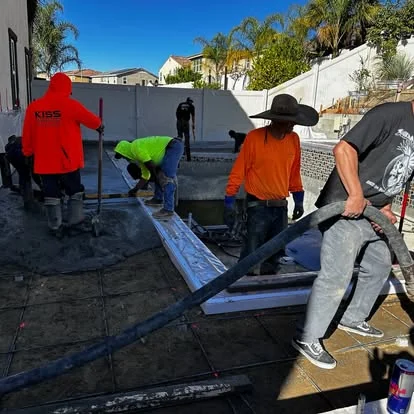
Boat Pads
Trailer tongue weight and a slab that has to stay level.
Parking Pads
Extra parking that is not the driveway.
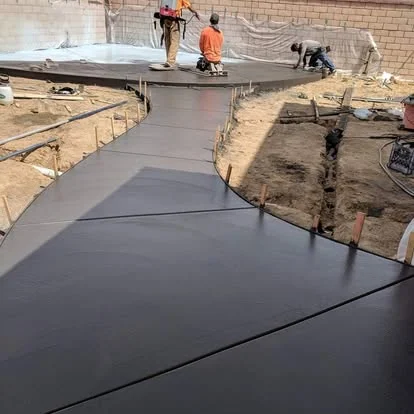
Concrete Pool Decks
Wet feet, chemicals, and sun all year.
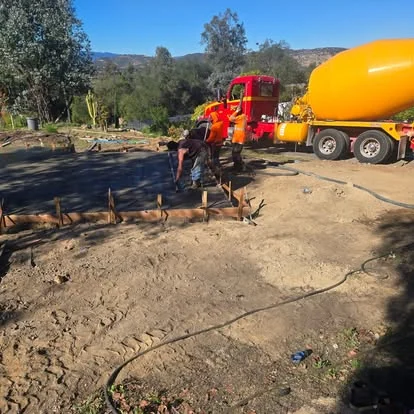
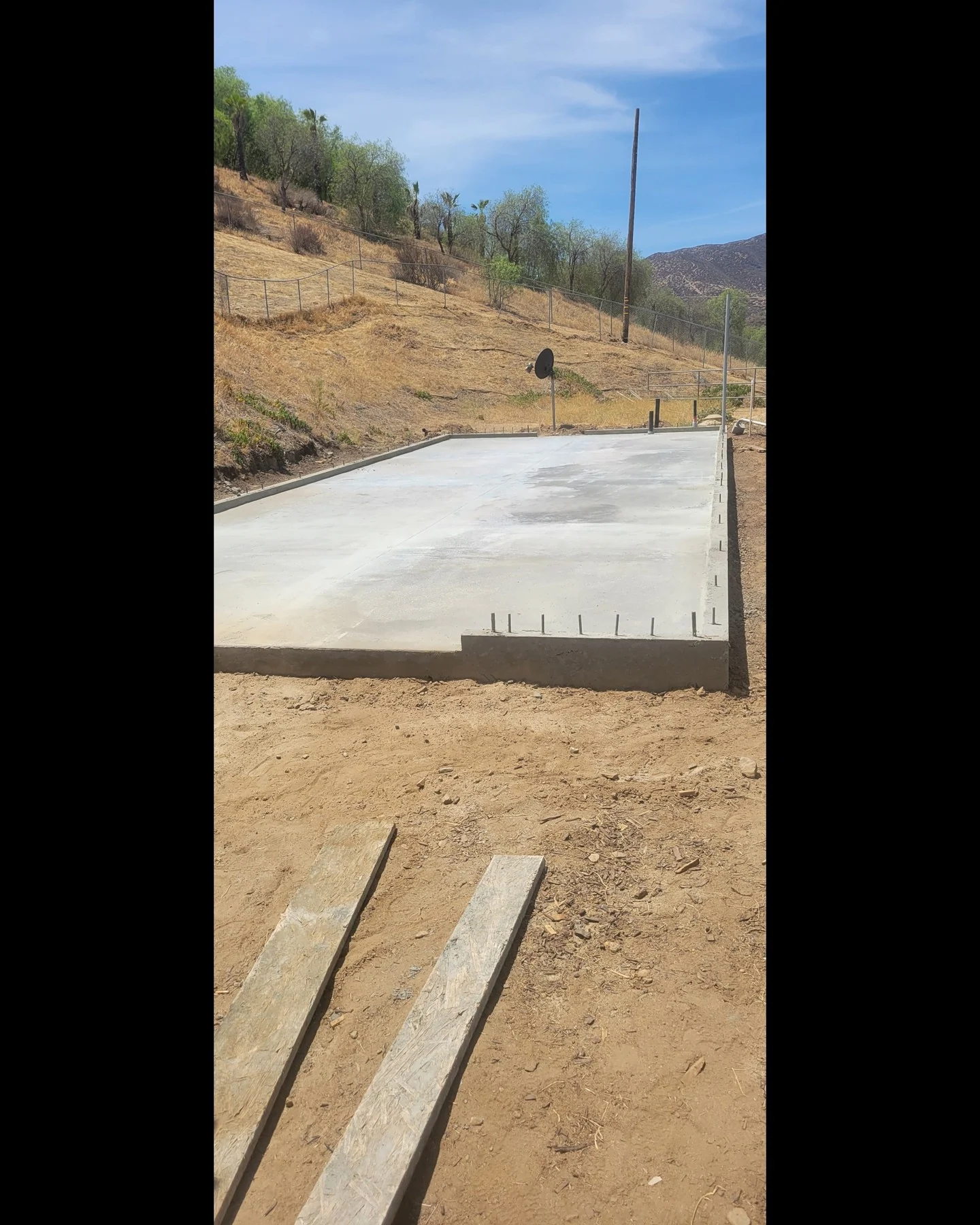
Concrete Pads
A pad sized to the thing that is going on it.
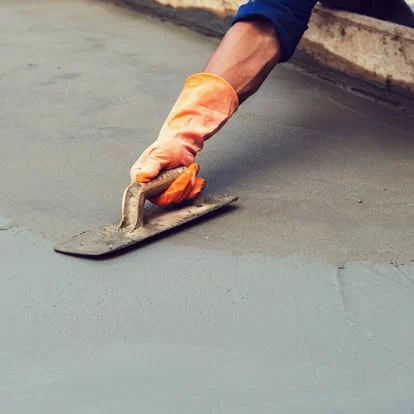
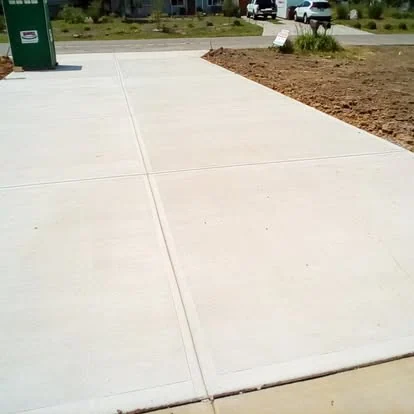
Residential Concrete Flatwork
All the flat concrete around a house, done by one crew.

Backyard Concrete
The whole back of the property, planned as one pour.
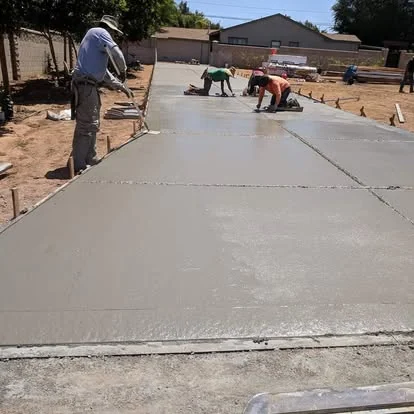
Concrete Grinding
Taking down high spots and trip lips.
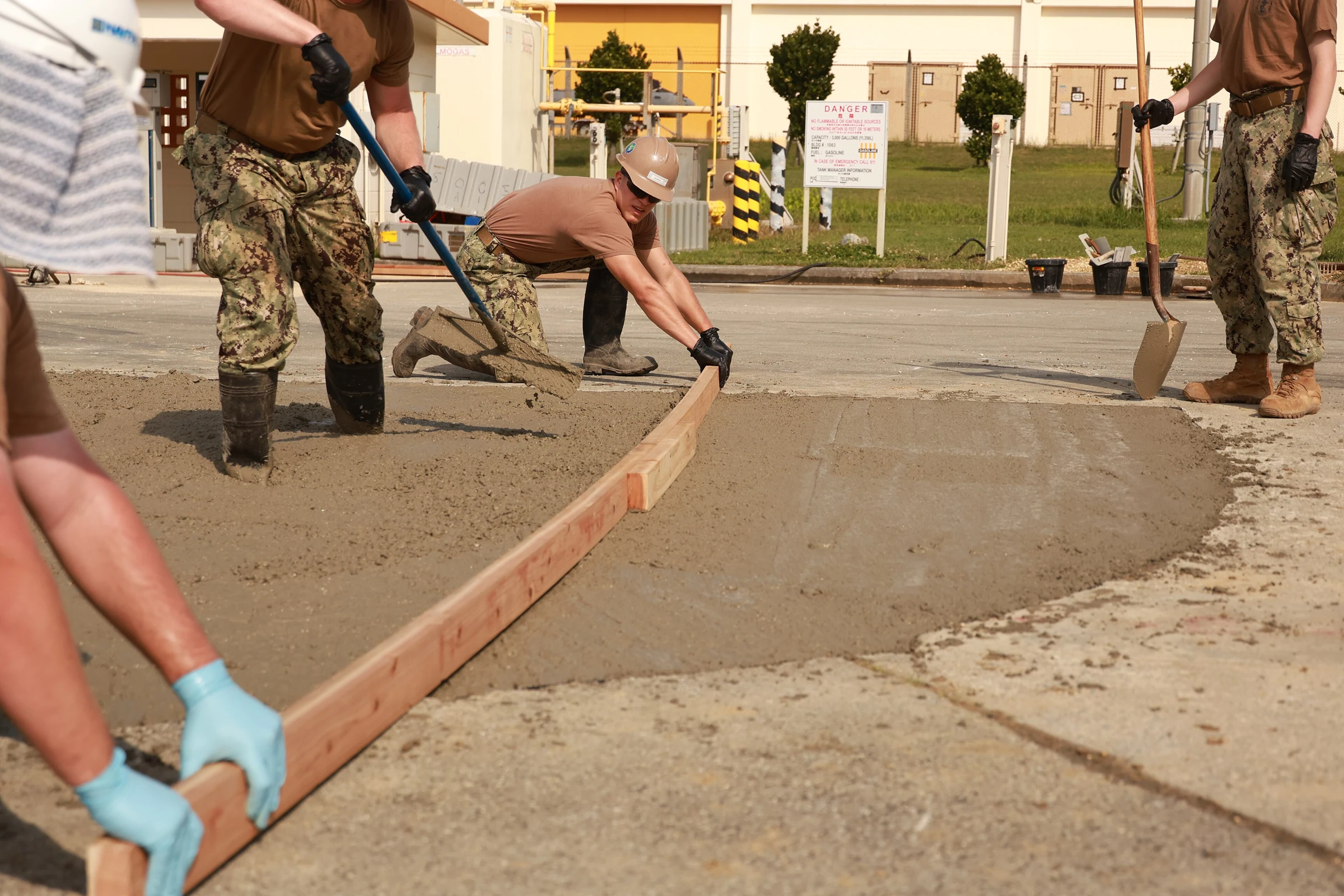
Concrete Sealing
Keeping water out of the pores.

Concrete Replacement
Out with the old slab, in with one built right.
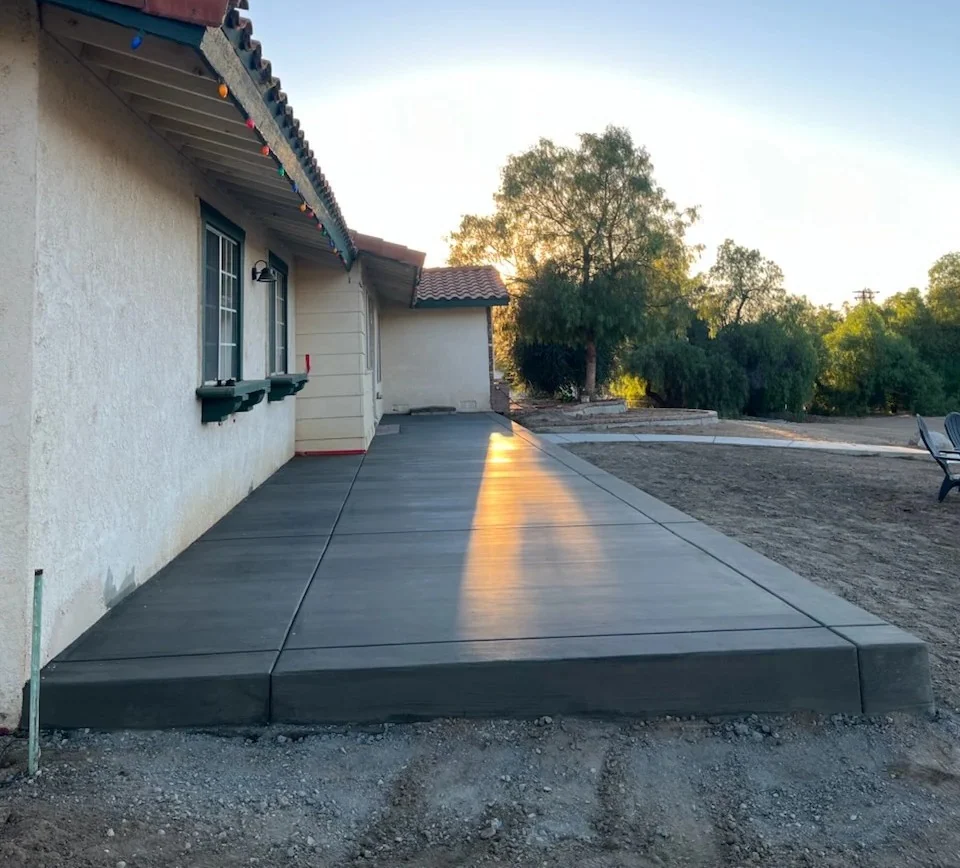
Concrete Curbs
Extruded or formed, straight and true.
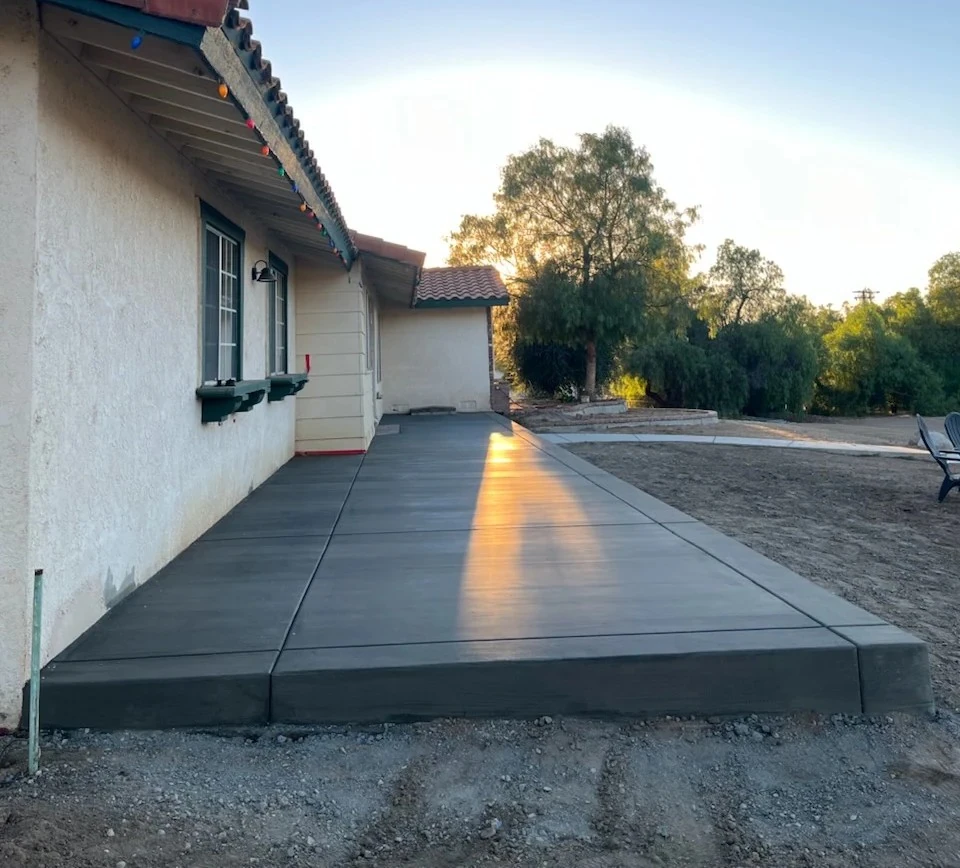
Concrete Gutters
Moving water where the grade will not.
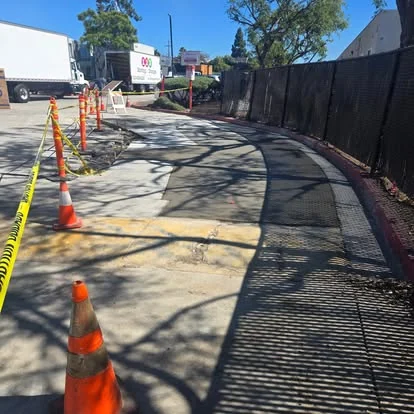
ADA Concrete Ramps
Built to the slope the tape measure will confirm.
Pouring concrete around Carlsbad
Pool decks near the ocean
A coastal pool deck takes salt from the air as well as chlorine from the water, plus bare feet. Slip resistance and a surface that holds up under both is the specification, not an upgrade.
Salt air reaches the steel
Marine air carries chloride well inland, and chloride is what corrodes reinforcing steel inside concrete. Rusting steel expands and breaks the concrete off from the inside, which is why coastal flatwork often fails in straight lines that match the bar spacing. Concrete cover over the steel is the defense, and it is specified rather than guessed.
Sandy soils and moving water
Coastal ground is frequently sand. It drains beautifully and it can be undermined by water moving through it, so compaction and understanding where water travels matter more than clay-style soil treatment.
A milder climate with a slower problem
The coast does not deliver the inland heat or the mountain freezing. What it delivers is constant moisture and salt, which is a slower and more corrosive problem, and it shows up as edge spalling and rust staining on older slabs.
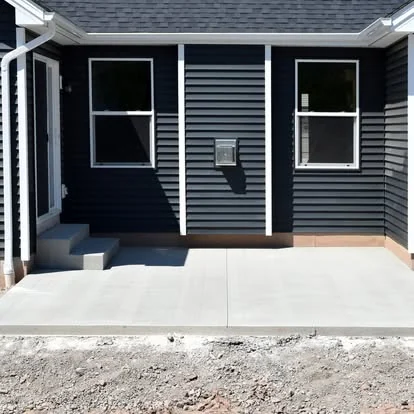
Concrete work around Carlsbad
Flatwork, foundations and repair across Carlsbad and the rest of San Diego County, poured by the same crew that answers the phone.
How concrete fails, and why
Cracks at re-entrant corners
Any inside corner in a slab, around a pillar or at an L-shaped patio, concentrates stress. Concrete cracks diagonally out of those corners unless steel or a joint is placed to control it.
Water against the house
Flatwork that slopes toward a building sends water at the foundation. In expansive soil that is the most expensive drainage mistake available.
Tire marks and staining
Hot tires pull at a sealed surface and some sealers soften under them. On a garage floor the finish and the sealer choice both matter for that reason.
Sunken sections around utilities
Trenches backfilled loosely settle for years. Anything poured over a recent trench needs that backfill compacted properly first.
How a job runs
Weather calls
Rain on fresh concrete damages the surface, and extreme heat shortens the finishing window. Both can move a date, and we will tell you why.
Sequence on bigger jobs
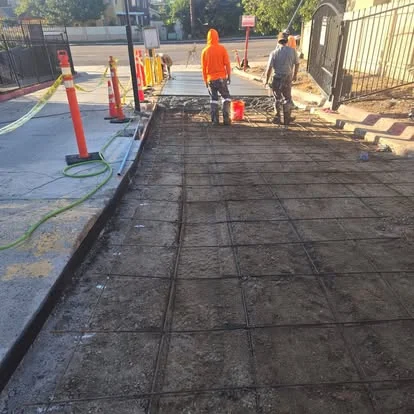
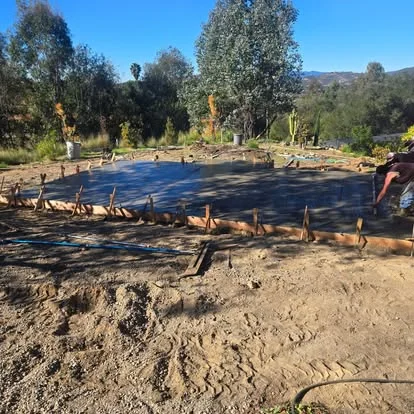
Demolition, earthwork, forming, steel, pour, joints, cure. Each step has to finish before the next one starts, and inspections land between some of them.
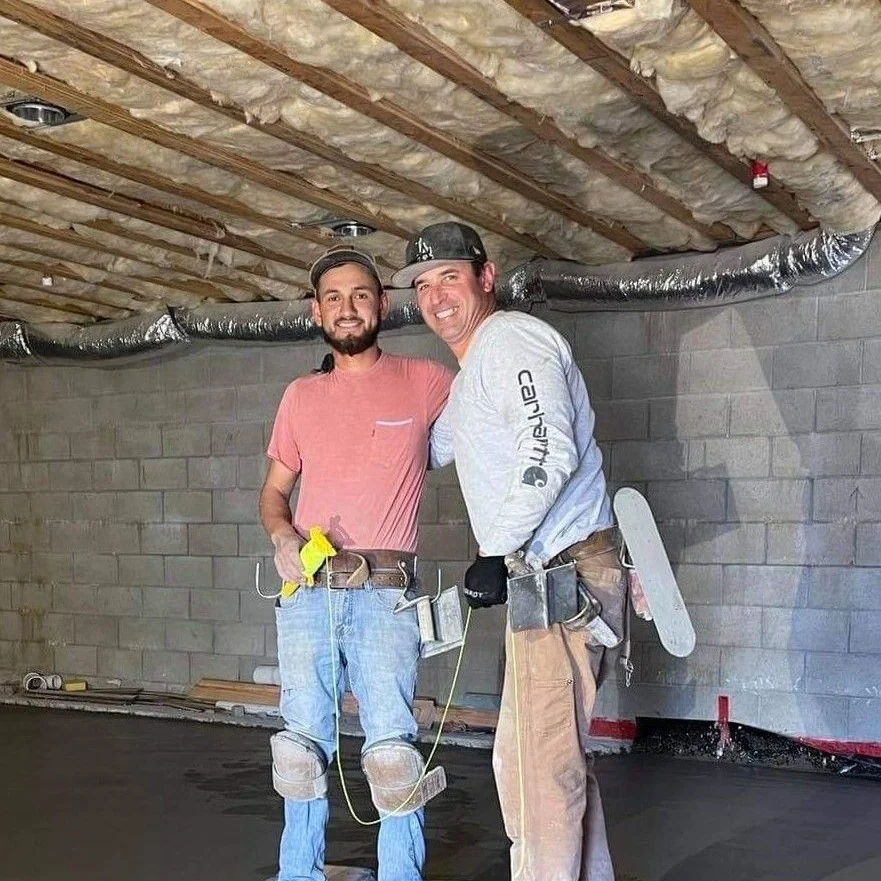
Knowing when to start floating is the part you cannot learn from a book.On finishing
Changes mid-job
Anything found underground can change the scope. If that happens you hear about it before work continues, with what it means.
What normal looks like after
Some hairline cracking, some color variation, and joints doing their job. We will tell you what is expected so you know what is not.
Around Carlsbad
Straight answers
Is the mild weather here easier on concrete?
Easier than inland heat or mountain freezing, yes. What you get instead is constant moisture and salt, which is slower and more corrosive.
My pool deck gets slippery. Can that be fixed?
Yes, with the right texture. A coastal pool deck takes salt from the air and chlorine from the water plus bare feet, so slip resistance is the specification rather than an upgrade.
Does humidity change the pour?
It changes the timing of every finishing step. Bleed water sits longer, and floating too early seals it in and weakens the top layer.
My lot is flat and water sits. What can be done?
Slope has to be designed in with planned low points and a drainage path. Gravity will not volunteer on a flat coastal lot.
Does salt air actually damage concrete?
It damages the steel inside it. Marine air carries chloride well inland, chloride reaches the reinforcement, and corroding steel expands and breaks the concrete off from the inside. Concrete cover over the steel is the defense.
Ready to talk about it?
Call the shop. We cover Carlsbad and the rest of the county from Hemet, and we will come out and read the job before quoting.