

Mountain Center concrete, no guesswork
We walk the job, read the ground, and tell you what it needs. Mountain Center and all of Riverside County, 32 years in the trade.
Talk to us about the job
What concrete is up against around Mountain Center
Short pour season
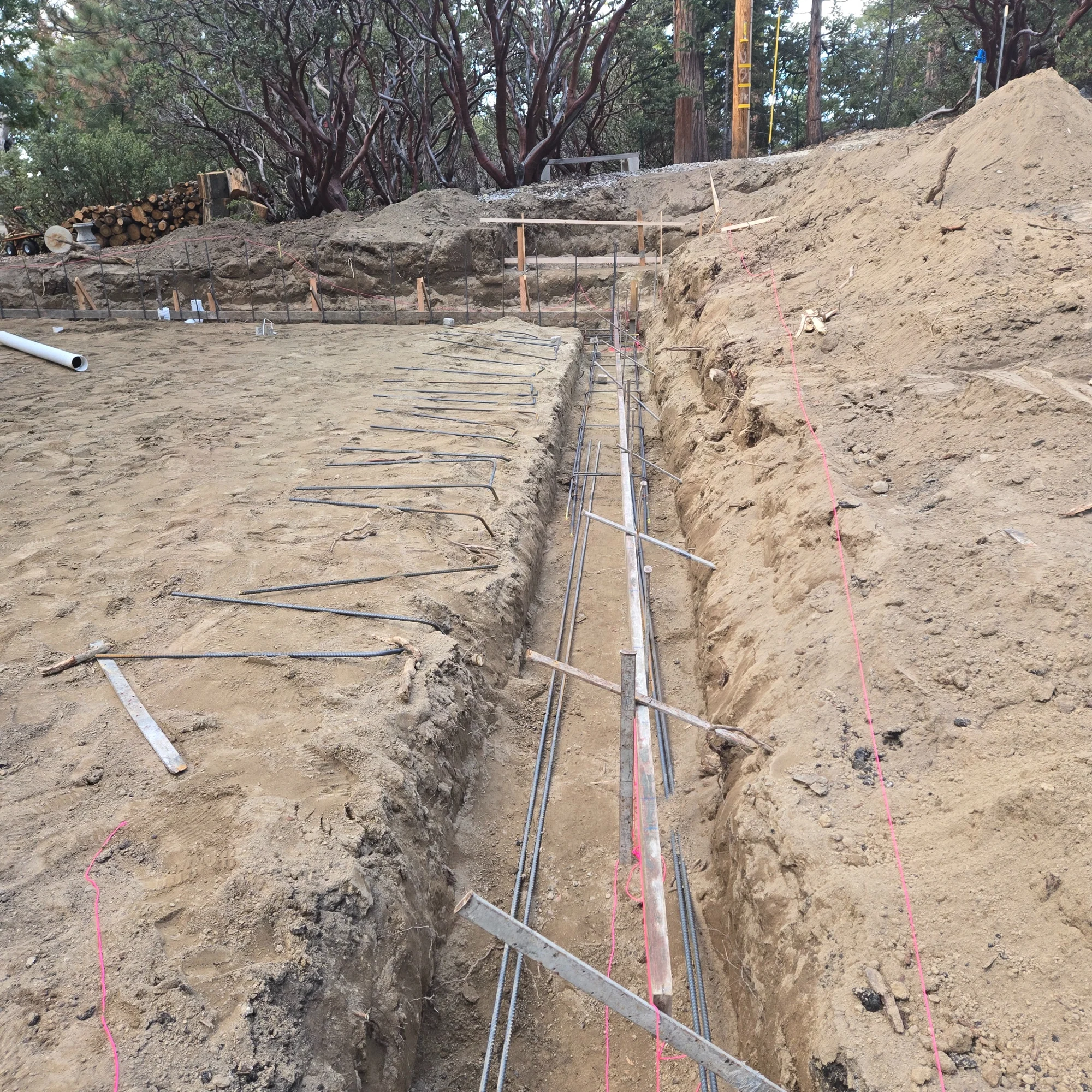
There are months at elevation when placing exterior concrete is the wrong call. We schedule to the season rather than pour into conditions that will not cure.
Slope on almost every lot
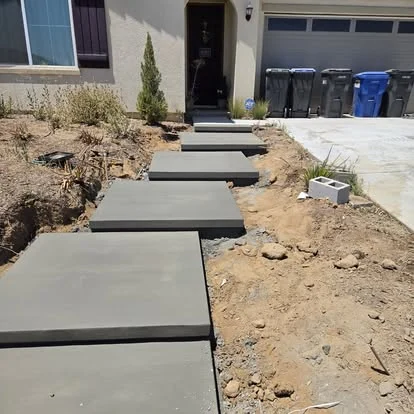
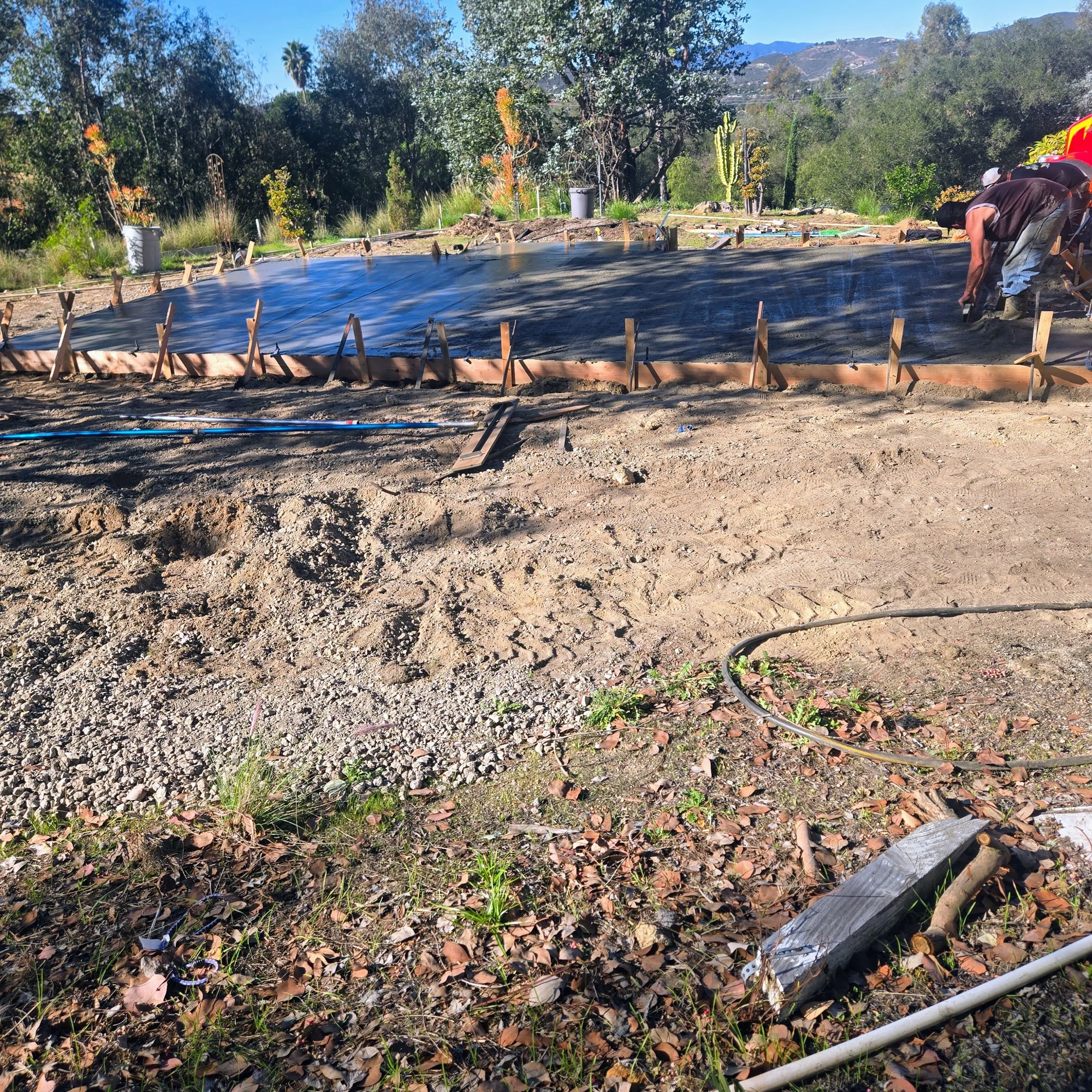
Mountain properties are rarely flat. That means stepped footings, retaining, and drainage that has real consequences if it is wrong. Water on a slope finds the cheapest path down.
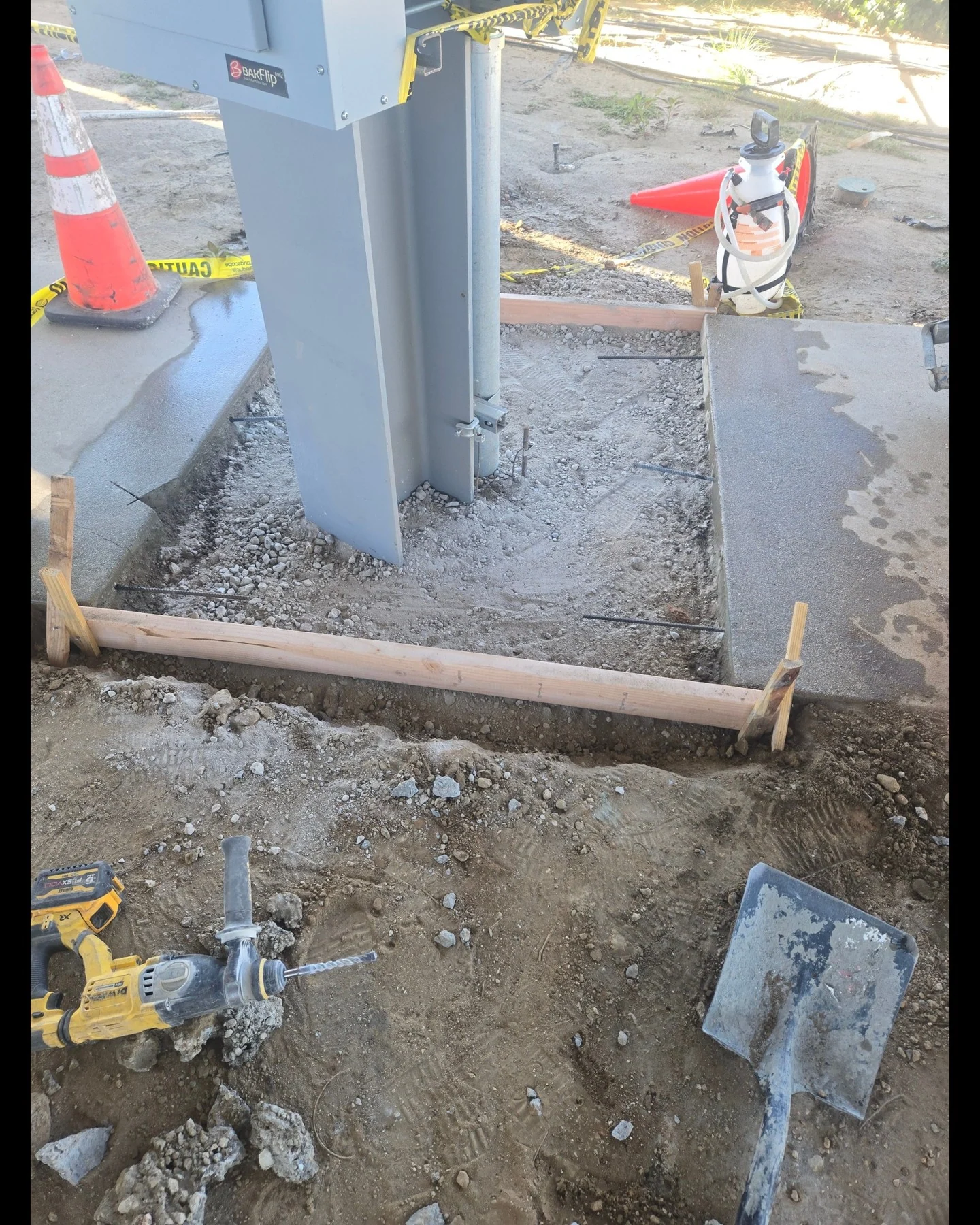
Snow, and what gets put on it
Deicing chemicals are harder on concrete than the cold is. Chloride holds moisture against the slab and attacks the paste holding the aggregate together. That drives both the mix and the sealing plan.
Pours scheduled to the heat
In summer we start early and keep the mix and the crew ahead of the temperature. Concrete does not wait for anybody.
Joints planned on paper
Joint layout gets worked out before the pour, spaced to the thickness and placed where the slab wants to move anyway. Then it gets cut at the right time.
Base first, always
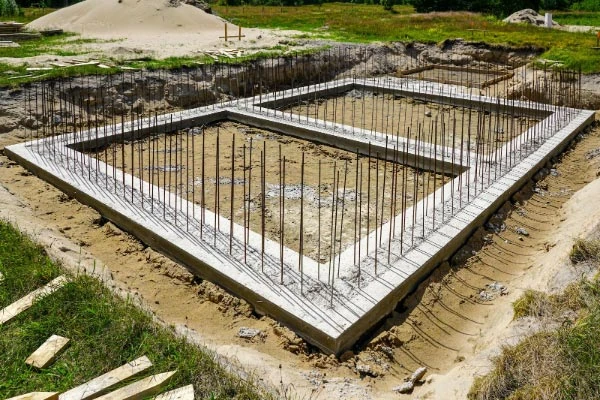
We cut to grade, fix the soft spots we find, and compact base in lifts before anything is formed. In expansive clay that step decides the whole outcome, so it is not where we save money.
What we build in Mountain Center
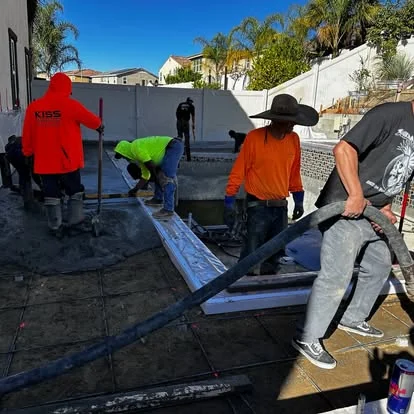
Basement Floors
A slab poured inside, where moisture has nowhere to go.
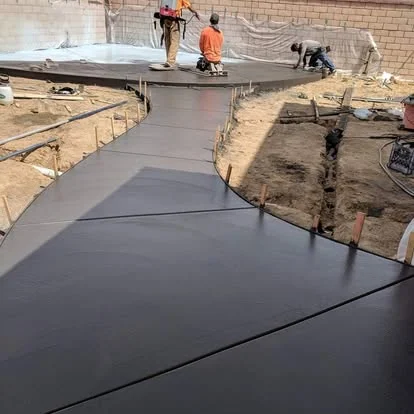
RV Pads
Heavy, concentrated, parked in one place for months.
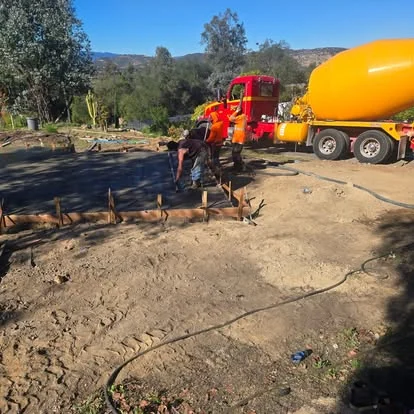
Boat Pads
Trailer tongue weight and a slab that has to stay level.
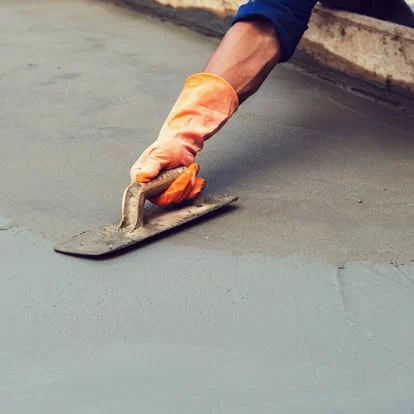
Parking Pads
Extra parking that is not the driveway.

Concrete Pool Decks
Wet feet, chemicals, and sun all year.
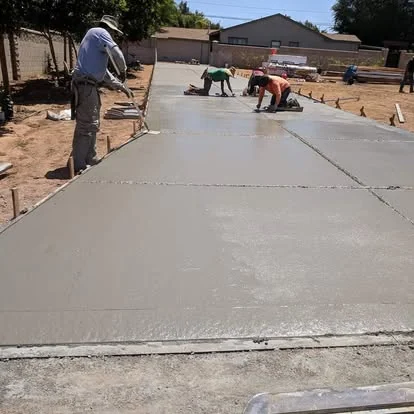
Concrete Pads
A pad sized to the thing that is going on it.
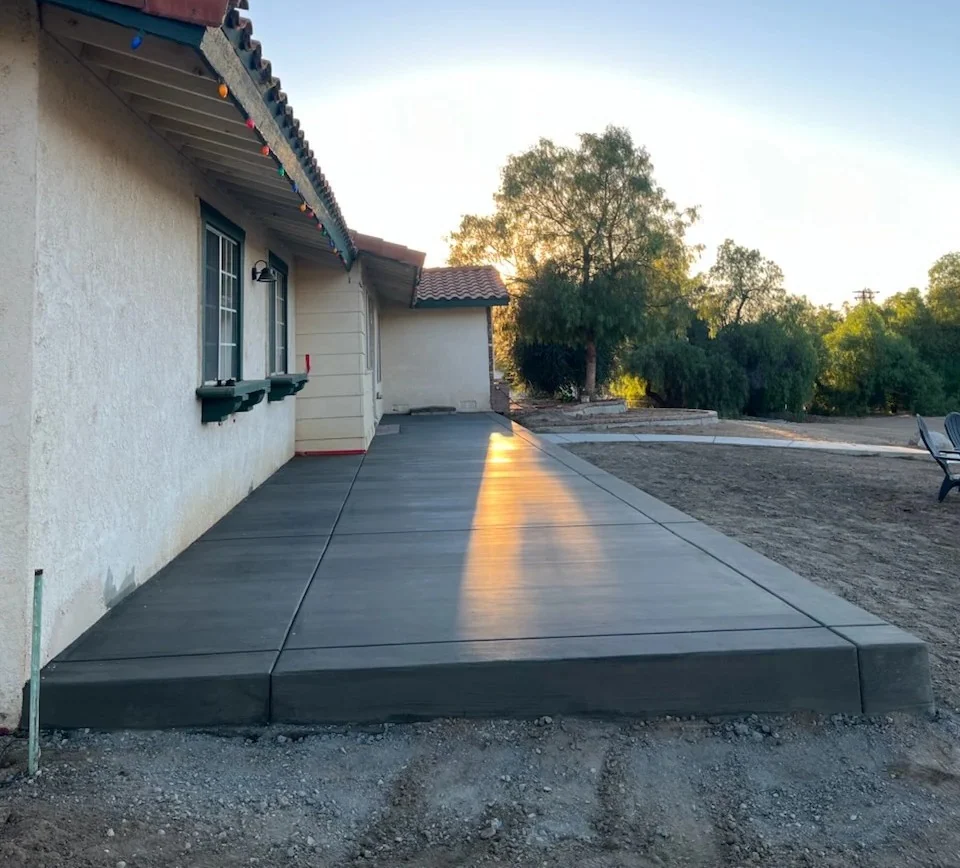
Settled Concrete Repair
The slab dropped because something under it did.
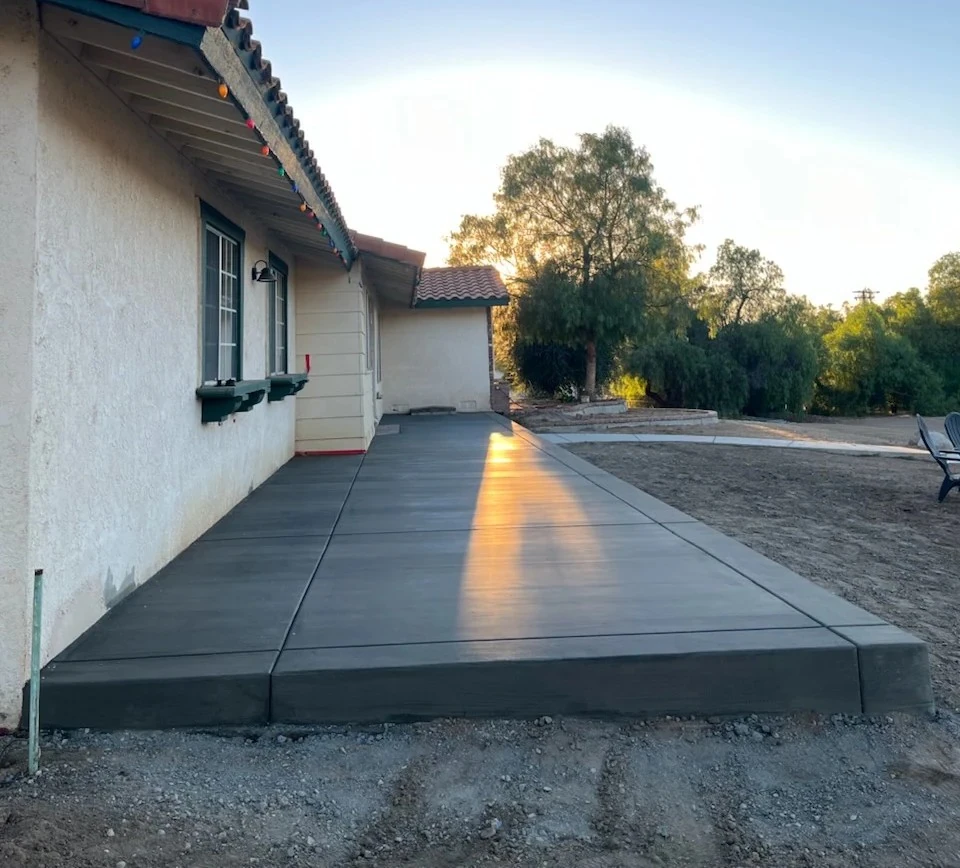
Uneven Concrete Repair
Lips, trip hazards, and panels out of plane.
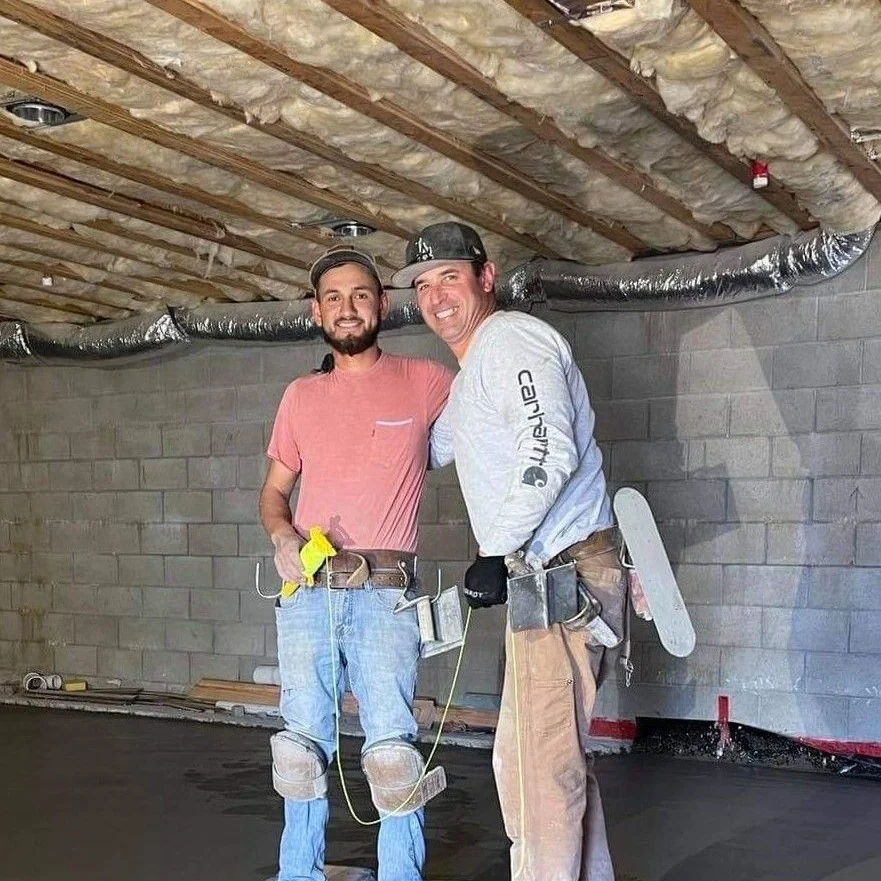
Concrete Joint Repair
The joints fail before the concrete does.
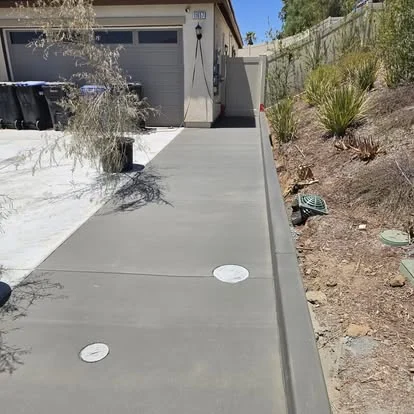
Equipment Pads
A level base for machinery that cannot move.
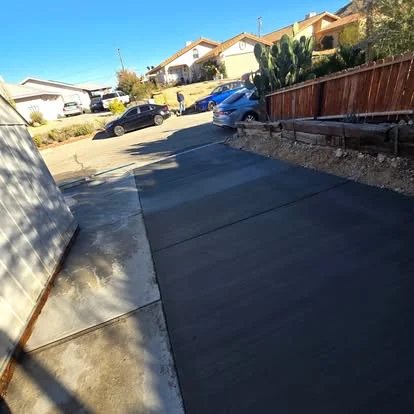
Transformer Pads
Utility pads built to the utility’s drawing.
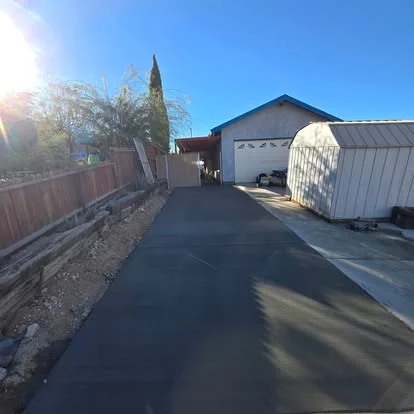
Utility Pads
Pads for meters, generators, and mechanical gear.
Pouring concrete around Mountain Center
Slope on nearly every lot
Mountain properties are rarely flat, which means stepped footings, retaining, and drainage with real consequences. Water on a slope finds the cheapest path down and it is usually the one you did not want.
A shorter pour season
There are months at elevation where placing exterior concrete is simply the wrong call. Concrete cures by chemical reaction and cold slows that reaction down, so a slab placed into a hard freeze may never reach strength. We schedule to the season.
Rock and shallow bedrock
Shallow rock and decomposed granite are common up here. Rock can be an excellent bearing surface and a genuine excavation problem in the same afternoon, and it changes how footings get formed.
Getting concrete to the work
Access is often the hardest part of a mountain job. Narrow roads, tight turns and grade decide whether a mixer reaches the pour or whether it gets pumped, and that gets planned before anything is quoted.
Concrete work around Mountain Center
Flatwork, foundations and repair across Mountain Center and the rest of Riverside County, poured by the same crew that answers the phone.
How concrete fails, and why
Thin slab cracking under vehicles
A four inch slab under a work truck or an RV will crack in the wheel path. Thickness has to come off the actual load, not off what is typical.
Joints in the wrong place
Joints spaced too far apart let the slab crack between them. The rule of thumb is roughly two to three feet of spacing per inch of thickness.
Surface loss at door thresholds
Water runs off a roof or a door and lands in the same line every time. Concentrated water wears concrete, and a drip line is a real design consideration.
Reinforcement too low
Steel sitting on the subgrade is doing nothing. It has to be lifted on chairs into the upper portion of the slab where tension actually occurs.
How a job runs
What a site visit covers
Soil, slope, drainage, access, existing concrete, and what you actually want the space to do. All of it changes the work.
Ordering the concrete
Mix design comes off the application. Strength, aggregate size and admixtures are decisions, and they are made before the truck is booked.
Concrete is judged on the surface and it fails from underneath.What thirty two years teaches
Placement and finish
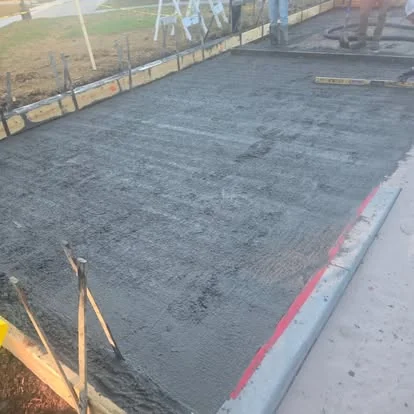
Placed, consolidated, screeded, floated and finished, each at the right moment. That timing is the trade.
Living with it
Keep water moving off it, reseal when it needs it, and keep an eye on the joints. That is most of concrete maintenance.
Around Mountain Center
Straight answers
Is deicing salt bad for my concrete?
Worse than the cold itself. Chloride holds moisture against the slab and attacks the paste binding the aggregate. It drives both the mix choice and the sealing plan.
When is the pour season?
There are months at elevation where placing exterior concrete is the wrong call. We schedule to the season rather than pour into conditions that will not cure properly.
We hit rock when we dug before. Is that a problem?
It can be both an excellent bearing surface and a genuine excavation problem in the same afternoon. It changes how footings get formed and it is worth knowing early.
How long before I can use it?
Cold slows the cure, so the numbers are longer than down the hill. You get the real ones for your pour.
Why did my steps crack when the slab did not?
Thin sections move more per foot than a big slab, and at elevation that movement is larger. Steps and narrow walks need their own jointing and steel.
Talk to us about Mountain Center
Describe the slab and we will tell you what it needs, including when that is less than you expected.