
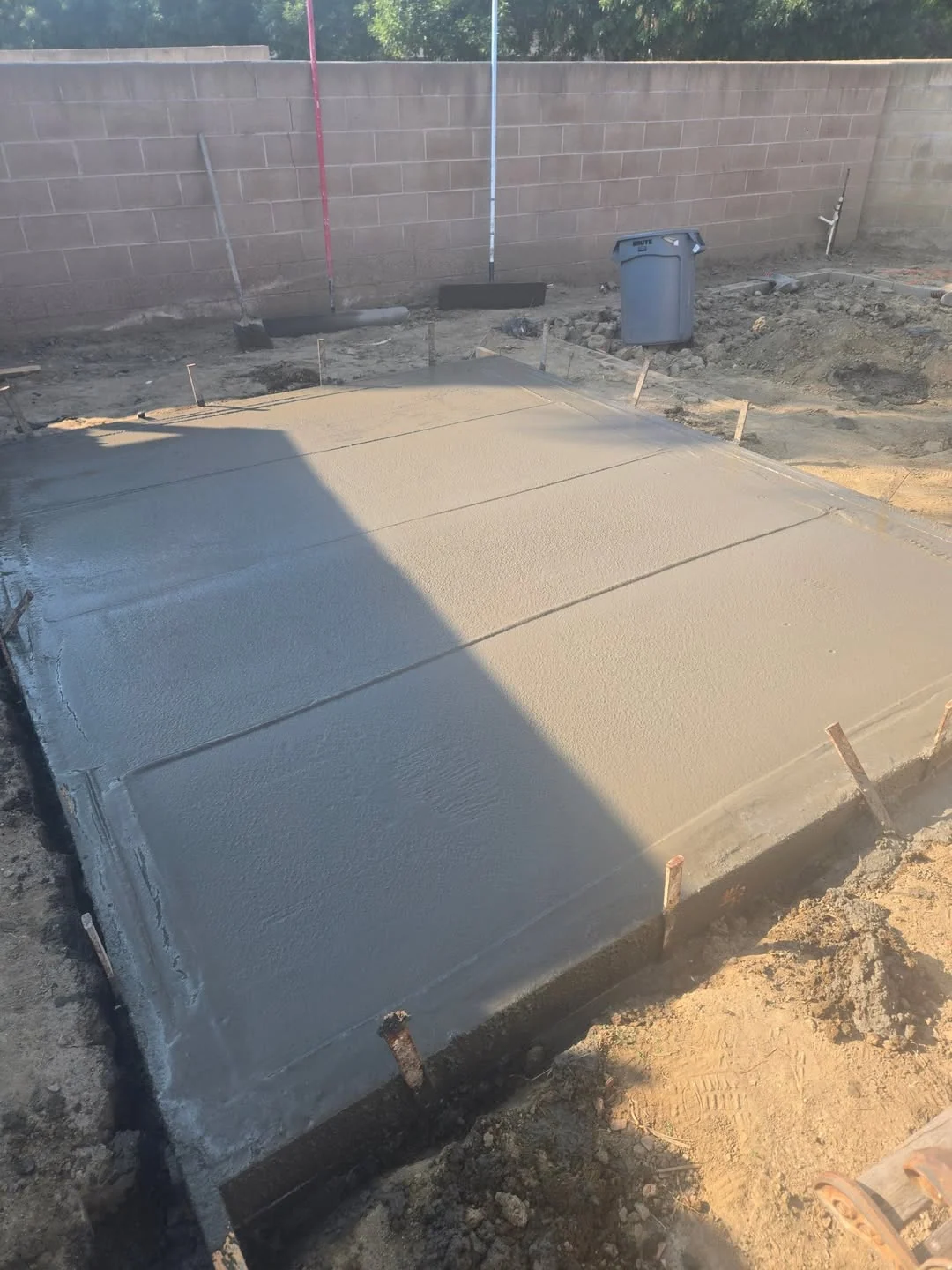
Four generations of concrete
The trade came down the family. 32 years in, the focus moved to residential concrete, learned properly, and grew from there into a full scale company doing commercial and industrial work as well.
Talk to us about the job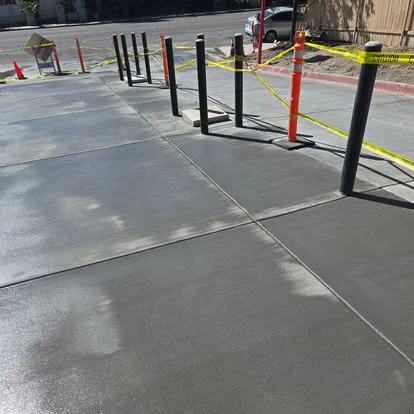
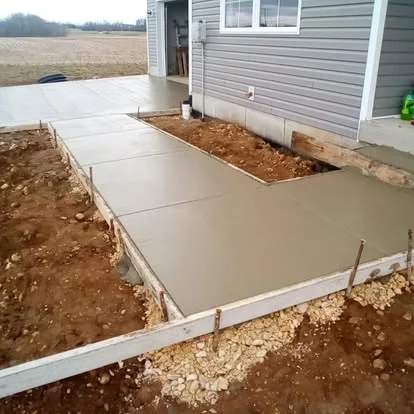
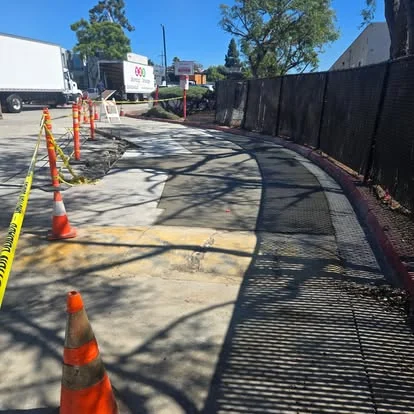
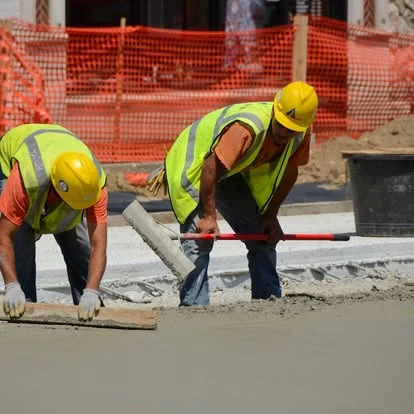
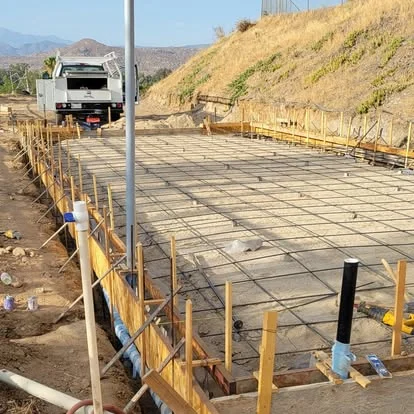
Where it started
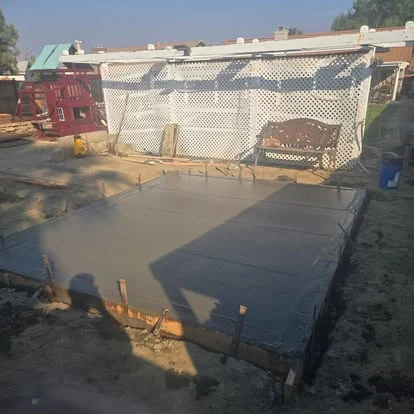
Fourth generation in concrete. The decision that shaped the company was narrowing down to residential work, learning that trade properly rather than treating it as small commercial, and building out from there.
What the license covers
California license 1137822, classification C-8 Concrete, with a contractor’s bond and workers compensation in place. Current certificates go out on request.
How we quote
Somebody comes out and stands on the job. Soil, drainage, access and the condition of what is already there change the work more than square footage does, and none of it shows up in a photograph.
Who we work for
Homeowners, commercial developers, industrial facilities and tribal projects. The crew and the standard are the same on all of them. The paperwork is not, and we handle that too.
The ground we build on
Irrigation against the slab
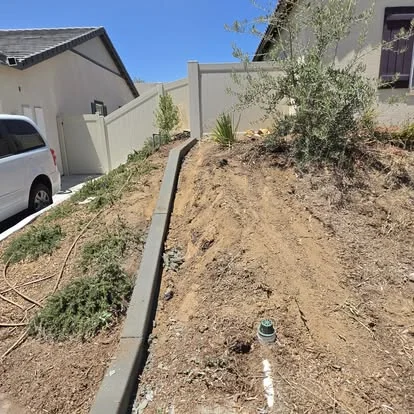
Almost every valley property waters something, and sprinklers running along a slab edge keep the base saturated year round. In expansive soil that is a slow way to undermine your own driveway. Where the water lands is worth looking at before blaming the concrete.
What the ground does here
The inland valleys run on expansive clay. It takes on water and swells, then dries out and shrinks, and it does that cycle every year. A slab poured on untreated clay rides that movement until something gives, which is why base preparation and reinforcement are the design rather than an upgrade. Where a soils report exists we build to it; where there is none, what we find during excavation tells us what the ground is going to do.
Drainage on a flat lot
Valley lots are often close to level, which makes slope hard to find and easy to get wrong. Low points, cross-fall and where water actually leaves the property get worked out before the pour, because once the concrete is down the drainage is permanent.
Older flatwork around here
A lot of valley concrete was poured thin, with light reinforcement, on a base that was never properly compacted. When it fails it is usually reporting on the ground rather than on the mix, and that is the difference between a repair that holds and one that comes back in a year.
Summer pours
Triple digit afternoons change how concrete behaves. It stiffens before it can be finished properly, the surface skins over while the body underneath is still soft, and water leaves the slab faster than the cement can use it. Valley pours start early, the mix gets adjusted for the heat, and curing is treated as an active step instead of something that happens on its own.
What lasts here
A properly based, properly jointed slab with reinforcement sized to the load will outlast the house it sits beside. The variables that decide it are all underneath and all invisible once the pour is done, which is exactly why they get cut on cheap jobs.
How concrete fails, and why
Settlement at the apron
The strip where a driveway meets a garage takes every vehicle and sits over backfill that was disturbed during construction. It settles more than the rest of the drive and it needs its own thickness and joint.
Heaving
A slab pushed upward is usually roots or expansive soil taking on water. Both get worse with irrigation, and neither is fixed by resurfacing the top.
Pop-outs
Small conical craters come from a particle of reactive aggregate near the surface expanding and blowing the concrete off above it. Cosmetic, and a repairable surface defect.
Dusting
A surface that chalks under a broom was finished or cured badly, or had water worked into it. Sealing helps; grinding and resurfacing fixes it.
How a job runs
Preparation you may need to do
Moving vehicles, clearing the area, and sometimes irrigation being shut off. We will tell you in advance what is on you.
Demolition day
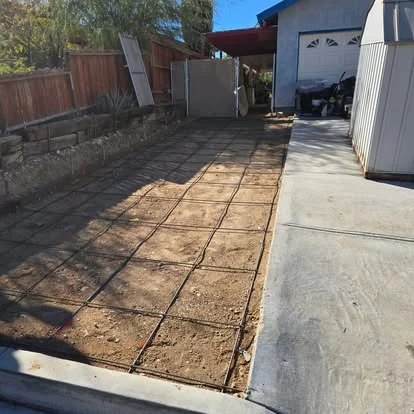
Saw cutting, breaking, loading and hauling. It is the loudest and dirtiest part and it usually happens first.
A repair aimed at the wrong cause is money spent twice.On repair work
Pour day
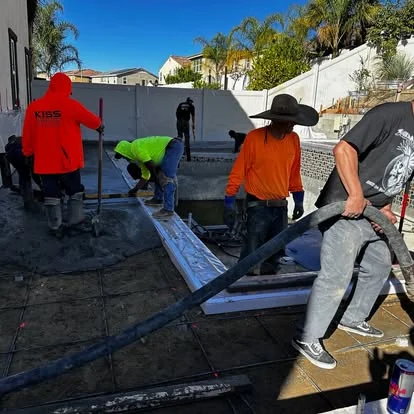
Early start in summer. The crew works continuously until the slab is placed and finished, because concrete sets on its own schedule.
Keeping off it
How long depends on the pour and the weather. You will get a real number, not a generic one.
How we quote and why
Cut the joints, cure it
Joints cut deep enough and early enough to work, then the slab gets protected while it cures. Leave either out and you have a crack you chose not to control.
Form, steel, pour
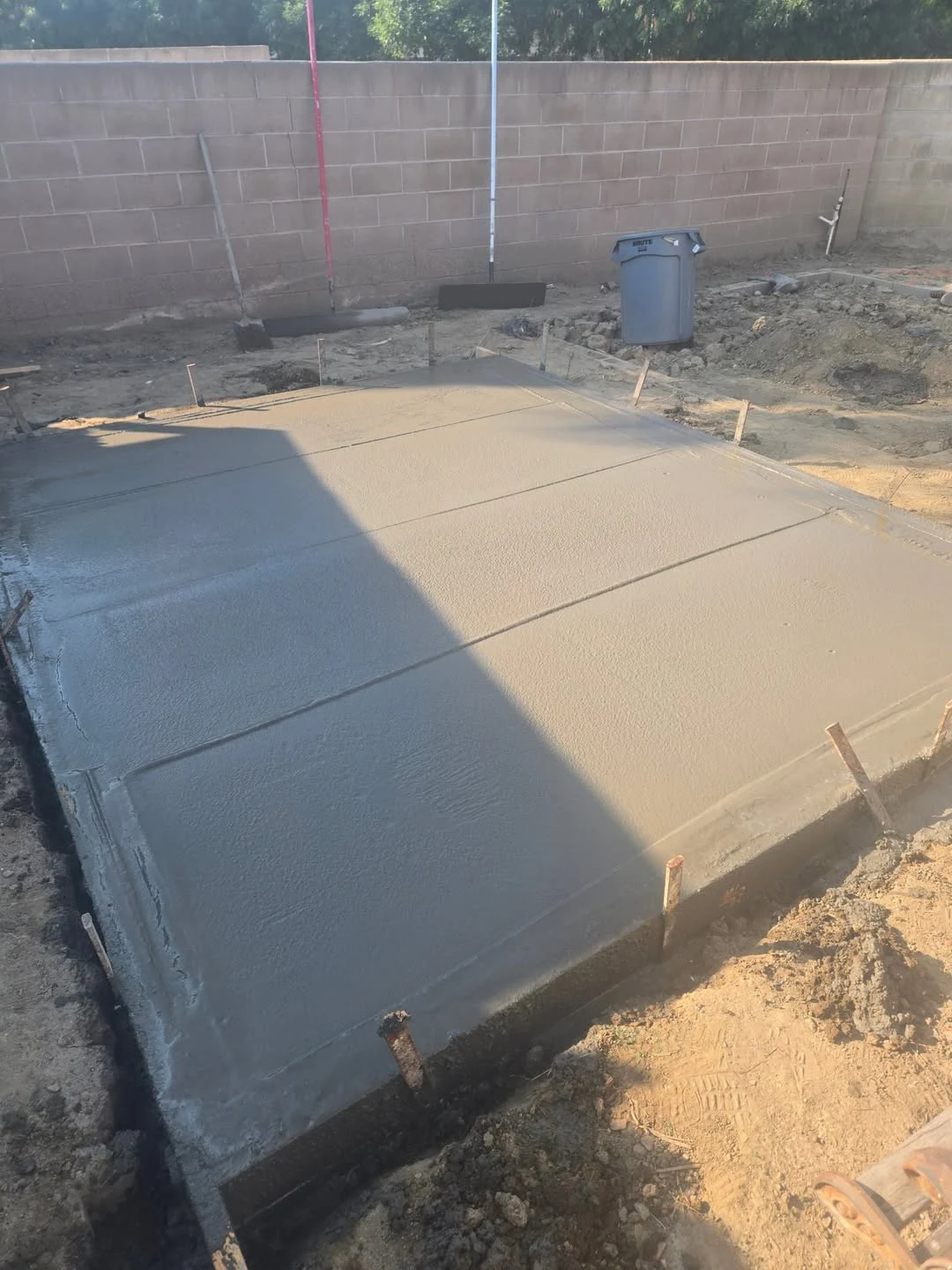
Forms braced for real pressure, steel on chairs at the right height, then placed and consolidated properly. Then finished at the right moment, which is the part you cannot rush.
Say what it needs
We tell you what the job actually requires, including when that is less than you expected. A repair that will hold beats a replacement you did not need.
Walk the job first
Somebody comes out and looks at it. You cannot price concrete off a photo, because the questions that matter are what the ground is doing, where water goes, and how a truck gets in.
Build the base
Grade, correct the soft spots, compact in lifts. This is the part nobody sees and the part that decides whether the slab is still flat in twenty years.
Common questions
Do you work from engineered plans?
For structural work, yes. Footings, stem walls, and anything carrying calculated load get built to the engineer’s drawings and inspected before they are covered.
What does expansive soil mean for my foundation?
Clay soils swell with water and shrink when they dry, and that movement is what cracks foundations. It gets handled in the design: footing depth, steel, moisture control, and sometimes soil treatment.
Do you pull the permits?
Structural concrete is permitted and inspected work. We would rather have that conversation before anything is dug than discover it at inspection.
Is my foundation crack structural?
Some are cosmetic shrinkage and some mean movement. Vertical displacement, a crack that widens along its length, or doors that have started sticking all point at movement. We look before advising.
Can you repair a foundation without replacing it?
Frequently. The question is always what caused it. Water, undersized footings and expansive soil all look similar at the crack and need different fixes.
Talk to us about the job
Call (951) 533-8821 or send the details.