
Concrete that outlasts the house
Driveways, patios, slabs and foundations for Redlands property owners. Fourth generation on the tools, licensed 1137822, working out of Hemet.
Talk to us about the job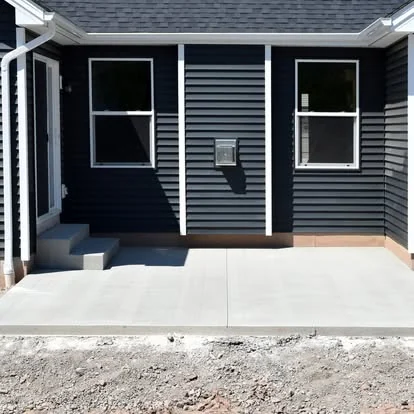
What concrete is up against around Redlands
Clay that moves with the season
The soil through the San Jacinto Valley is expansive. It swells when it gets water and shrinks back when it dries, and it does that every year. A slab poured on untreated clay rides that movement until it cracks. The fix is in the base and the steel, decided before anybody orders concrete.
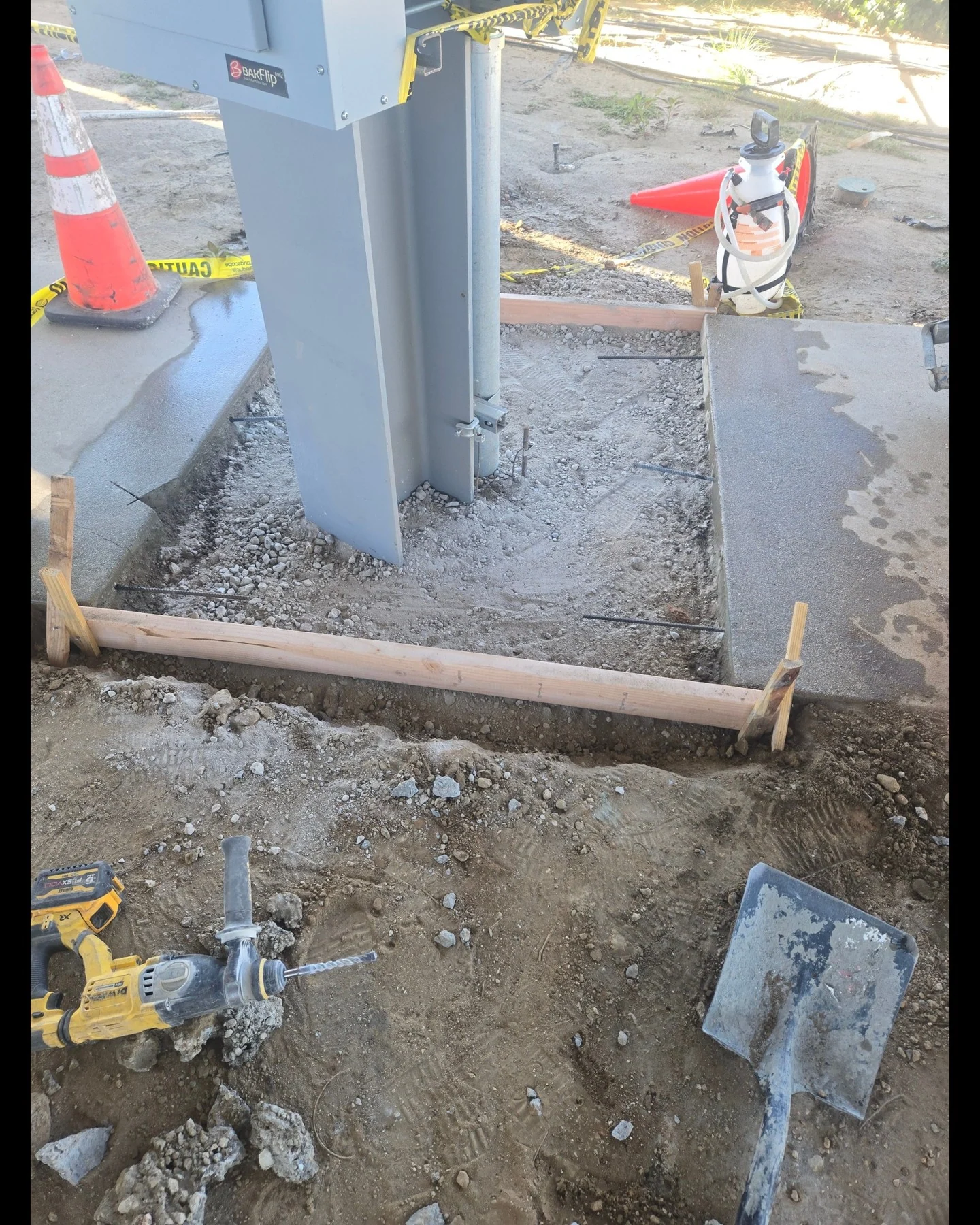
Irrigation next to flatwork
Sprinklers running against a slab edge keep the base saturated year round. In expansive soil that is a slow way to undermine your own driveway. Where the water lands matters.
Old slabs and new ones together
A new pour tied hard to an old slab will crack at the joint, because the two will never move the same. They get isolated on purpose so each one can do what it wants.
Base first, always
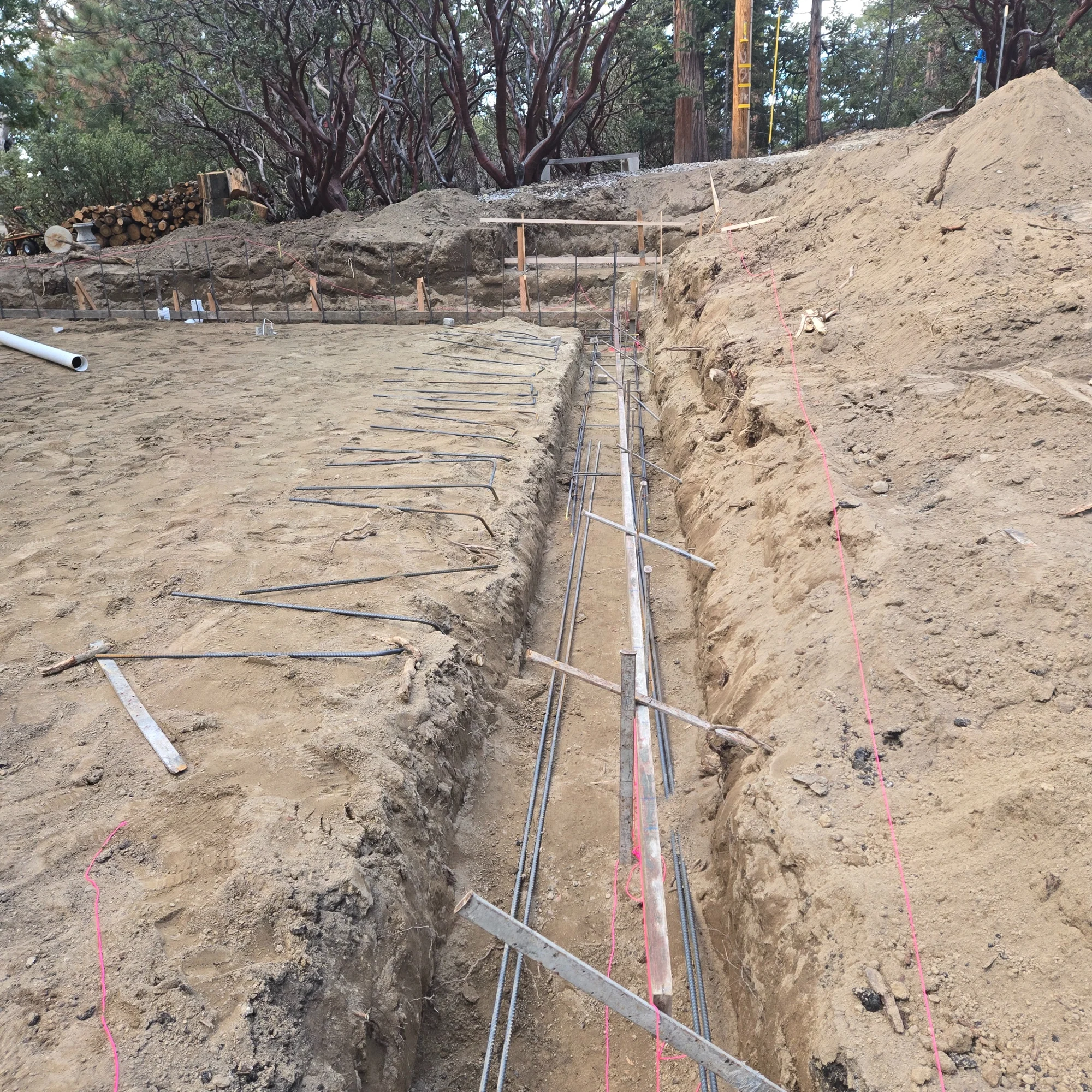
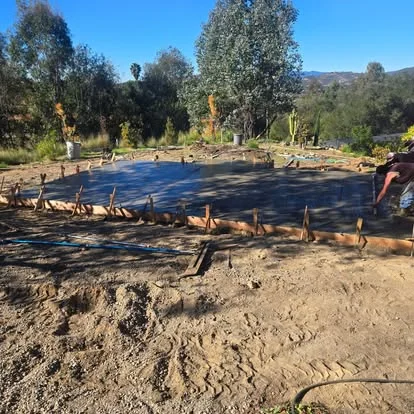
We cut to grade, fix the soft spots we find, and compact base in lifts before anything is formed. In expansive clay that step decides the whole outcome, so it is not where we save money.
Steel sized to the movement
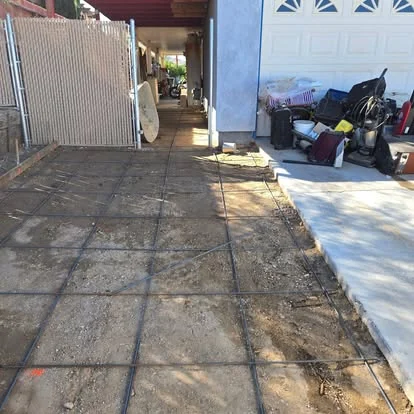
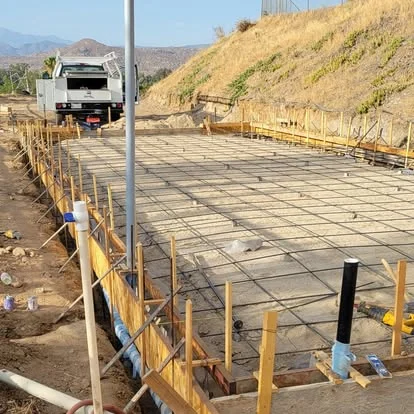
Reinforcement gets placed for what the soil is going to do, on chairs at the right height with real cover. Steel lying on the dirt does nothing at all.
Cleanup is part of the job
Washout handled properly, spoil hauled, surfaces cleaned. Concrete work is messy while it happens and should be invisible when it is done.
What we build in Redlands
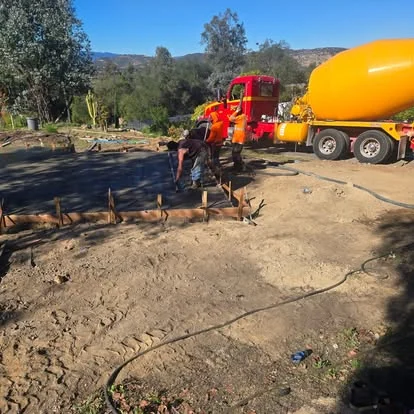
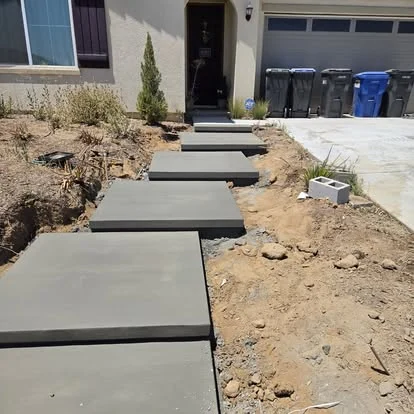
Concrete Stairs
A formed flight that carries load and holds its geometry.
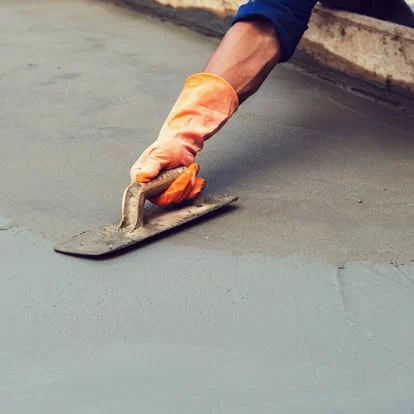
Front Porches
The first slab anybody sees.

Back Porches
The slab that gets lived on.
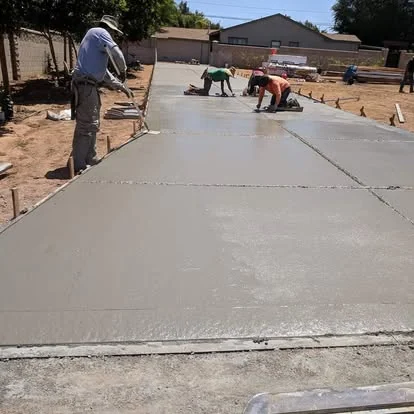
Concrete Courtyards
An enclosed slab where drainage has nowhere obvious to go.

Concrete Slabs
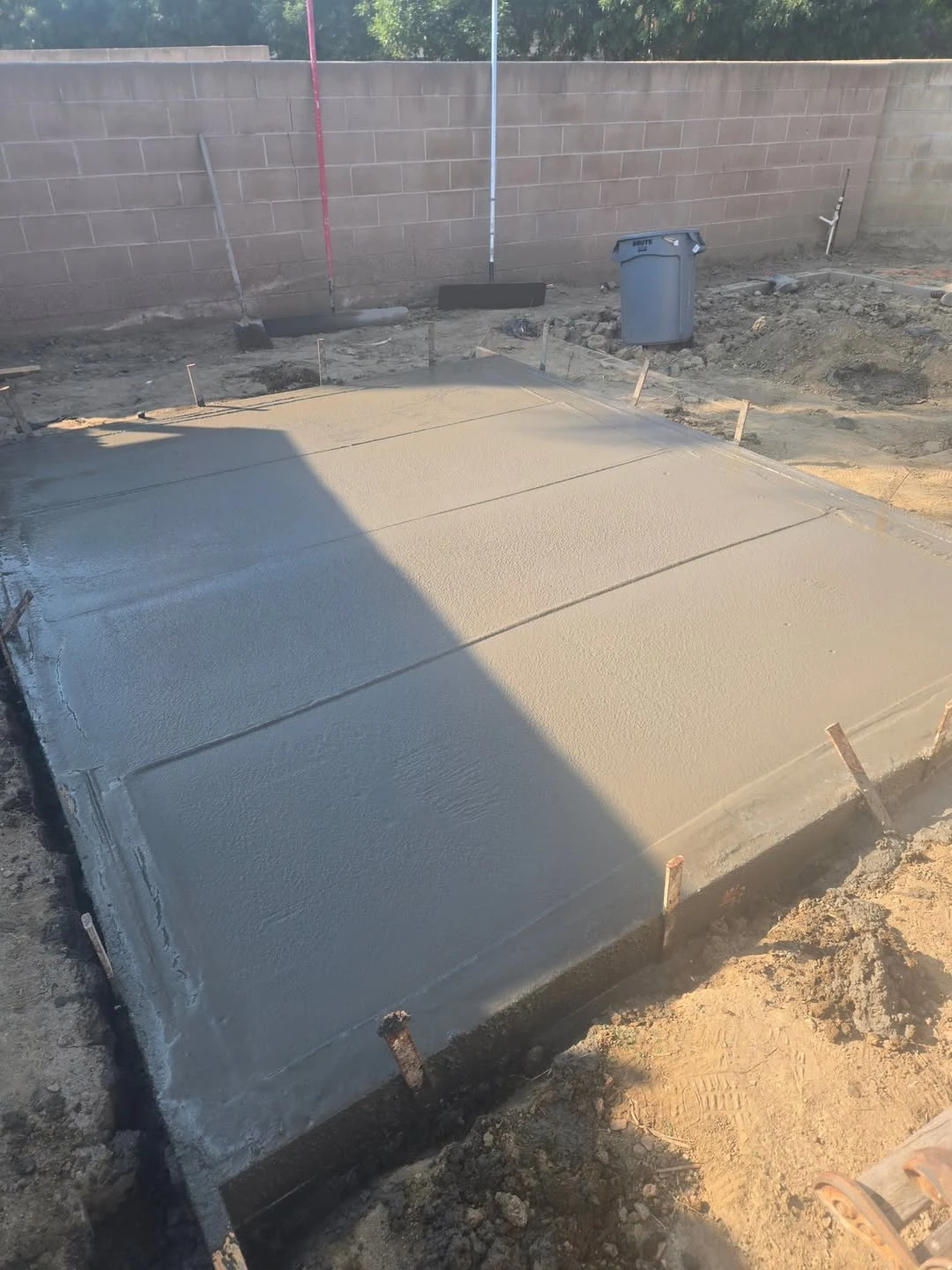
The flat pour everything else is a version of.
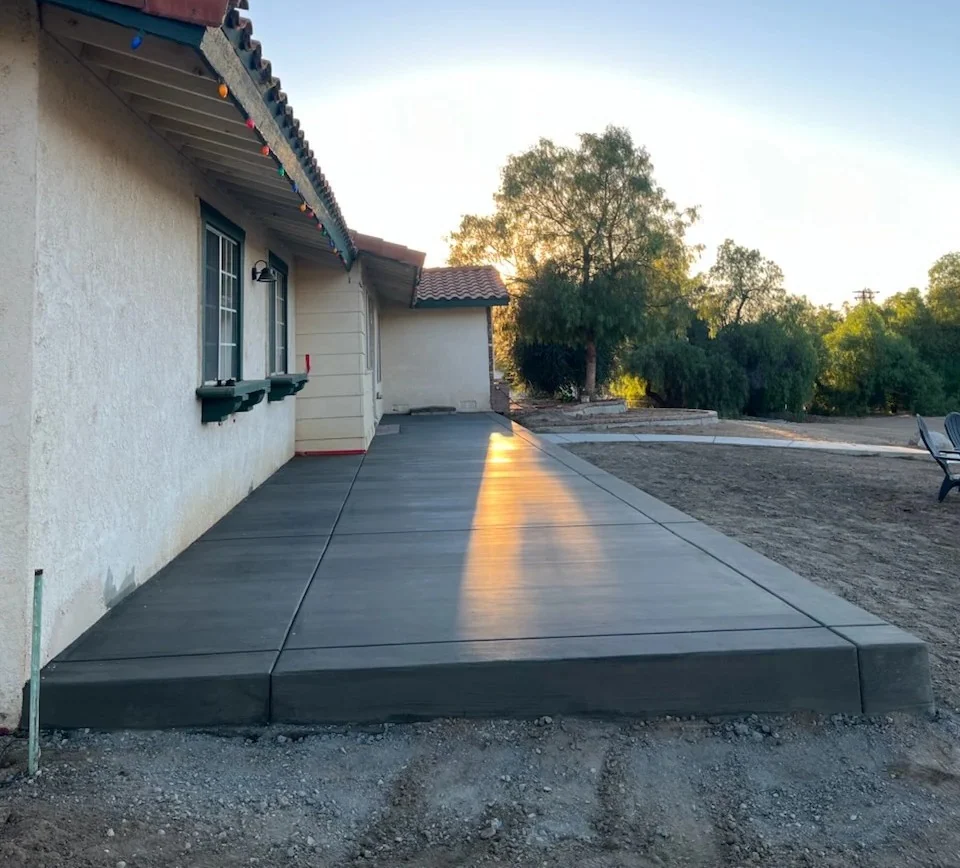
Concrete Slab Repair
Cracks and surface failure on a slab worth keeping.
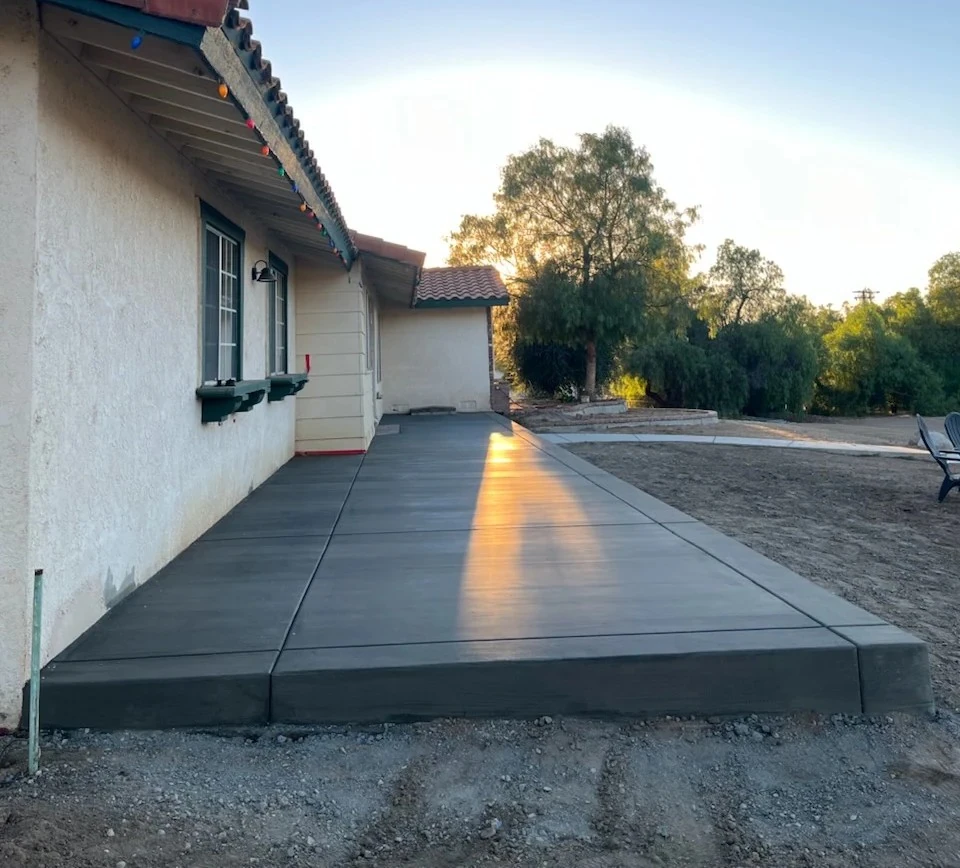
Concrete Replacement
Out with the old slab, in with one built right.
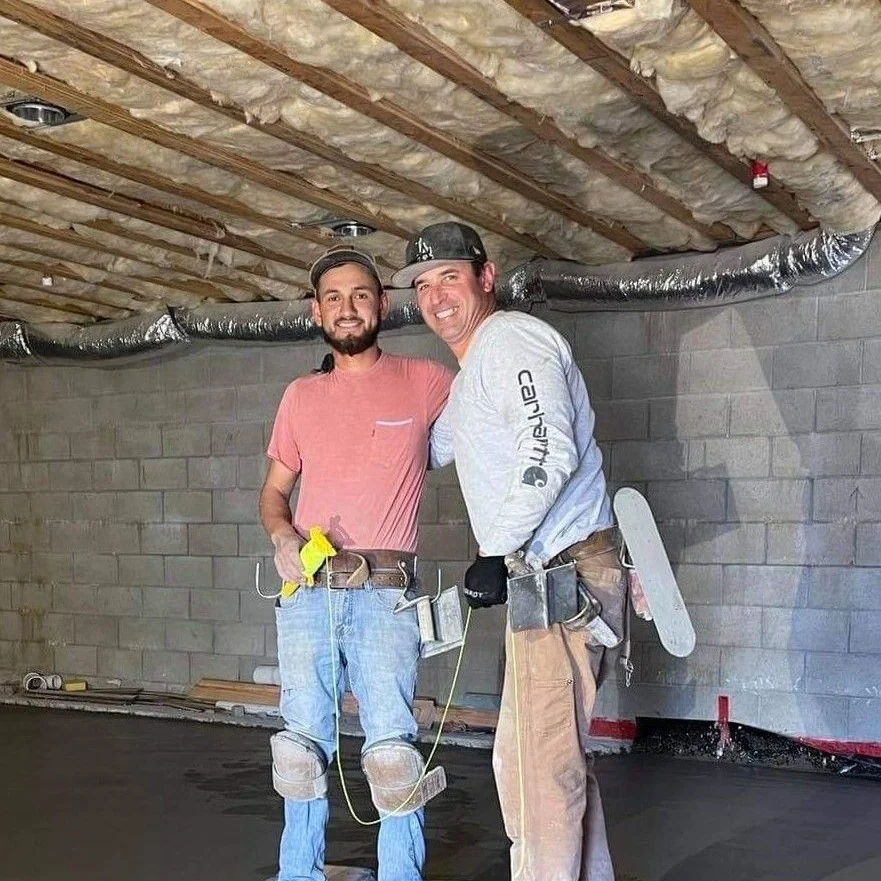
Concrete Removal
Break it out, haul it off, leave it clean.
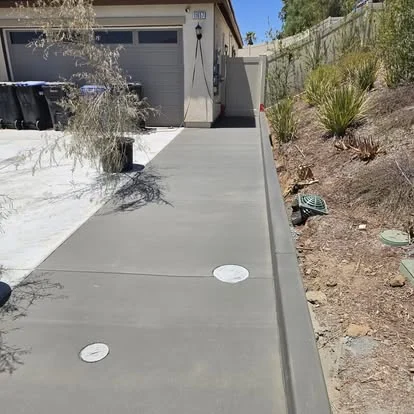
Concrete Demolition
Controlled demolition, including reinforced sections.
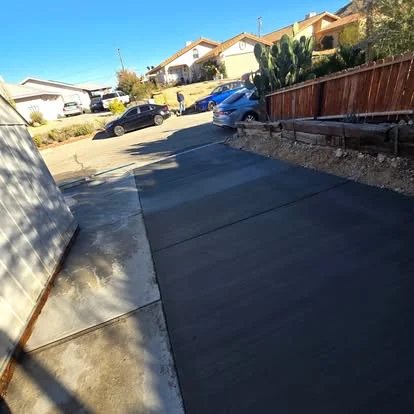
Concrete Aprons
The transition slab that takes the worst of it.
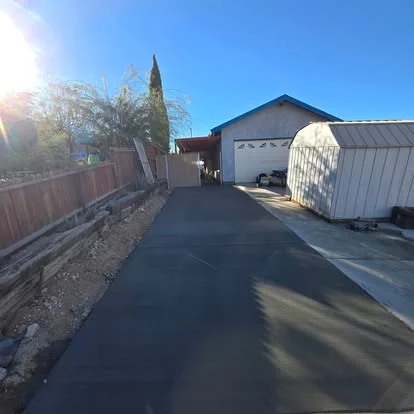
Drive Approaches
Where private property meets the public street.
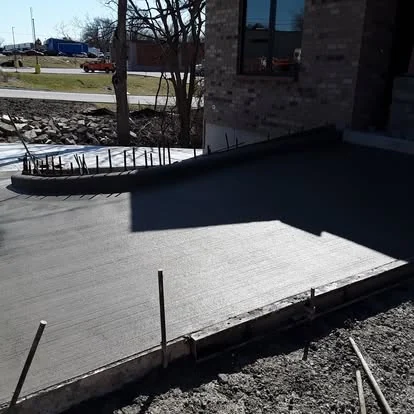
Concrete Curbs
Extruded or formed, straight and true.
Pouring concrete around Redlands
Irrigation against the slab
Almost every valley property waters something, and sprinklers running along a slab edge keep the base saturated year round. In expansive soil that is a slow way to undermine your own driveway. Where the water lands is worth looking at before blaming the concrete.
What the ground does here
The inland valleys run on expansive clay. It takes on water and swells, then dries out and shrinks, and it does that cycle every year. A slab poured on untreated clay rides that movement until something gives, which is why base preparation and reinforcement are the design rather than an upgrade. Where a soils report exists we build to it; where there is none, what we find during excavation tells us what the ground is going to do.
Older flatwork around here
A lot of valley concrete was poured thin, with light reinforcement, on a base that was never properly compacted. When it fails it is usually reporting on the ground rather than on the mix, and that is the difference between a repair that holds and one that comes back in a year.
Summer pours
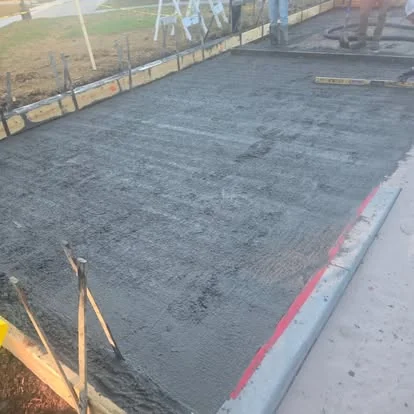
Triple digit afternoons change how concrete behaves. It stiffens before it can be finished properly, the surface skins over while the body underneath is still soft, and water leaves the slab faster than the cement can use it. Valley pours start early, the mix gets adjusted for the heat, and curing is treated as an active step instead of something that happens on its own.
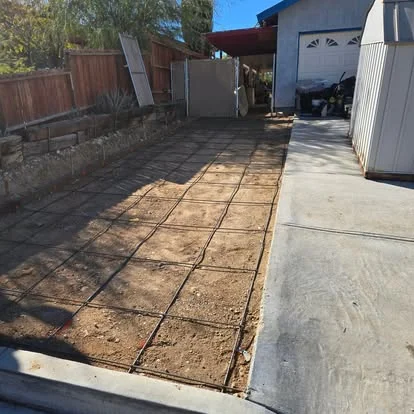
Concrete work around Redlands
Flatwork, foundations and repair across Redlands and the rest of San Bernardino County, poured by the same crew that answers the phone.
How concrete fails, and why
Cracks along a plumbing run
A trench under a slab that was not compacted is a soft line, and the slab cracks along it. Compaction in the trench matters as much as in the open.
Glazed surfaces that are slippery when wet
Over-troweling closes the surface to a polish. Indoors that can be a choice; on an exterior walk it is a hazard.
Deterioration under planters
Soil and constant moisture held against concrete leaches it and stains it. Anything permanently wet against a slab shortens its life.
Repairs that do not match
A repair poured with a different mix, finished differently, or cured differently will always read as a patch. Matching the finish and joint pattern is part of the job.
How a job runs
The walkthrough
Somebody comes out and looks. That visit decides the scope, and it is also when you should ask everything, because the answers get cheaper before the concrete is ordered.
What you decide
Finish, color, joint layout and edge detail are choices. We will make recommendations based on where the slab is and what it has to do.
Almost every failure we get called to look at is base, not concrete.On diagnosis
What we decide
Thickness, base, steel and mix come off the load and the soil. Those are not preference items and we will not build them thin to win a job.
Handover
You get told how to look after it: when to seal, what not to put on it, and what normal looks like in the first year.
Around Redlands
Straight answers
Should I worry about hairline cracks in the first month?
Usually not. Concrete gives up water as it cures and gets slightly smaller doing it, and fine shrinkage cracking in that window is the material behaving normally. Anything that widens or lifts is different, and worth a call.
Do you handle the demolition and haul-off?
Yes. Saw cutting to a clean line, breaking out, loading and hauling is part of the job, and we protect what stays and leave the ground ready for the new pour.
Can you match the concrete I already have?
Usually close, rarely exact, because concrete changes color as it ages. We match thickness, finish and joint pattern so the result reads as one surface rather than a patch.
Does the clay soil here really matter that much?
Yes. Expansive clay swells with water and shrinks when it dries, every year. That movement is what cracks slabs and foundations, and it is handled in the base, the reinforcement and the drainage rather than in the finish.
My sprinklers run along the driveway. Is that a problem?
It can be. Constant water at a slab edge keeps the base saturated, and in expansive soil that undermines the concrete from underneath. Where the water lands is worth looking at before blaming the slab.
Your Redlands slab
Tell us what it is and what it has to carry. We will be straight about what it needs and what it does not.