

Built for Pinon Hills ground
The soil and the weather here decide how a slab is built. Driveways, patios, slabs and foundations across Pinon Hills, licensed 1137822.
Talk to us about the job
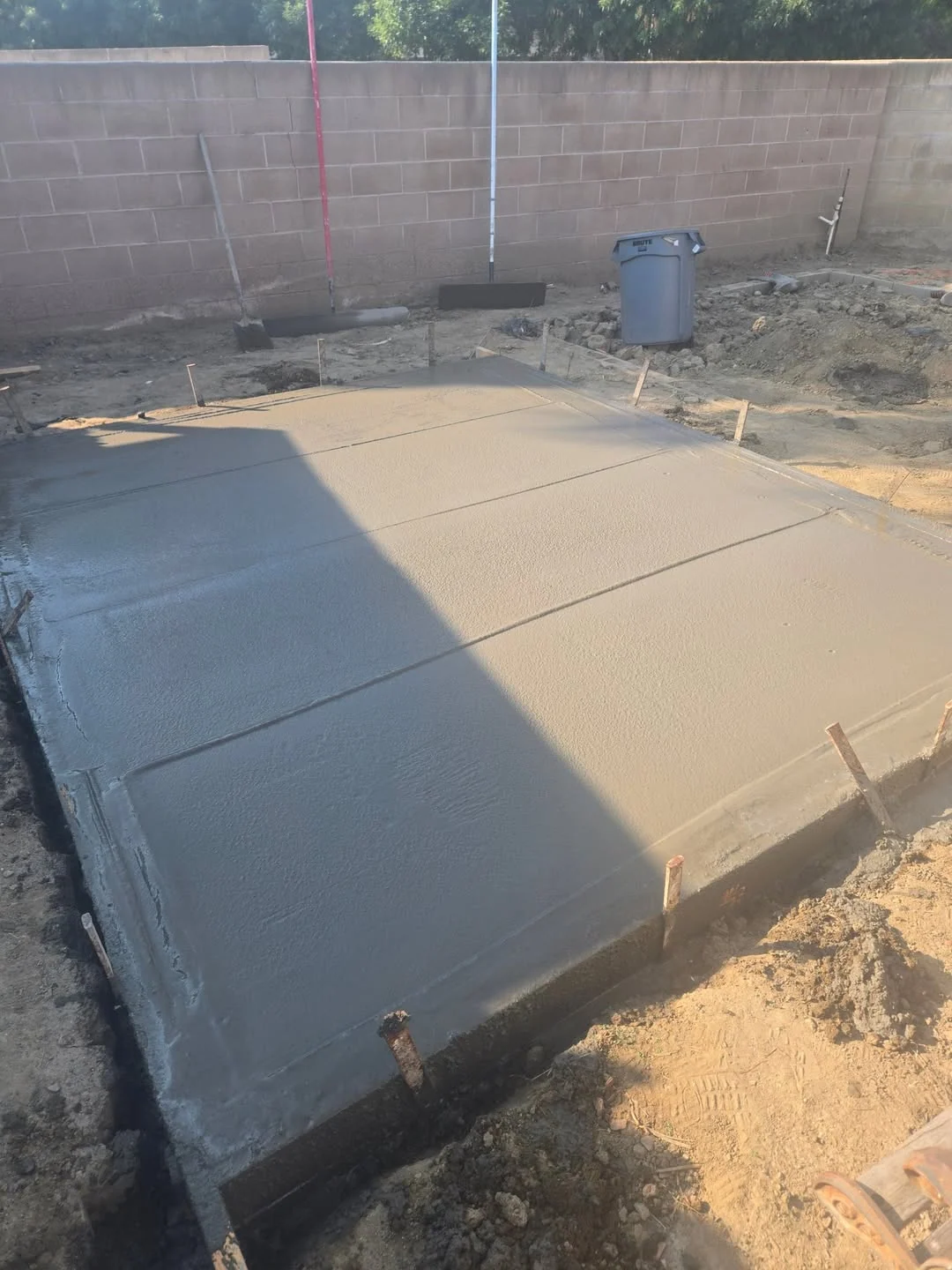
What concrete is up against around Pinon Hills
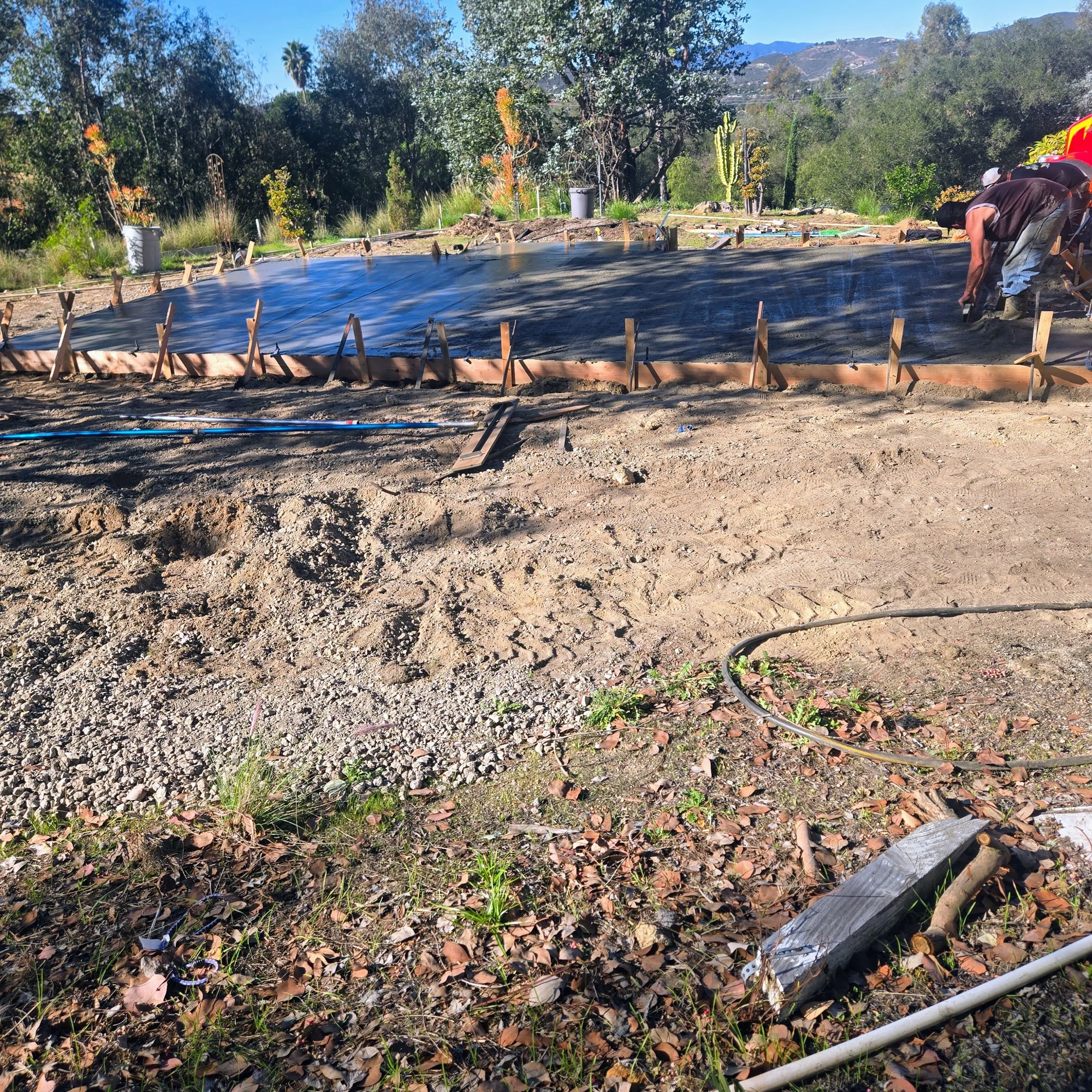
Heat and cold in the same year
High desert concrete takes triple digit summers and hard freezes in the same twelve months. It has to be designed for both, which means air entrainment where it matters and joints that allow real movement.
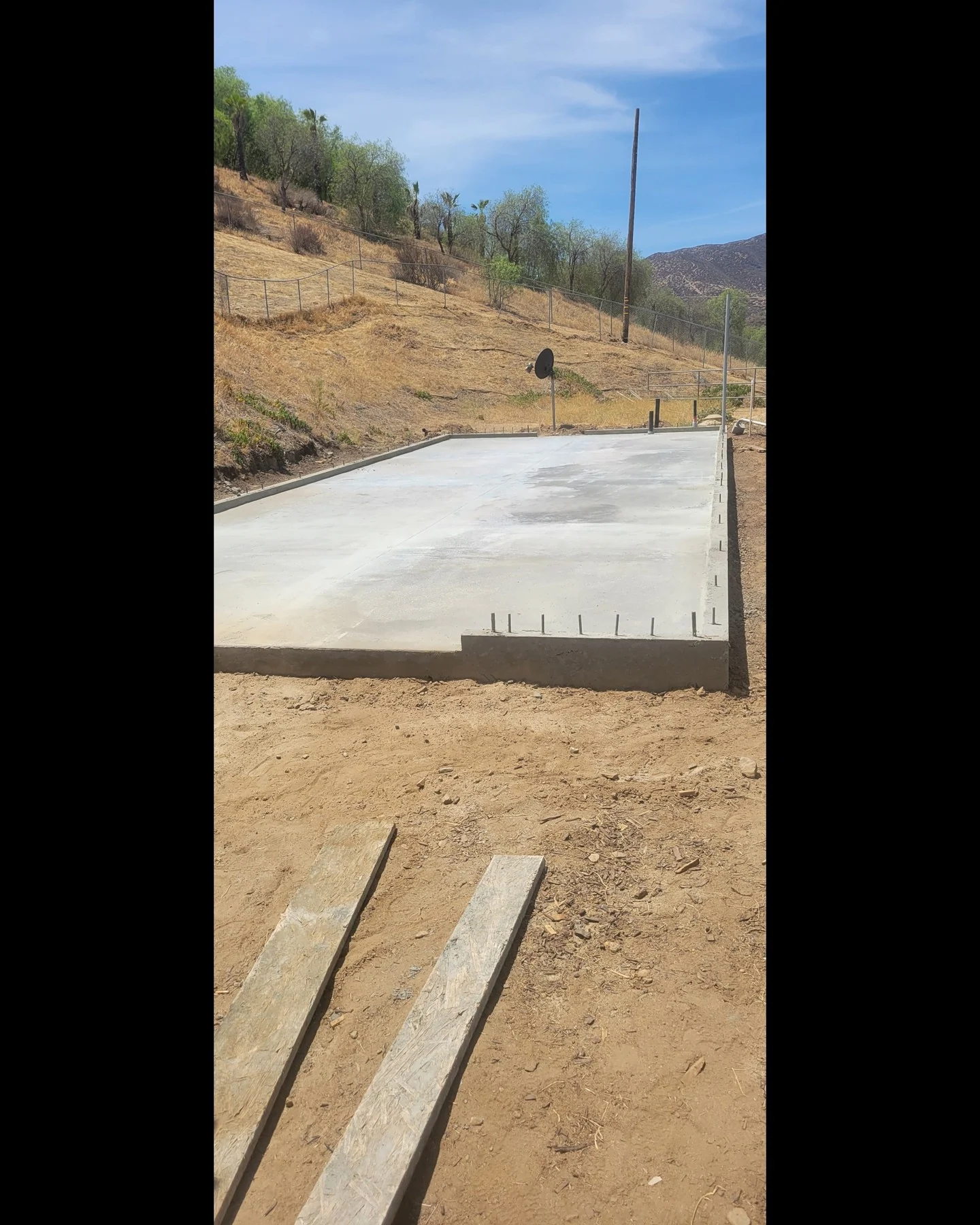
Sealing actually matters here
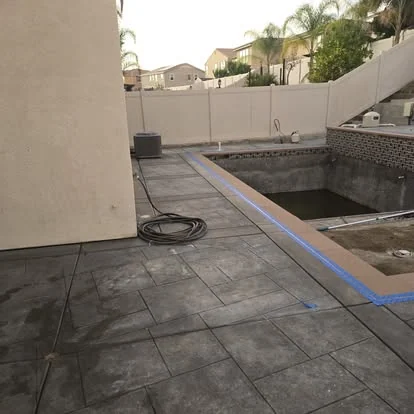
Where freeze cycling is real, keeping water out of the pores is the difference between a slab that lasts and one that spalls. Sealing is maintenance that pays for itself at this elevation.
Long runs and long cracks
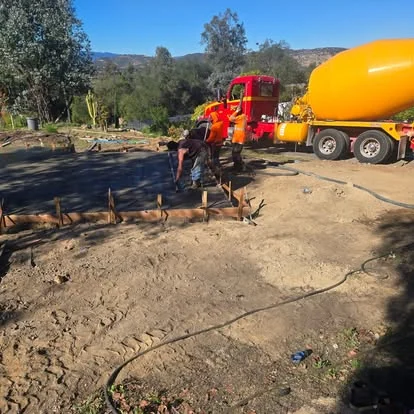
High desert lots are often big, which means long driveways and long slabs. Length multiplies movement, so joint spacing and layout matter more than on a small urban pad.
Water routed off the slab
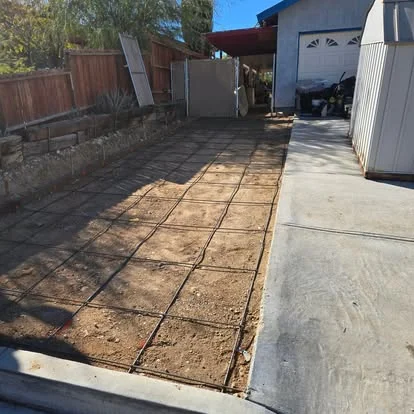
Slopes, low points and a path for water to leave are set before the pour, because afterward the drainage is permanent.
Cleanup is part of the job
Washout handled properly, spoil hauled, surfaces cleaned. Concrete work is messy while it happens and should be invisible when it is done.
Steel sized to the movement
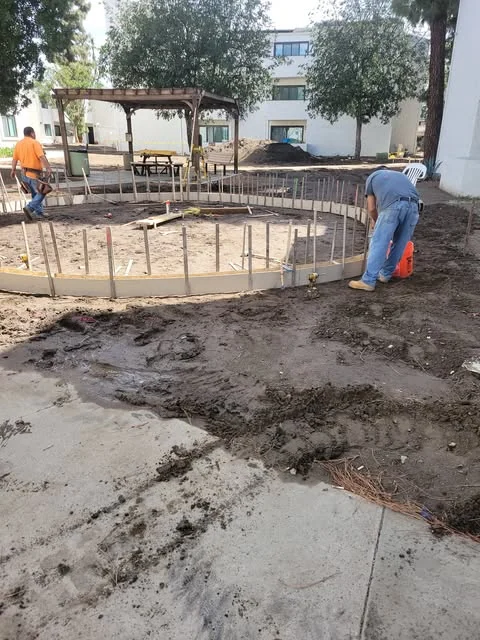
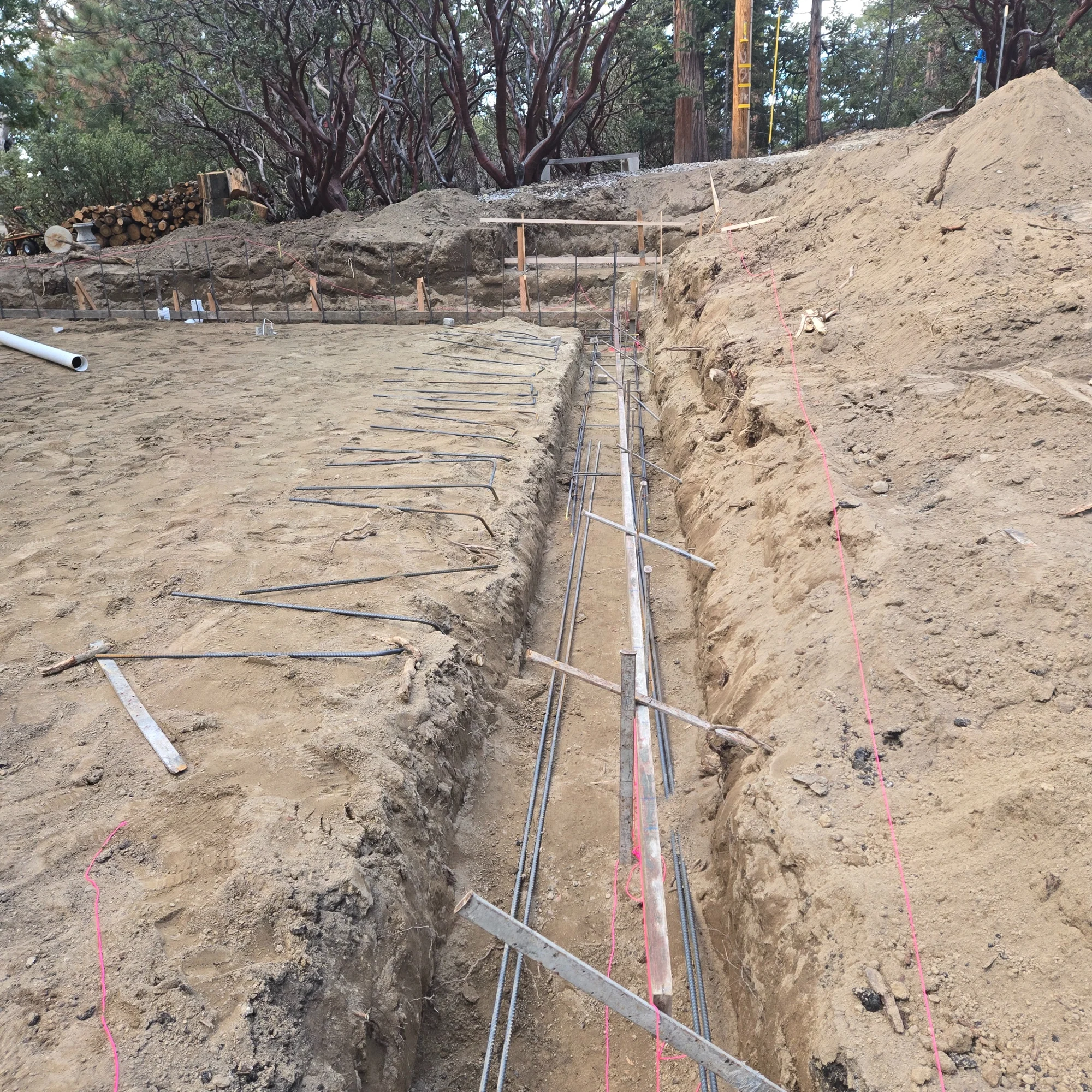
Reinforcement gets placed for what the soil is going to do, on chairs at the right height with real cover. Steel lying on the dirt does nothing at all.
What we build in Pinon Hills
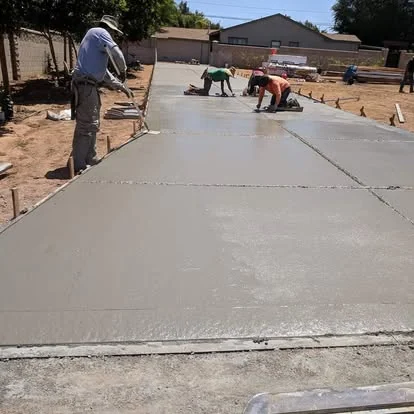
Garage Floors
Hot tires, dropped tools, and whatever ran off the car.
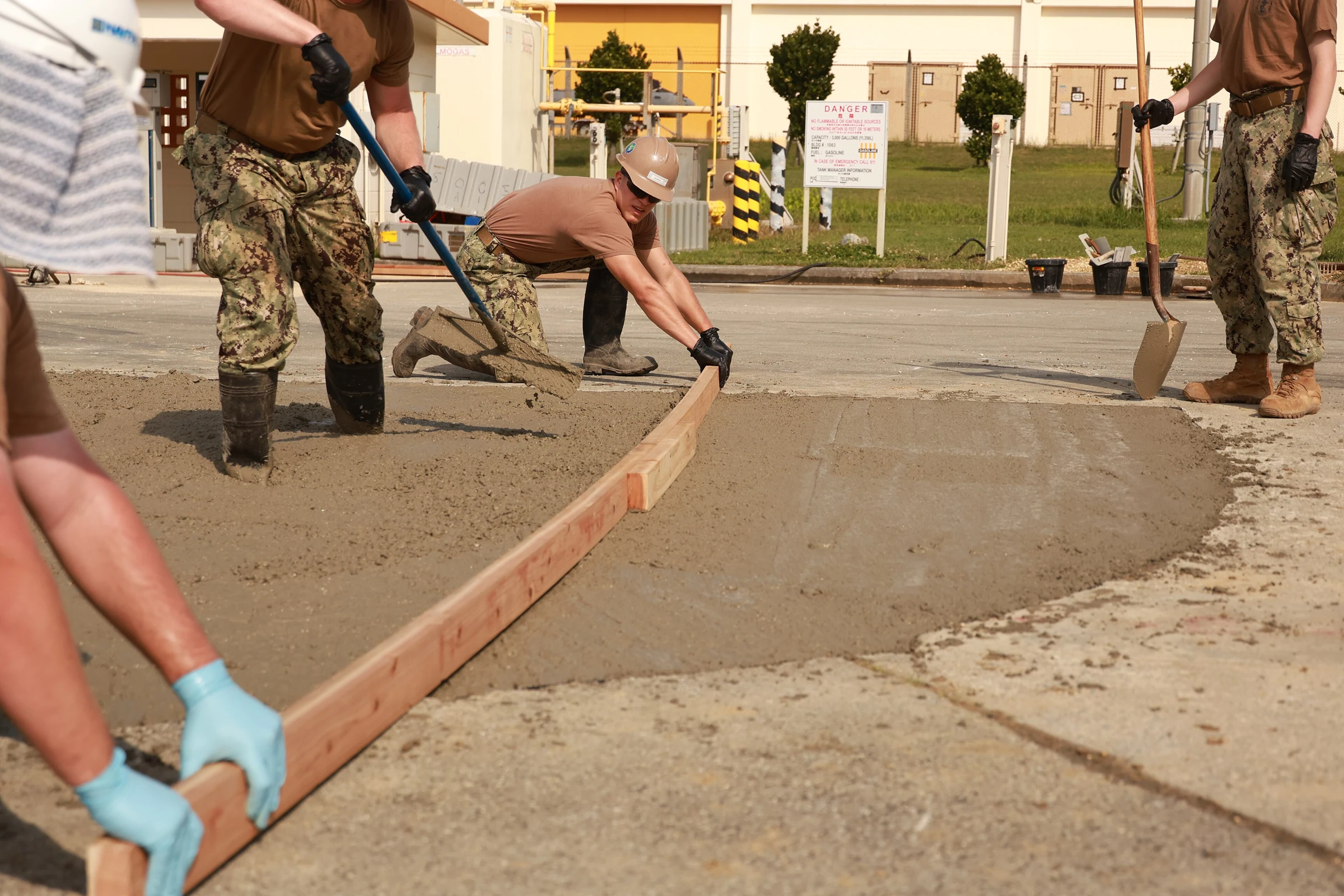
Garage Aprons
The strip between the driveway and the garage door.
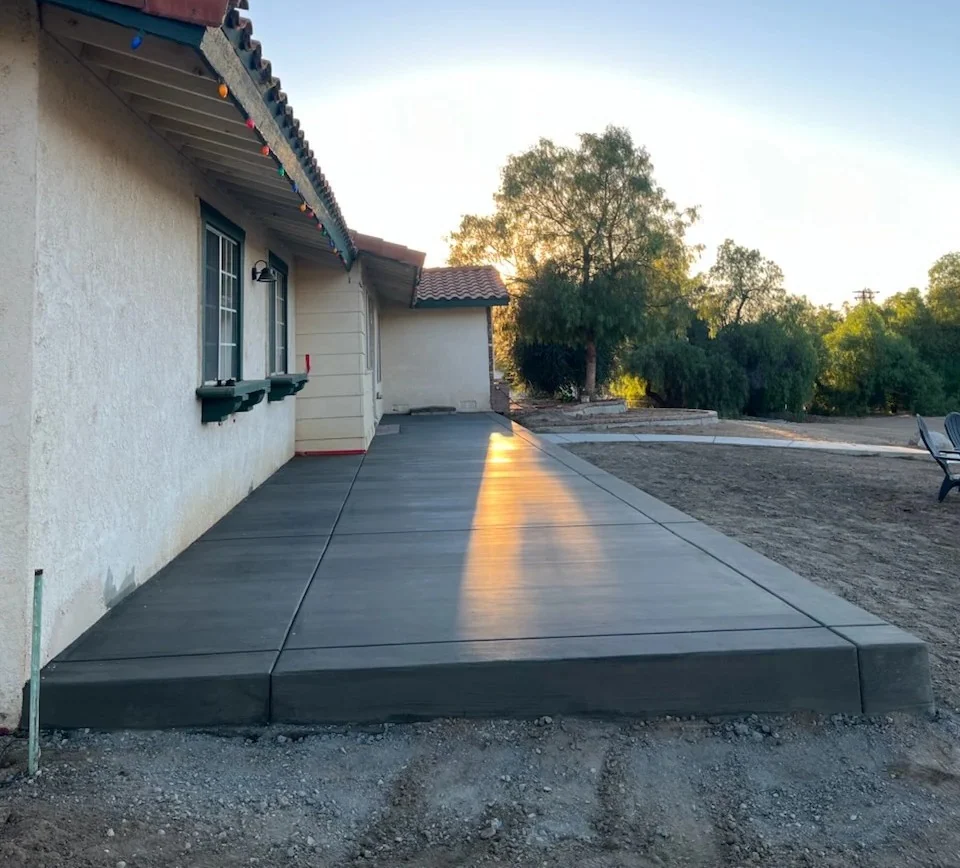
Basement Floors
A slab poured inside, where moisture has nowhere to go.
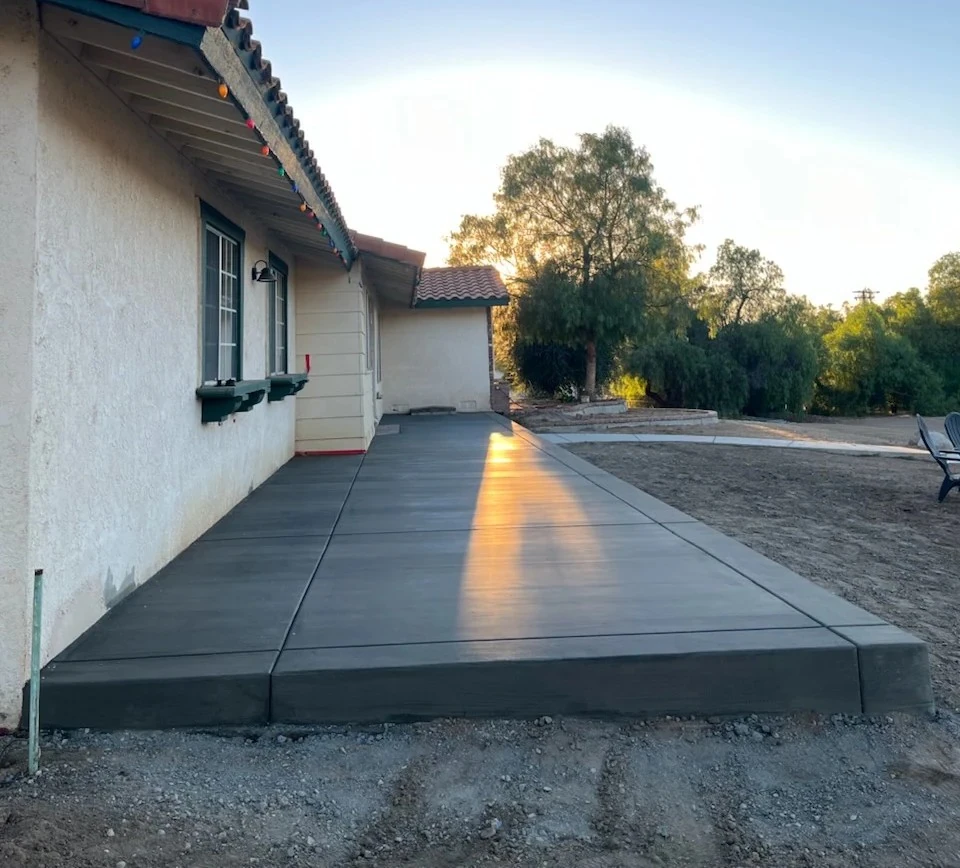
RV Pads
Heavy, concentrated, parked in one place for months.
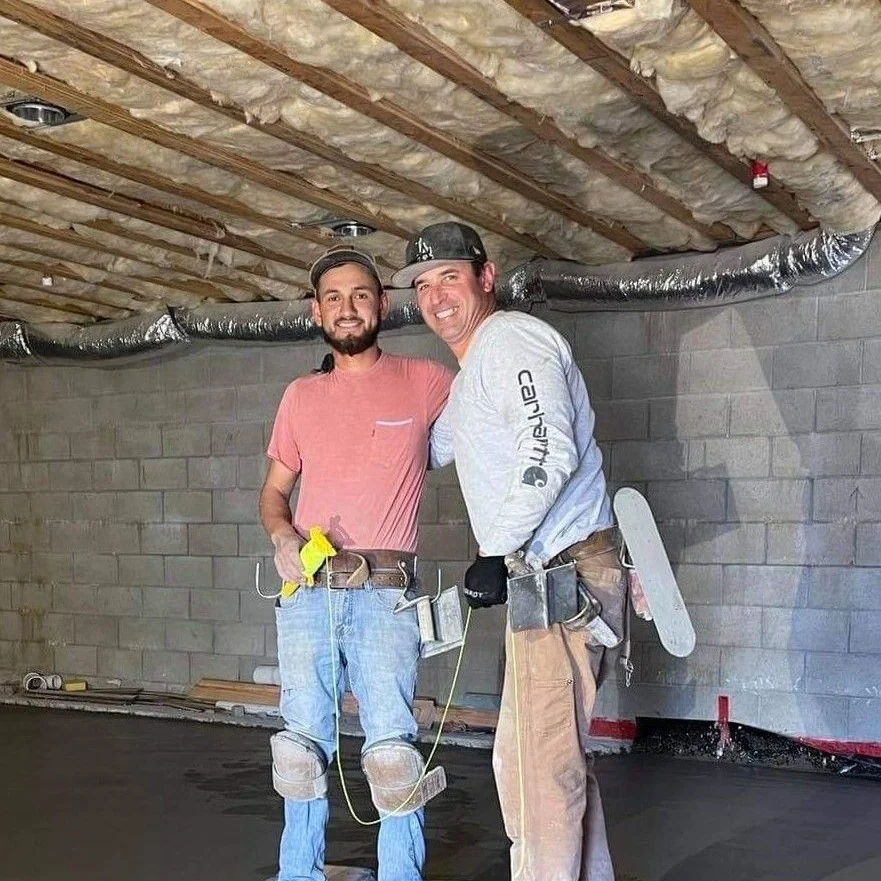
Boat Pads
Trailer tongue weight and a slab that has to stay level.
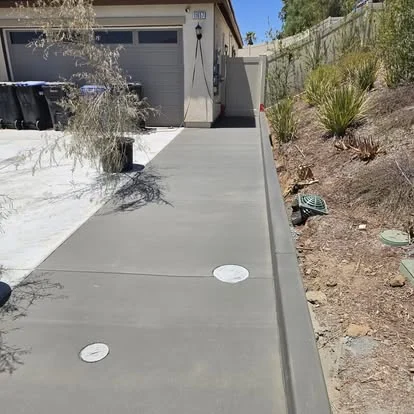
Parking Pads
Extra parking that is not the driveway.
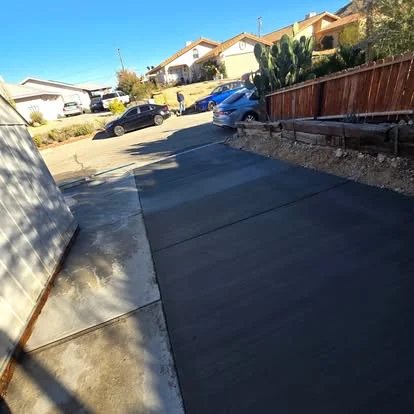
Spalled Concrete Repair
Surface flaking down to the aggregate.
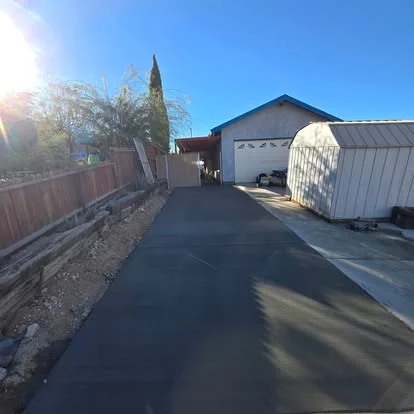
Settled Concrete Repair
The slab dropped because something under it did.
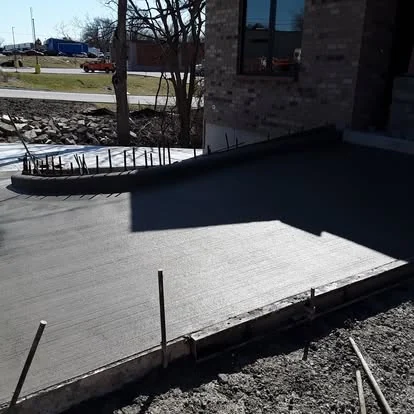
Uneven Concrete Repair
Lips, trip hazards, and panels out of plane.
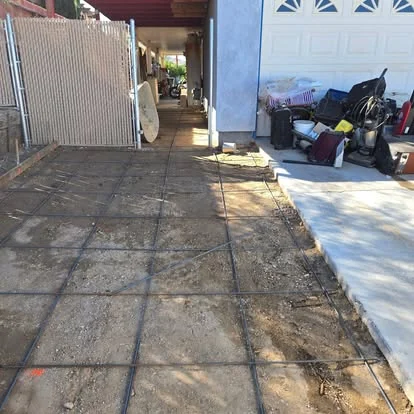
Commercial Concrete Flatwork
Flatwork built to a plan set and an inspection.
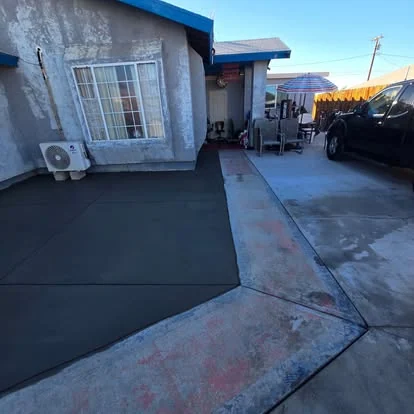
Commercial Concrete Slabs
Slabs sized for racking, equipment, and forklifts.
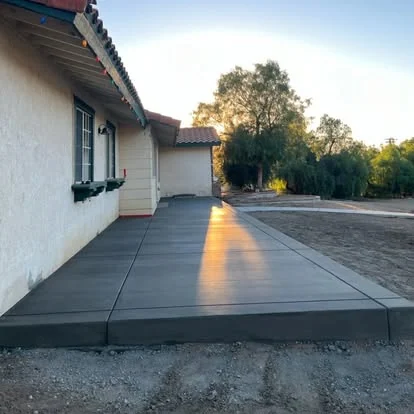
Commercial Concrete Foundations
Footings and stem walls under a commercial structure.
Pouring concrete around Pinon Hills
Long runs on big lots
High desert properties are often large, which means long driveways and big slabs. Length multiplies movement, so joint spacing and layout matter more here than on a small urban pad, and a long drive poured without a joint plan will crack wherever it likes.
Wind and the finishing window
Sustained wind combined with very low humidity pulls water out of fresh concrete fast enough to close the finishing window early and craze the surface. Pours get planned around the forecast, not just the calendar.
Freeze and thaw is real at this elevation
The high desert genuinely freezes, and that changes the concrete conversation completely. Water gets into the pores, freezes, expands and works the surface apart from inside. Over a decade that is the difference between a sound slab and a pitted, spalling one. Air entrainment and sealing both matter here in a way they do not down in the valley.
Distance and delivery
Some of these properties are a long way from a batch plant, which affects the delivery window and how a pour gets staged. That is worth planning honestly up front rather than discovering it with a truck on site.
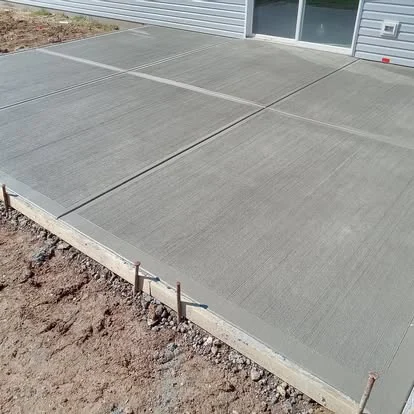
Concrete work around Pinon Hills
Flatwork, foundations and repair across Pinon Hills and the rest of San Bernardino County, poured by the same crew that answers the phone.
How concrete fails, and why
Cracks after a hot pour
Concrete placed into extreme heat stiffens before it can be finished properly and shrinks harder as it cools. Hot weather practice exists for exactly this reason.
Wide joints that collect debris
Joints that were cut too wide or have lost their sealant fill with grit, which then prevents the slab from closing and spalls the joint edges.
A patch that failed
New material on old concrete only holds if the substrate was prepared and a bonding agent used. A patch troweled onto a dusty surface lets go within a season.
Movement at a retaining wall
Retaining walls fail from water pressure behind them more often than from the soil weight. Drainage behind the wall is the design.
How a job runs
The soil question
In expansive clay the soil drives the design. If there is a soils report we build to it; if not, what we find during excavation informs the base work.
Drainage
Where water goes gets decided before the pour, because afterward it is permanent. That sometimes means changing the plan to fix a problem you already had.
A slab with no cracking plan will still crack. It just picks the place.On control joints
Joint layout
Joints are planned on paper and cut on time. Where they land is partly structural and partly how the finished slab reads.
Maintenance
Concrete is low maintenance, not no maintenance. Sealing and joint upkeep are the two things worth doing.
Around Pinon Hills
Straight answers
Is sealing worth it here?
More than anywhere else we work. Where freeze cycling is real, keeping water out of the pores is the difference between a slab that lasts and one that spalls.
Is delivery a problem this far out?
It can affect the window and how the pour is staged. We plan it honestly rather than discovering it with a truck on site.
Do you handle demolition and haul-off?
Yes, cut clean, broken out, loaded and hauled, with the ground left ready for the new pour.
Why does my driveway surface flake?
That is scaling, and at this elevation it is usually freeze damage in concrete that was not air entrained or was left unsealed. Repair means getting off everything loose and bonding new material properly.
My lot is large. Does that change anything?
Length multiplies movement, so a long driveway needs a real joint plan. Poured without one it will crack wherever it likes.
Get a number for your Pinon Hills job
Tell us what you are building. Somebody comes out, reads the site, and prices what it actually needs rather than what fits a template.