

Concrete work across Needles
From a single pad to a full foundation. We cover Needles and the rest of San Bernardino County out of Hemet, with 32 years in the trade and a license to back it.
Talk to us about the job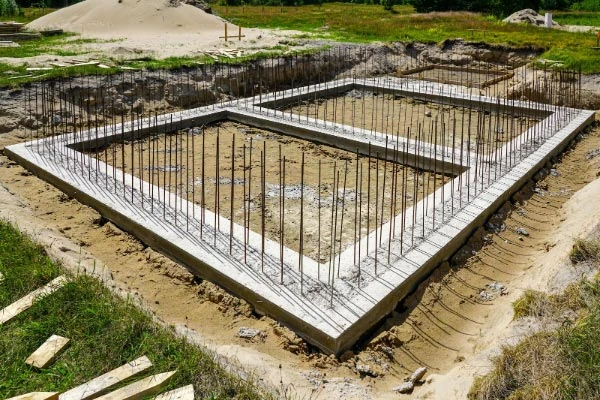
What concrete is up against around Needles
Winter scheduling
Placing concrete into a hard freeze is how you get a slab that never cures properly. Cold weather pours either get protection or get rescheduled.
Access and haul distance
Some of these properties are a long way from a plant. That affects the delivery window and how the pour is staged, and it is worth planning honestly instead of discovering it with a truck on site.
Long runs and long cracks
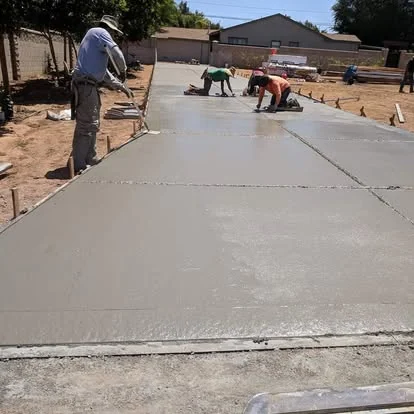
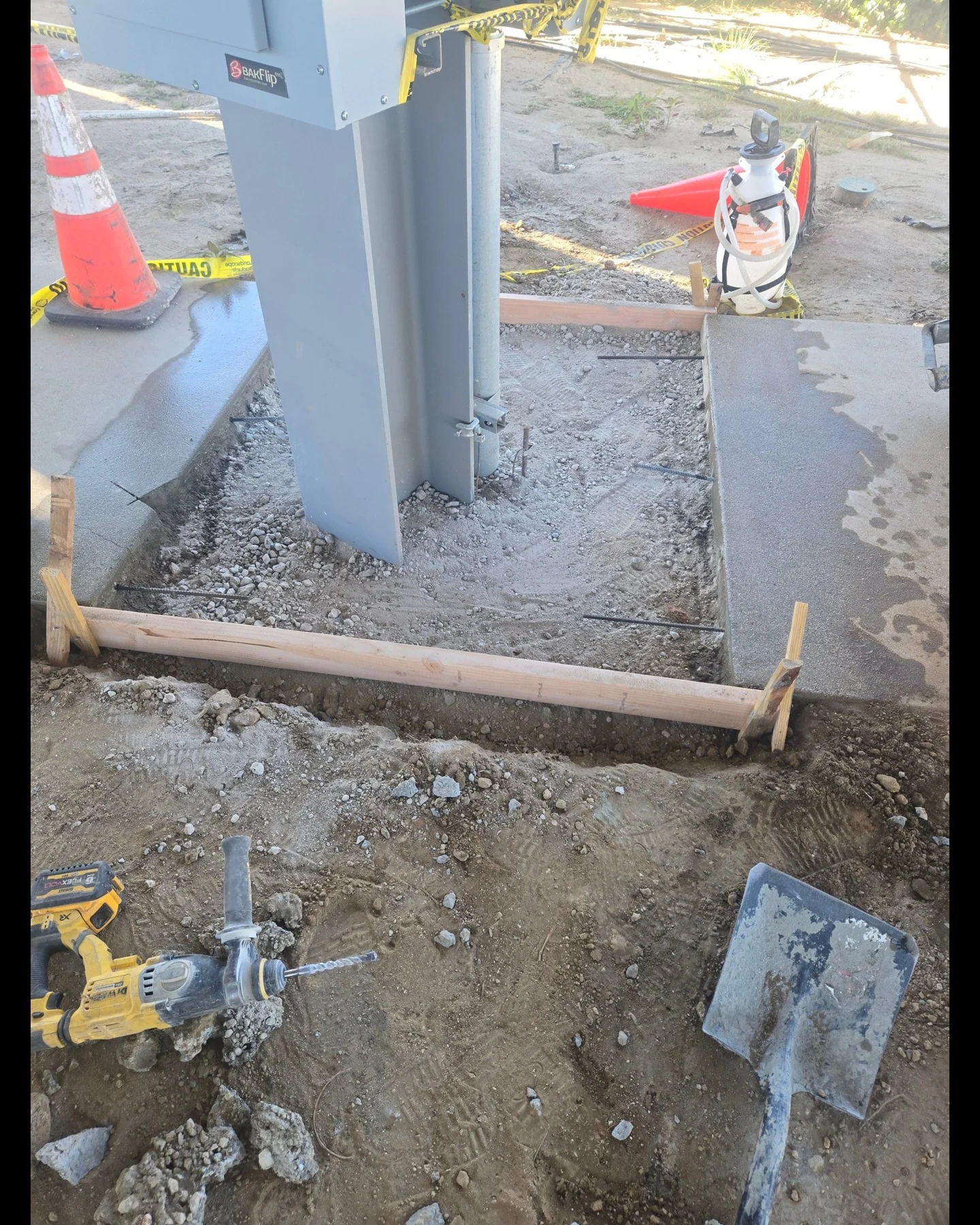
High desert lots are often big, which means long driveways and long slabs. Length multiplies movement, so joint spacing and layout matter more than on a small urban pad.
Joints planned on paper
Joint layout gets worked out before the pour, spaced to the thickness and placed where the slab wants to move anyway. Then it gets cut at the right time.
Pours scheduled to the heat
In summer we start early and keep the mix and the crew ahead of the temperature. Concrete does not wait for anybody.
Honest diagnosis before a number
We look at what failed and why before quoting. Sometimes the answer is a repair and sometimes it is a rebuild, and we will tell you which even when the smaller job is ours to lose.
What we build in Needles
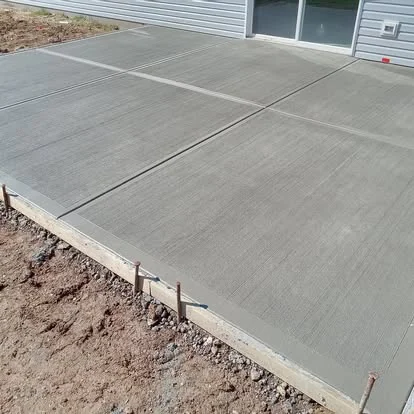
Concrete Slabs
The flat pour everything else is a version of.
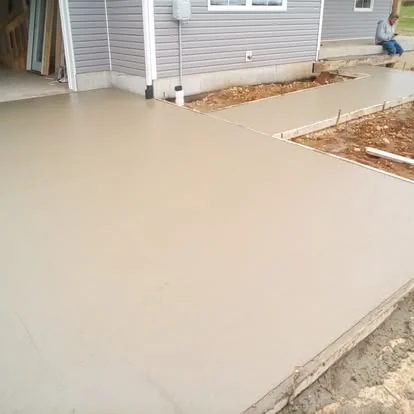
Concrete Slab Repair
Cracks and surface failure on a slab worth keeping.
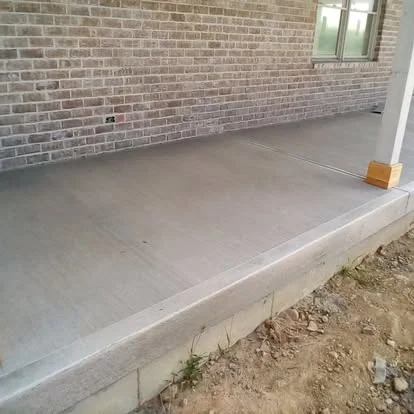
Concrete Slab Replacement
When the base failed, the slab follows.
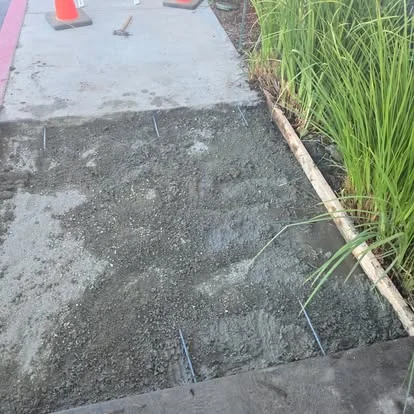
Garage Floors
Hot tires, dropped tools, and whatever ran off the car.
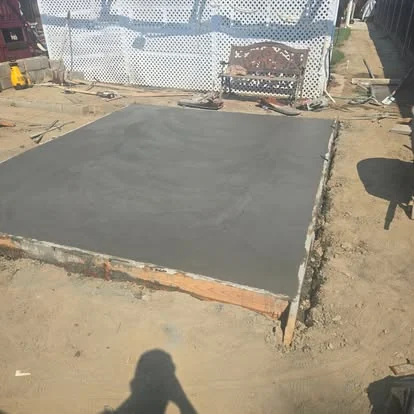
Garage Aprons
The strip between the driveway and the garage door.
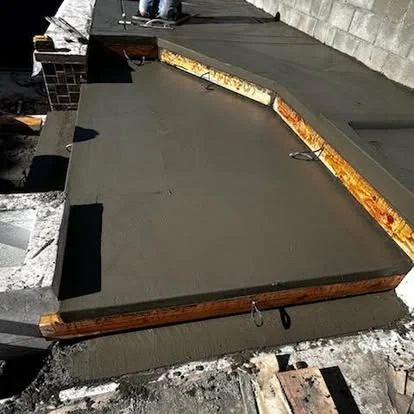
Basement Floors
A slab poured inside, where moisture has nowhere to go.
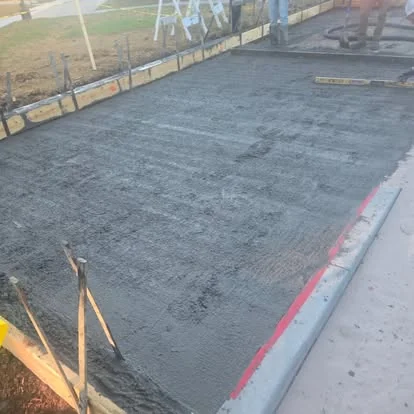
Concrete Sealing
Keeping water out of the pores.
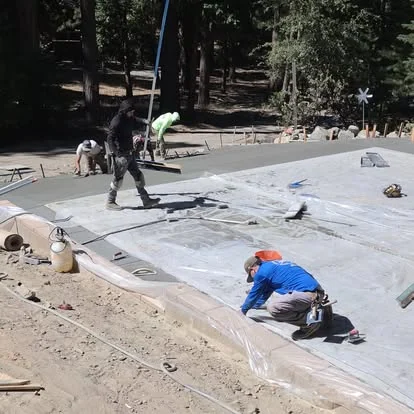
Concrete Replacement
Out with the old slab, in with one built right.

Concrete Removal
Break it out, haul it off, leave it clean.
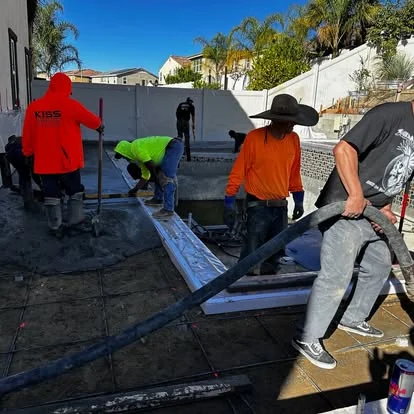
Industrial Concrete
Heavy concrete for working facilities.
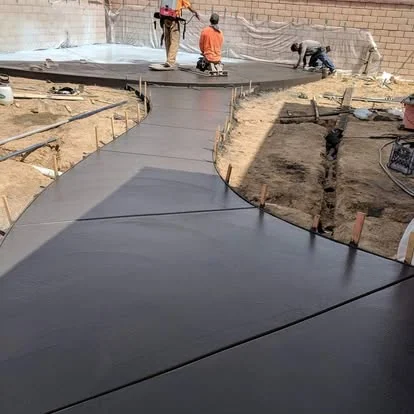
Tilt-Up Concrete
Panels cast flat on the slab, then stood up.
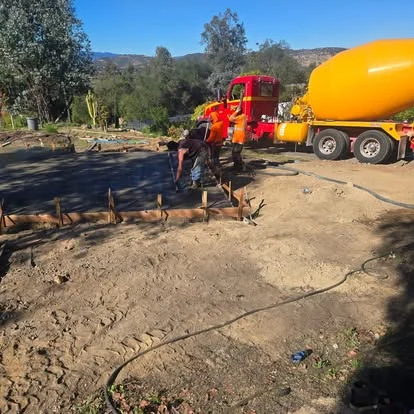
Concrete Drainage Channels
Formed channels that carry water on purpose.
Pouring concrete around Needles
Freeze and thaw is real at this elevation
The high desert genuinely freezes, and that changes the concrete conversation completely. Water gets into the pores, freezes, expands and works the surface apart from inside. Over a decade that is the difference between a sound slab and a pitted, spalling one. Air entrainment and sealing both matter here in a way they do not down in the valley.
Long runs on big lots
High desert properties are often large, which means long driveways and big slabs. Length multiplies movement, so joint spacing and layout matter more here than on a small urban pad, and a long drive poured without a joint plan will crack wherever it likes.
Distance and delivery
Some of these properties are a long way from a batch plant, which affects the delivery window and how a pour gets staged. That is worth planning honestly up front rather than discovering it with a truck on site.
Triple digits and hard freezes in one year
High desert concrete takes both extremes within twelve months, so it has to be built for both. That means the right mix, joints that allow real movement, and a sealing plan that gets followed rather than mentioned once.
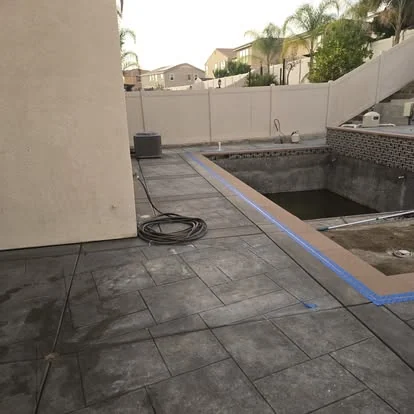
Concrete work around Needles
Flatwork, foundations and repair across Needles and the rest of San Bernardino County, poured by the same crew that answers the phone.
How concrete fails, and why
A slab that rocks
If you can feel movement walking across it, there is a void underneath. That is erosion, poor compaction, or soil that shrank away. Filling the void is the fix; replacing the slab without filling it is not.
Cracks that widen along their length
A crack that is hairline at one end and open at the other is reporting differential movement. That is a foundation and soil conversation, not a patching one.
Discolouration in patches
Blotchy color usually comes from inconsistent curing, adding water to part of a load, or finishing at different times across one pour. It is cosmetic and it is permanent.
Joint sealant failure
Open joints let water into the base, and the base is what holds the slab up. Resealing joints is cheap maintenance that prevents expensive failures.
How a job runs
The soil question
In expansive clay the soil drives the design. If there is a soils report we build to it; if not, what we find during excavation informs the base work.
Drainage
Where water goes gets decided before the pour, because afterward it is permanent. That sometimes means changing the plan to fix a problem you already had.
Steel lying on the dirt does nothing at all.On reinforcement
Joint layout
Joints are planned on paper and cut on time. Where they land is partly structural and partly how the finished slab reads.
Maintenance
Concrete is low maintenance, not no maintenance. Sealing and joint upkeep are the two things worth doing.
Around Needles
Straight answers
How does the wind affect a pour?
Sustained wind with very low humidity closes the finishing window early and crazes the surface. Pours get planned around the forecast, not just the calendar.
My lot is large. Does that change anything?
Length multiplies movement, so a long driveway needs a real joint plan. Poured without one it will crack wherever it likes.
Is delivery a problem this far out?
It can affect the window and how the pour is staged. We plan it honestly rather than discovering it with a truck on site.
What soil is under most of these lots?
Decomposed granite and alluvium, mostly. Worked in lifts it compacts into excellent base; dumped and raked flat it behaves badly.
How long before I can drive on it?
Foot traffic a day or two, vehicles longer, and cold weather stretches both. You get the real number for your pour.
Your Needles slab
Tell us what it is and what it has to carry. We will be straight about what it needs and what it does not.