

Concrete work across Costa Mesa
From a single pad to a full foundation. We cover Costa Mesa and the rest of Orange County out of Hemet, with 32 years in the trade and a license to back it.
Talk to us about the job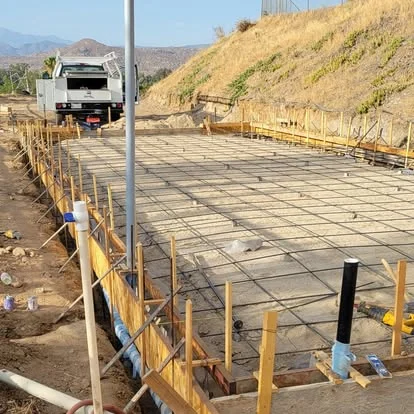

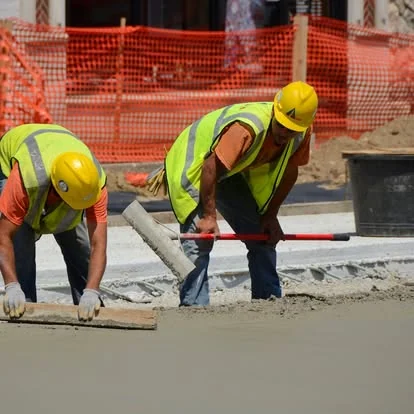
What concrete is up against around Costa Mesa
Older coastal slabs
A lot of coastal flatwork is decades old and was poured with less cover over the steel than we would use now. Rust staining and edge spalling usually mean the steel is going, not just the surface.
Salt air and the steel inside
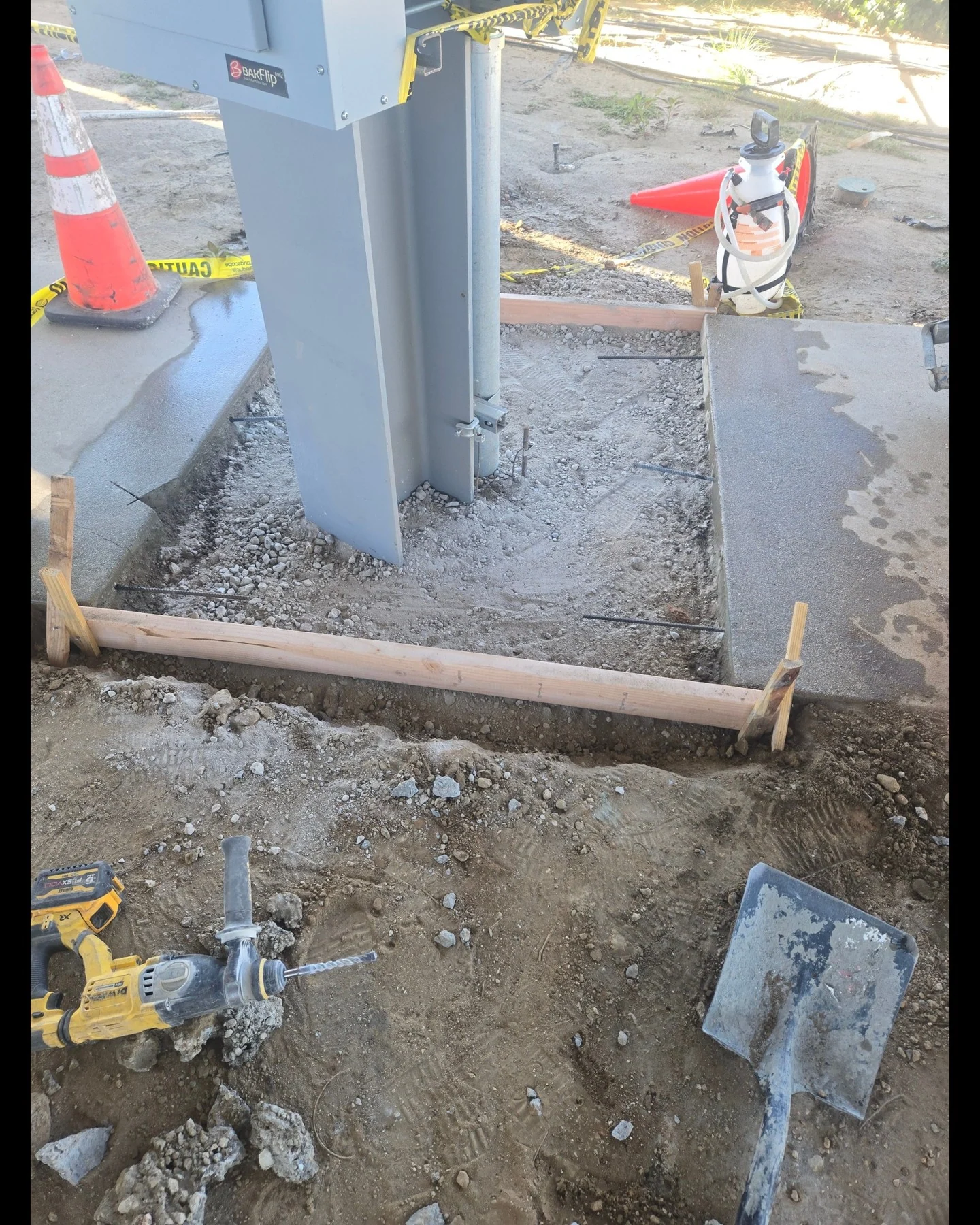
Marine air carries chloride inland for miles. Chloride gets through concrete to the reinforcing steel and corrodes it, and rusting steel expands and cracks the concrete off from the inside. Cover over the steel is the defense.
Mild temperatures, different problem
The coast does not give you the heat or the freezing that inland concrete fights. What it gives you is constant moisture and salt, which is a slower and more corrosive problem.
Joints planned on paper
Joint layout gets worked out before the pour, spaced to the thickness and placed where the slab wants to move anyway. Then it gets cut at the right time.
Steel sized to the movement
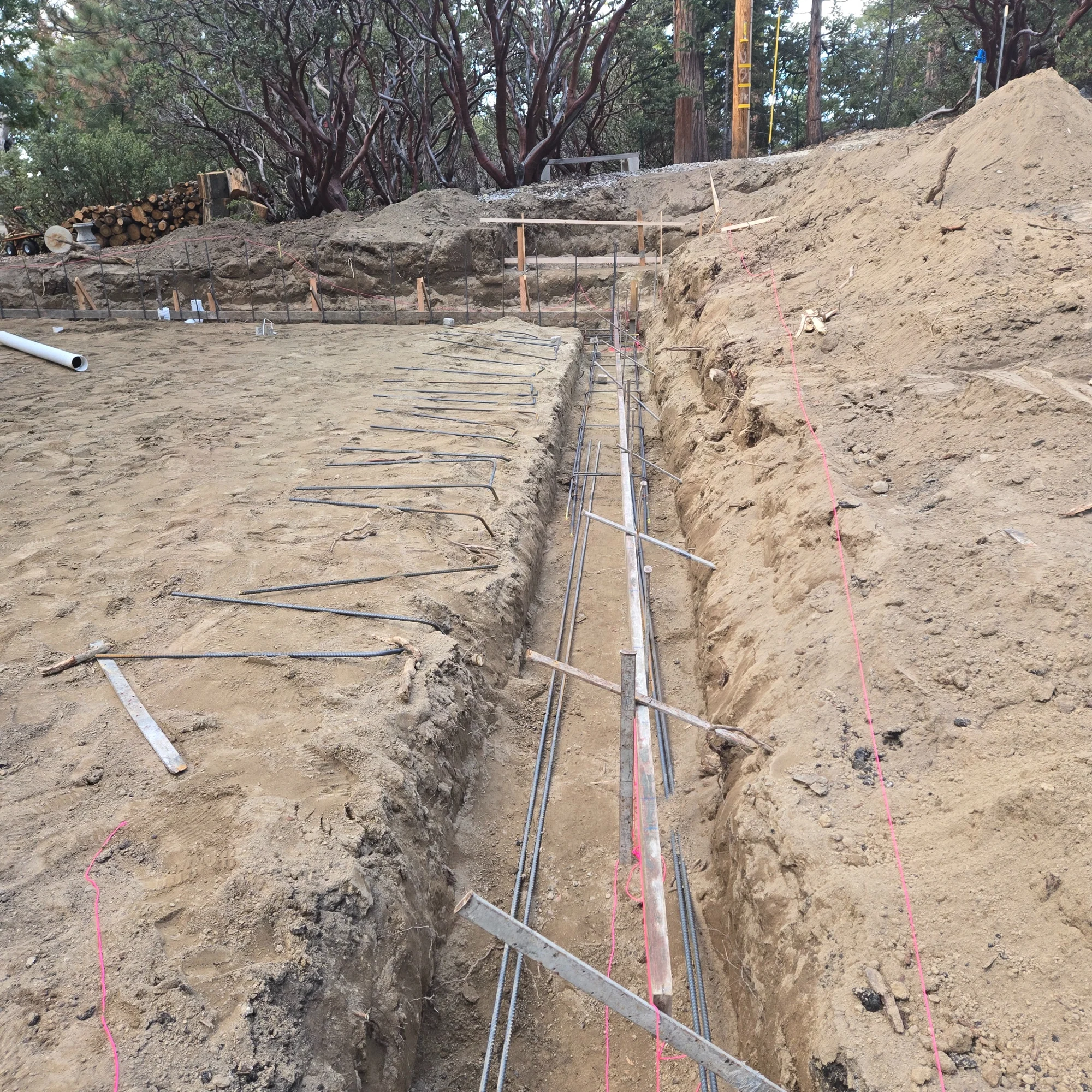
Reinforcement gets placed for what the soil is going to do, on chairs at the right height with real cover. Steel lying on the dirt does nothing at all.
One crew start to finish
The same people who form it pour it and finish it. There is no handoff where the details get lost.
What we build in Costa Mesa
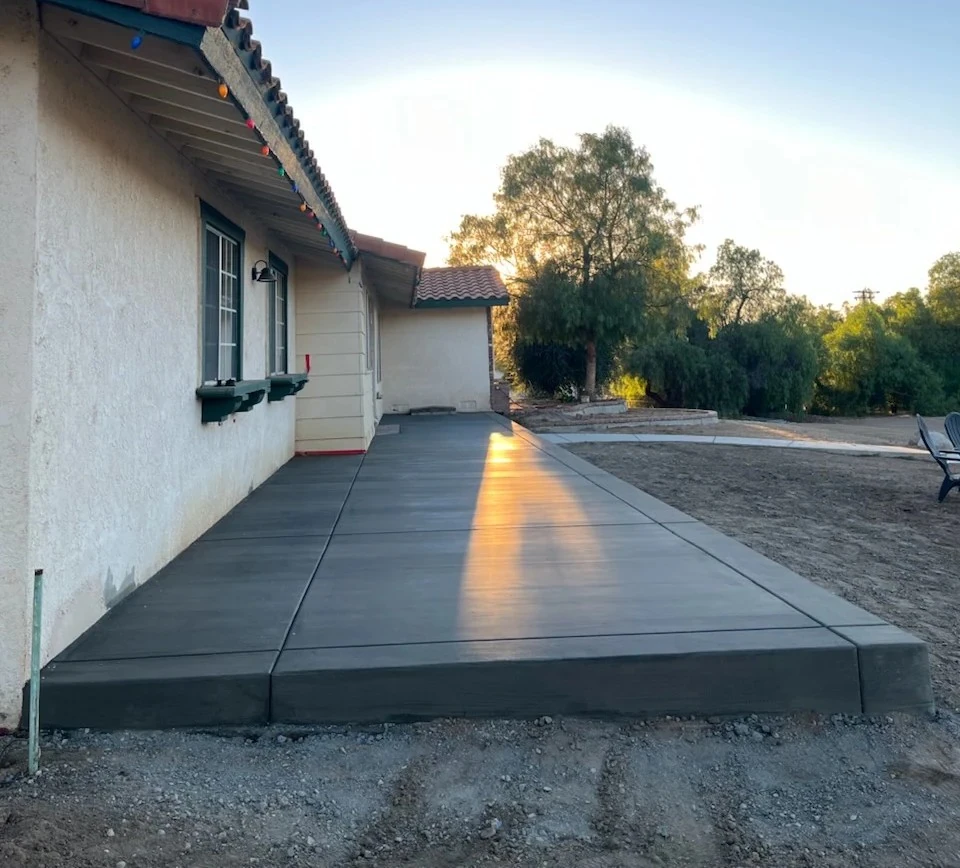
Garage Floors
Hot tires, dropped tools, and whatever ran off the car.
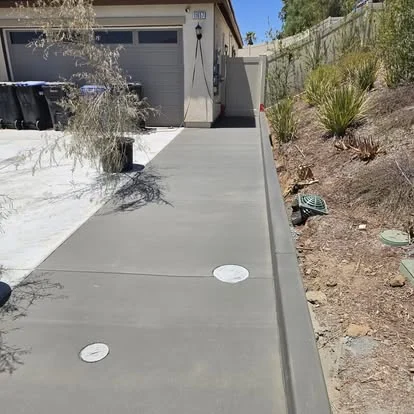
Garage Aprons
The strip between the driveway and the garage door.
Basement Floors
A slab poured inside, where moisture has nowhere to go.
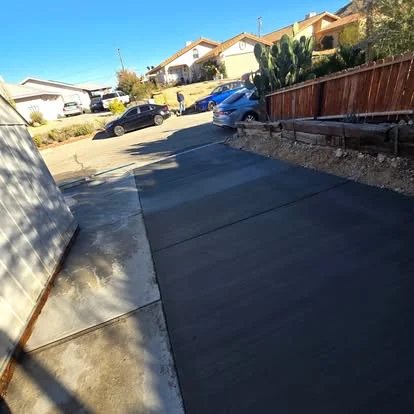
RV Pads
Heavy, concentrated, parked in one place for months.
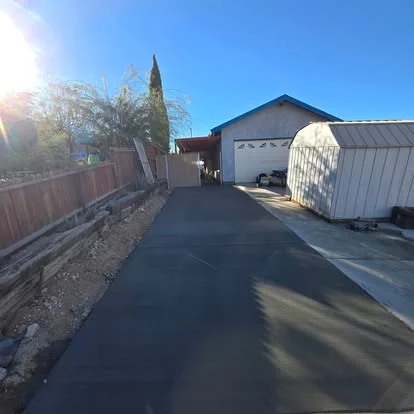
Boat Pads
Trailer tongue weight and a slab that has to stay level.
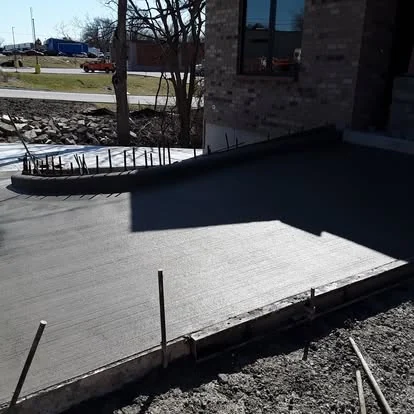
Parking Pads
Extra parking that is not the driveway.
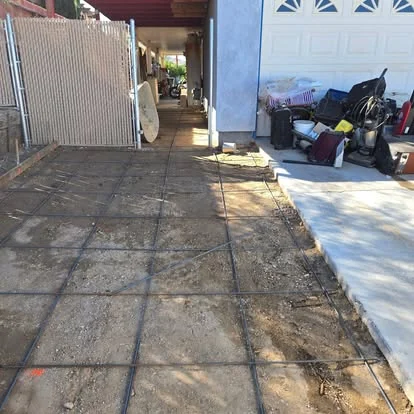
Concrete Repair
Fix the concrete that is worth fixing.
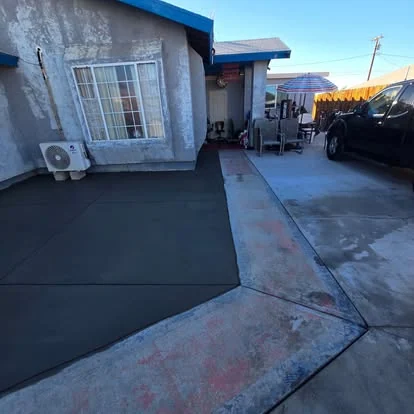
Concrete Crack Repair
Some cracks are cosmetic. Some are a message.
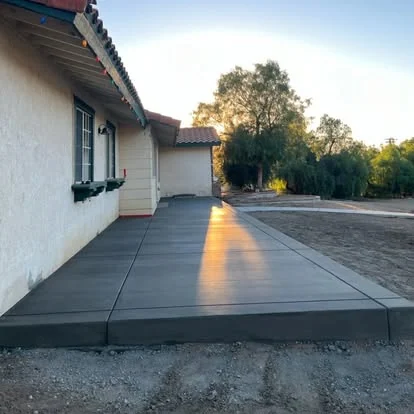
Spalled Concrete Repair
Surface flaking down to the aggregate.
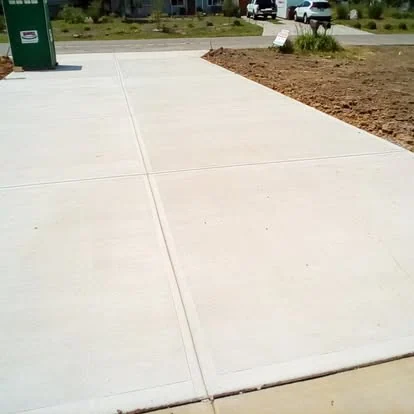
ADA Sidewalks
Accessible routes that hold their tolerances.
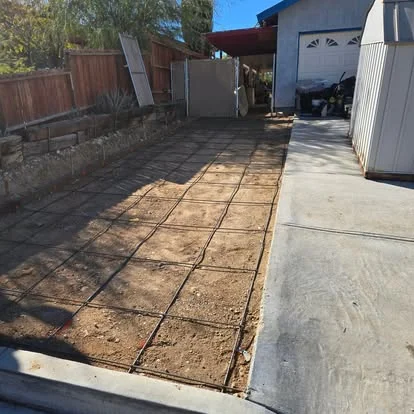
Warehouse Floors
Flat enough for racking and hard wheels.
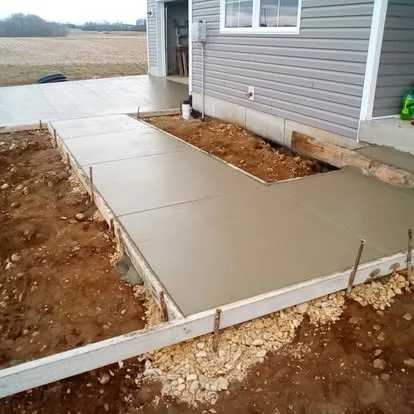
Industrial Floors
Impact, chemicals, and equipment loads.
Pouring concrete around Costa Mesa
Salt air reaches the steel
Marine air carries chloride well inland, and chloride is what corrodes reinforcing steel inside concrete. Rusting steel expands and breaks the concrete off from the inside, which is why coastal flatwork often fails in straight lines that match the bar spacing. Concrete cover over the steel is the defense, and it is specified rather than guessed.
Pool decks near the ocean
A coastal pool deck takes salt from the air as well as chlorine from the water, plus bare feet. Slip resistance and a surface that holds up under both is the specification, not an upgrade.
A milder climate with a slower problem
The coast does not deliver the inland heat or the mountain freezing. What it delivers is constant moisture and salt, which is a slower and more corrosive problem, and it shows up as edge spalling and rust staining on older slabs.
Sandy soils and moving water
Coastal ground is frequently sand. It drains beautifully and it can be undermined by water moving through it, so compaction and understanding where water travels matter more than clay-style soil treatment.
Concrete work around Costa Mesa
Flatwork, foundations and repair across Costa Mesa and the rest of Orange County, poured by the same crew that answers the phone.
How concrete fails, and why
Cracks radiating from a drain
Anything cast into a slab is a stress point. Drains, posts and penetrations all need isolation or steel around them, otherwise cracks start there.
Uneven cure color on a big pour
A large slab poured across changing weather or with loads arriving at different times can finish in visibly different shades. Sequencing and consistent mix control prevent it.
Deterioration at sprinkler heads
Constant water in one spot saturates the base and leaches the surface. It is a landscaping-meets-concrete problem and it is common.
Broken corners at driveways
Vehicles cut the corner where a drive meets the street, over the least supported concrete on the property. A thickened edge and steel at the corner fix it.
How a job runs
The soil question
In expansive clay the soil drives the design. If there is a soils report we build to it; if not, what we find during excavation informs the base work.
Drainage
Where water goes gets decided before the pour, because afterward it is permanent. That sometimes means changing the plan to fix a problem you already had.
Concrete is judged on the surface and it fails from underneath.What thirty two years teaches
Joint layout
Joints are planned on paper and cut on time. Where they land is partly structural and partly how the finished slab reads.
Maintenance
Concrete is low maintenance, not no maintenance. Sealing and joint upkeep are the two things worth doing.
Around Costa Mesa
Straight answers
What about sandy soil near the water?
It drains beautifully and it can be undermined by moving water. Compaction and understanding where water travels matter more here than clay-style treatment.
Should I seal coastal concrete?
Yes, and the reason is chloride rather than freezing. Different mechanism, same maintenance, and skipping it eventually costs you the reinforcement.
How long before I can drive on it?
Foot traffic a day or two, vehicles longer. Mild coastal temperatures are kind to a cure and you still get the real numbers.
Do you handle demolition and haul-off?
Yes, cut clean, broken out and hauled, with the site left ready to pour.
Why are there rust stains and cracks in straight lines?
Those lines usually match the rebar spacing, which means the steel is corroding. It is a cover and chloride problem rather than a surface one, and it needs looking at properly.
Ready to talk about it?
Call the shop. We cover Costa Mesa and the rest of the county from Hemet, and we will come out and read the job before quoting.