
Built for Rosamond ground
The soil and the weather here decide how a slab is built. Driveways, patios, slabs and foundations across Rosamond, licensed 1137822.
Talk to us about the job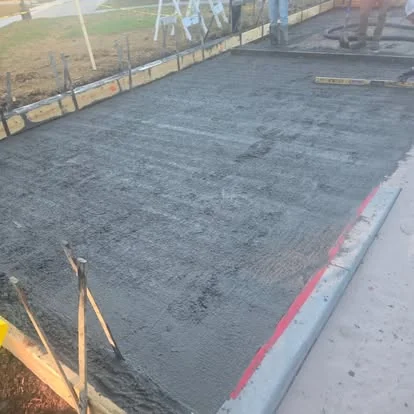
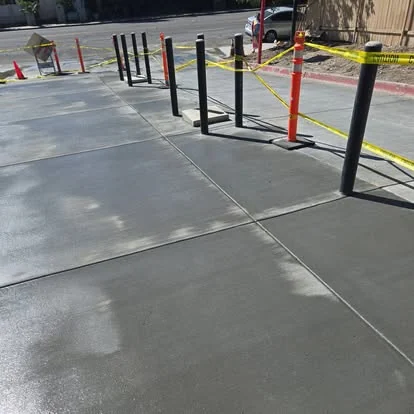
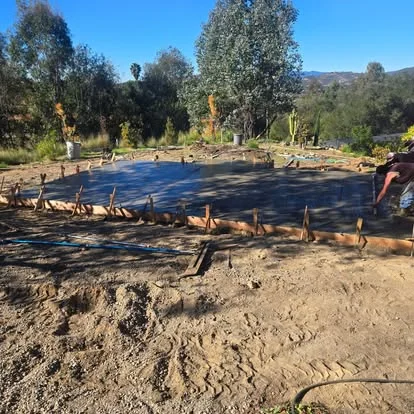

What concrete is up against around Rosamond
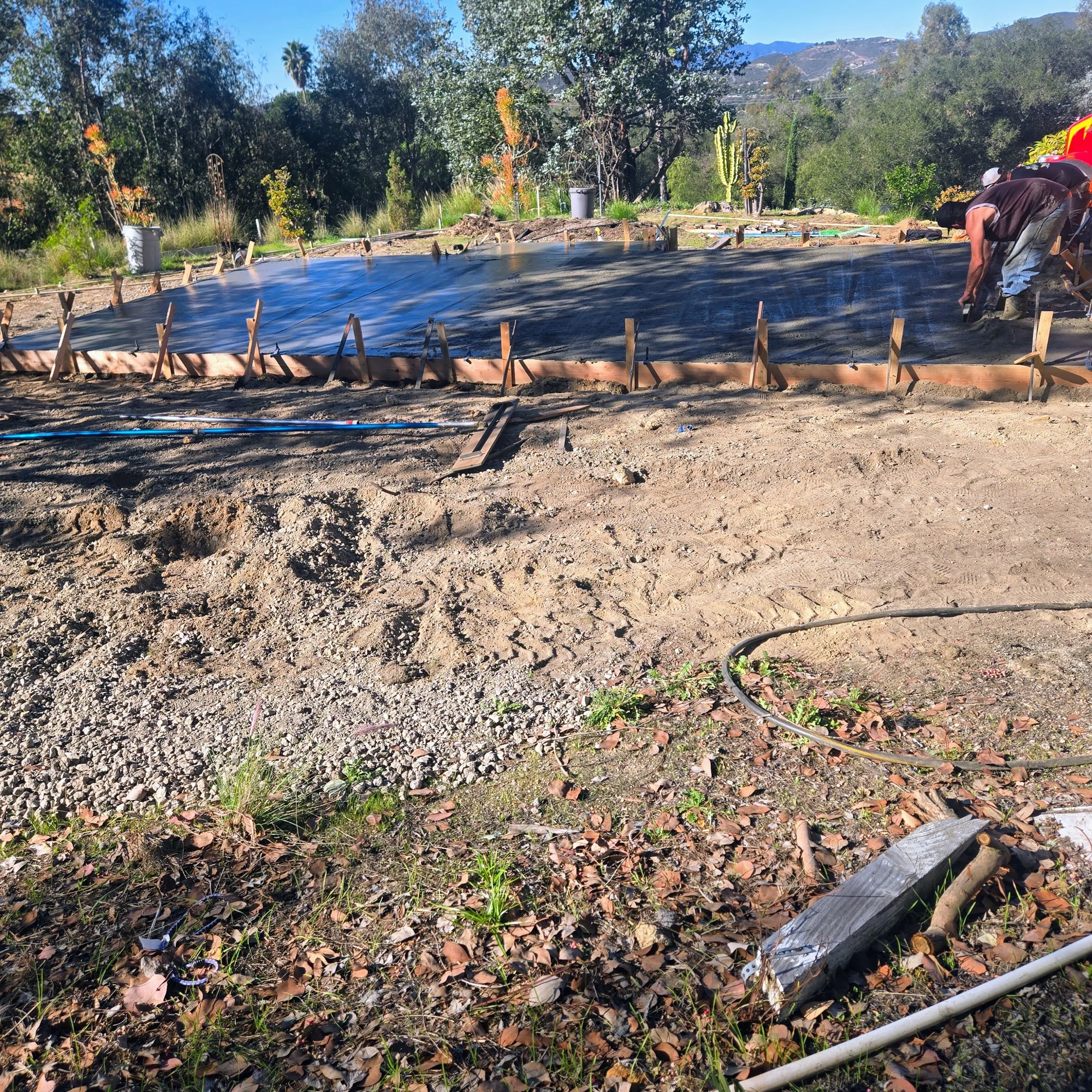
Sealing actually matters here
Where freeze cycling is real, keeping water out of the pores is the difference between a slab that lasts and one that spalls. Sealing is maintenance that pays for itself at this elevation.
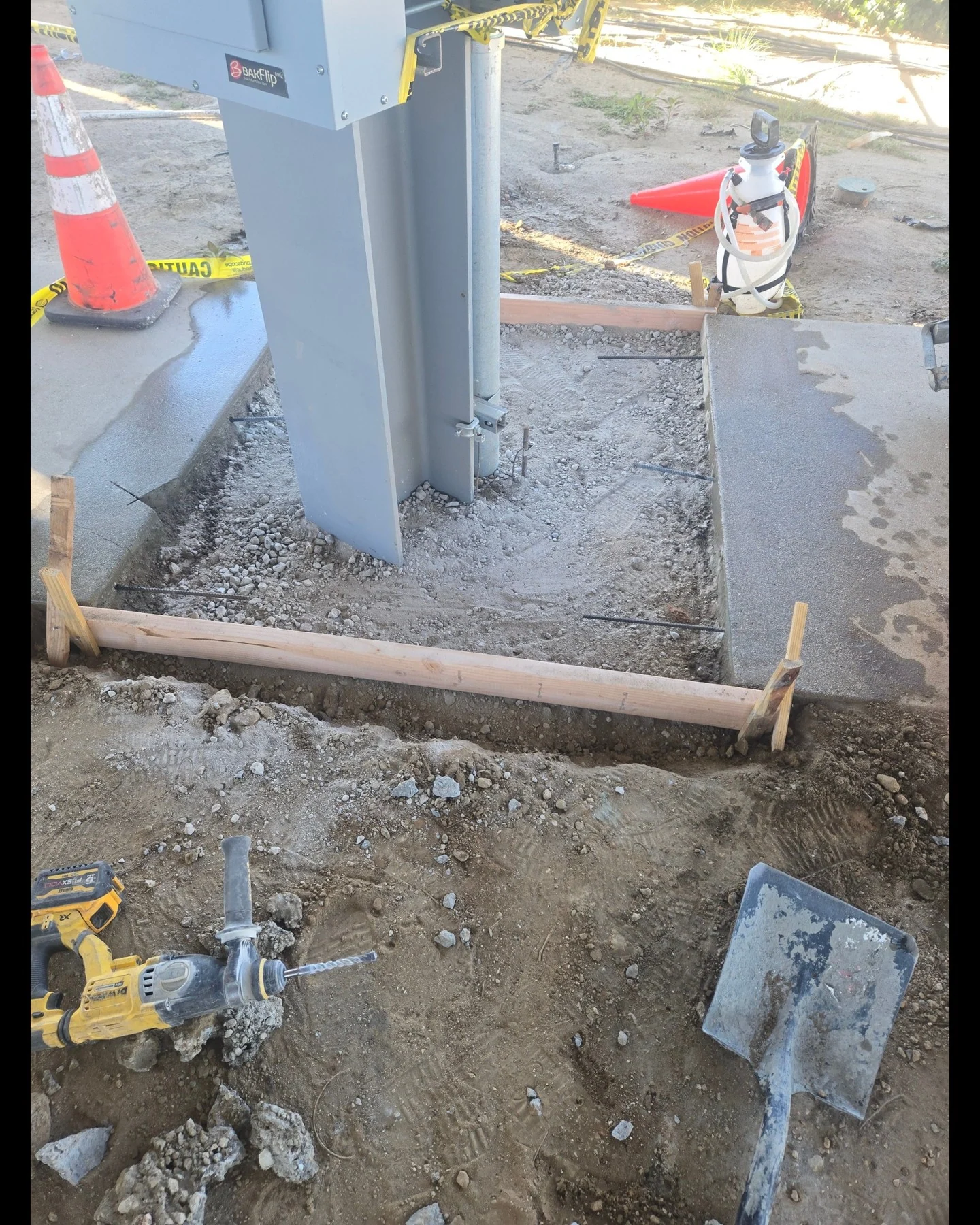
Wind and the finishing window
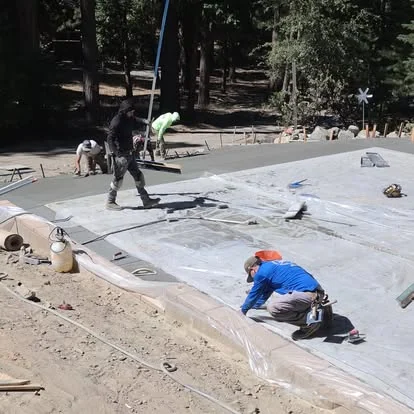
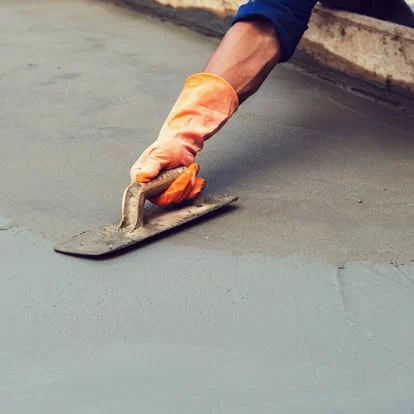
Sustained wind pulls water out of a fresh slab fast. Combined with low humidity it can close the finishing window early and leave a crazed surface. Pours get planned around the forecast.
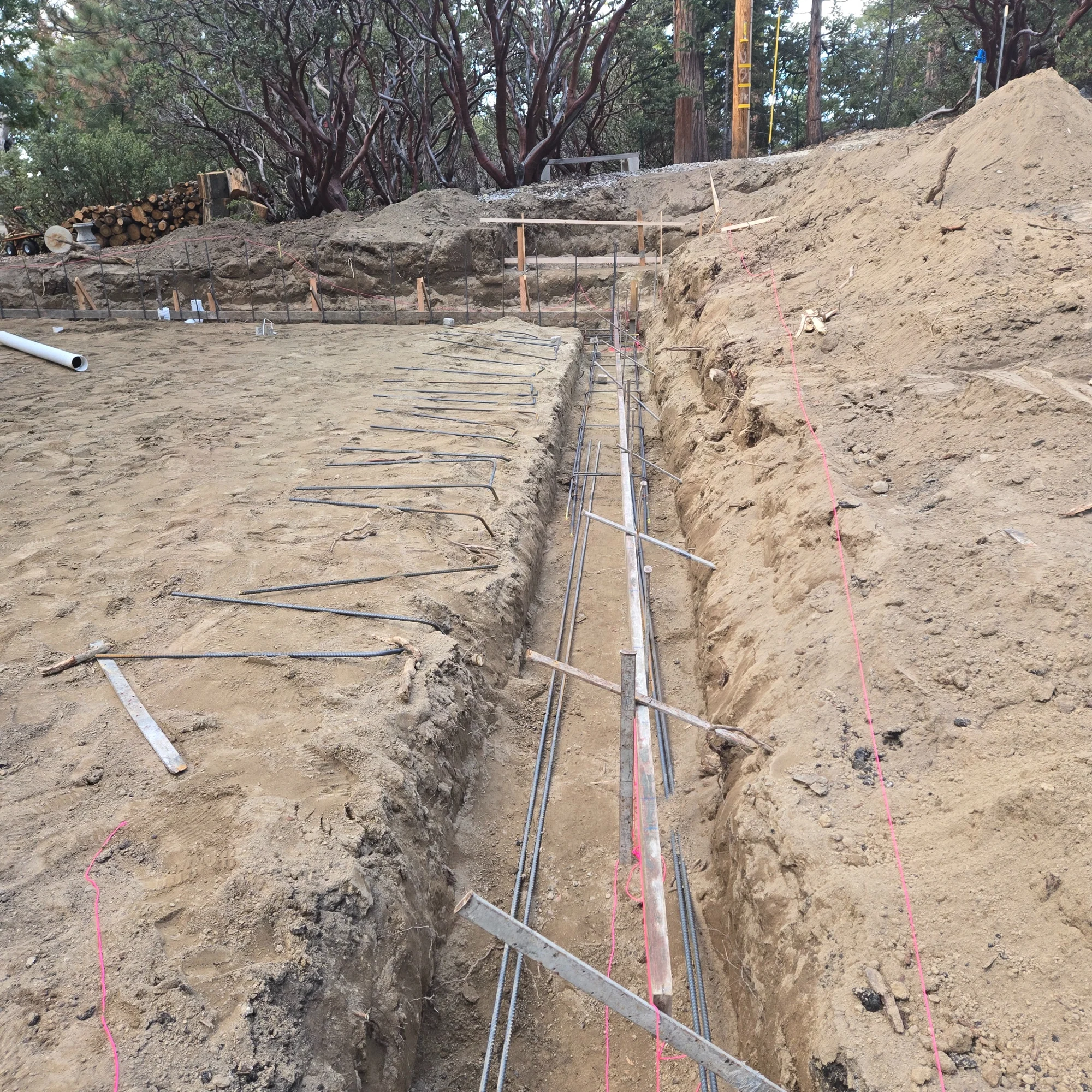
Granitic and decomposed soils
A lot of high desert ground is decomposed granite and alluvium. It compacts well when it is worked properly in lifts and behaves badly when it is dumped and raked.
Steel sized to the movement
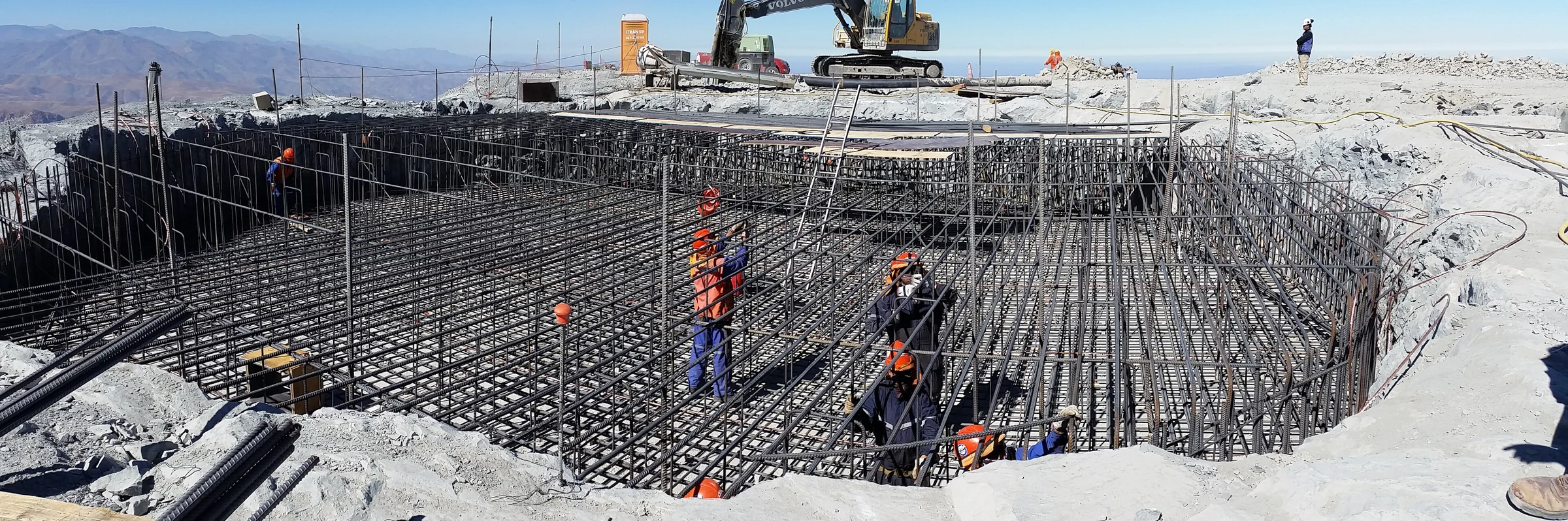
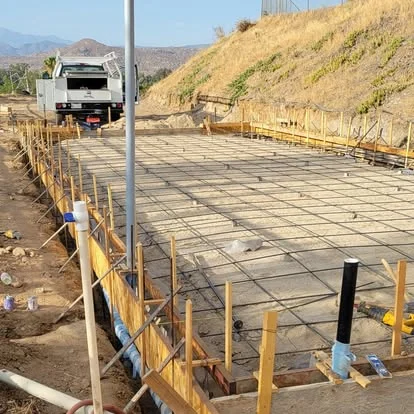
Reinforcement gets placed for what the soil is going to do, on chairs at the right height with real cover. Steel lying on the dirt does nothing at all.
Base first, always
We cut to grade, fix the soft spots we find, and compact base in lifts before anything is formed. In expansive clay that step decides the whole outcome, so it is not where we save money.
Joints planned on paper
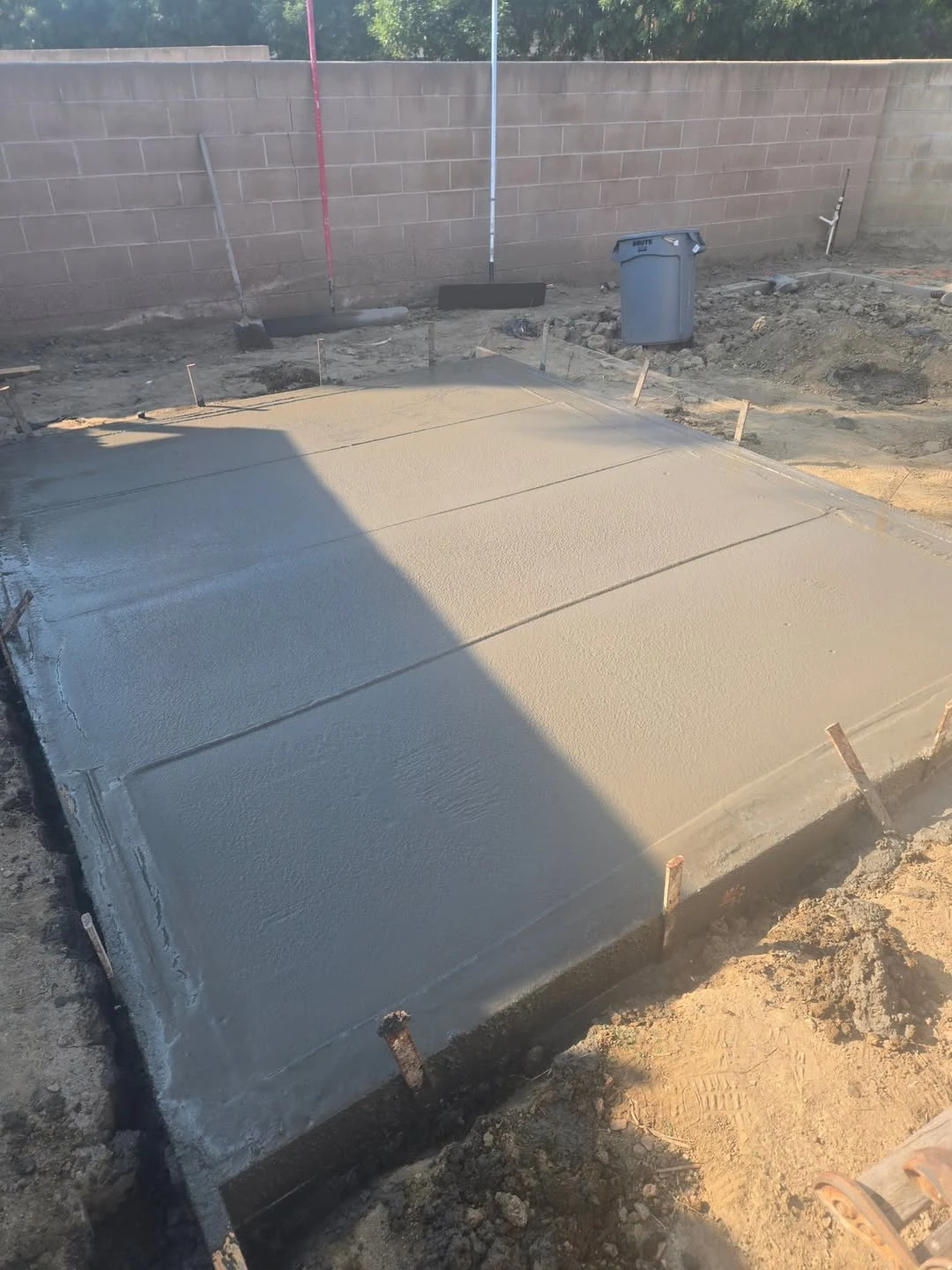
Joint layout gets worked out before the pour, spaced to the thickness and placed where the slab wants to move anyway. Then it gets cut at the right time.
What we build in Rosamond
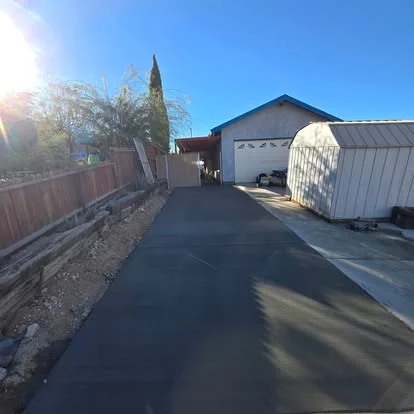
Basement Floors
A slab poured inside, where moisture has nowhere to go.
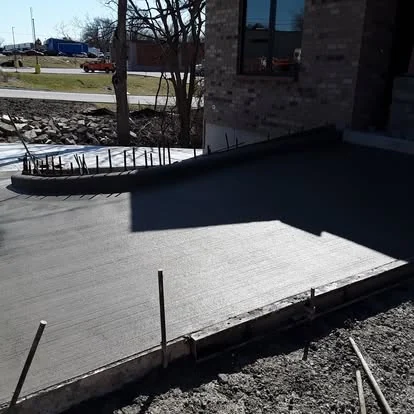
RV Pads
Heavy, concentrated, parked in one place for months.
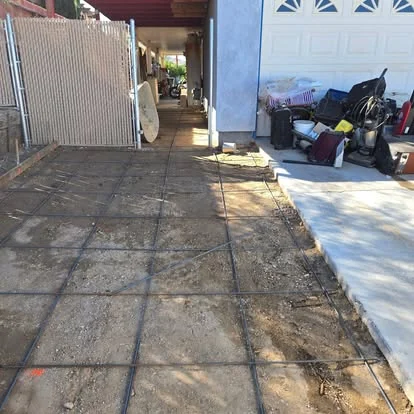
Boat Pads
Trailer tongue weight and a slab that has to stay level.
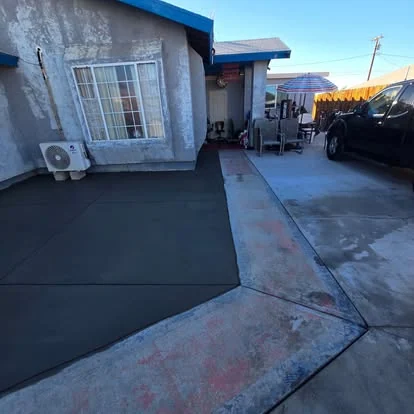
Parking Pads
Extra parking that is not the driveway.
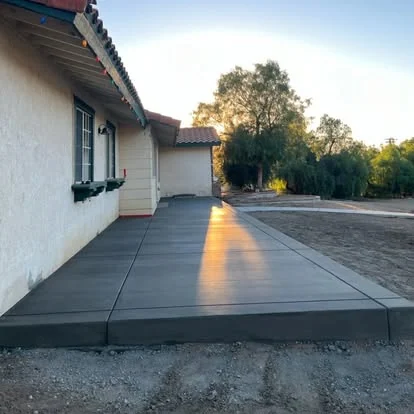
Concrete Pool Decks
Wet feet, chemicals, and sun all year.
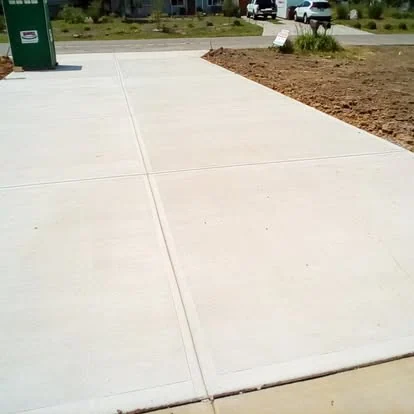
Concrete Pads
A pad sized to the thing that is going on it.
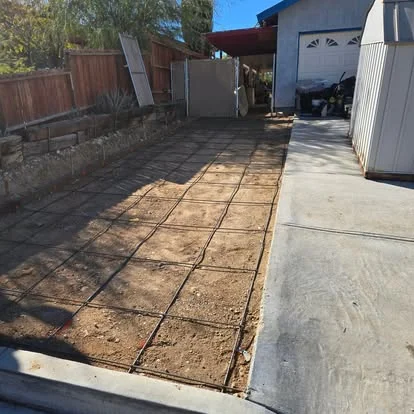
Uneven Concrete Repair
Lips, trip hazards, and panels out of plane.
Concrete Joint Repair
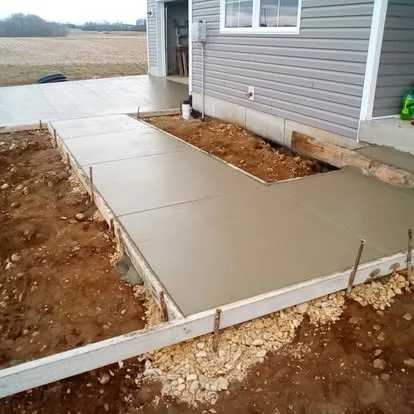
The joints fail before the concrete does.
Concrete Resurfacing
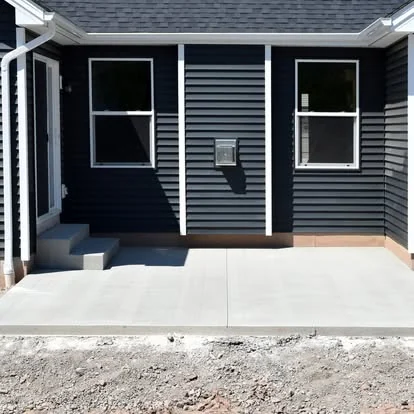
A new surface on a sound slab.
Commercial Concrete Slabs
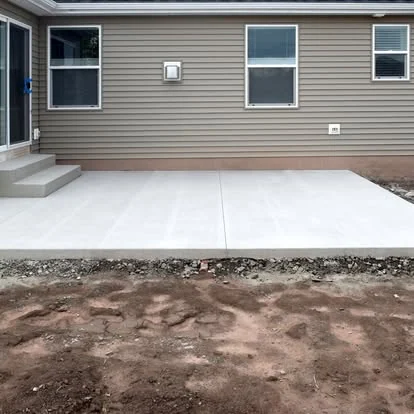
Slabs sized for racking, equipment, and forklifts.
Commercial Concrete Foundations
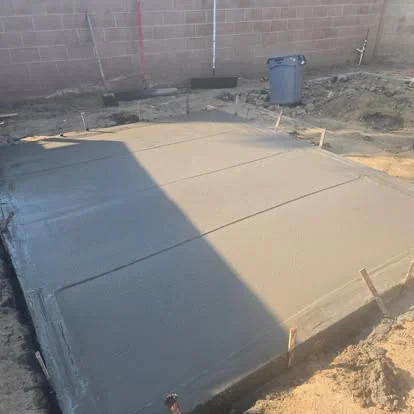
Footings and stem walls under a commercial structure.
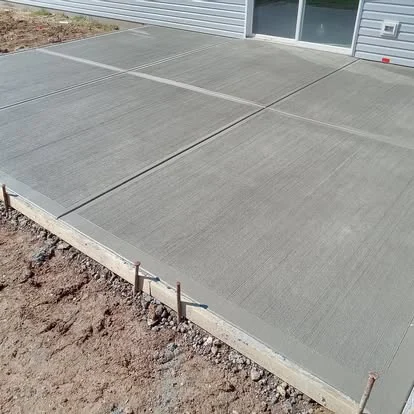
Commercial Sidewalks
Walks that carry public traffic and public liability.
Pouring concrete around Rosamond
Freeze and thaw is real at this elevation
The high desert genuinely freezes, and that changes the concrete conversation completely. Water gets into the pores, freezes, expands and works the surface apart from inside. Over a decade that is the difference between a sound slab and a pitted, spalling one. Air entrainment and sealing both matter here in a way they do not down in the valley.
Wind and the finishing window
Sustained wind combined with very low humidity pulls water out of fresh concrete fast enough to close the finishing window early and craze the surface. Pours get planned around the forecast, not just the calendar.
Long runs on big lots
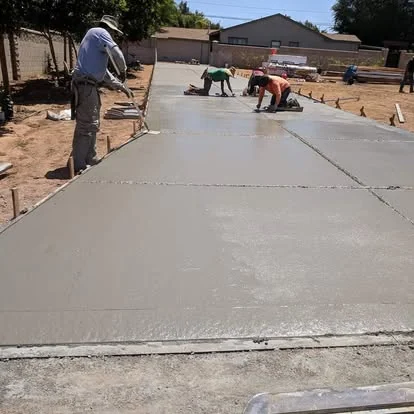
High desert properties are often large, which means long driveways and big slabs. Length multiplies movement, so joint spacing and layout matter more here than on a small urban pad, and a long drive poured without a joint plan will crack wherever it likes.
Decomposed granite and alluvium
Much of the high desert is decomposed granite and alluvial material. Worked properly in lifts it compacts into an excellent base; dumped and raked flat it behaves badly and the slab tells you so within a few years.
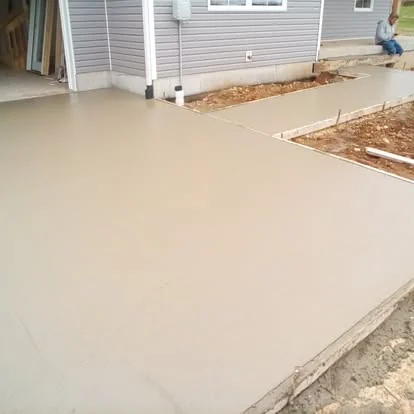
Concrete work around Rosamond
Flatwork, foundations and repair across Rosamond and the rest of Kern County, poured by the same crew that answers the phone.
How concrete fails, and why
Cracks after a hot pour
Concrete placed into extreme heat stiffens before it can be finished properly and shrinks harder as it cools. Hot weather practice exists for exactly this reason.
Wide joints that collect debris
Joints that were cut too wide or have lost their sealant fill with grit, which then prevents the slab from closing and spalls the joint edges.
A patch that failed
New material on old concrete only holds if the substrate was prepared and a bonding agent used. A patch troweled onto a dusty surface lets go within a season.
Movement at a retaining wall
Retaining walls fail from water pressure behind them more often than from the soil weight. Drainage behind the wall is the design.
How a job runs
Before we start
You get told what is being built, how long the concrete is unusable, and where the truck and the crew will be. Access gets sorted before the day, not on it.
The day of the pour
Concrete arrives on a schedule and does not wait. The crew works to the material, which means the pour is not a good day to renegotiate the scope.
Once the slab is down, the drainage is permanent.On grading
After the pour
Foot traffic usually after a day or so, vehicles longer. You get the real numbers for your slab, because thickness and weather both change them.
The first month
Concrete keeps gaining strength for weeks. Hairline shrinkage cracking in that window is normal and is not a failure. Anything that worries you, call and we will look.
Around Rosamond
Straight answers
How long before I can drive on it?
Foot traffic a day or two, vehicles longer, and cold weather stretches both. You get the real number for your pour.
Do you handle demolition and haul-off?
Yes, cut clean, broken out, loaded and hauled, with the ground left ready for the new pour.
Does concrete really freeze up here?
Yes, and that changes the whole conversation. Water in the pores freezes, expands and works the surface apart from inside, which is why high desert slabs pit and spall in a way valley slabs do not. Air entrainment and sealing both matter here.
Can you pour in winter?
Sometimes, with protection. Concrete cures by chemical reaction and cold slows that reaction down, so a slab placed into a hard freeze may never reach strength. We would rather move a date than pour into conditions that will not cure.
Why does my driveway surface flake?
That is scaling, and at this elevation it is usually freeze damage in concrete that was not air entrained or was left unsealed. Repair means getting off everything loose and bonding new material properly.
Get a number for your Rosamond job
Tell us what you are building. Somebody comes out, reads the site, and prices what it actually needs rather than what fits a template.