

Romoland slabs, built from the base up
Most concrete fails from underneath, so that is where we start. Serving Romoland and Riverside County with 32 years in the trade behind every pour.
Talk to us about the job

What concrete is up against around Romoland
Thickness matched to the load
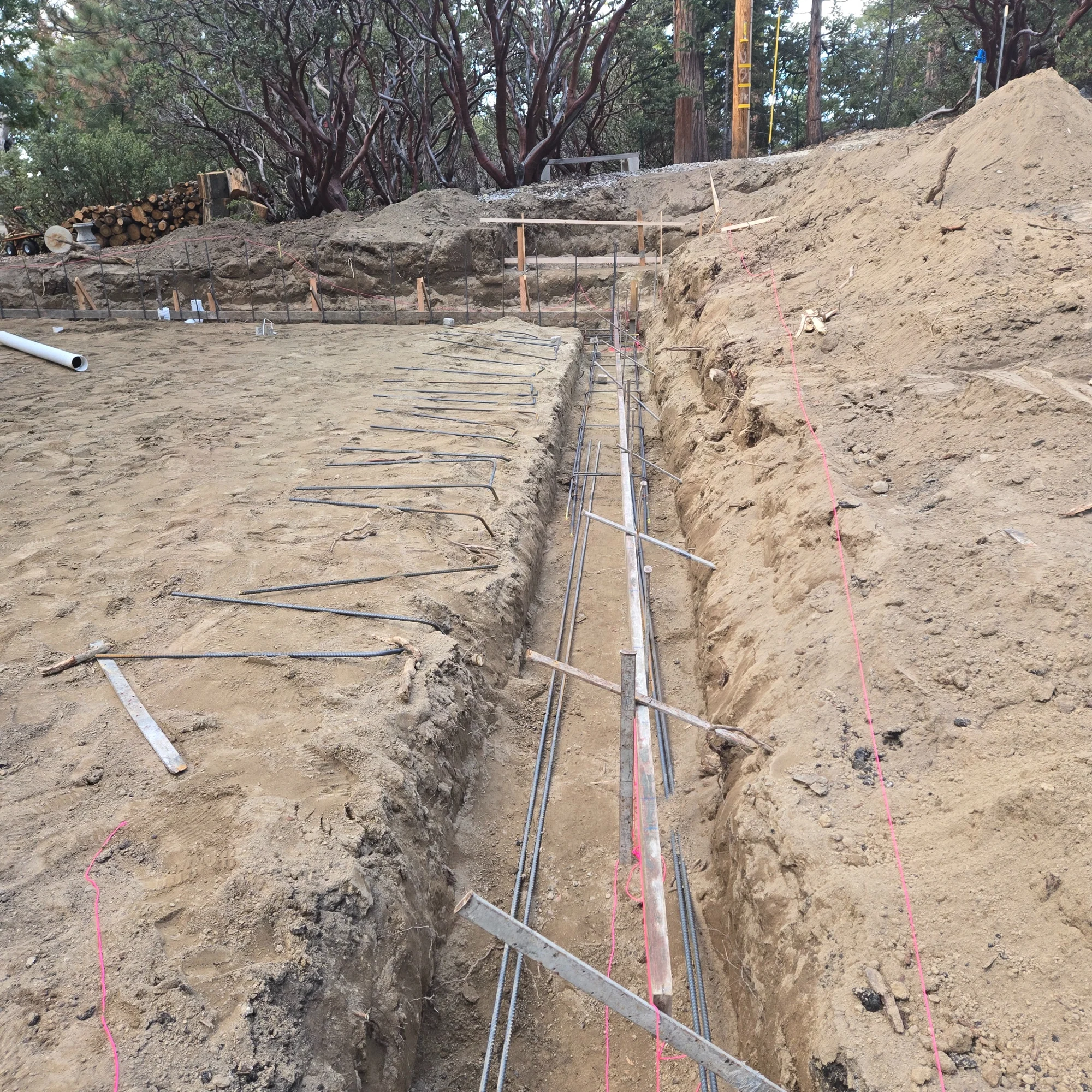
A driveway that carries a work truck is not the same slab as a garden path. Thickness and steel come off what actually drives on it, and getting that wrong shows up as cracking in the wheel path.
Summer heat during the pour
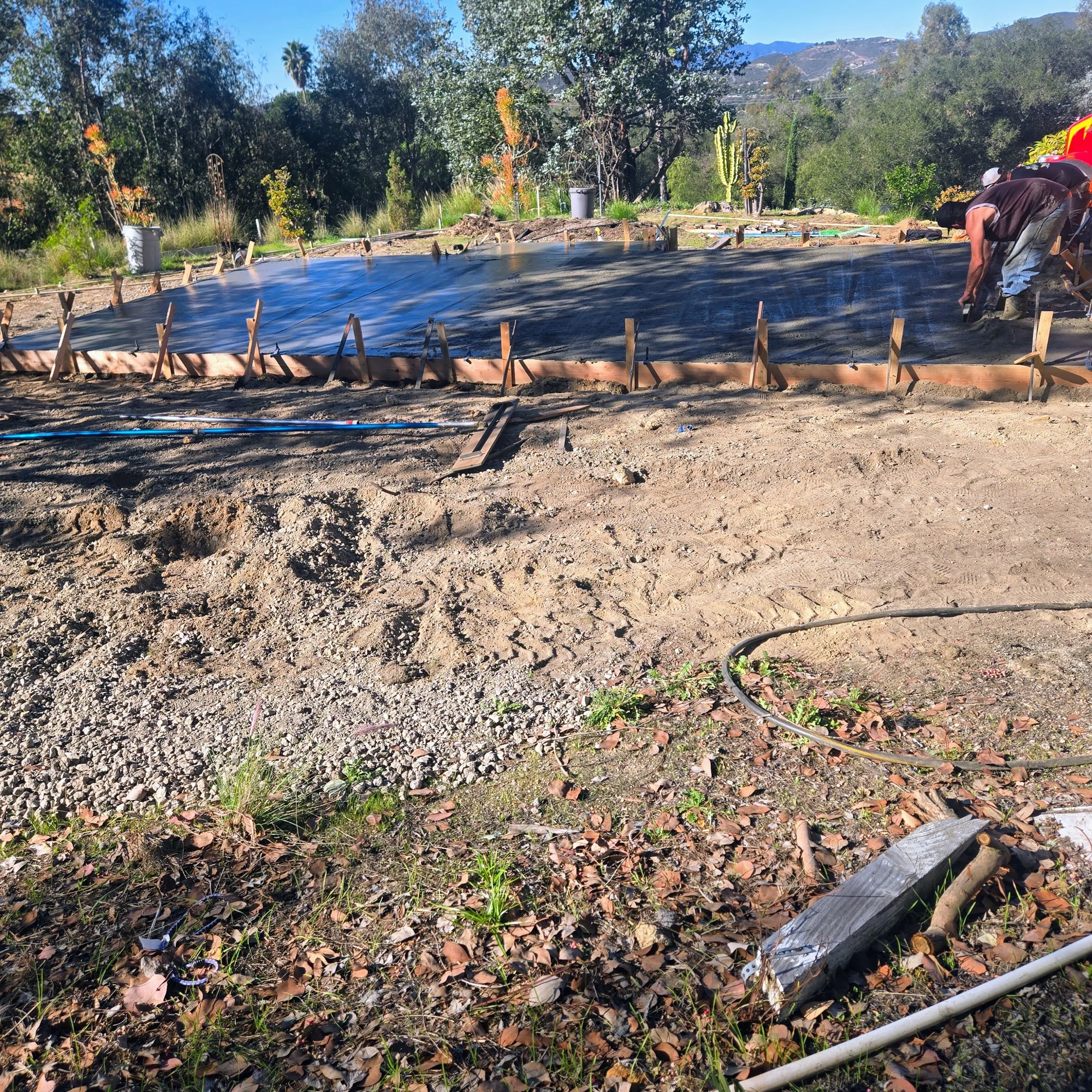
Concrete placed at a hundred and five degrees behaves nothing like concrete placed at seventy. It stiffens fast, the surface skins over while the body is still soft, and you get a finish that looks closed but is not. Hot weather pours get scheduled early and treated differently.
Curing in dry heat
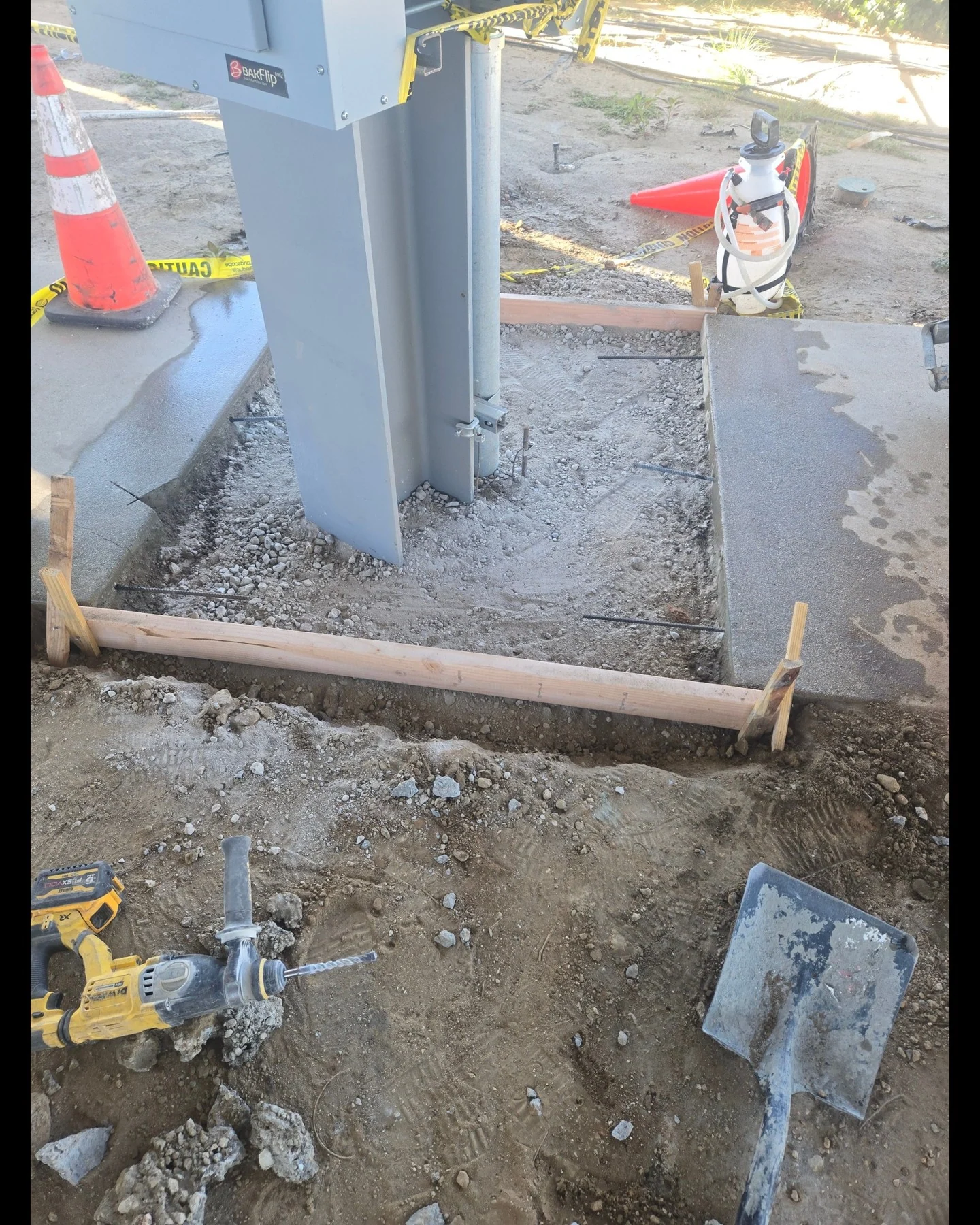
Low humidity and wind pull water out of a fresh slab faster than the concrete can use it. That is surface crazing and a weak top layer. Curing is an active step here, not something that just happens.
Water routed off the slab
Slopes, low points and a path for water to leave are set before the pour, because afterward the drainage is permanent.
Steel sized to the movement
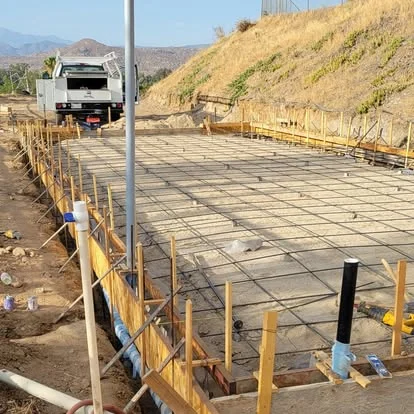
Reinforcement gets placed for what the soil is going to do, on chairs at the right height with real cover. Steel lying on the dirt does nothing at all.
Cleanup is part of the job
Washout handled properly, spoil hauled, surfaces cleaned. Concrete work is messy while it happens and should be invisible when it is done.
What we build in Romoland
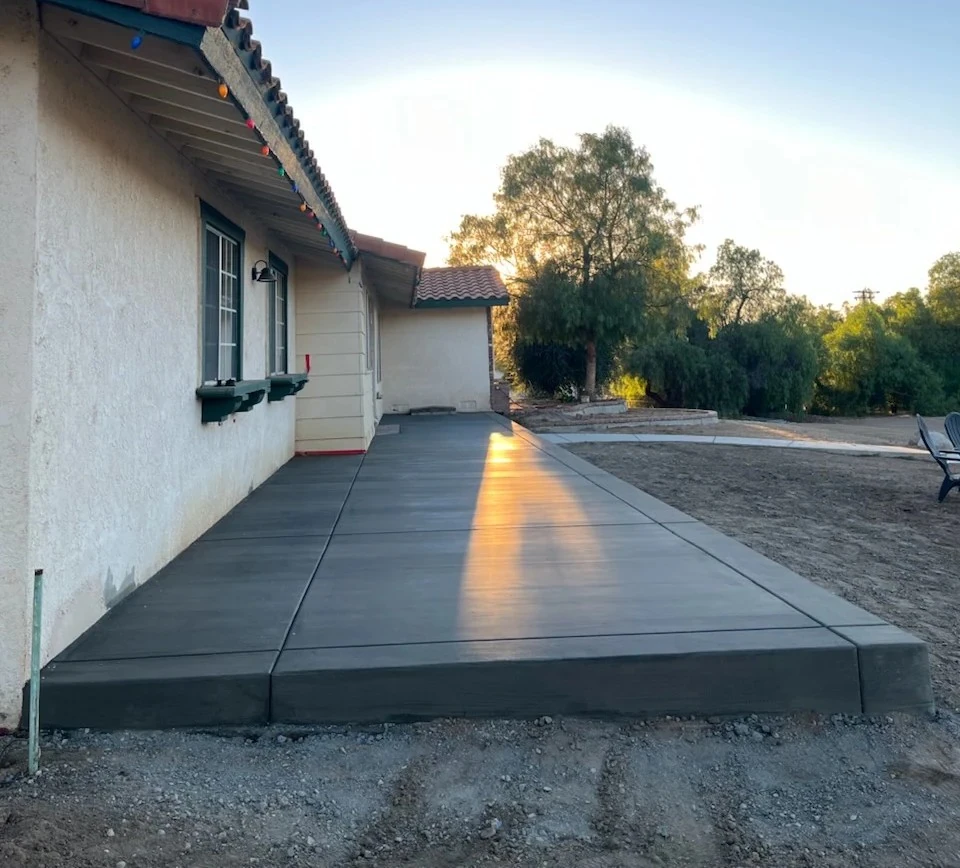
Concrete Patio Replacement
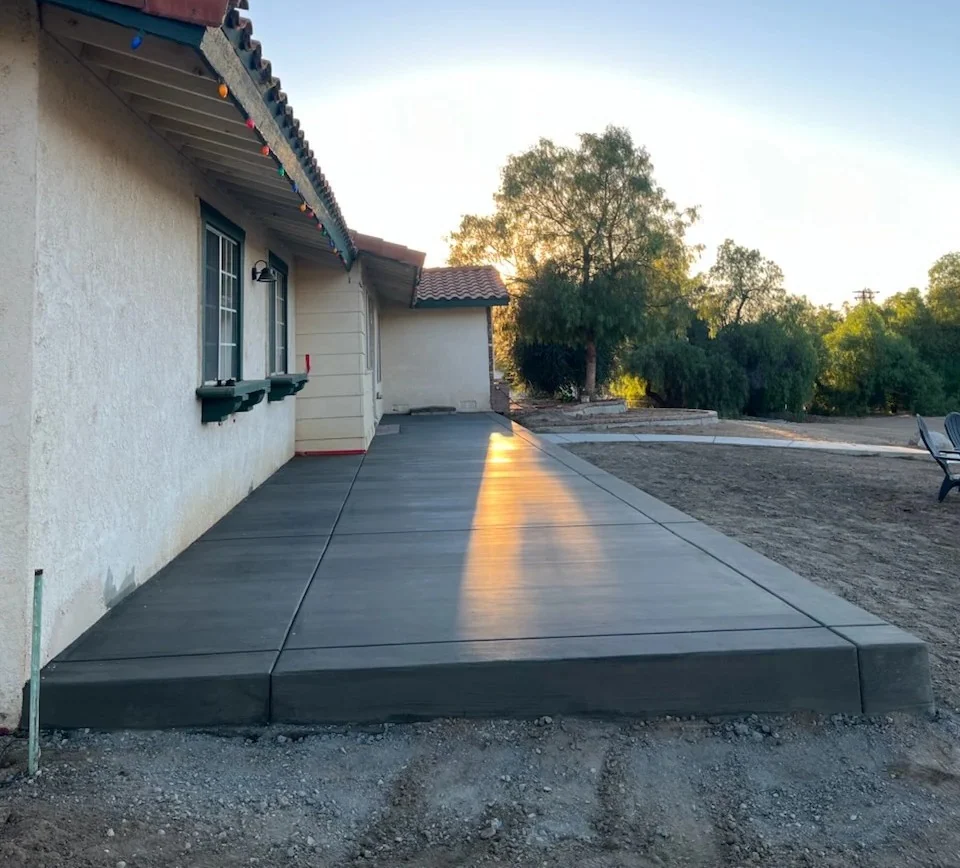
Take out the old slab, pour the one you actually wanted.
Concrete Patio Repair
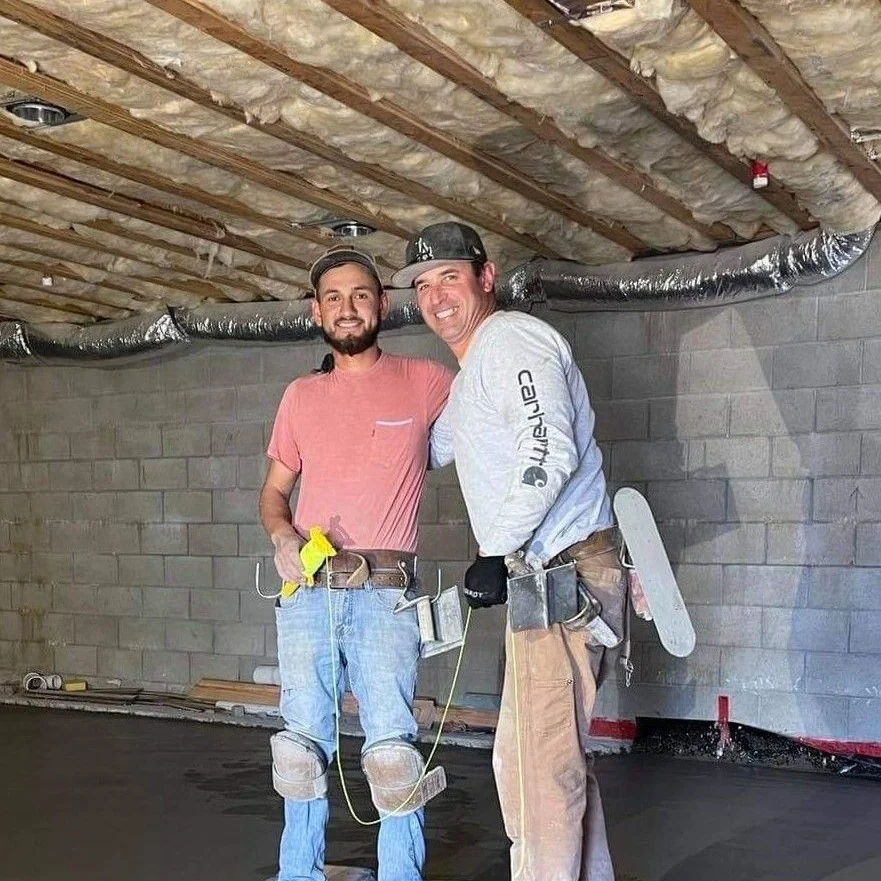
Cracks, settled corners, and surfaces that have gone rough.
Concrete Walkways
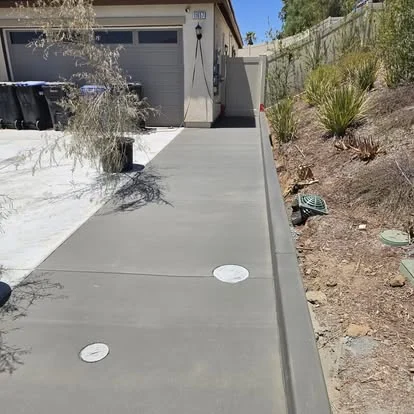
Getting from the street to the door without a trip hazard.
Concrete Sidewalks
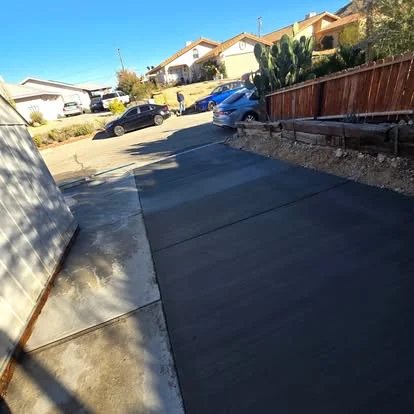
Public-facing flatwork built to the spec the city will inspect.
Concrete Sidewalk Repair
Lifted, cracked, or spalled panels made safe again.
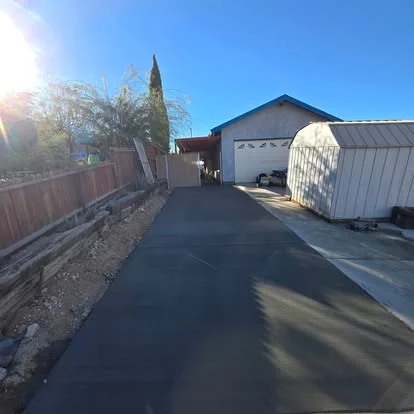
Concrete Sidewalk Replacement
Panel by panel, or the whole run.
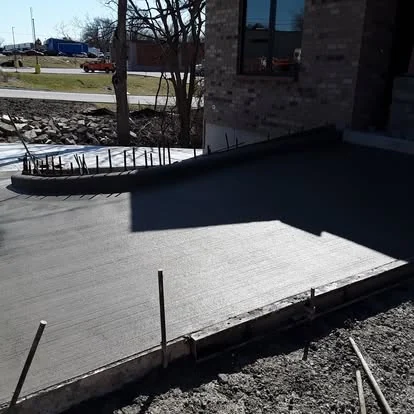
Concrete Crack Repair
Some cracks are cosmetic. Some are a message.
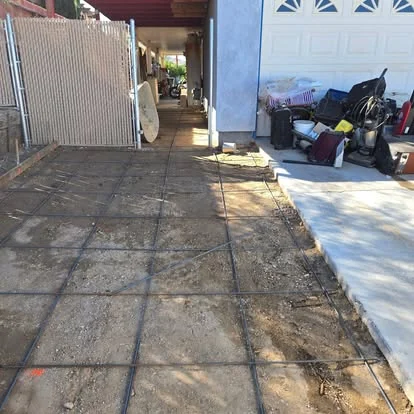
Spalled Concrete Repair
Surface flaking down to the aggregate.
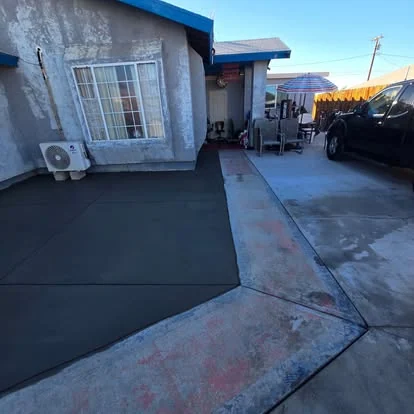
Settled Concrete Repair
The slab dropped because something under it did.
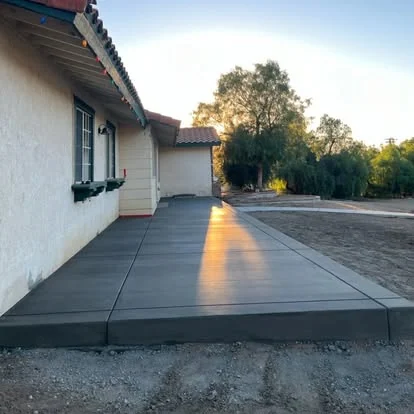
Concrete Gutters
Moving water where the grade will not.
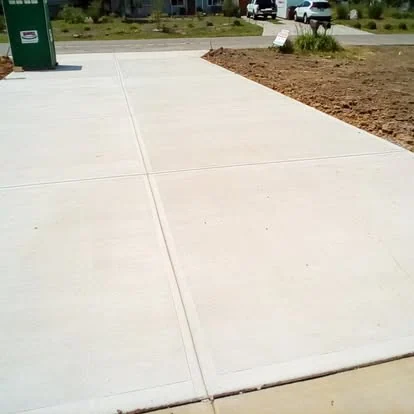
ADA Concrete Ramps
Built to the slope the tape measure will confirm.
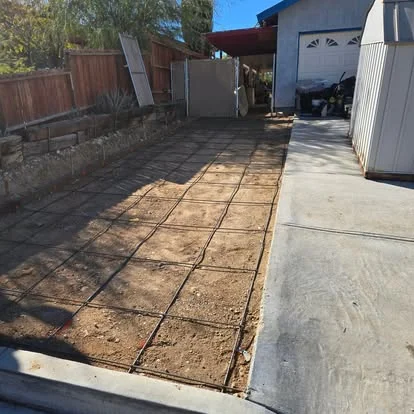
ADA Sidewalks
Accessible routes that hold their tolerances.
Pouring concrete around Romoland
What the ground does here
The inland valleys run on expansive clay. It takes on water and swells, then dries out and shrinks, and it does that cycle every year. A slab poured on untreated clay rides that movement until something gives, which is why base preparation and reinforcement are the design rather than an upgrade. Where a soils report exists we build to it; where there is none, what we find during excavation tells us what the ground is going to do.
Irrigation against the slab
Almost every valley property waters something, and sprinklers running along a slab edge keep the base saturated year round. In expansive soil that is a slow way to undermine your own driveway. Where the water lands is worth looking at before blaming the concrete.
Summer pours
Triple digit afternoons change how concrete behaves. It stiffens before it can be finished properly, the surface skins over while the body underneath is still soft, and water leaves the slab faster than the cement can use it. Valley pours start early, the mix gets adjusted for the heat, and curing is treated as an active step instead of something that happens on its own.
Older flatwork around here
A lot of valley concrete was poured thin, with light reinforcement, on a base that was never properly compacted. When it fails it is usually reporting on the ground rather than on the mix, and that is the difference between a repair that holds and one that comes back in a year.
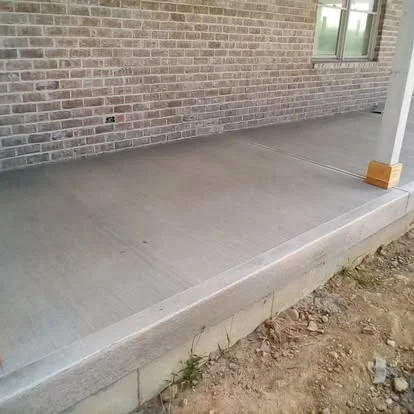
Concrete work around Romoland
Flatwork, foundations and repair across Romoland and the rest of Riverside County, poured by the same crew that answers the phone.
How concrete fails, and why
Failure at a cold joint
Where one pour met another and was not detailed, the two never bonded and the line opens. Planned cold joints are fine; accidental ones are a leak path and a crack.
Curling at the edges
Slab edges lifting off the base happens when the top dries faster than the bottom. It shows as a hollow sound near joints and it is a curing and moisture-gradient issue.
Scaling in freeze zones
Surface peeling in sheets, common at elevation and in the high desert, is freeze damage in concrete that was not air entrained or was sealed too late.
Blisters
Raised bubbles under a finished surface mean the top was closed while air or water was still coming up. They break under traffic and leave holes.
How a job runs
Scheduling
Weather moves concrete dates, particularly in summer. We would rather move a pour than place into conditions that will not finish or cure properly.
Site access
A mixer is a large, heavy vehicle. Where it can park and how far the concrete has to travel changes the method and sometimes the price. That is worked out in advance.
Steel lying on the dirt does nothing at all.On reinforcement
Protecting what stays
Existing flatwork, landscaping, and anything we are working next to gets protected. Concrete is messy while it happens.
Curing time
The slab is not finished when it looks finished. Curing continues for weeks and how it is protected in the first days affects the surface for the life of it.
Around Romoland
Straight answers
Can you pour in the middle of summer?
We do, and we start early. Triple digit afternoons stiffen the mix before it can be finished and pull water out of the slab, so hot weather pours get scheduled, mixed and cured differently. Sometimes the right answer is moving the date.
Do you handle the demolition and haul-off?
Yes. Saw cutting to a clean line, breaking out, loading and hauling is part of the job, and we protect what stays and leave the ground ready for the new pour.
How thick should my driveway be?
It comes off what parks on it. A passenger car drive and one carrying a loaded work truck or an RV are not the same slab, and the wheel path is where a thin one cracks first.
What maintenance does concrete actually need?
Keep water moving off it, reseal when it needs it, and keep the joints maintained. Water is the common factor in nearly every concrete failure, so those three things buy years.
Does the clay soil here really matter that much?
Yes. Expansive clay swells with water and shrinks when it dries, every year. That movement is what cracks slabs and foundations, and it is handled in the base, the reinforcement and the drainage rather than in the finish.
Romoland concrete, quoted properly
Access, base condition, thickness and finish decide the price. That is why we walk it first and why the number holds.