

Poured once, done right
La Quinta driveways, patios, foundations and repair work. Licensed 1137822, fourth generation, and straight about what a job actually needs.
Talk to us about the job
What concrete is up against around La Quinta
Day to night swing
The desert can drop forty degrees after sundown. Concrete expands and contracts with that, every day, for its whole life. Joint spacing has to allow for a slab that never stops moving.
Blowing sand during finishing
Wind-driven sand landing on a slab during the finishing window gets worked into the surface. Wind is a scheduling factor here the same way rain is elsewhere.
Water loss before the slab sets
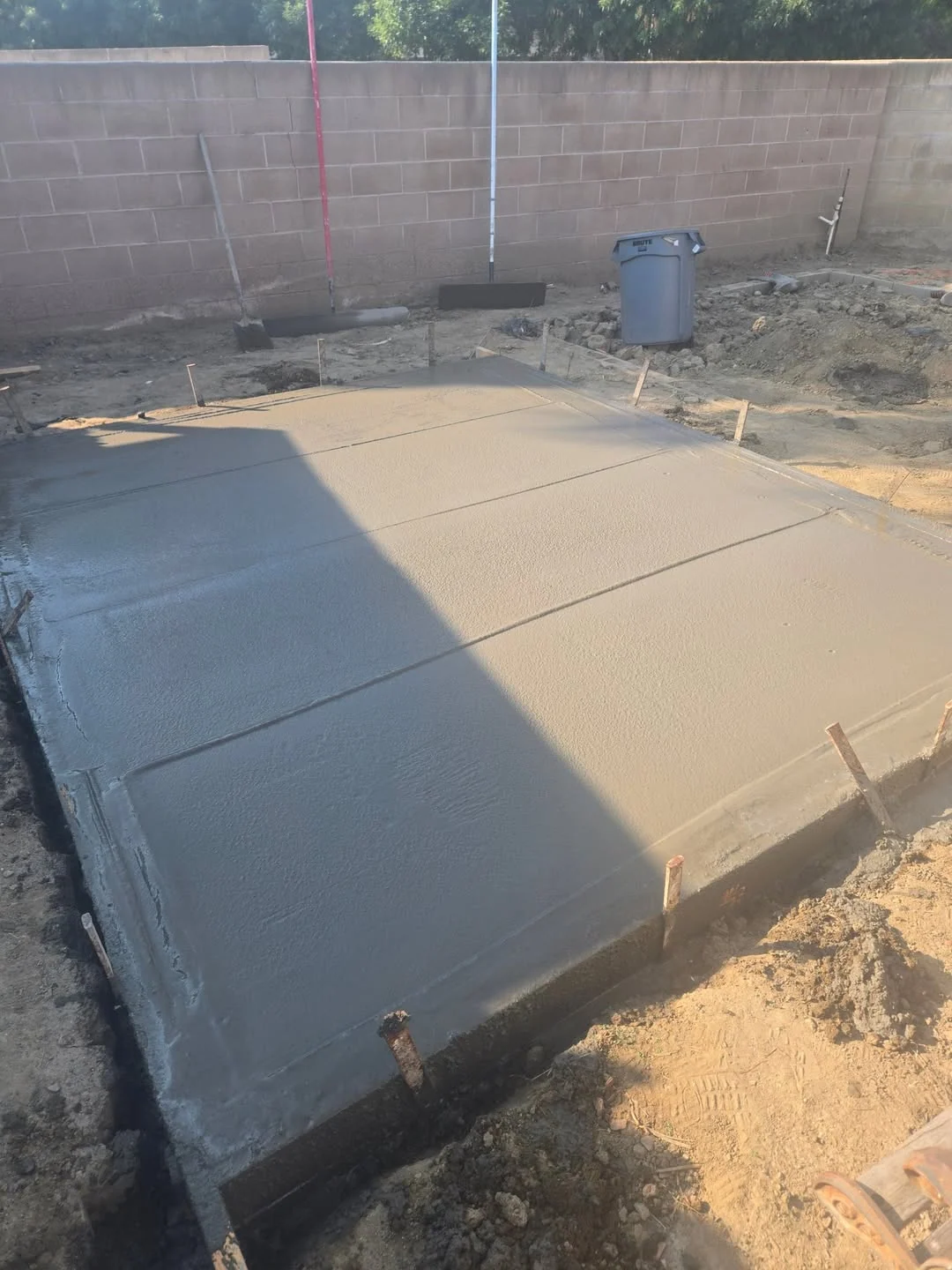
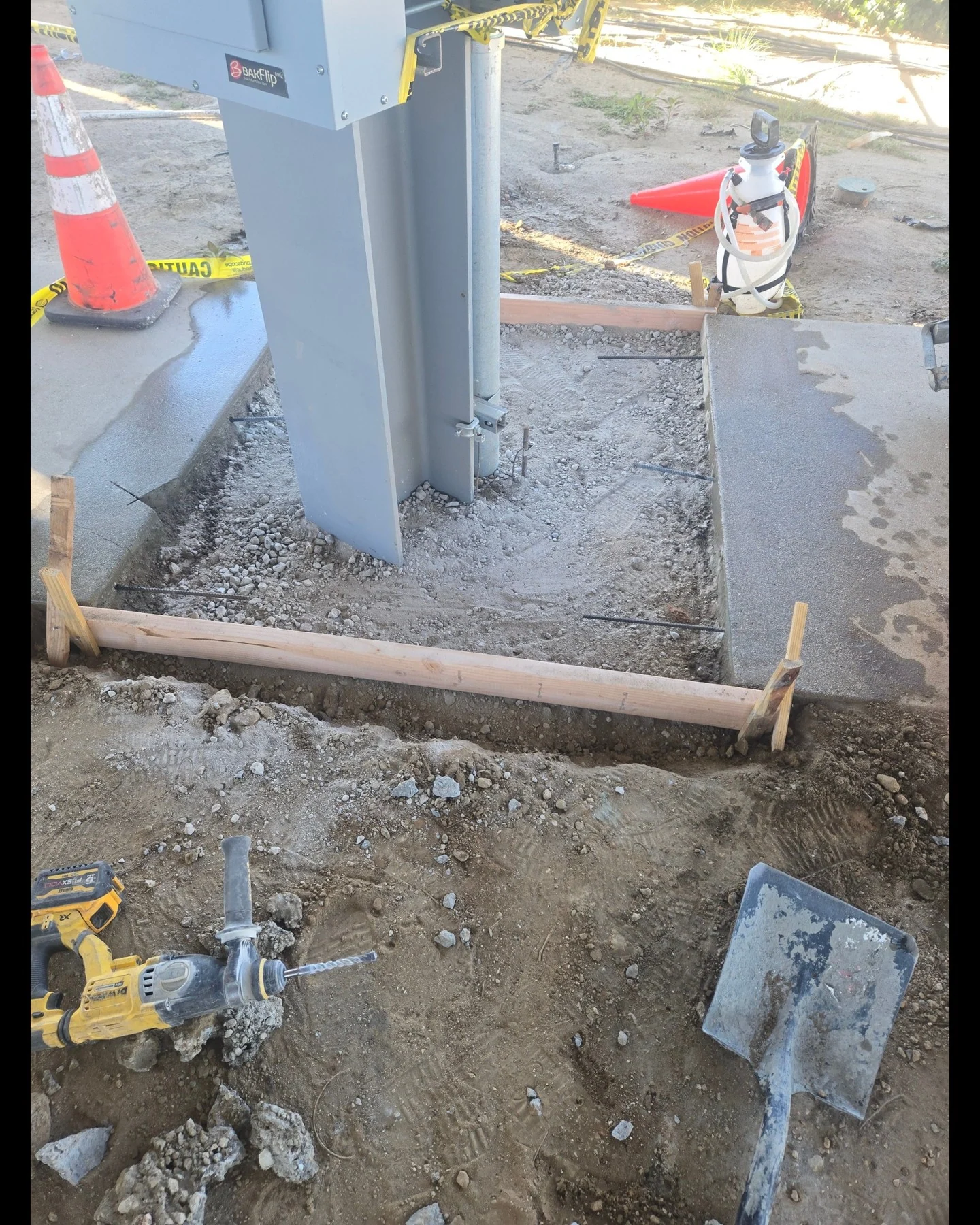
Single-digit humidity and wind will pull water out of fresh concrete fast enough to ruin the surface. Evaporation control during the pour is not optional at these temperatures.
Honest diagnosis before a number
We look at what failed and why before quoting. Sometimes the answer is a repair and sometimes it is a rebuild, and we will tell you which even when the smaller job is ours to lose.
Base first, always
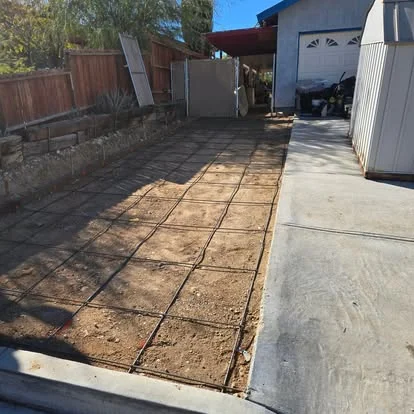
We cut to grade, fix the soft spots we find, and compact base in lifts before anything is formed. In expansive clay that step decides the whole outcome, so it is not where we save money.
Water routed off the slab
Slopes, low points and a path for water to leave are set before the pour, because afterward the drainage is permanent.
What we build in La Quinta

Concrete Slab Repair
Cracks and surface failure on a slab worth keeping.
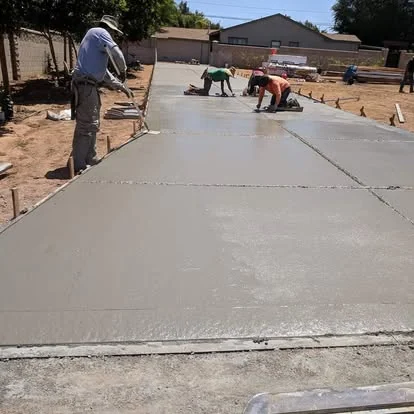
Concrete Slab Replacement
When the base failed, the slab follows.
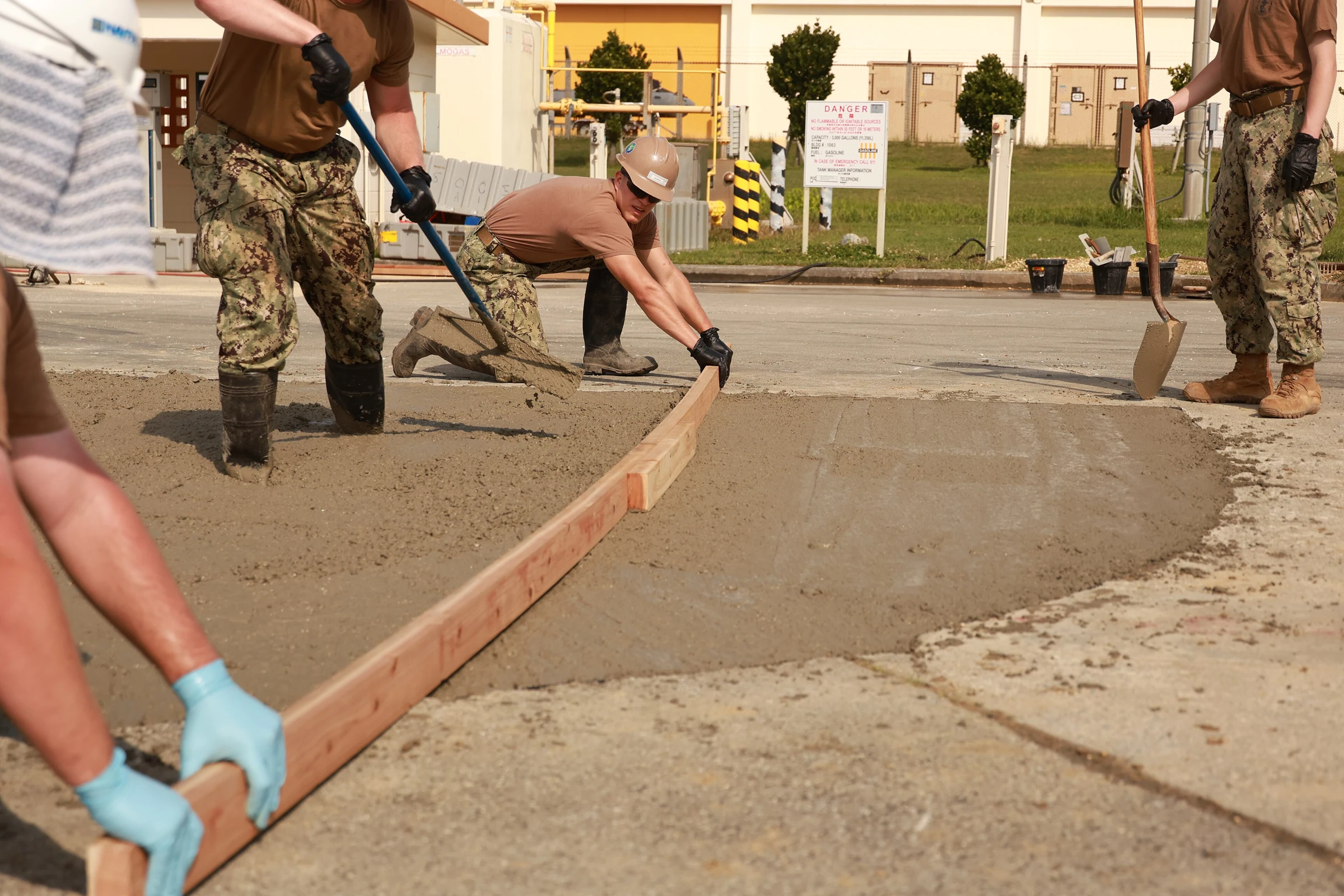
Garage Floors
Hot tires, dropped tools, and whatever ran off the car.
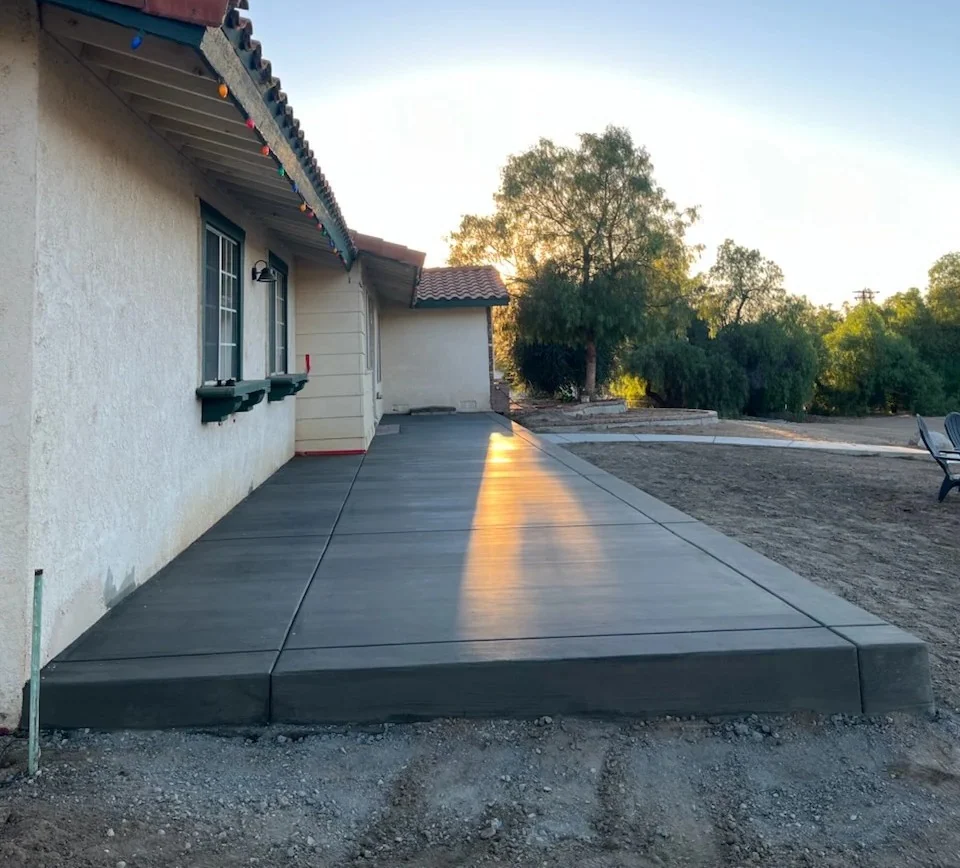
Garage Aprons
The strip between the driveway and the garage door.
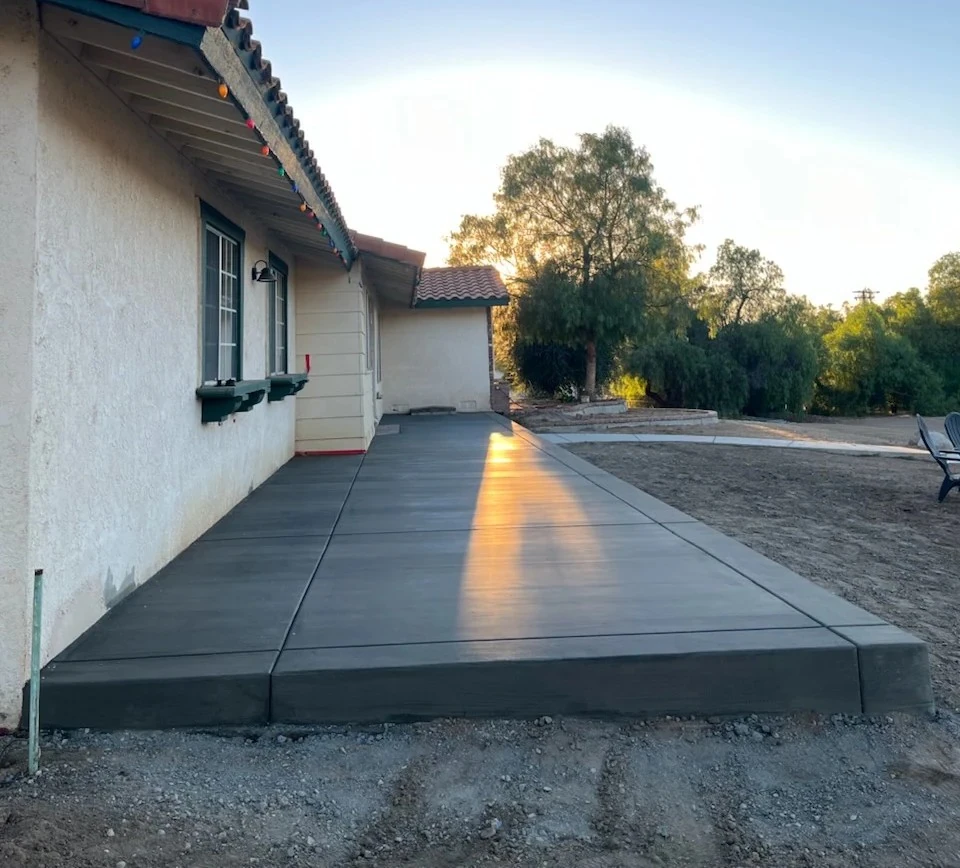
Basement Floors
A slab poured inside, where moisture has nowhere to go.
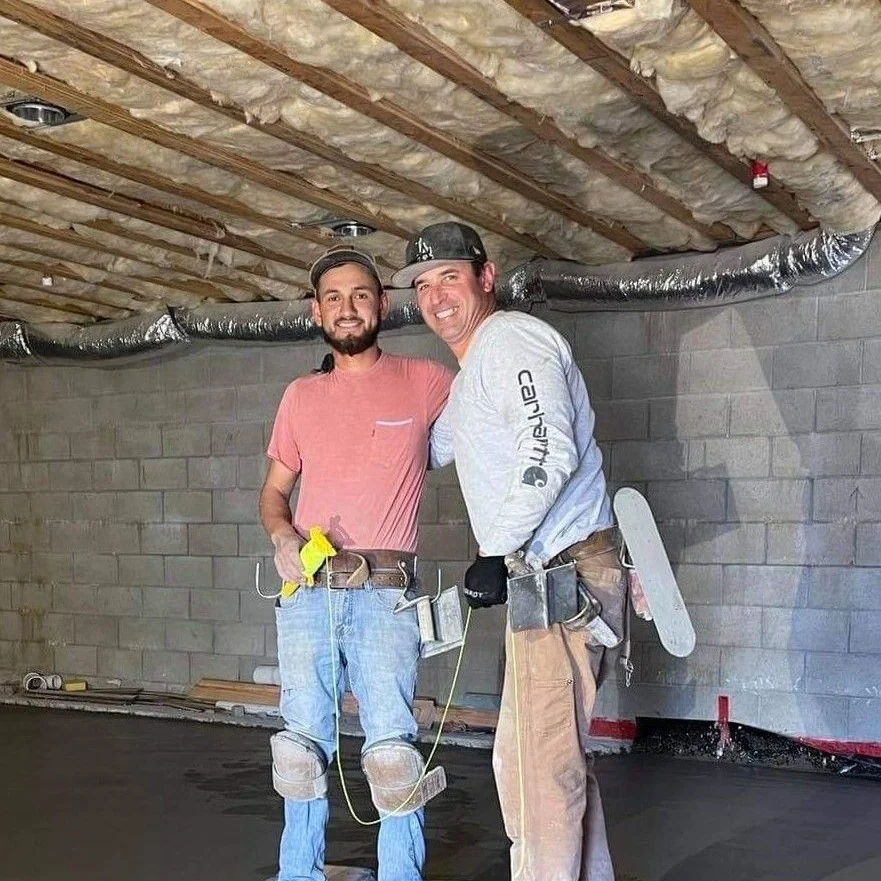
RV Pads
Heavy, concentrated, parked in one place for months.
Concrete Leveling
Lifting a slab back to where it started.
Concrete Grinding
Taking down high spots and trip lips.
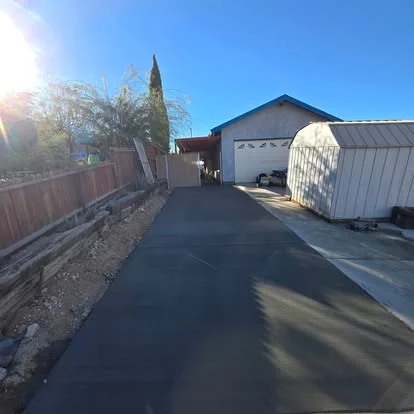
Concrete Sealing
Keeping water out of the pores.
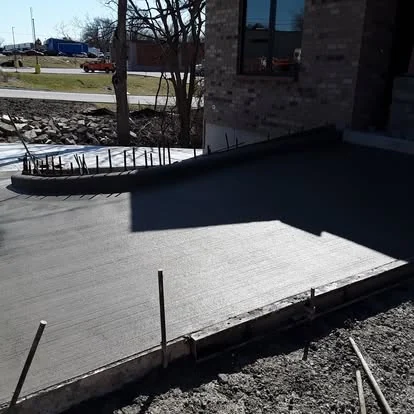
Concrete Aprons
The transition slab that takes the worst of it.
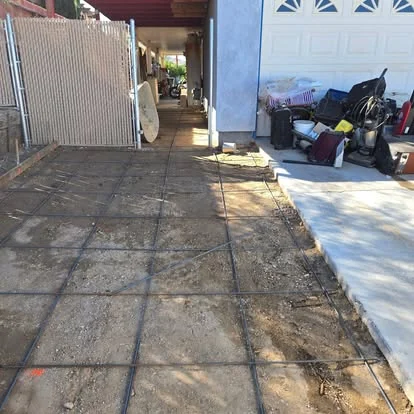
Drive Approaches
Where private property meets the public street.
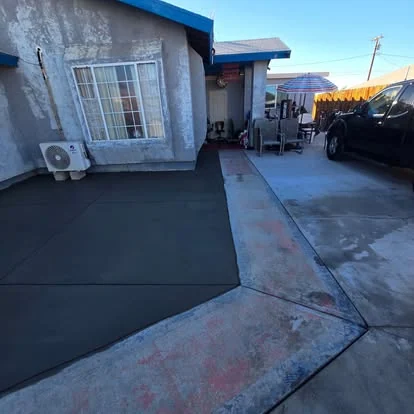
Concrete Curbs
Extruded or formed, straight and true.
Pouring concrete around La Quinta
Salts and sulfates in the soil
Parts of the low desert carry high salt and sulfate levels. Those attack cement paste and corrode reinforcing steel, and where it is a factor both the mix design and the concrete cover over the steel change. It is worth knowing before pouring rather than after.
The daily temperature swing
The desert can drop forty degrees after sundown, and concrete expands and contracts with that every single day for its whole life. Joint spacing has to allow for a slab that never stops moving, which is a different calculation from a mild coastal lot.
Wind during finishing
Blowing sand landing on a slab inside the finishing window gets worked into the surface and stays there. Wind is a scheduling factor in the desert the same way rain is elsewhere.
Heat is a design input
Low desert summers put concrete through conditions most of the country never sees. Placing at a hundred and fifteen means the mix is stiffening as it comes off the chute, and the finishing window can close in minutes. Pours move to first light, the mix is ordered for the conditions, and evaporation control during placement is not optional.
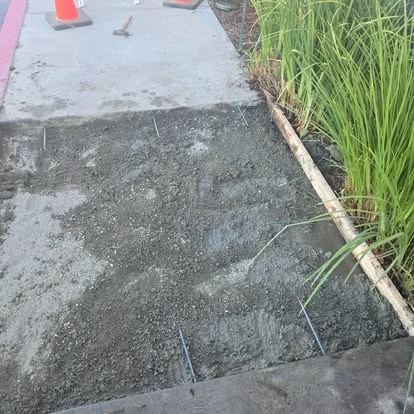
Concrete work around La Quinta
Flatwork, foundations and repair across La Quinta and the rest of Riverside County, poured by the same crew that answers the phone.
How concrete fails, and why
Cracks along a plumbing run
A trench under a slab that was not compacted is a soft line, and the slab cracks along it. Compaction in the trench matters as much as in the open.
Glazed surfaces that are slippery when wet
Over-troweling closes the surface to a polish. Indoors that can be a choice; on an exterior walk it is a hazard.
Deterioration under planters
Soil and constant moisture held against concrete leaches it and stains it. Anything permanently wet against a slab shortens its life.
Repairs that do not match
A repair poured with a different mix, finished differently, or cured differently will always read as a patch. Matching the finish and joint pattern is part of the job.
How a job runs
The soil question
In expansive clay the soil drives the design. If there is a soils report we build to it; if not, what we find during excavation informs the base work.
Drainage
Where water goes gets decided before the pour, because afterward it is permanent. That sometimes means changing the plan to fix a problem you already had.
The base is the job. The concrete is the finish on top of it.On what actually matters
Joint layout
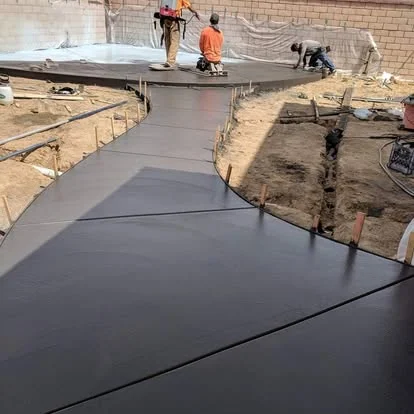
Joints are planned on paper and cut on time. Where they land is partly structural and partly how the finished slab reads.
Maintenance
Concrete is low maintenance, not no maintenance. Sealing and joint upkeep are the two things worth doing.
Around La Quinta
Straight answers
What about salts in the desert soil?
Parts of the low desert carry high salt and sulfate levels that attack cement paste and corrode reinforcing steel. Where it is a factor the mix design and the cover over the steel both change.
Does wind affect the pour?
It does. Blowing sand landing inside the finishing window gets worked into the surface and stays there, so wind is a scheduling factor here the way rain is elsewhere.
Can you pour in desert summer heat?
Yes, with the schedule and the mix built around it. Placing at a hundred and fifteen means the concrete is stiffening as it leaves the chute, so pours move to first light and evaporation control during placement is not optional.
My patio gets too hot to walk on. Can that be fixed?
Color and finish both affect surface temperature, and a lighter, more textured surface is noticeably more comfortable. On a replacement that is a real choice to make up front.
Do you handle the demolition and haul-off?
Yes, including saw cutting to a clean line and hauling the spoil. The site gets left ready to pour.
Pouring in La Quinta
We would rather stand on the job than guess at it. Call and we will set a time to come and look.